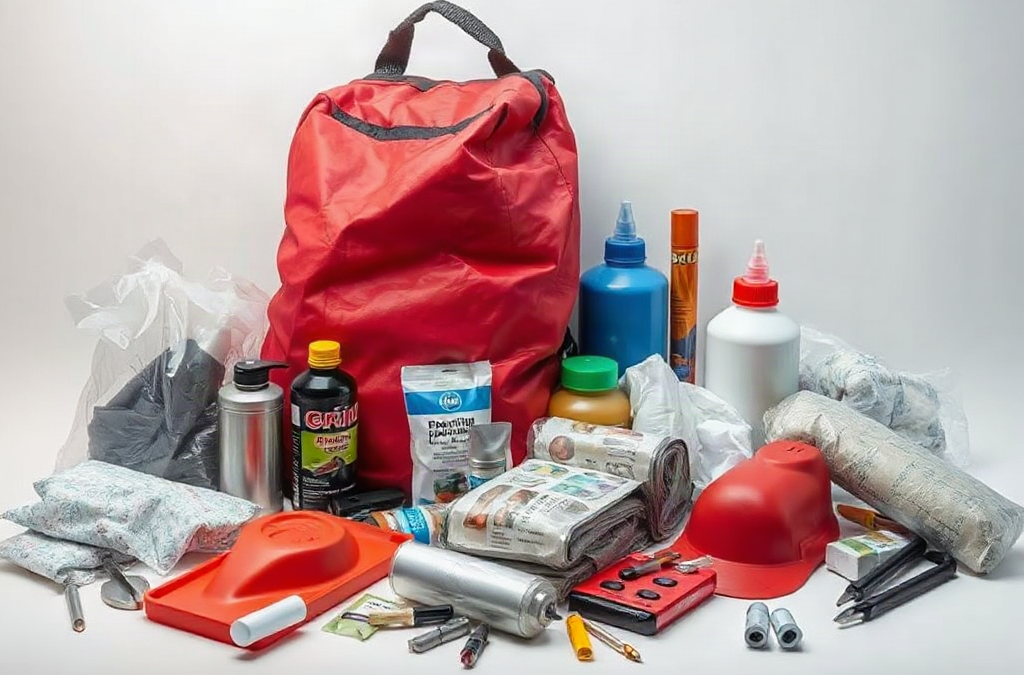
An earthquake preparedness list organized by function groups supplies according to the problems they solve: immediate protection, water and food, first aid, sanitation, communication, evacuation, and recovery. Pack high-priority items where they will be used, including sturdy shoes beside the bed, a flashlight within reach, water in accessible storage, and evacuation copies of identification. Account for broken utilities, blocked rooms, aftershocks, medication needs, pets, and the possibility of leaving on foot. Avoid relying on one large container; distribute essential supplies among home stations, portable bags, vehicles where appropriate, and household members so one damaged or inaccessible location does not disable the entire plan.
How Should Earthquake Supplies Be Organized?
Functional organization starts with the conditions an earthquake may create inside and outside the home. Shaking can move furniture, break glass, interrupt utilities, block normal exits, and separate family members. A useful list therefore answers practical questions: What prevents an injury immediately? What sustains the household if water or power stops? What must travel if the building becomes unsafe? What information will be needed during recovery?
Organizing only by product type is less useful. A shelf labeled “tools” may contain a wrench, work gloves, and a flashlight, but those items serve different tasks and may be needed in different locations. The flashlight belongs where darkness is likely to become an immediate problem. Gloves and sturdy shoes should be close to sleeping or exit areas where broken glass may be present. A utility shutoff tool belongs near the applicable shutoff point, provided household members know when and how to use it safely.
A practical earthquake preparedness list organized by function can use four storage layers. The first is immediate-access equipment placed at bedsides, work areas, and other occupied rooms. The second is household supplies for sheltering without normal services. The third is portable equipment for evacuation. The fourth is protected information and recovery material, including identification copies, insurance details, contacts, and property records.
| Function | Typical Items | Best Storage Logic |
|---|---|---|
| Immediate protection | Shoes, flashlight, gloves, whistle | Within reach where people sleep or spend time |
| Shelter support | Water, food, sanitation supplies, medications | Accessible locations protected from falling objects |
| Evacuation | Portable bag, maps, chargers, identification copies | Near a usable exit, without obstructing it |
| Recovery | Contacts, insurance records, home inventory | Protected physical copies plus secure digital backups |
One oversized kit creates a single point of failure. It may be too heavy to carry, trapped behind a damaged door, or stored in a garage that cannot be entered safely. Distributed storage is more resilient, although it requires a simple inventory so items are not forgotten or duplicated wastefully. Label containers by function and location, then record expiration dates, battery types, and assigned carriers.
Test the arrangement by imagining a nighttime event with no power and debris on the floor. If household members cannot reach footwear, light, medication, or an exit bag without crossing a hazardous area, the layout is failing. The goal is not to own the longest list; it is to place each item where its function can still be performed under disrupted conditions.
Water, Food, Medical, and Sanitation Needs
Life-sustaining supplies deserve priority over convenience equipment because service interruptions can quickly affect drinking, medication routines, hygiene, and safe food preparation. Water should be stored in containers intended for that purpose and positioned where leakage would not ruin documents or electrical equipment. Keep containers manageable enough for household members to move, rather than depending entirely on one heavy vessel.

Food should require little water, cooking, or refrigeration. Ready-to-eat canned foods, nut or seed butters, shelf-stable meals, crackers, dried fruit, and familiar snack foods are practical examples, subject to allergies and dietary needs. Include a manual can opener when canned food is part of the plan. Foods that are very salty may increase thirst, while supplies that require prolonged heating are a weak choice when fuel, ventilation, or cookware is unavailable.
Medical planning needs more personalization than a standard shopping list provides. Maintain an accessible supply of prescribed medicines when permitted by the prescription and dispensing rules, along with a current medication list, dosing information, allergies, and relevant clinician or pharmacy contacts. First-aid materials can address minor cuts and routine wound care, but a kit does not replace professional assessment for serious bleeding, breathing difficulty, crushing injuries, loss of consciousness, or other urgent conditions. Household members should know the limits of their skills.
Sanitation planning becomes necessary when toilets, running water, or waste collection cannot be used normally. Useful supplies may include heavy-duty trash bags, ties, toilet paper, soap, hand-cleaning products, disposable gloves, menstrual products, diapers, and cleaning materials appropriate to the household. Store hygiene items separately from food. Never mix cleaning products, and follow their labels because combining incompatible products can produce dangerous fumes.
A compact functional check keeps priorities visible:
- Hydration: Stored drinking water, portable containers, and a rotation date.
- Nutrition: Familiar shelf-stable food, eating utensils, and a manual opener.
- Medical continuity: Medicines, first-aid materials, health information, and backup eyewear if needed.
- Sanitation: Waste bags, hygiene products, soap, gloves, and a household waste plan.
Common failures include storing food nobody normally eats, overlooking pet water, and letting medicine or batteries expire unnoticed. Review supplies on a recurring household schedule and whenever medication, diet, family size, or pet needs change. A successful setup is easy to inspect, uses familiar products, and does not require normal utilities to perform its basic functions.
What Protection, Communication, and Utility Items Matter?
Protection equipment should reduce predictable hazards after shaking without encouraging people to enter unsafe areas. Sturdy closed-toe shoes help when glass or sharp debris covers floors, while work gloves may protect hands during light cleanup. Eye protection and dust masks may be useful around ordinary dust and debris, but they do not make a damaged structure safe to enter. Suspected structural instability, fire, sparking equipment, or a gas odor calls for leaving the hazard area and following local emergency instructions.
Light should be available without open flame. Place flashlights or headlamps near beds and in portable bags, and store compatible spare batteries separately if the design requires them. A headlamp leaves both hands available for opening doors, assisting another person, or carrying supplies. Candles introduce a fire risk where gas leaks, fallen materials, and unstable surfaces may exist, so battery-powered lighting is the more practical first choice.
Communication planning should not depend on a single phone, network, or person. Keep charging cables, a portable power bank maintained according to its manufacturer’s instructions, a battery-powered or hand-crank radio, written contacts, and an out-of-area contact plan. Text messages may sometimes be more practical than repeated voice calls when networks are congested, but no communication method is guaranteed. Agree in advance on meeting places for situations in which household members cannot reach one another.
Utility equipment requires judgment, not just ownership. Learn where water, electrical, and gas controls are located and obtain instructions from the relevant utility or a qualified professional. Do not shut off a utility reflexively without understanding the hazard and restart requirements. Gas service, in particular, may require qualified restoration after shutoff. A wrench is useful only if it fits the intended control and the user understands when intervention is appropriate.
Consider a household in which the main supply container is in a dark basement. If power fails and the stairs are obstructed, that container cannot serve its function. A smaller light and whistle upstairs, chargers in an evacuation bag, and gloves near an accessible exit provide useful redundancy. By comparison, buying several sophisticated devices while neglecting placement creates an impressive inventory with poor operational value.
Check whether every household member can locate and operate basic equipment. Replace leaking batteries, recharge power banks, confirm that radio settings are understood, and keep instructions with unfamiliar tools. Signs of failure include devices with incompatible connectors, unmarked shutoff tools, emergency contacts stored only on a locked phone, and equipment placed where falling furniture may bury it.
How Do You Prepare for Evacuation and Recovery?
Evacuation equipment should support a safe, realistic departure rather than duplicate the entire household stockpile. A portable bag may contain water, compact food, essential medication, first-aid supplies, a flashlight, charging equipment, a radio, weather-appropriate clothing, hygiene items, local maps, identification copies, and small-denomination payment options. Weight matters: a bag that cannot be carried by its assigned person is not truly portable.
Assign supplies across capable household members instead of loading everything into one bag. Children, older adults, people with disabilities, and anyone with mobility or medical needs may require a different arrangement. Keep mobility aids, hearing-device batteries, communication boards, service-animal supplies, or other essential equipment in the plan where applicable. Pet preparations should include carriers or leashes, food, water, identification, sanitation materials, and records that may be needed for temporary accommodation.
Route planning must account for more than a front door. Identify alternate exits and meeting locations, but do not assume a planned route will remain open. Printed local maps can remain useful when phones lack power or service. Keep evacuation bags accessible without placing them where they narrow a hallway or become falling hazards. Vehicle storage can provide redundancy, but heat, cold, theft, and limited access make a vehicle a poor sole location for medication, water, documents, or irreplaceable equipment.
Recovery begins with information. Protected copies of identification, insurance contacts, medical details, property information, and household contacts can reduce delays when normal records are inaccessible. Store physical copies in a water-resistant portable holder and maintain secure digital backups using a method the household can actually access. Avoid keeping account passwords or sensitive originals loosely inside an easily stolen bag.
A brief home inventory can document major possessions and the condition of rooms before an event. Photographs, serial numbers where relevant, policy information, and contact details should be updated after major purchases or household changes. Documentation does not guarantee reimbursement or assistance, but missing records can complicate applications and claims.
Run a practical carry test rather than assuming the plan works. Each person should pick up the assigned bag, reach the chosen exit, and identify where to meet. Adjust excessive weight, replace confusing labels, and move inaccessible equipment. The plan is working when essential items can be found in darkness, carriers fit the animals, contact information is readable without internet access, and responsibilities remain clear if one adult is absent.
Conclusion
A functional list turns a collection of products into a usable earthquake plan. Begin with items needed during the first minutes—light, footwear, basic protection, and a way to signal—then address water, ready-to-eat food, medication, hygiene, and communication. Build a separate portable layer for evacuation and protect the records needed afterward.
Placement deserves as much attention as purchasing. Divide critical equipment among accessible locations, avoid bags that are too heavy to carry, and do not rely solely on a garage, vehicle, phone, or single exit. Next, walk through a nighttime scenario, test each assigned bag, and correct anything that is inaccessible, expired, incompatible, or unfamiliar. Recheck the arrangement when household needs change. A shorter list that people can reach and use is more dependable than an extensive stockpile built around ideal conditions.
Frequently Asked Questions
Should all earthquake supplies be kept in one place?
No. Keep household reserves together where practical, but distribute immediate-use items and portable supplies so a blocked room or damaged storage area does not remove access to everything.
What should be placed beside the bed?
Sturdy closed-toe shoes, a flashlight or headlamp, and a whistle are practical choices. Position them where shaking is unlikely to scatter them or make them difficult to reach.
How often should earthquake supplies be checked?
Use a recurring schedule that matches the shortest expiration or maintenance interval in the kit, and review it after changes in medications, household members, pets, or equipment.
Should a gas shutoff wrench be included?
Include the correct tool only after learning the utility’s instructions and the conditions that justify shutoff. Do not assume gas service can be safely restored without qualified assistance.
What documents belong in an evacuation bag?
Consider identification copies, insurance contacts, medication details, emergency contacts, pet records, and key property information. Protect them from water and secure sensitive data against loss or theft.