
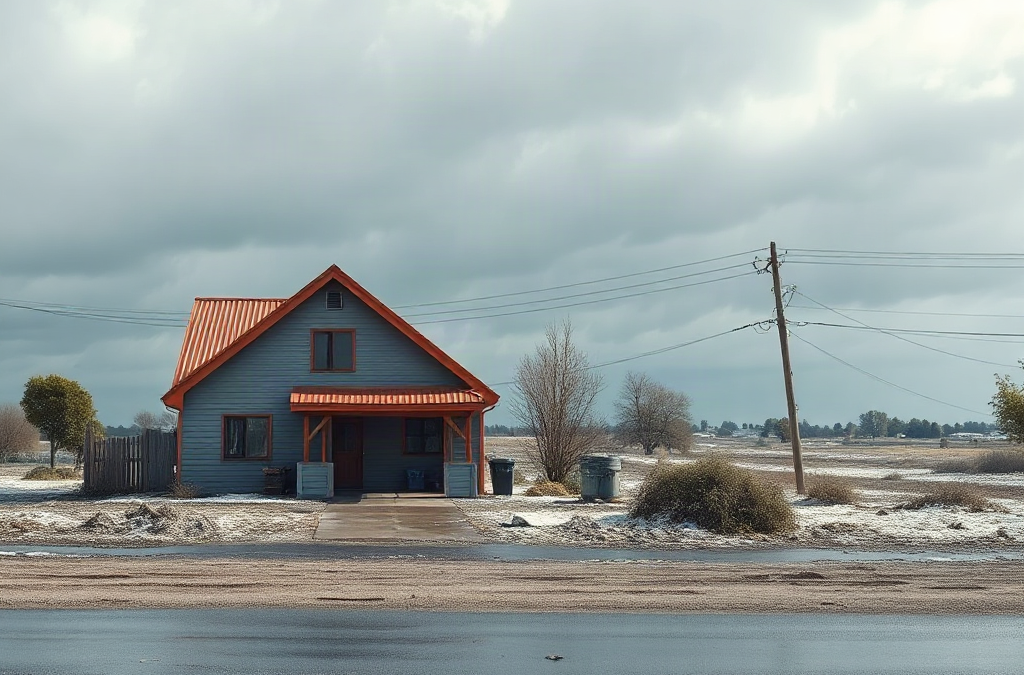
Hazard mitigation measures reduce disaster losses by limiting exposure, strengthening vulnerable buildings and infrastructure, and protecting the natural systems that absorb hazards. Effective measures include risk-based land-use rules, floodproofing and elevation, wildfire-resistant construction, seismic retrofits, drainage improvements, and dependable warning systems. Priorities should reflect local hazard maps, the people and facilities most at risk, project life span, maintenance demands, and the consequences of failure. Mitigation works best when communities combine structural projects with enforceable building standards, property-level upgrades, public communication, and recurring reviews as development patterns and environmental conditions change.
What you’ll learn
This guide covers the following practical points:
- Match Measures to Local Risk — Useful mitigation begins with a location-specific account of hazards, exposed assets, and likely consequences.
- Safer Land Use and Natural Buffers — Land-use decisions can prevent new exposure from accumulating in places where protective structures may eventually be exceeded.
- Stronger Buildings and Infrastructure — Physical upgrades reduce losses when they address the way a specific hazard damages a structure or system.
- Warnings, Continuity, and Property-Level Actions — Warnings and operating procedures reduce human and service losses that construction alone cannot address.
Match Measures to Local Risk
Useful mitigation begins with a location-specific account of hazards, exposed assets, and likely consequences. A flood-prone river corridor, a neighborhood near fire-adapted vegetation, and an unreinforced building in an earthquake zone require different interventions. FEMA describes hazard mitigation planning as a process for minimizing impacts before disasters occur, but the plan only becomes actionable when risks are connected to named properties, infrastructure systems, and responsible parties.
A sound assessment examines more than whether a hazard can occur. It considers depth or intensity, frequency, warning time, duration, and cascading effects. A flooded substation may interrupt water pumping; a blocked bridge may isolate emergency services; smoke may affect communities far from a fire perimeter. Historical events are valuable, but they should not be treated as a complete forecast when development, drainage, vegetation, or climate conditions are changing.
Start by locating essential services and populations that may have difficulty evacuating or recovering. Then identify failure points whose loss would create the widest disruption. The resulting priority list should distinguish between frequent, localized damage and rare events with severe consequences. A common mistake is ranking projects by the visibility of the hazard rather than the scale and duration of likely losses.
Safer Land Use and Natural Buffers
Land-use decisions can prevent new exposure from accumulating in places where protective structures may eventually be exceeded. Zoning, development setbacks, open-space acquisition, density limits, and restrictions on critical facilities can steer vulnerable uses away from floodways, unstable slopes, erosion zones, and other high-risk areas. These measures are usually most effective before roads and utilities encourage additional construction.

Natural features can complement those controls. Floodplains temporarily store water, wetlands slow runoff, dunes reduce coastal wave effects, and healthy vegetation can stabilize some soils. The U.S. Climate Resilience Toolkit identifies both land-use zoning and floodplain restoration among available flood-risk measures. Natural buffers are not impenetrable barriers, however; their value depends on location, condition, available space, and the severity of the event.
Tradeoffs require explicit treatment. Limiting development may affect land values or reduce the local tax base, while property acquisition can disrupt established communities if participation, relocation, and long-term site management are handled poorly. Protective zoning that applies only to new buildings also leaves existing exposure untouched. The recurring failure is permitting new risk while spending public funds to correct older risk. Communities should pair development controls with options for existing properties, such as acquisition, relocation, elevation, or floodproofing where technically suitable.
Stronger Buildings and Infrastructure
Physical upgrades reduce losses when they address the way a specific hazard damages a structure or system. Flood measures may include elevating occupied floors, raising utilities, installing flood-resistant materials below expected water levels, or improving drainage. Earthquake work may strengthen connections between roofs, walls, foundations, and nonstructural components. Wildfire measures can include fire-resistant exterior assemblies, ember-resistant vents, managed vegetation, and accessible water supplies.
Critical infrastructure deserves system-level analysis rather than isolated hardening. Reinforcing a hospital has limited value if access roads, power, communications, water, or suppliers remain fragile. Redundancy, backup routes, protected controls, and the ability to isolate damaged components may keep essential services operating even when some assets fail. A practical review should trace what each facility needs to function and how long backup arrangements can realistically last.
Retrofitting is constrained by building condition, occupancy, cost, workmanship, and code requirements. An apparently simple alteration can shift loads or trap water in ways that create a different failure. Owners should use qualified design and construction professionals for structural, electrical, geotechnical, or floodproofing work and verify applicable local requirements.
| Hazard | Example Measure | Critical Check |
|---|---|---|
| Flood | Elevate utilities and occupied space | Expected water level, access, and foundation capacity |
| Earthquake | Strengthen structural connections | Whole-building load path and soil conditions |
| Wildfire | Reduce ember entry and combustible exposure | Roof, vents, nearby vegetation, and ongoing upkeep |
| High wind | Reinforce roof and opening protection | Continuous connections from roof to foundation |
The frequent mistake is buying a visible protective product without checking whether the surrounding structure remains the weaker link. A measure is working when inspections confirm that components remain connected, maintained, and suitable for the updated hazard estimate—not merely when installation is complete.
Warnings, Continuity, and Property-Level Actions
Warnings and operating procedures reduce human and service losses that construction alone cannot address. Detection systems, redundant communication channels, evacuation routes, shelter arrangements, and continuity procedures give people time and direction when a hazard develops. They are mitigation measures when they produce durable reductions in expected harm, although they also overlap with preparedness and response.
Messages must identify the affected area, hazard, required action, deadline, and source of updates. One channel is insufficient because electricity, cellular networks, internet access, language barriers, hearing limitations, or public distrust may prevent receipt. Organizations should maintain contact lists, alternate work locations, manual operating procedures, and clearly assigned authority for shutdowns or relocation.
Property-level action can close gaps left by public projects. Residents may secure water heaters and tall furniture in earthquake areas, keep drains clear, move valuable equipment above likely flood levels, maintain defensible space where wildfire guidance calls for it, and document insurance-relevant property details. Measures should fit the building and local hazard; improvised barriers or vegetation removal can redirect water, increase erosion, or conflict with safety requirements.
Exercises expose weak assumptions before an emergency. Warning tests should confirm that messages reach intended recipients and that recipients know what to do. A failed test, delayed evacuation, unclear authority, or expired backup supply signals that the arrangement needs revision. Treating message delivery as proof of effective warning is a common error; protective action is the meaningful outcome.
Prioritize and Maintain Mitigation Investments
Project selection should compare expected risk reduction with cost, feasibility, service life, maintenance burden, and distribution of benefits. The cheapest project is not necessarily the best value, and the largest project may not address the most consequential failure. NOAA characterizes mitigation as reducing loss of life and property by lessening disaster impacts, a useful test for separating substantive risk reduction from work that is merely visible.
A compact prioritization process keeps decisions traceable:
- Define the failure: State which people, buildings, services, or environmental assets face harm.
- Compare alternatives: Include land-use, structural, natural, operational, and property-level options.
- Test feasibility: Review ownership, permits, engineering limits, funding, and community effects.
- Fund the life cycle: Account for inspection, maintenance, replacement, staffing, and training.
- Measure performance: Track reduced exposure, completed retrofits, warning reach, downtime, and unresolved vulnerabilities.
Equity affects both effectiveness and implementation. A program that requires substantial upfront household spending may bypass renters, lower-income owners, and small businesses even where risk is high. Technical assistance, accessible communication, and transparent eligibility rules can make benefits more reachable. Decision-makers should also identify who bears construction disruption, relocation pressure, or residual risk.
Maintenance is where many projects quietly lose value. Clogged drainage, damaged shutters, unmanaged vegetation, expired agreements, and untested backup equipment can reverse expected protection. Assign an owner, inspection interval, corrective-action process, and funding source before approving a measure. Reassess priorities after damaging events, major development, infrastructure changes, or updated hazard information rather than assuming the original design remains adequate indefinitely.
Frequently Asked Questions
What is the difference between hazard mitigation and emergency response?
Mitigation reduces long-term risk before the next event through measures such as safer land use, retrofits, and natural buffers. Emergency response manages immediate consequences through rescue, shelter, medical aid, and incident operations.
Which mitigation measure should be completed first?
Prioritize a measure that addresses a documented high-consequence vulnerability and is feasible to maintain. Protecting critical services or correcting a known life-safety weakness may take precedence over lower-impact property improvements.
Are building codes enough to control disaster losses?
Codes establish minimum requirements for covered construction, but they may not correct older buildings, protect infrastructure networks, or stop development in exposed locations. Enforcement, retrofits, maintenance, and land-use decisions remain necessary.
Do natural barriers replace engineered protection?
Not automatically. Wetlands, dunes, floodplains, and vegetation can reduce certain impacts, but performance varies with condition and event severity. Combined natural and engineered measures may be more appropriate where consequences are high.
How can a community tell whether mitigation is working?
Track exposure removed, vulnerable buildings upgraded, essential-service downtime, warning coverage, inspection findings, and maintenance completion. After an event, compare actual damage and service interruption with expected performance and correct identified weaknesses.
Conclusion
Effective mitigation concentrates limited resources on documented hazards, critical dependencies, and people facing the greatest consequences. Begin with a local risk assessment, prevent new exposure where possible, and compare structural, natural, operational, and property-level options rather than defaulting to a single large project. Every selected measure needs accountable ownership, professional input where safety is involved, recurring inspection, and a way to test performance. The next practical step is to identify one high-consequence failure, evaluate several ways to reduce it, and fund the chosen measure through its full service life.
Additional Resources
Authoritative Sources
- Strategic hazard mitigation planning
sciencedirect.comBy M Gall · 2024 · Cited by 7 — Hazard mitigation reduces future losses, as evidenced by post-disaster forensic studies [6,7] and re-analysis of FEMA's mitigation investments at an individual ... Read more
- Hazard Mitigation Value
coast.noaa.govHazard mitigation —the effort to reduce loss of life and property by lessening the impact of disasters—has numerous benefits.
- What is Hazard Mitigation?
emergency.lacity.govHazard mitigation describes actions taken to help reduce or eliminate long-term risks caused by hazards or disasters, such as flooding, earthquakes, wildfires,




