Build an emergency preparedness stockpile by choosing shelf-stable food, safe water, medicines, lighting, sanitation supplies, and other items your household already knows how to use. Assign every consumable an expiration or review date, place the earliest-dated units at the front, and replace each item when it is consumed. Track inventory by quantity and storage location, inspect it at least twice a year, and discard anything leaking, swollen, contaminated, or damaged. Rotation rules should account for package condition and storage temperature rather than relying on printed dates alone.
What Belongs in a Practical Stockpile?
A useful stockpile covers specific disruptions rather than filling shelves indiscriminately. Start with the functions that become difficult when utilities, stores, or transportation are unavailable: drinking, eating, managing health needs, seeing after dark, receiving information, maintaining sanitation, and keeping warm or cool enough for the conditions.
Food should be shelf-stable, familiar, and practical without normal kitchen service. Canned beans, fish, fruit, vegetables, soup, nut or seed butter, crackers, dry cereal, shelf-stable milk, and ready-to-eat meals can provide workable combinations. Include a manual can opener when cans lack pull tabs. Dry rice and beans may last well under suitable conditions, but they are poor primary choices if a scenario leaves you with little water or no safe cooking method. Ready-to-eat products cost more and may create more packaging waste, yet they reduce fuel and water demands.
Water requires separate planning because an ordinary pantry does not solve drinking, cooking, and hygiene needs. Store commercially bottled water or water in clean, food-grade containers intended for that purpose. Keep it away from fuels, pesticides, cleaners, and other substances that could leak or produce fumes. A filter can be useful, but it is not a substitute for stored water when no source is available, and not every filter removes every type of contaminant.
Nonfood supplies should match household circumstances. Common priorities include flashlights, compatible batteries, a battery-powered or hand-crank radio, hygiene products, waste bags, basic first-aid materials, chargers or power banks, copies of critical information, and weather-appropriate clothing. Prescription medicines and medical devices require special handling; discuss emergency quantities, storage limits, and replacement timing with the relevant pharmacist or clinician rather than assuming they can be stockpiled indefinitely.
Build around actual use. A household that never eats canned stew is likely to let a case expire, while regularly used pasta sauce or tuna can flow naturally through normal meals. A common failure is buying large, discounted quantities before testing taste, preparation requirements, storage space, or dietary compatibility. Purchase a few units first, use them under the conditions anticipated, and expand only if they work.
How Much Food and Water Should You Store?
The appropriate quantity depends on household size, local hazards, available space, health needs, climate, and how long outside assistance or shopping could be interrupted. A smaller, complete supply is more useful than a month of food without adequate water, medication planning, sanitation materials, or a way to prepare meals.

For water, Ready.gov advises storing at least one gallon per person per day for several days, with additional amounts potentially needed by children, nursing people, people who are ill, and those in hot climates. Pets need water too. Treat that figure as a planning baseline rather than a promise that every household will use the same amount. Someone with medical equipment that consumes water, for example, needs a separate calculation based on the equipment instructions and professional advice.
| Planning stage | Primary objective | What to verify |
|---|---|---|
| Several days | Cover a brief outage or access disruption | Water, ready-to-eat meals, lighting, medicines, and sanitation |
| One to two weeks | Reduce dependence on immediate shopping | Meal variety, cooking fuel, storage capacity, and rotation pace |
| Longer duration | Extend resilience for location-specific risks | Nutritional balance, replacement cost, temperature control, and inventory discipline |
Estimate food by constructing meals, not by counting packages. Write a simple menu for the period you want to cover, then calculate the required units. A can of beans may feed several people as part of a meal or only one person as the main dish. Check serving sizes, calorie needs, allergies, sodium restrictions, infant feeding requirements, and whether preparation consumes scarce water. Include foods that can be eaten cold even if you expect to have a camp stove or grill.
Cooking devices introduce constraints. Never use outdoor combustion equipment indoors or in another enclosed area where carbon monoxide can accumulate. Store fuel according to its label and local requirements, away from living areas and ignition sources. If safe outdoor cooking is not feasible during severe weather, the stockpile should contain enough no-cook options to bridge that period.
Budget favors gradual accumulation. Add one or two durable items during routine shopping, then record them immediately. Buying everything at once may produce a shelf full of identical dates and a costly replacement wave later. Staggered purchases spread both expiration dates and spending, provided the household does not consume new stock without logging it.
How Do Stockpile Rotation Rules Work?
Rotation moves the oldest suitable inventory into normal use before newer units, while inspection removes anything that is no longer safe or dependable. The practical rule is first expiring, first out: compare printed dates and package condition, then place the item needing attention soonest at the front. This is more precise than simply putting the oldest purchase first because products bought later can carry earlier dates.
When supplies arrive, write the purchase month and any printed date where it can be seen without moving the package. Place newer units behind later-dated stock and record the quantity. Whenever an item leaves the shelf, add it to the next shopping list. That replacement step matters: a pantry can appear full while critical categories quietly decline after routine use.
- Receive: Check seals, dents, leaks, moisture damage, and dates before shelving.
- Label: Mark the purchase date and a household review or use-by month.
- Position: Put the earliest review date at the front and newer stock behind it.
- Use: Incorporate approaching dates into ordinary meals or household use.
- Replace: Restore the target quantity and update the inventory record.
Printed date language does not have a single universal meaning across all products. Some dates primarily address expected quality, while particular products may have different requirements. Package integrity and storage history remain critical. Do not taste food to decide whether it is safe. Bulging, leaking, badly rusted, deeply dented, spurting, or otherwise compromised cans and containers warrant cautious disposal following applicable food-safety guidance.
Set rotation intervals by category rather than assigning one date to everything. Batteries, water, food, medicine, fire extinguishers, documents, and power banks have different instructions and failure modes. Follow manufacturer directions for storage and inspection. Recharge a power bank on its required schedule; test a flashlight with its designated batteries; review medicine dates with a pharmacist; and inspect stored water containers for damage or contamination concerns.
The system is working when counts remain near their targets, approaching dates appear in normal meal plans, and inspections find little unexplained damage. It is failing when products are hidden behind newer purchases, labels cannot be read, the inventory disagrees with the shelf, or replacement shopping repeatedly happens in one expensive batch.
Storage Layout and Inventory Control
Storage conditions determine whether a carefully dated stockpile remains usable. Choose a cool, dry location protected from direct sunlight, pests, flooding, chemical contamination, and sharp temperature swings. Garages, sheds, vehicles, and attics may look spacious but can expose food, batteries, medicines, and water containers to damaging heat or cold. Product labels should decide where sensitive items go.
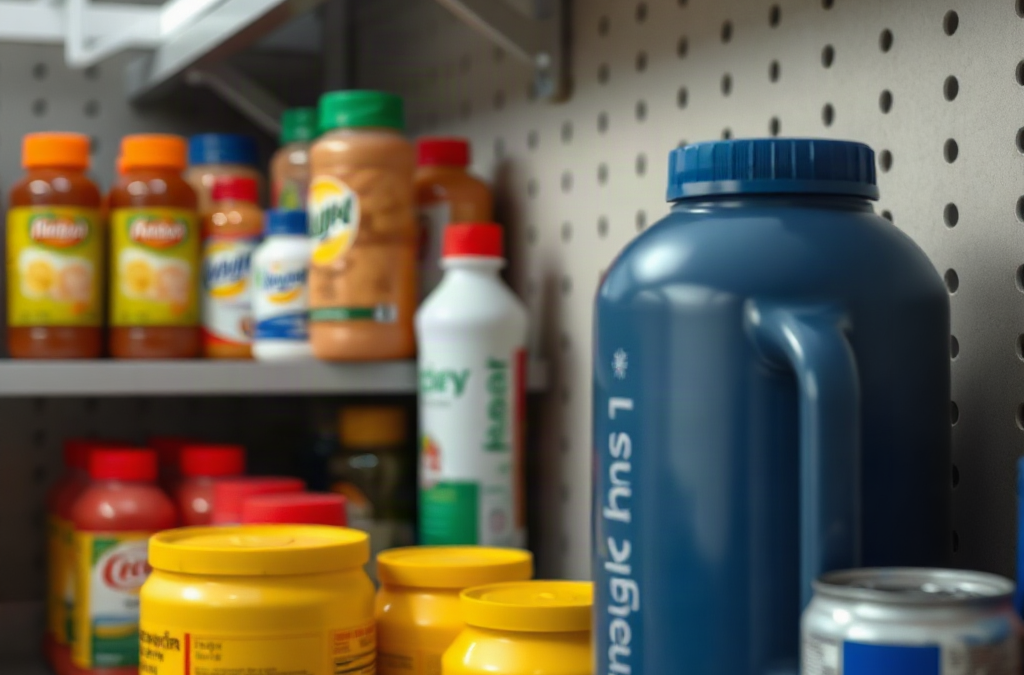
Arrange supplies by function and then by date. Keep water together where shelves can safely bear the weight, food in visible rows, lighting equipment with compatible batteries, and sanitation supplies in a separate labeled area. Hazardous products should never be placed where a leak could contaminate food or water. Heavy containers belong on low, stable shelving rather than above head height.
A compact inventory needs only a few fields: item name, target quantity, current quantity, printed or review date, storage location, and special notes. A spreadsheet is convenient for sorting dates, but a paper sheet attached inside a pantry door still works during a power or network outage. Whichever method is chosen must be simple enough that every person who removes supplies can update it.
Consider a home with canned food split between a kitchen cupboard and basement shelves. Without location labels, family members may buy duplicates while an older case remains unseen downstairs. Recording “basement shelf B” and keeping a small working supply upstairs allows routine use without losing track of reserve stock. The alternative—one large mixed bin—saves shelf space but makes inspection and first-expiring-first-out rotation much harder.
Use sealed pest-resistant containers where appropriate, but do not let secondary bins hide labels or damage. Keep original packaging and instructions for equipment whenever practical. Avoid transferring chemicals into drink bottles or unlabeled containers. For food, use only containers intended for food storage, and follow established guidance before repackaging dry goods for longer storage.
A visible gap is useful inventory information, not a cosmetic problem. Mark each shelf with the intended item and quantity so an empty position signals that replacement is due. Overpacking shelves removes that signal and restricts inspection. If items cannot be removed without unloading an entire stack, the layout is too dense for reliable rotation.
When Should You Inspect, Replace, or Expand Supplies?
Review the entire stockpile at least twice a year and inspect it after flooding, pest activity, extreme indoor temperatures, a move, or any event that may have damaged storage. Items with shorter review cycles should be checked more often according to their labels or professional instructions. Tie the full review to two memorable months rather than relying on an unscheduled intention.
During inspection, compare physical stock with the inventory, bring approaching dates forward, and look for corrosion, swelling, leaks, broken seals, damp cartons, pest evidence, unusual odors, battery damage, expired medicines, and depleted chargers. Confirm that equipment still operates and that household members know where supplies are. Do not open questionable food indoors merely to investigate it, and keep leaking chemicals or damaged batteries away from skin, food, and water while following local disposal guidance.
Replacement decisions should consider condition, instructions, and suitability—not date alone. A flashlight that works but uses a battery size no longer kept in the house creates avoidable complexity. Food may remain intact yet no longer fit a changed allergy, medical diet, or infant’s needs. Contact lenses, hearing-aid batteries, mobility-device supplies, pet food, and seasonal clothing also need updates as household circumstances change.
Expand only after the current layer rotates cleanly. If a three-day menu repeatedly produces untouched meals, correct the food choices before buying two weeks of the same products. If water blocks an exit or overloads shelving, improve storage before increasing volume. A larger reserve magnifies weaknesses in recordkeeping, temperature control, and replacement cost.
After using the stockpile during an outage or evacuation, record what ran short, what was difficult to open or cook, and what went unused. A meal requiring prolonged heating may have consumed too much fuel; a single large water container may have been hard to lift; batteries may have been present but incompatible. Convert those observations into specific changes rather than merely restoring the previous list.
Expansion is justified when inspections are current, shelves remain accessible, the budget can absorb routine replacements, and the stored products are actually consumed or maintained. Signs to pause include frequent waste, unreadable labels, missing inventory entries, crowded exits, unstable shelving, or supplies stored outside their permitted conditions.
Conclusion
A dependable reserve is defined by usable supplies and controlled turnover, not by the number of packages on a shelf. Establish a modest target for water, no-cook food, health needs, lighting, communication, and sanitation. Label each consumable, position the earliest review date where it will be used first, and record every addition or removal.
Schedule two whole-stock inspections each year while honoring shorter product-specific intervals. Correct damaged storage, incompatible equipment, disliked meals, and inaccurate counts before purchasing more. The next practical step is to choose a short planning period, write the meals and daily needs it must support, inventory what is already available, and buy only the missing items. Once that supply survives several rotation cycles without waste or confusion, extend it gradually for the hazards and constraints relevant to the household.
Frequently Asked Questions
Should emergency food be separate from the regular pantry?
It can be separate, but regularly eaten products are easier to rotate through the kitchen. Clearly identify the minimum reserve quantity so normal use does not leave the household below its target.
How often should a stockpile be checked?
Conduct a complete review at least twice a year, with more frequent checks for medicines, charged devices, short-dated foods, or products whose instructions specify another interval.
Can food be used after its printed date?
Date meanings vary by product, so consult the label and authoritative food-safety guidance. Never rely on tasting, and discard packages that are swollen, leaking, badly rusted, unsealed, or otherwise compromised.
What is the easiest way to track stockpile inventory?
Record the item, target count, current count, review date, and shelf location in a spreadsheet or paper log. Update it whenever something is added, used, moved, or discarded.
Should emergency supplies be stored in a garage?
Only when each product permits the garage’s temperature and moisture conditions. Heat, freezing, humidity, pests, fuels, and chemicals can make a garage unsuitable for food, water, medicines, batteries, and electronics.
Additional Resources
Authoritative Sources
- American Red Cross Emergency Preparedness
redcross.orgPractical emergency preparation, safety, and supply guidance for households.