An effective emergency poster answers a narrow operational question: what should a person do in this place, during this hazard, right now? That focus separates a useful sign from a general safety message. A poster about a building fire should not attempt to explain every type of fire behavior. It should direct people to raise the alarm, use the nearest safe exit, avoid elevators when local instructions say so, and move to the designated assembly area.
The strongest posters connect four pieces of information: the hazard, the first action, the next decision, and the boundary of the instruction. “Flood warning” identifies the situation, but “move to higher ground; do not walk or drive through floodwater” gives a person something to do. A boundary such as “follow official evacuation orders” prevents the poster from pretending to replace emergency authorities or site-specific procedures.
Specificity matters because people often encounter posters while distracted, moving, or helping someone else. A workplace sign beside a fire extinguisher can identify the PASS sequence if staff are trained and the equipment is appropriate, but it should not imply that an untrained person must fight a growing fire. A better design pairs the equipment instruction with a clear escape condition: leave immediately if the fire is spreading, smoke is heavy, or the exit could be cut off.
Use Emergency preparedness posters that communicate useful actions as a practical reference when deciding whether a draft gives readers a visible behavior rather than a topic label. Common failures include slogans without verbs, instructions that assume power or internet access, and diagrams that show equipment without explaining when not to use it. The poster should support a broader emergency communication plan, not compete with it.
How to Structure Instructions Under Stress
Poster instructions work best when they follow the order a person must act, rather than the order an editor thought of the information. Put the immediate protective move first, then the communication step, then the follow-up location or accountability step. For an earthquake, that may mean “Drop, Cover, and Hold On,” followed by checking for hazards before leaving and using the designated contact method. The exact wording should match the procedures used by the responsible organization or local authority.
Short numbered sequences are useful when each step is distinct and observable. A compact evacuation poster might show: 1) take essential medication if it is within reach, 2) use the marked route, 3) assist only when it does not delay your own exit, and 4) report to the assembly point. A paragraph containing all four actions is harder to scan, especially when people are wearing protective equipment, dealing with smoke, or navigating unfamiliar spaces.
Sequence alone does not solve every communication problem. Some hazards require conditional instructions. A chemical release poster may need separate branches for people indoors and outdoors, such as sheltering inside versus moving crosswind or away from the release, depending on official direction and the substance involved. Avoid improvising technical advice. Where the correct action depends on a public alert, the poster should direct readers to the approved alert channel and identify the responsible organization.
A useful test is the “ten-second explanation.” Ask someone unfamiliar with the poster to point to the first action, the exit or safe location, and the source of further instructions. If they scan the page in the wrong order, mistake a warning icon for a command, or cannot tell whether the message applies to them, revise the hierarchy. A poster can be visually attractive and still fail if its decision path is ambiguous.
First: name the hazard or trigger in plain language.
Next: show the immediate protective action with a strong verb.
Then: identify the route, safe location, or communication method.
To wrap up: state a limitation, such as waiting for official instructions or not re-entering.
Choosing Visuals, Language, and Accessibility Features
Visuals should reduce interpretation time, not decorate the page. A simple exit arrow, shelter symbol, handwashing sequence, or water-depth warning can reinforce a short instruction when the symbol is familiar and its meaning is explained. An icon should never carry the entire message if viewers may not recognize it. Pair it with text, especially for actions involving evacuation, medical assistance, hazardous materials, or accessibility routes.
Typography must remain readable at the distance where the decision occurs. A poster mounted beside a stairwell can use a different scale from one viewed across a lobby. High contrast, generous spacing, and a clear heading improve scanning more reliably than adding more illustrations. Avoid putting essential text over photographs, using decorative fonts, or relying on color alone. Someone with color-vision limitations should still be able to distinguish “evacuate,” “do not enter,” and “assembly point” through words, shapes, or position.
Language choices should reflect the people who will use the space. If a school, clinic, apartment building, or workplace serves multilingual residents, translated versions may be more effective than squeezing several languages into unreadably small type. Use a reviewed translation rather than literal machine output for safety-critical wording. Include terminology familiar to the site, such as the actual name of the assembly area or the posted room number for a shelter location.
Accessibility also includes the physical context. Keep signs at a height and location visible to wheelchair users and people of different heights, avoid placing them behind open doors or stored supplies, and show accessible exits or refuge procedures where relevant. Do not assume that a person who cannot hear an alarm will receive the same cue as everyone else; visual alerts, staff roles, and alternative notification methods may need to appear in the local procedure rather than on one crowded poster.
The tradeoff is between completeness and speed. A detailed poster may be valuable in a preparedness room, while a corridor sign should carry only the actions needed in that corridor. Link the two through consistent icons and terminology. A common mistake is designing one universal poster for fire, flood, severe weather, power loss, and medical emergencies. The result usually contains broad warnings and no clear first move.
Placement, Testing, and Updating Posters
Placement determines whether an emergency poster is available before, during, or after a decision. Put evacuation guidance along normal travel routes and near exits, not only in an office where staff conduct orientation. Place shelter instructions near the rooms or areas intended for sheltering. Mount equipment-specific directions beside the equipment, while keeping the sign visible when people are standing at the point of use.
Context changes what a poster should say. A kitchen may need a grease-fire warning and a clear prohibition against using water, while a child-care setting may need adult-led movement instructions rather than equipment operation. An apartment lobby may identify the building assembly area, but residents still need a separate source for neighborhood evacuation orders. These are different decisions, and combining them can create false confidence about what the sign covers.
Test posters in the conditions in which they must work. View them under normal and emergency lighting, from the approach direction, and with the surrounding noise or crowding present. Ask a visitor or new employee to explain the first action without coaching. If people stand too close to read the type, follow the wrong arrow, or interpret a symbol differently, the design needs revision. A tabletop review by the poster creator is not a substitute for an on-site test.
Update whenever the route, phone number, assembly point, alarm method, responsible department, or official procedure changes. Add a review date and an owner so outdated signs can be removed rather than layered over with temporary notices. Lamination can protect paper from moisture, but it does not make obsolete information safe. A damaged, faded, or taped-over poster should be treated as a communication failure, not merely a cosmetic problem.
A practical review can be completed in five checks:
Confirm that the action matches current site and official procedures.
Verify every arrow, room number, phone number, and assembly location.
Check readability, contrast, language, and accessible route information.
Run a short user test with someone who did not design the poster.
Record the owner and next review trigger, especially after renovations or drills.
Drills provide useful evidence, but they should not be treated as proof that a poster works in every emergency. Participants may know the exercise is coming and may follow staff cues that will not exist in a real event. Compare drill observations with independent poster tests and feedback from people who use the space daily. This approach reveals whether the sign supports action or merely looks familiar.
Frequently Asked Questions
What should an emergency preparedness poster include first?
It should state the hazard or trigger and show the immediate action in a prominent position. Add the next destination or communication step only after the first action is clear.
How many instructions should appear on one poster?
Use only the steps needed for the decision at that location. A short sequence is usually easier to follow than a comprehensive list that mixes preparation, response, and recovery.
Should posters rely on emergency symbols?
No. Symbols can speed recognition, but pair them with plain-language commands because viewers may interpret unfamiliar icons differently.
Where should emergency posters be placed?
Place them where the decision occurs: along evacuation routes, beside shelter areas, near relevant equipment, and at assembly points. Keep them visible from the direction people approach.
How often should emergency posters be reviewed?
Review them after any change to routes, alarms, phone numbers, responsible staff, or official procedures, and set a regular inspection schedule to catch fading or damage.
Further Reading
Authoritative Sources
Ready.gov ready.gov
Provides federal emergency preparedness information that can help organizations align poster actions with recognized hazard guidance
FEMA Integrated Public Alert and Warning System fema.gov
Explains how public alerts and warnings fit into broader emergency communication, which helps posters point readers toward authoritative updates
U.S. Fire Administration Fire Safety Resources usfa.fema.gov
Offers fire-safety information useful for checking evacuation and prevention messages before displaying them in homes or facilities
Conclusion
Useful emergency posters are small decision tools, not miniature manuals. Give each sign one clearly defined situation, put the first protective action where it can be found immediately, and use later steps to direct people toward an exit, shelter, assembly point, or approved information source. Test the design with people who did not create it, in the lighting and location where it will be used. Check language, contrast, physical access, and the accuracy of every route or contact detail. Separate local instructions from advice that belongs to emergency authorities, and remove outdated signs instead of covering them with patches. The next practical step is to walk through one facility, identify its highest-consequence decision points, and revise the posters that leave visitors guessing.
Build Around Likely Disruptions, Not Movie Scenarios
A useful doomsday preparedness checklist begins with the disruptions most likely to affect your location and household. Severe weather, extended power outages, wildfire smoke, earthquakes, flooding, transportation interruptions, cyber incidents, and temporary supply shortages usually create more immediate planning needs than an imagined total collapse. The goal is not to predict one dramatic event; it is to remain functional when normal services become unreliable.
Local conditions should shape the order of your decisions. A household in an earthquake zone may need shoes, gloves, a wrench for utility shutoffs, and a way to communicate when roads are blocked. A rural home may need backup heat, animal supplies, and extra fuel-handling precautions. An apartment resident may have less storage but greater access to nearby services, making compact water storage, lighting, evacuation information, and building-specific planning more valuable.
Separate three planning horizons: the first 24 hours, several days without normal services, and a longer period of partial recovery. The first horizon is about immediate safety and information. The second depends on water, food, medicine, hygiene, lighting, and temperature control. The third may require money, transportation, replacement documents, community coordination, and the ability to adapt as stores, utilities, or workplaces reopen unevenly.
Avoid treating every hazard as identical. Sheltering during a winter outage requires different equipment from evacuating ahead of a wildfire. A go-bag supports rapid movement, while a home cache supports staying put. Linking each item to a specific scenario prevents expensive purchases that occupy space but do not solve a real problem. Review local emergency alerts, evacuation routes, building rules, and utility procedures before choosing specialized equipment.
Prioritize Water, Food, Medicine, and Sanitation
Water deserves the first storage priority because people need it for drinking, food preparation, medication, and basic hygiene. Keep commercially packaged water or safely stored containers in a cool, accessible location, and account for pets, infants, older adults, and anyone whose health needs increase fluid or sanitation requirements. Storage is only useful if containers can be moved without injury and if household members know where they are.
Food should be familiar, shelf-stable, and usable with the available cooking method. Canned vegetables, beans, fish, fruit, soup, nut butters, oats, rice, crackers, and ready-to-eat meals can form a practical base, but dietary restrictions and preparation time matter more than novelty. A bag of dry beans may last a long time yet be a poor short-outage choice if it requires hours of cooking and substantial water. Ready-to-eat foods cost more but reduce fuel and water demands.
Rotate supplies through ordinary meals rather than storing them untouched until they expire. Mark purchase dates, keep a manual can opener with canned goods, and test unfamiliar foods before relying on them. Include infant feeding supplies, medically required diets, pet food, and a small reserve of electrolyte beverages where appropriate. Do not assume refrigeration will continue; plan for coolers, insulated containers, and safe food-discard decisions if power fails.
Medicine and sanitation often expose weak plans. Keep a current medication list, copies of prescriptions or medical instructions, spare glasses, hearing-aid batteries, menstrual products, diapers, soap, hand sanitizer, toilet paper, heavy bags, disinfecting supplies, and basic first-aid materials. Prescription storage and refill limits vary, so discuss continuity with a pharmacist or clinician rather than assuming a large stockpile is possible. Sanitation reduces secondary problems when water service or sewage systems are interrupted.
Immediate priority: drinking water, essential medication, safe shelter, lighting, and a way to receive verified information.
Next priority: food, sanitation, first aid, battery power, clothing, and cooking or warming options.
Later additions: replacement documents, repair tools, fuel contingencies, and specialized equipment for local hazards.
Use Doomsday preparedness checklist focused on realistic risks as a living inventory rather than a shopping list. A smaller set of maintained supplies is more dependable than a large cache with expired batteries, missing parts, or foods nobody will eat.
Add Power, Communication, and Household Skills
Power loss changes how nearly every other supply works. Lighting, refrigeration, heating, cooling, medical devices, internet access, and water systems may all be affected. Start with headlamps or flashlights, spare batteries stored according to manufacturer guidance, charging cables, power banks, and a safe method for receiving alerts. Candles may provide light but introduce fire risk, especially during confusion or evacuation, so they should not be treated as the only backup.
Communication planning should include more than a phone. Keep written phone numbers, meeting locations, local maps, a battery-powered or hand-crank radio, and an out-of-area contact if that arrangement suits your family. Text messages may work when voice calls are congested, but no method is guaranteed. Decide how household members will reconnect if schools, workplaces, roads, or cell networks become unavailable.
Skills make supplies usable. Adults and older children should know how to locate shutoffs, use a fire extinguisher, perform basic first aid, filter information, and leave the home safely. Practice opening emergency exits, carrying essential items, and operating radios or power banks. A generator can help with selected loads, but it requires correct outdoor placement, fuel management, ventilation, and attention to carbon-monoxide risk. Never improvise indoor generator use or connect equipment in a way that can energize utility lines.
Compare convenience equipment with low-tech alternatives. A large battery system may run important devices longer, but a flashlight, paper contact list, blankets, and manual can opener remain useful when electronics fail or charging is impossible. Similarly, a portable stove may help with meals outdoors, while no-cook foods are safer when ventilation, fuel, or fire control is uncertain. Choose based on storage, maintenance, budget, and the skills available in the household.
Test the arrangement during a planned evening without normal power. Notice which devices cannot charge, which foods require unavailable tools, and whether anyone depends on a service the plan ignored. A test that reveals inconvenience is valuable; a plan that is never tested creates false confidence.
Turn Supplies Into a Tested Household Plan
A household plan should assign decisions before stress makes coordination difficult. Write down who checks on children, older relatives, neighbors, and pets; who carries the medication pouch; where everyone meets; and when the household shelters, evacuates, or relocates. Keep copies in a secure offline location and provide accessible versions for people with hearing, vision, mobility, language, or cognitive needs.
Use a simple decision framework based on official warnings, immediate hazards, and the condition of essential services. Shelter may be appropriate when travel is more dangerous than staying home and the building remains safe. Evacuation becomes more urgent when authorities issue instructions, fire or flood conditions threaten the property, or the household cannot maintain breathable air, safe temperature, water, medication, or sanitation. Do not delay solely because a familiar route is closed; identify alternate routes and a destination in advance.
Pack a compact evacuation bag with identification copies, medications, water, snacks, basic clothing, phone power, hygiene items, a flashlight, and necessary child or pet supplies. Keep home supplies separate from the bag so taking one does not empty the other. Store footwear and protective clothing where they can be reached quickly after glass breakage, flooding, smoke, or debris.
Run short exercises rather than staging an unrealistic survival test. Try a six-hour outage, a no-internet evening, or a timed departure with each person carrying only assigned items. Record what failed: dead batteries, confusing instructions, inaccessible storage, insufficient water, or a pet that cannot be transported easily. Revise the plan after household changes, seasonal hazards, medication changes, moves, or major equipment purchases.
Coordination with trusted neighbors can improve resilience without assuming unlimited community support. Agreeing to check on a person who lives alone or sharing verified local updates may solve problems that individual stockpiles cannot. The tradeoff is privacy and reliability; share only what is appropriate, and maintain an independent minimum supply in case others are unavailable.
Avoid Common Preparedness Mistakes
The most common failure is buying visible gear before covering basic needs. Tactical equipment, expensive freeze-dried food, and elaborate radios cannot compensate for missing water, prescriptions, sanitation, or an evacuation route. Build in layers, paying for specialized equipment only after the household can manage a routine outage and a rapid departure.
Another mistake is ignoring maintenance. Batteries corrode, water containers develop leaks, food labels become unclear, documents change, and medical supplies expire. Assign a recurring inspection tied to a familiar date, such as the start of each season. Check seals, charge power banks, replace used first-aid items, rotate food, confirm contact details, and verify that storage remains accessible.
Do not rely on a single information source or an assumption that authorities will provide door-to-door instructions. Keep official alert channels enabled, but also maintain a radio and written plans. Social media may contain useful local observations and dangerous rumors at the same time; compare urgent claims with official emergency management, utility, weather, or public-health information.
All in all, avoid planning for an abstract “doomsday” while overlooking personal vulnerabilities. A person who cannot climb stairs, a pet that becomes distressed in carriers, a medication requiring refrigeration, or a family member who does not speak the dominant language may determine whether the plan works. Review the checklist from the least mobile or most medically dependent person’s perspective. Practical preparedness is not measured by the size of the cache; it is measured by whether the household can make safe decisions with limited services.
Use official emergency-management, weather, public-health, and utility guidance for hazard-specific instructions. Local agencies can provide evacuation zones, shelter information, alert enrollment, and procedures that generic preparedness lists cannot replace.
Frequently Asked Questions
What should be stored first for realistic emergencies?
Prioritize drinking water, essential medications, safe lighting, food that needs little preparation, sanitation supplies, and a way to receive verified alerts. Adapt quantities to household size, medical needs, pets, climate, and storage limits.
How long should a household prepare to manage without normal services?
Build a basic short-term reserve first, then extend it as budget and space allow. A plan for several days is more useful when it is maintained and tested than a larger unmaintained stockpile.
Are freeze-dried meals necessary?
No. They can be convenient, but ordinary shelf-stable foods may be cheaper and more familiar. Choose foods that match available water, cooking fuel, dietary needs, and storage conditions.
Should every household own a generator?
Not necessarily. A generator may be useful for specific medical or temperature needs, but it requires safe outdoor operation, fuel storage, maintenance, and correct electrical use. Lighting, power banks, blankets, and no-cook foods may suit smaller households better.
How often should a preparedness checklist be reviewed?
Inspect it at least seasonally and after moves, health changes, severe events, or major household changes. Replace expired items, recharge equipment, update contacts, and practice the plan when conditions are calm.
Conclusion
A realistic preparedness plan is built around interruptions people can actually face: unsafe travel, failed power, contaminated or unavailable water, delayed supplies, smoke, flooding, and communication gaps. Put water, medicine, sanitation, food, lighting, and verified information ahead of specialized gear. Then connect those supplies to evacuation decisions, utility knowledge, household roles, and a compact go-bag.
Review the plan from the perspective of the person with the greatest mobility, medical, dietary, or communication need. Test it during a short outage, correct the failures, and maintain the inventory through regular rotation. The strongest checklist is not the most dramatic one; it is the one that remains usable when services are limited and decisions must be made quickly.
The first prerequisite is a realistic picture of the hazards that could affect your location and the people who depend on you. A plan built around a generic supply bin may overlook the consequences of a winter outage, flash flood, wildfire evacuation, earthquake, severe storm, or hazardous-material incident. Local geography, building type, utility reliability, road access, and warning time all change what preparation should emphasize.
Start by making two short inventories. The first lists plausible disruptions and their likely effects: loss of electricity, unsafe tap water, blocked roads, smoke, evacuation orders, damaged communications, or temporary isolation. The second records household requirements. Include prescription schedules, refrigerated medicines, mobility aids, hearing or vision needs, infant supplies, pet carriers, dietary restrictions, and the location of shutoff valves. A person who relies on an electric oxygen concentrator has a different planning priority from someone whose main concern is commuting home after a storm.
Household composition also affects the plan’s speed. A young child may not be able to follow an unfamiliar evacuation route, while an older adult may need time, transportation, or assistance with stairs. Pets cannot be assumed to remain safe indoors, and some shelters may have separate arrangements for animals. Ask each person what they would need if they were away from home when the incident began. That question exposes gaps in school pickup, workplace communication, and transportation plans.
A useful first review can be compact:
Identify three to five credible local hazards and the first problem each could create.
List people, animals, medications, equipment, and documents that need special handling.
Mark utility shutoffs, safe interior areas, exits, meeting places, and nearby higher ground where relevant.
Note who may be at work, school, or traveling during a typical weekday.
The common mistake is treating the most dramatic disaster as the only meaningful one. A household near a coast may focus on evacuation but still need a plan for a multi-day power failure. Conversely, buying large quantities of supplies before understanding evacuation routes can waste money and create storage problems. Use the prerequisites for starting an emergency preparedness plan as a filter: every item and procedure should answer a specific risk or household need.
Set Communication, Evacuation, and Shelter Conditions
A plan becomes usable when it explains what people will do, where they will go, and how they will reconnect if normal communication fails. Phone calls may not work during congestion or a power outage, so relying on one contact method is a weak assumption. Establish an out-of-area contact, a nearby meeting place, and a second meeting place outside the immediate neighborhood. Write the details down rather than keeping them only in a phone.
Communication instructions should be specific enough for a child, visitor, or stressed adult to follow. Decide who collects children, who checks on a neighbor, who transports pets, and who carries medications or documents. Identify official information channels, such as local emergency management alerts, weather notifications, or public safety announcements. A social-media post may provide a useful lead, but it should not replace confirmation through an official source when evacuation or shelter instructions are involved.
Evacuation and shelter-in-place are different operating conditions. Evacuation requires routes, fuel, transportation, destination options, and a way to leave if a primary road closes. Shelter-in-place requires suitable interior space, ventilation decisions when outside air is hazardous, water, sanitation, lighting, and a method for receiving updates. A basement may be useful for some severe weather but unsuitable during flooding; a vehicle may help with transportation but becomes dangerous if roads are submerged or smoke reduces visibility.
Write a short decision sequence for each major hazard. For example, during a fast-moving wildfire threat, the sequence may be to monitor official alerts, load medications and identification, take pets, leave on the designated route, and notify the out-of-area contact. During a winter outage, the priorities may instead be preserving warmth, checking on vulnerable occupants, protecting pipes where appropriate, and deciding when to relocate before conditions worsen.
One failure mode is creating a route without confirming the destination. Relatives may be away, hotels may not accept animals, and a shelter may have capacity or accessibility limits. Contact potential destinations in advance when practical, and keep paper maps because digital navigation depends on a charged device and usable networks. Revisit the plan after a move, a new job or school schedule, a vehicle change, or a medical change. A plan that cannot be followed under stress is not finished; it needs simpler instructions, visible contact information, and practiced choices.
Build Supplies Around Real Constraints
Supplies should support the first hours and days of the specific disruptions you identified, not imitate a universal shopping list. Water, shelf-stable food, lighting, first-aid materials, sanitation items, batteries, chargers, and basic tools are common foundations, but quantities and types depend on household size, climate, medical needs, and whether evacuation is more likely than remaining at home.
Separate supplies into three locations: a home reserve, a portable evacuation kit, and small personal kits for work, school, or vehicles. This arrangement addresses a frequent practical problem: a well-stocked closet is useless if the household must leave immediately or a person is stranded away from home. Use containers that one person can lift, label medications and expiration dates, and keep essential documents in a protected but accessible format. Include copies of identification, insurance information, medication lists, emergency contacts, and care instructions while protecting sensitive information.
Food selection deserves more thought than simply buying the longest-lasting products. Choose items that household members will eat, require little or no cooking, and fit medical or allergy constraints. A manual can opener matters if canned food is included. Water storage must account for sanitation and storage conditions; commercially packaged water or properly prepared containers may be more practical than improvised vessels of uncertain cleanliness. Rotate items through normal use instead of waiting for an emergency to discover that food is unpalatable or equipment is missing parts.
Power planning is another tradeoff. A small battery bank may keep phones operating but cannot run every medical device or appliance. Rechargeable lighting reduces battery waste, while disposable batteries may be simpler for infrequently used equipment. Anyone dependent on powered medical equipment should ask the equipment provider or clinician about an appropriate backup arrangement rather than assuming a consumer power station is adequate. Fuel, generators, and heating devices also require strict attention to manufacturer instructions and ventilation; indoor use of equipment designed for outdoor operation can create lethal carbon-monoxide hazards.
Use a priority order when money or storage is limited:
Preserve life and communication: medications, water, lighting, first aid, alerts, and charging.
Maintain basic function: food, sanitation, warmth, mobility, and pet care.
The common mistake is buying specialized gear before securing ordinary necessities. A compact radio cannot compensate for missing prescriptions, and a large food stock does not solve a lack of sanitation supplies. Compare each purchase with its storage burden, expiration date, training requirement, and usefulness in more than one scenario. The planning prerequisites should guide spending toward items that solve the most probable and most dangerous constraints first.
Assign Responsibilities and Test the Plan
Responsibilities make a preparedness plan operational. Assign tasks by ability, location, and timing rather than by assumption. One adult may handle alerts and official instructions, another may gather medications and documents, while an older child may collect a pet carrier or flashlight. No single person should be the only holder of critical information, because that person may be injured, away, or unable to communicate.
Create a one-page household action sheet with emergency numbers, meeting locations, medical notes, evacuation destinations, utility shutoff locations, and the first task for each person. Keep one copy at home and another in a vehicle or work bag when appropriate. Include a simple plan for people who do not use smartphones, have limited English proficiency, or need visual, hearing, or mobility accommodations. Accessibility is not an optional refinement; it determines whether instructions can be acted on.
Testing reveals problems that discussion hides. Conduct a short drill rather than staging a dramatic event. Ask everyone to locate the evacuation kit, show the meeting place, explain how to contact the out-of-area person, and identify what would happen if the power and internet failed. Check whether a packed bag is too heavy, whether a child can open the container, whether a pet will enter its carrier, and whether an important medication is actually included. These observations provide better evidence than confidence alone.
Review the plan after the drill and record concrete failures. If nobody knows where the paper contacts are, move them. If the vehicle lacks fuel or cannot carry all occupants, identify another driver or destination. If the emergency kit contains expired food, damaged batteries, or inaccessible packaging, replace or reorganize it. Test alarms, chargers, radios, and backup lighting according to their instructions; devices that have never been operated should not be treated as ready.
Some households prefer a detailed binder, while others need a short card and a few labeled containers. The better format is the one people can use under stress and update without abandoning it. Recheck the plan at a regular household milestone, such as the start of a season or a change in school or work routines. Use official local guidance alongside the emergency preparedness planning checklist, since local hazards and public instructions can change the correct response.
Frequently Asked Questions
What should be done before buying emergency supplies?
Identify local hazards, household medical and accessibility needs, likely evacuation or shelter conditions, and available storage. This prevents spending heavily on items that do not address the most serious constraints.
How many hazards should a household plan for?
Begin with the few hazards most credible for the location and building, then add disruptions that could affect daily life, such as power, water, communications, or transportation failures.
What information belongs in a household emergency plan?
Include contacts, meeting places, evacuation destinations, routes, medical needs, medications, pet arrangements, utility shutoffs, alert sources, and responsibilities for each household member.
Should emergency supplies be stored in one place?
No. Keep a home reserve, a portable evacuation kit, and smaller kits where household members spend time, such as vehicles, workplaces, or schools, when practical.
How often should an emergency preparedness plan be tested?
Test it whenever it is created and after major changes, then review it periodically. Update it after moves, changes in health needs, new pets, altered school or work schedules, or equipment replacement.
Conclusion
A workable emergency preparedness plan rests on decisions made before an alert: which hazards are plausible, who needs assistance, where the household will go, how people will communicate, and which supplies support those choices. Begin with a household and hazard inventory, then create separate instructions for evacuation and sheltering. Buy supplies in priority order, paying attention to medications, water, sanitation, lighting, food, charging, transportation, and safe equipment use rather than accumulating impressive but unsuitable gear. Assign responsibilities to more than one person and test the plan with a brief drill. The next useful step is to write the contact and meeting-place information on paper, inspect current supplies, and schedule a review after the next household change or seasonal transition.
A useful household workbook is a decision tool, not a collection of generic disaster facts. It should help people answer practical questions before stress and limited information make those questions harder: Who needs assistance? Where will everyone meet? Which hazards are plausible at this address? What can the household do if electricity, water, mobile service, or transportation is unavailable?
Begin with a household profile. Record names, preferred contact methods, work and school locations, medical considerations, allergies, mobility needs, language needs, pets, and the people authorized to collect children if normal routines are interrupted. Include a local contact and an out-of-area contact when appropriate. A relative who lives elsewhere may be easier to reach if local networks are congested, but that person should agree to the role rather than being listed without notice.
Risk assessment should be specific to the property and routine. A high-rise apartment, rural home, and suburban house may require different assumptions about elevators, wells, flood access, heating, and transportation. Note hazards such as severe weather, wildfire, flooding, extended utility outages, or hazardous-material incidents only when they are relevant to the household’s location and exposure. The goal is not to predict every event; it is to identify conditions that change the household’s actions.
A compact workbook can use one page for each decision area:
People and responsibilities: who checks on whom, gathers supplies, contacts relatives, or handles animals.
Locations and routes: home, workplace, school, meeting points, alternate roads, and accessible exits.
Needs and constraints: prescriptions, assistive equipment, infant supplies, pet care, transportation, and important documents.
Supplies and services: what is stored, where it is kept, what requires rotation, and which utilities need special shutoff knowledge.
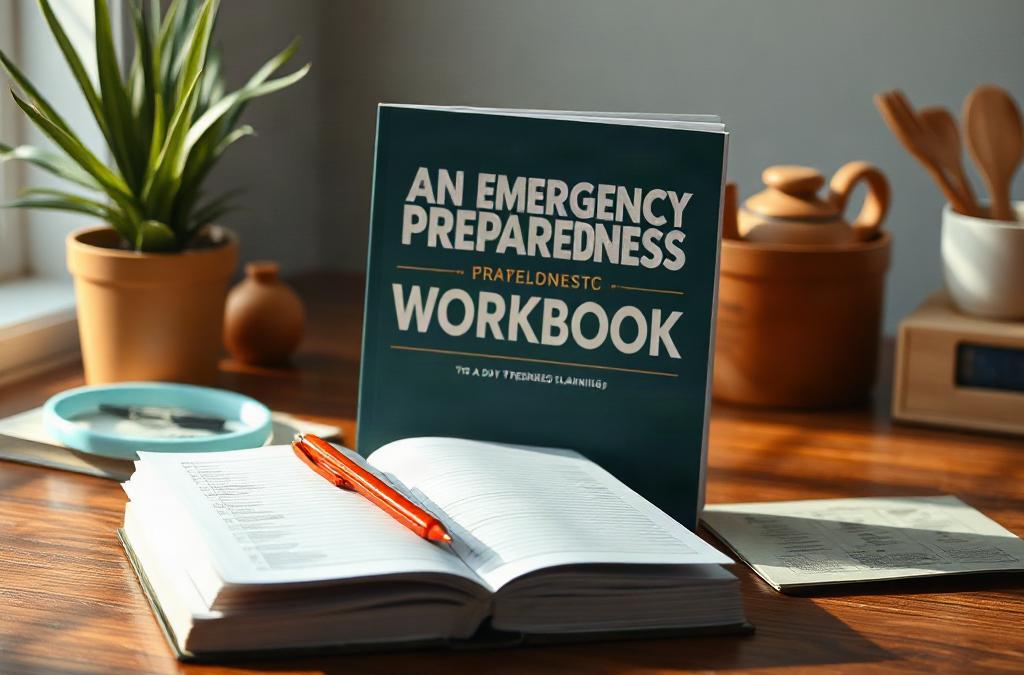
A common failure is copying a template without translating it into household assignments. “Someone will gather the documents” is weaker than naming a person, location, backup person, and deadline. Use An emergency preparedness workbook for household planning as a living record: write in plain language, leave space for changes, and mark information that must be verified locally.
Document Communication, Evacuation, and Shelter Choices
Communication and movement decisions should be written as alternatives rather than a single ideal scenario. A household may need to shelter at home, leave quickly, or separate temporarily because work and school schedules do not align. The workbook should state what triggers each option and where people go next.
List at least two meeting places: one nearby for leaving the building or neighborhood and another outside the immediate area if access is restricted. Add addresses, landmarks, accessibility notes, parking limitations, and the person responsible for confirming arrival. A map or printed directions can be useful when battery power, internet access, or navigation services are unavailable. Do not assume the route used every day will remain open; identify an alternate route and the transportation required for each household member.
Communication instructions should include a short message format. A practical entry might specify the sender’s name, location, safety status, intended destination, and next check-in time. Record phone numbers, school or workplace contacts, and any local alert channels the household actually uses. Printed information matters because a phone may be lost, uncharged, damaged, or inaccessible to a child who needs to make contact.
Evacuation planning also has a timing tradeoff. Leaving early may reduce exposure to congestion and changing conditions, while waiting for more information may be appropriate when officials have not advised departure and the hazard is uncertain. The workbook should not invent its own authority; it should tell readers where official instructions will be checked and which household member monitors them. For a wildfire-prone area, for example, the plan may distinguish between preparing vehicles, moving pets, and departing when local authorities issue an evacuation notice.
The common mistake is choosing a meeting place that is familiar but operationally poor. A busy shopping center may close, become inaccessible, or lack a safe place to wait. Prefer locations with clear landmarks and a realistic way for children, older adults, people with disabilities, and pets to reach them. Connect these details with An emergency preparedness workbook for household planning, then test the plan with a short walk-through rather than assuming that written instructions are self-explanatory.
Turn Supplies and Medical Needs Into Trackable Tasks
Inventory pages are most useful when they connect supplies to people, conditions, and replenishment dates. A list that says “food” or “first-aid items” does not show whether the household can actually use what is stored. Record quantities, storage location, expiration or replacement dates, special preparation requirements, and the person responsible for checking the item.
Separate supplies by function. Drinking water, shelf-stable food, sanitation items, lighting, batteries, communication equipment, basic tools, first-aid materials, clothing, and document copies may be stored in different places. A home kit can be difficult to move, while a smaller grab-and-go bag should be light enough for the person carrying it. Keeping both options may be more practical than forcing every need into one container.
Food planning requires more than selecting products with long shelf lives. Include foods household members already eat, manual-open packaging where possible, and items that match allergies, infant feeding needs, or medical restrictions. Note whether cooking, refrigeration, or added water is required. A supply may appear adequate on paper but fail during a power outage if it depends on an appliance or fuel source that is unavailable.
Medical information deserves its own protected page. Record prescription names, dosing instructions as provided by the prescriber or label, pharmacy contact details, equipment needs, allergies, and insurance or care information that may be needed. Do not treat the workbook as a substitute for professional medical advice or assume that stored medication can be used indefinitely. Ask a pharmacist or clinician about appropriate refill planning and storage questions, especially when temperature or access is a concern.
Use a simple review table with four columns: item, location, condition, and next action. “Flashlight—hall closet—works—replace batteries in October” is more useful than “flashlight.” A common failure is hiding all supplies in a single inaccessible place. Water and heavier containers may be impossible for some household members to move, while critical documents stored in a locked room may not be available during an evacuation. Place items according to function and access, then use An emergency preparedness workbook for household planning to assign maintenance rather than relying on memory.
Test, Update, and Use the Workbook Under Pressure
A workbook becomes reliable when the household rehearses its decisions. Testing exposes assumptions that a written plan can conceal: a child may not know the meeting point, a pet carrier may be difficult to reach, a backup route may require a bridge, or a paper contact list may contain an old number.
Run a short, low-risk exercise rather than staging a dramatic event. Ask each person to locate the workbook, identify the nearest exit, find the communication page, and explain what they would take first. Then test one scenario, such as a nighttime power outage or a school closure that separates household members. Record the time required, points of confusion, missing items, and instructions nobody understood.
Review results by priority. A failed communication number and an inaccessible medication may deserve attention before adding another type of snack to the supply shelf. A plan is working when people can state their next action without searching through several pages. It is failing when responsibilities are vague, information conflicts, or the household depends on one person who may not be present.
Set review triggers instead of relying only on an annual date. Update the workbook after moving, changing jobs or schools, adding a pet, beginning a new treatment, replacing a vehicle, experiencing a local hazard, or changing household composition. A seasonal check can cover batteries, clothing, heating or cooling needs, food rotation, and route conditions. Keep a current digital copy if practical, but retain a printed version where it can be reached without internet access.
Privacy needs attention as well. The workbook may contain medical, contact, access, and identity information. Store it so household members can reach it while limiting unnecessary exposure, and avoid placing sensitive details in an openly visible vehicle. The final mistake is treating completion as success. A filled workbook that has never been discussed is less useful than a shorter plan understood by everyone. Schedule a brief review, make one correction, and repeat until the instructions fit the household’s actual abilities and constraints.
Frequently Asked Questions
What should an emergency preparedness workbook contain first?
Begin with household contacts, medical and mobility needs, meeting places, evacuation routes, communication steps, and assigned responsibilities. Supplies can then be matched to those documented needs.
Should the workbook be digital or printed?
Use both when practical. A digital copy is easy to update, while a printed copy remains available during power, internet, device, or account-access problems.
How often should household planning information be reviewed?
Review it on a regular schedule and after changes such as a move, new medication, altered work or school routines, a new pet, or a major equipment purchase.
How can a household test its plan without creating unnecessary risk?
Conduct a short walk-through: locate the workbook, identify exits, send a practice check-in, find essential supplies, and discuss one realistic outage or evacuation scenario.
What is a common mistake in household preparedness workbooks?
Leaving responsibilities vague is a frequent problem. Name a primary and backup person for key tasks, and verify that the assigned person can realistically perform them.
Conclusion
A household workbook earns its place when it reduces hesitation during a disruption. Give priority to information that changes immediate decisions: who needs help, where people meet, how they communicate, which route they use, and what medical or mobility constraints must be addressed. Add supplies as accountable tasks with locations, condition checks, and replacement dates rather than as an undated shopping list. Keep the document accessible, protect sensitive information, and review it whenever household circumstances change. The next useful action is small but specific: gather the household’s contacts and needs, assign one responsibility to each capable person, and run a short walk-through. Any confusion found during that exercise is a practical correction to make before an emergency exposes it.
Useful emergency preparedness images show a decision, location, sequence, or responsibility clearly enough to guide someone who has little time to read. A photograph of a packed bag may be attractive, but it does not tell a household where the bag is stored, which items are for infants, or what should be replaced after use. Strong visuals connect an action to a real household detail.
For household planning, the most valuable image types are labeled floor plans, evacuation maps, supply diagrams, communication cards, utility shutoff illustrations, and short step sequences. Each serves a different purpose. A floor plan helps people leave safely; a supply diagram reduces searching; a communication card preserves important numbers when phones or internet service are unavailable. Combining all of these into one crowded graphic usually weakens the result.
Use Emergency preparedness images for household planning as working documents rather than decoration. A visual is successful when a visitor, child old enough to follow instructions, or substitute caregiver can identify the next action without asking the person who normally manages the household.
Common failures are easy to spot. Tiny labels disappear when an image is printed, color coding fails for people with color-vision differences, and generic disaster photographs create a false sense of completion. A better approach uses large text, strong contrast, plain symbols, and short captions such as “Go-bag closet,” “Outdoor meeting point,” or “Turn off water here.” Keep decorative imagery separate from operational information so the urgent parts remain visible.
Building a Household Map That Works Under Stress
A household emergency map should show the routes, hazards, and meeting points that matter in the actual home. Begin with a simple outline of each occupied level, then mark primary and alternate exits, stairways, fire extinguishers, first-aid supplies, emergency bags, utility controls, and safe outdoor meeting locations. The map does not need architectural precision; it needs accurate orientation and readable labels.
Place the map where people naturally pause, such as near an entryway, on the refrigerator, or beside a household information folder. A second copy may belong near sleeping areas if nighttime evacuation is a concern. For apartments, include the building exit route and avoid assuming that an elevator will be available. For homes with more than one floor, show how a person with limited mobility could reach assistance or an agreed waiting location.
Maps work because they reduce the mental effort of reconstructing space during smoke, darkness, noise, or confusion. A person who normally leaves through the front door may need another route if a fire, fallen tree, or blocked hallway changes the familiar path. Marking an alternate route makes that possibility visible before it becomes urgent.
Do not copy a generic floor-plan template without testing it. Walk the route with the actual household, including children, older adults, pets, and anyone who uses mobility equipment. Notice locked gates, clutter, high thresholds, poor lighting, and doors that require special keys. Compare a detailed digital map with a simplified printed version: the digital file is easier to edit, while the paper copy remains available during a power or network outage. Use both when practical.
A compact map review can ask:
Can a person identify two exits from the main living and sleeping areas?
Are meeting places labeled with a specific location rather than “outside”?
Can someone find the supply kit and utility controls without a verbal explanation?
Are symbols and labels readable in grayscale and low light?
Turning Supply Photos Into Usable Checklists
Supply images are most effective when they support prioritization instead of encouraging random accumulation. Photographing the actual emergency bin, cabinet, or go-bag lets household members recognize what they are looking for and where it belongs. Add numbered labels or a small legend so the image answers practical questions: Which container holds medications? Where are batteries stored? Which items need rotation?
A useful visual checklist separates immediate-use items from longer-term supplies. Immediate-use items might include a flashlight, basic first aid, essential medications, copies of key documents, water, and communication equipment. Longer-term storage may include additional food, sanitation supplies, cleaning materials, backup lighting, and seasonal clothing. The distinction prevents a household from treating a large pantry as if it were ready to carry during an evacuation.
Consider the difference between a staged photograph and a labeled inventory. A staged photograph may show attractive containers and many products, but it can hide expiration dates, quantities, or missing pieces. A labeled inventory image can show the container, location, replacement date, and responsible person. The second format is less polished but more useful.
Build the image around actual constraints. A household with pets needs visible leashes, carriers, food, and vaccination records. Someone with diabetes, hearing loss, respiratory equipment, or refrigerated medication may need a specific storage and power plan, but medical decisions should follow advice from the person’s clinician or pharmacist. Do not assume that one universal kit meets every need.
Use a short priority system rather than a long unranked list:
Leave or shelter safely: lighting, communication, essential medication access, and route information.
Maintain basic needs: water, food suited to the household, sanitation, warmth, and infant or pet supplies.
Restore routine: chargers, documents, tools, replacement batteries, and items for extended disruption.
Label the date of the last review on the image or its companion checklist. A photograph becomes misleading when the pictured batteries are gone, the kit has moved, or food no longer matches allergies and dietary requirements. Link Emergency preparedness images for household planning to a simple inventory process so the visual reflects what is truly available.
Designing Visuals for Different Hazards and Household Needs
Emergency visuals should reflect the hazards a household may actually face, because the correct action differs by event. A wildfire evacuation image may emphasize route choices, vehicle readiness, and meeting points. A severe storm image may emphasize shelter location, weather alerts, lighting, and staying away from windows. A flood visual may need higher-ground routes and warnings about driving through moving water. One generic “disaster plan” graphic cannot communicate all of these decisions accurately.
Separate shared actions from hazard-specific actions. A shared communication card can list out-of-area contacts, meeting locations, and emergency numbers. A hazard card can show the shelter room, evacuation direction, or the local warning source. Keeping these components separate makes updates easier when official instructions change or when the household moves.
Images also need to represent the people expected to use them. Large type, plain language, high contrast, and numbered steps can assist children, older adults, visitors, and people who process information more slowly under pressure. Do not rely on color alone to indicate danger or priority. Pair red, yellow, or green with words, patterns, or symbols. Avoid illustrations that suggest unsafe behavior, such as standing near a damaged utility line or returning to a building before it is declared safe by appropriate authorities.
For example, a household near a flood-prone road might create one image showing the route to higher ground and a second showing the supplies to take if leaving quickly. A family in an apartment may need a building exit map rather than a suburban driveway diagram. A rural household may need to show alternate roads because a single route can be blocked. These differences are not cosmetic; they change what the visual must communicate.
Use official local alerts and emergency-management information for hazard-specific instructions. An attractive homemade map should not override an evacuation order, shelter directive, or utility warning. The visual supports recall and coordination, while current authorities provide changing situational information.
Reviewing, Printing, and Updating the Visual Plan
Review turns a collection of images into a functioning household system. Schedule a short walkthrough at least when the household moves, changes sleeping arrangements, adds a pet, changes medication needs, or relocates supplies. Seasonal checks are useful for batteries, clothing, food, heating equipment, and weather-specific items.
Test the visuals instead of merely asking whether they look clear. Hand the map to someone who did not create it and ask that person to locate the emergency bag, identify two exits, and point to the meeting place. If the person needs an explanation, the image needs revision. Test a printed copy in grayscale and at its intended size. A graphic that works on a bright phone screen may fail when printed on ordinary paper.
Keep an editable master file and a small number of printed copies. Store paper versions in more than one accessible location, protected from moisture but not locked inside a container nobody can open quickly. A digital copy can be useful for travel or remote family members, but it should not be the only version. Phones lose power, passwords are forgotten, and cellular networks may be congested.
Use a change log or revision date. Check names, phone numbers, addresses, meeting locations, supply quantities, and route assumptions. Remove obsolete versions from visible locations so household members do not choose between conflicting instructions. A simple annual review is better than an elaborate design that no one maintains.
Finish by practicing one small scenario. Ask each person to find the image, name the first action, and identify who handles any special responsibility. If people disagree about the route or cannot locate an item, treat that as useful evidence rather than a failure. Update the graphic, explain the change, and practice again. The purpose of Emergency preparedness images for household planning is dependable shared understanding, not visual perfection.
Frequently Asked Questions
What should an emergency household map include?
Show primary and alternate exits, stairways, meeting points, emergency supplies, utility controls, and hazards specific to the home. Use labels and symbols that remain readable in print.
Are stock emergency images useful for household planning?
They can explain a general concept, but they cannot replace a map or inventory based on the household’s actual rooms, routes, equipment, pets, and accessibility needs.
Should emergency planning visuals be printed?
Yes. Printed copies remain available during power, device, or network failures. Keep a digital master for editing, but test printed versions for size, contrast, and accuracy.
How often should household preparedness images be updated?
Review them after a move, household change, route change, or supply relocation, and consider a seasonal check for food, batteries, clothing, and weather-related equipment.
How can images work for people with accessibility needs?
Use large type, high contrast, plain language, and more than color to convey meaning. Test the plan with the person who will use it and adapt responsibilities to actual capabilities.
Further Reading
Authoritative Sources
Ready.gov Preparedness Guidance ready.gov
Official household preparedness guidance, checklists, alerts, and emergency planning resources
American Red Cross Emergency Preparedness redcross.org
Practical emergency preparation, safety, and supply guidance for households
Conclusion
Effective emergency preparedness images show the household’s real decisions: where to go, what to take, who handles each responsibility, and how to find essential supplies. Begin with a readable home map and a prioritized inventory, then add hazard-specific routes and communication information. Print the working version, place it where people can reach it, and test it with someone who did not design it. Replace decorative graphics that do not guide action, and never let a homemade visual conflict with current instructions from local emergency authorities. A dated review, a short walkthrough, and clear labels will usually provide more value than a complex poster. The next step is to photograph or draw the actual supply location and exits, then revise the image until another household member can use it without explanation.
The most useful earthquake kit is not necessarily the largest one. Its value depends on whether a person can reach it, use it without electricity, and rely on the contents during the first hours after shaking. A sensible ranking considers four questions: Does the item protect life or prevent injury? Is it needed when utilities fail? Can it solve a problem without outside assistance? Will it remain usable after being stored for months?
That approach places immediate safety supplies ahead of convenience items. A flashlight belongs near the top because broken glass, fallen objects, and power outages can make movement dangerous. Water follows closely because a household may lose access to running water or discover that local authorities have issued a water-use warning. Food matters, but a sealed snack is less urgent than the ability to see, move safely, and treat a minor wound.
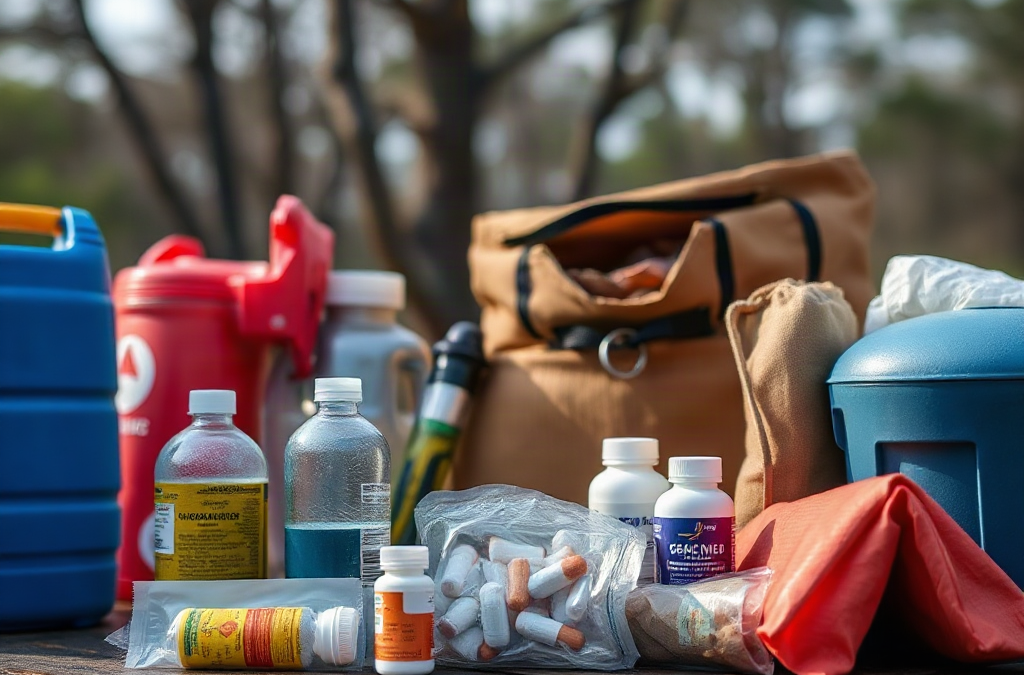
Use the Earthquake preparedness kit essentials by priority as a staged purchasing plan rather than a single shopping trip. Someone with limited funds can buy lighting, footwear, water storage, and basic medical supplies first, then add food and specialty items. Someone preparing a large home should distribute supplies in more than one location so one blocked room does not eliminate the entire cache.
A common mistake is buying a prepacked emergency bag and assuming it covers household needs. Generic kits may contain useful small tools but too little water, unsuitable food, no prescription medication, or no supplies for children and pets. Treat any commercial kit as a starting container. Check every item against the people, building, climate, and likely access problems in your own home.
Priority One: Immediate Safety and Water
Immediate safety supplies should make it possible to avoid injury, see clearly, signal for help, and obtain safe drinking water. Keep sturdy shoes and work gloves close to each bed, not only in a garage or basement. After an earthquake, bare feet can encounter broken glass, nails, or damaged flooring before anyone reaches the main storage area. A flashlight with spare batteries is more useful than a candle in a room with leaking gas or spilled flammable liquids.
A compact first-aid kit can address cuts, blisters, minor burns, and routine needs, but it is not a substitute for emergency medical care. Include wound dressings, adhesive tape, antiseptic supplies, disposable gloves, scissors, and any regularly used over-the-counter items that household members can safely take. Store personal prescriptions according to medical guidance and rotate them before expiration rather than placing an unreliable supply in the kit.
Water requires deliberate planning. Store commercially packaged water or use clean, food-grade containers maintained according to public-health guidance. Water is heavy, so distribute it where people can reach it without lifting an unsafe load. A filter or purification method may supplement stored water, but it should not be treated as an automatic replacement for a dependable initial supply; filters vary in what they remove, and purification steps may require time or fuel.
Consider a nighttime scenario: shaking occurs while the household is asleep, the power fails, and a hallway contains fallen objects. Shoes, gloves, a flashlight, and a whistle beside the bed solve immediate access problems before anyone opens a larger container. By contrast, a well-organized bin in a locked shed may be useless if the family cannot safely cross the home or open the damaged door.
Keep a flashlight, spare batteries, shoes, gloves, and a whistle in bedside locations.
Store drinking water in accessible places and inspect containers for leaks or damage.
Add a manual can opener if any food requires cans.
Include a battery or hand-crank radio if local alerts may be unavailable through normal internet access.
Do not use open flames as the default lighting choice. Candles can create an added fire risk after structural damage or a gas leak. Do not enter visibly damaged buildings merely to retrieve supplies; personal safety and official instructions take precedence over the contents of a kit.
Priority Two: Food, Medical Care, and Sanitation
Once immediate hazards are covered, add food that can be eaten with little preparation and does not depend on refrigeration. Choose familiar shelf-stable items such as ready-to-eat canned foods, nut or seed products when appropriate, crackers, dried fruit, shelf-stable milk, and individually packaged meals. Balance calories with storage life, dietary restrictions, and the ability to open or chew the food. A box of dry ingredients may last a long time but offers little value if it needs cooking water, electricity, or a working stove.
Food selection involves a tradeoff between compactness and household suitability. Energy bars are easy to distribute but may be unsuitable for allergies, young children, or people who dislike their texture. Canned meals provide variety and moisture but add weight and require a can opener. Rotate items into ordinary meals before their quality declines, then replace them with fresh stock. Mark expiration or best-by dates where they can be seen without emptying the container.
Medical planning should go beyond a generic first-aid pouch. Make a written list of prescriptions, allergies, medical conditions, emergency contacts, and essential equipment instructions. People who use contact lenses, hearing aids, inhalers, glucose supplies, mobility devices, or other routine equipment need a way to protect and maintain those items. Ask a clinician or pharmacist about storage and backup options for medication that requires temperature control.
Sanitation becomes a practical health concern when plumbing is unavailable. Pack toilet bags or liners, toilet paper, hand sanitizer, soap, wet wipes, menstrual products, diapers, disposable gloves, and heavy-duty trash bags. Separate clean supplies from waste-handling items to reduce contamination. A sealed bucket may provide a temporary toilet option, but local public-health instructions should guide disposal because conditions differ by community and building.
One weak assumption is that food and water alone make a kit complete. A family may have enough calories but no way to manage waste, clean hands, or open packaging. Another is overbuying specialized freeze-dried meals while neglecting ordinary foods that children will actually eat. Use a short inventory review: count people, identify dietary needs, check preparation requirements, and test at least one item before storing a large quantity.
Priority Three: Communication, Shelter, and Special Needs
Communication and shelter supplies become more valuable when roads are blocked, mobile networks are congested, or family members are separated. Keep a battery-powered or hand-crank radio, spare batteries in a protected container, charging cables, a power bank, and a printed contact list. Write down an out-of-area contact and meeting locations because phone numbers stored only in a device may be inaccessible if the battery is depleted.
Do not assume a power bank solves every communication problem. It needs to be charged, cables must match household devices, and cellular service may be intermittent. A radio can provide local instructions but cannot send a message. These tools work best as a layered arrangement: a written plan, multiple communication methods, and a household rule to avoid unnecessary calls when networks are overloaded.
Shelter items should reflect the season and the location of the kit. Blankets, warm layers, rain protection, sturdy clothing, masks for dust, and closed-toe footwear can make a temporary evacuation more tolerable. In hot climates, add sun protection and appropriate hydration planning; in cold climates, prioritize insulation and dry clothing. A tent may help some households, but it is bulky and may be less useful than warm bedding if the family expects to shelter indoors.
Special-needs planning changes the priority order. Infants may need formula, bottles, diapers, and safe preparation supplies. Pets need food, water, carriers or leashes, waste bags, and copies of vaccination records. Older adults may need hearing-aid batteries, glasses, mobility support, and easy-open packaging. A person with limited mobility may need a smaller supply cache at reachable height rather than a heavy container on a high shelf.
Store copies of identification, insurance information, medication lists, and key contacts in a waterproof sleeve, while protecting sensitive information from unnecessary exposure. Include basic cash in small denominations only if it is safe and appropriate for your circumstances. The goal is not to predict every disruption; it is to remove predictable obstacles when normal systems are unavailable.
Build, Store, and Recheck the Kit
Build the kit in layers so the first purchases address the highest consequences. A compact household checklist can follow this order: immediate safety, water, medical supplies, sanitation, ready-to-eat food, communication, shelter, and personal or comfort items. The ranking is flexible. A person dependent on refrigerated medication may place temperature-management planning ahead of some general supplies, while a household in a cold region may move warm clothing higher.
Use durable, clearly labeled containers that can be opened without tools. Keep one small grab-and-go bag in an accessible location and a larger reserve where it is unlikely to be crushed, locked, or exposed to moisture. Avoid placing all supplies beneath heavy storage, near a water heater, or behind a door that could jam. A distributed arrangement is less tidy than one large tote, but it reduces the risk of total loss.
Test the system rather than merely inspecting it. Confirm that flashlights work, batteries have not leaked, food can be opened, radio controls are understood, and household members know where supplies are located. Practice turning off utilities only if household members can do so safely and local guidance supports the action; never restore gas service without qualified direction. Check water containers, medication dates, clothing sizes, pet supplies, and contact information on a schedule tied to seasonal changes or household routines.
The most common failure is silent drift: children outgrow clothing, batteries expire, prescriptions change, and a once-accessible storage area becomes crowded. A short review every few months is more realistic than an elaborate annual overhaul that never happens. After an earthquake warning, nearby construction, a move, or a change in household membership, revisit both the contents and the storage locations.
Use the priority list to make the next purchase decision concrete. If the household lacks bedside lighting and safe footwear, buy those before comfort items. If immediate safety is covered but water is scarce, improve storage next. This sequence turns preparedness into a series of manageable risk reductions rather than an all-or-nothing project.
For current recommendations, compare your household kit with guidance from your national or local emergency-management agency, public-health department, and recognized earthquake-safety organizations. Local authorities can provide the most relevant information about evacuation sites, water advisories, utility procedures, and disposal requirements after an earthquake.
Frequently Asked Questions
What should go in an earthquake kit first?
Start with safe lighting, sturdy shoes, gloves, a whistle, water, and basic first-aid supplies. These items address immediate hazards and access problems before food and comfort supplies.
How much food should an earthquake kit contain?
Store enough familiar, shelf-stable food for the period your household and local authorities consider realistic, while accounting for water, allergies, preparation needs, and a manual can opener.
Should an earthquake kit include a water filter?
A filter can supplement stored water, but it should not replace a dependable initial supply. Check exactly what the filter removes and whether it needs electricity, pressure, chemicals, or lengthy treatment.
Where should earthquake supplies be stored?
Keep small safety supplies beside beds and place larger reserves in accessible, dry locations away from heavy objects, heat, and doors that could become blocked.
How often should an earthquake kit be checked?
Review it every few months and whenever household needs change. Replace damaged water containers, expired or unsuitable food, depleted batteries, outgrown clothing, and outdated medication information.
Conclusion
A useful earthquake kit is a ranked system, not a collection of emergency products. Put immediate safety within reach first: lighting, footwear, gloves, signaling equipment, water, and basic medical supplies. Add food and sanitation items that work without refrigeration, electricity, or complicated preparation, then adapt communication, shelter, medication, infant, pet, and mobility supplies to the people who depend on them. Storage location matters as much as the shopping list; a blocked or inaccessible container cannot support recovery. Test the contents, rotate consumables, and revise the arrangement when seasons or household needs change. Making the next highest-priority improvement today is more reliable than waiting to assemble a perfect kit all at once.