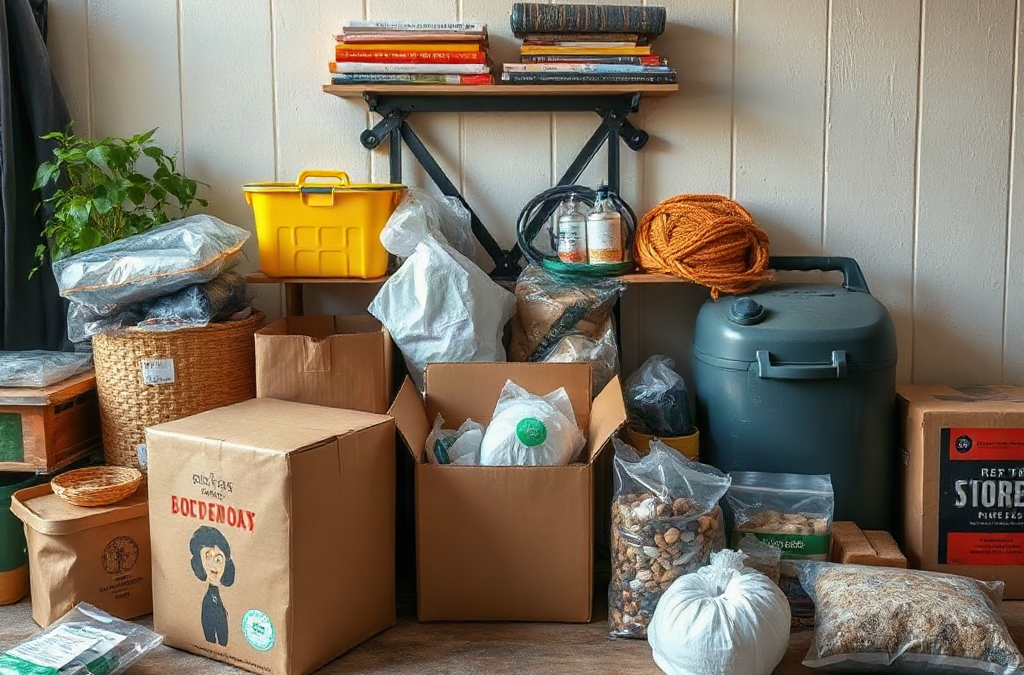
Free supplies are worth accepting when their condition, purpose, and history can be reasonably verified. The safest no-cost additions are usually ordinary items with simple failure modes: unopened shelf-stable food, clean food-grade containers, blankets, manual can openers, paper maps, basic hygiene products, and working flashlights. These items do not become safe merely because they cost nothing, so inspect them as carefully as something purchased at a store.
A useful distinction is the difference between a low-consequence convenience and a safety-critical tool. A donated plastic tote with a cracked lid may still hold towels, but a damaged water container can leak or introduce contamination. A spare cotton shirt can serve as clothing or a dust cover, while an unknown respirator, expired medication, or altered electrical cord should not be treated as dependable protective equipment. Free prepping supplies sourced without unsafe substitutions depend on matching the item to a task it can actually perform.
Prioritize supplies that are identifiable and inspectable:
Factory-sealed food and drinks within their labeled dates and stored in reasonable conditions.
Clean, food-grade containers with intact interiors, lids, and threads.
Unused soap, toilet paper, trash bags, menstrual products, and other sealed hygiene goods.
Working flashlights, lanterns, radios, and batteries that fit the device and show no leakage.
Blankets, sturdy clothing, storage bins, paper supplies, and hand tools with no obvious damage.
The safer choice may be to decline an item even when another person calls it useful. Unknown powders, unlabeled liquids, recalled baby products, moldy textiles, badly corroded batteries, and opened sterile medical supplies introduce uncertainty that is difficult to remove. A free object saves money only if it does not create a health hazard, damage another item, or fail at the moment it is needed. Treat uncertainty as a cost, not as a bargain.
Where to Find Useful Items Without Buying Them
Reliable no-cost sourcing usually comes from organized exchanges rather than random scavenging. Local mutual-aid groups, neighborhood sharing networks, community centers, food pantries, school surplus programs, workplace safety closets, and library lending programs may offer supplies or point residents toward them. Disaster agencies and local governments sometimes distribute water, information materials, sanitation goods, or other assistance during specific events. Availability varies, so confirm eligibility, collection times, storage rules, and quantity limits directly with the organization.
Reuse within your own home is often the most controllable source. Retired backpacks can hold evacuation documents, clean jars can store dry goods if they are appropriate for food contact, and sturdy boxes can organize supplies off the floor. Reuse works best when the original function is close to the new one. A food container reused for food is easier to assess than a container that previously held automotive fluid. A clean towel can support hygiene, but it is not a substitute for a sterile dressing.
Community exchanges require more screening than household reuse because the item’s history may be incomplete. Ask specific questions rather than relying on broad assurances:
What was the item used for, and how was it stored?
Is the package sealed, labeled, and within its usable date?
Does the item have a model number, recall history, or manufacturer instructions?
Can it be inspected or tested before acceptance?
For example, a community giveaway of bottled water may be useful if cases are sealed and have been stored away from heat and chemicals. Loose bottles in a garage with unknown exposure deserve more caution. A donated camp stove may be valuable if its fuel connection, hose, controls, and instructions are present, but a missing regulator is not a reason to improvise one. The less information available about a device, the more appropriate it is to choose a simpler, lower-risk item instead.
Use free prepping supplies sourced without unsafe substitutions as a sourcing standard, not a promise that every community offer is suitable. A polite refusal protects the usefulness of the rest of the collection.
How to Screen Donated and Reused Supplies
Screen each item in four stages: identify it, inspect it, test it, and assign it a clear use. Identification means locating the label, material, size, expiration date, model information, or instructions. Inspection looks for cracks, swelling, leaks, corrosion, contamination, missing parts, frayed cords, and evidence of heat or moisture damage. Testing should be limited to normal operation and should never involve bypassing a safety feature or combining parts that were not designed to work together.
Food and water storage need special attention because contamination may not be visible. Reject cans that are leaking, bulging, deeply rusted at seams, or severely dented near the lid. Do not use a container that previously held chemicals for drinking water, even if it has been washed. Glass jars can be practical for dry foods, but they are breakable and may be a poor choice for transport. Clear labeling and a protected storage location reduce confusion when several people are using the supply.
Electrical and fuel-powered devices deserve a higher threshold. Examine battery compartments for leakage, confirm that replacement batteries are the correct type, and check cords for cuts or exposed conductors. For fuel appliances, confirm that the fuel type, connector, regulator, and ventilation requirements are known. Never test a questionable combustion device indoors. A free flashlight with a clean compartment is preferable to a powerful lantern with damaged wiring or an unknown fuel system.
Medical and protective items should not be accepted merely because they look new. Opened bandages, expired sterile products, unsealed gloves, unknown ointments, and prescription medicines may not be dependable or appropriate. A clean roll of gauze in an intact package has a different risk profile from a loose dressing in a plastic bag. When a task involves injury treatment, fire protection, electrical work, or chemical exposure, use equipment made and labeled for that task rather than a homemade substitute.
Record the result with a simple status system: accepted for direct use, accepted for low-risk backup, quarantined for more information, or rejected. This prevents a questionable item from quietly entering the main supply. If a flashlight fails during a ten-minute household test, mark it for repair or recycling rather than placing it back in the emergency drawer. Screening is successful when the collection becomes smaller but more dependable.
Building a No-Cost Supply Priority List
A practical priority list begins with immediate household functions, not an impressive inventory. Ask what must continue during a short outage or an unexpected departure: drinking, eating, sanitation, lighting, communication, warmth, and access to essential information. Free sources should fill these functions in that order. A decorative item or specialized gadget can wait while the household lacks a clean water container, soap, or a way to open food.
Use a three-column assessment: need, safe free source, and backup if unavailable. For drinking water, the free source might be a clean, labeled food-grade container; the backup could be a commercially produced container obtained later. For lighting, a working flashlight from a household drawer may be enough, while candles introduce flame risk and should not be treated as an automatic replacement. For communication, a paper list of phone numbers and addresses costs little and remains useful even if electronic devices lose power.
A compact priority order can look like this:
Water storage and safe drinking access.
Shelf-stable foods that household members can actually eat.
Soap, sanitation materials, waste bags, and personal hygiene supplies.
Lighting, spare compatible batteries, charging cables, and a manual information source.
Warmth, basic tools, documents, and mobility supplies.
Household needs change the ranking. A person with an infant may prioritize sealed feeding supplies and diapers; someone with mobility limitations may need a stable bag, seating support, or transportation coordination before adding more food. A pet household needs species-appropriate food and water containers, not human food substitutions. The goal is functional coverage, not equal quantities of every category.
Review the list after a realistic trial. During an evening without normal lighting, note what was hard to locate, what required power, and which donated items were awkward or unusable. If a free storage bin is too heavy to move when full, it may work better for stationary supplies than for evacuation. If household members cannot identify the contents quickly, add labels and group items by use. Practical testing exposes weaknesses that a visual inventory hides.
Common Substitution Mistakes and Safer Alternatives
The most dangerous substitutions replace a safety feature with a material that merely resembles the original item. A scarf is not a certified respirator, a kitchen towel is not a heat-resistant glove, and a repurposed bottle that held cleaner is not a water vessel. Similar appearance does not mean equivalent filtration, temperature resistance, chemical compatibility, or structural strength.
Another mistake is treating a missing component as optional. A stove without its correct regulator, a flashlight without a compatible battery, or a water filter without its specified cartridge may look nearly complete while being unusable or unsafe. Manufacturer instructions matter because fittings, pressure, voltage, and filtration performance are designed as systems. If the original part cannot be found, choose a simpler complete item instead of forcing a workaround.
Expiration dates also require judgment. Dates on some products relate to quality rather than an instant change in safety, but that does not justify ignoring all dates. Infant products, sterile medical supplies, medications, chemical treatments, and temperature-sensitive goods deserve particular caution. For ordinary packaged foods, inspect the seal and condition, follow storage directions, and use household judgment; do not distribute questionable food to someone with limited ability to assess it.
When deciding whether to substitute, ask three questions: Does the replacement perform the same technical function? Can its condition and compatibility be verified? What happens if it fails? If failure could cause poisoning, burns, serious injury, loss of clean water, or inability to evacuate, do not improvise. If failure only causes inconvenience, such as using a box for organization instead of transport, a carefully inspected reuse may be reasonable.
Keep questionable items separate from the dependable supply and explain the reason to anyone sharing the collection. That simple practice prevents a well-meaning person from using an unlabeled container or damaged tool under pressure. The strongest no-cost approach combines reuse, community support, and disciplined refusal. For additional planning ideas, compare your inventory with Free prepping supplies sourced without unsafe substitutions and remove anything whose safety depends on guessing.
Frequently Asked Questions
What free prepping supplies are usually safest to accept?
Sealed food, clean food-grade containers, unused hygiene products, blankets, paper information, and tested basic lighting are generally easier to evaluate than chemicals, medicines, fuel systems, or protective equipment.
Can reused containers hold drinking water?
Use only containers designed for food or water contact, with a clean interior, intact lid, and no history of chemical storage. Do not rely on washing an unknown chemical container.
Should expired donated food be kept?
Inspect the packaging, storage history, and product type. Reject leaking, bulging, badly damaged, or questionable packages, and use extra caution with products for infants or people with special dietary needs.
What items should never be improvised?
Avoid improvised substitutes for respirators, sterile medical supplies, fire protection, electrical components, fuel connections, and chemical-handling equipment because failure can cause serious harm.
How can a free item be tested safely?
Identify its intended use, inspect labels and condition, test normal operation in a controlled setting, and keep it out of the main supply if compatibility or safety remains uncertain.
Further Reading
Authoritative Sources
Ready.gov Emergency Kit ready.gov
Provides a government-maintained starting point for evaluating household supplies and adapting them to personal needs
Food Safety at Home fda.gov
Explains practical food handling and storage considerations relevant to donated and stored food
Hygiene and Handwashing cdc.gov
Offers public-health guidance for selecting and using sanitation supplies when normal services are disrupted
Conclusion
Free sourcing works best when it reduces cost without reducing confidence. Begin with water storage, food, sanitation, lighting, and communication, then accept only items with a clear purpose and inspectable condition. Household reuse and organized community exchanges are usually easier to control than anonymous donations, but every item still needs a decision about contamination, compatibility, expiration, and failure consequences.
Separate low-risk convenience items from safety-critical equipment, and never replace a certified or purpose-built component with something that merely looks similar. Test supplies before storing them, label what you keep, and remove anything that depends on guesswork. A smaller collection of verified, usable goods will serve the household better than a larger pile of uncertain substitutes.
Seasonal shortages tend to affect products with concentrated demand, limited production windows, transportation exposure, or short shelf lives. Winter storms can interrupt deliveries and increase demand for heating-related goods, while hurricane season can quickly tighten supplies of bottled water, batteries, fuel containers, and shelf-stable food. Holiday periods may strain baking ingredients, packaging, toys, and popular household goods. Seasonal illness waves can create temporary pressure on thermometers, tissues, disinfecting products, and certain over-the-counter medicines.
The practical implication is that a useful stock-up list is based on household dependence, not internet popularity. A family that cooks from dry staples may benefit from rice, beans, canned tomatoes, and cooking oil; a household with an infant, a pet, or a member who uses a particular medical product needs a different priority order. The Items to stock up on before seasonal shortages should therefore be products with predictable use, realistic storage requirements, and few acceptable substitutes.
A common mistake is waiting until a shortage is visible. Once shelves are empty, buyers often accept expensive alternatives, unfamiliar brands, or quantities they cannot store properly. A better approach is modest, repeated purchasing during ordinary shopping trips. Watch for products that are consistently used, difficult to replace, or needed on a fixed schedule. Prescription medicines require special attention because refill rules, insurance limits, and clinician guidance may affect how early they can be obtained; do not change a medication schedule simply to create a surplus.
Another weak assumption is that every seasonal disruption produces a long-term shortage. Many gaps are brief and uneven, with one store or brand affected while alternatives remain available. Buying a reasonable reserve protects against inconvenience without encouraging waste or tying up money in low-priority goods. The goal is continuity for essential routines, not an attempt to purchase an entire season at once.
Foods Worth Buying Early and Rotating
Food reserves work best when they extend ordinary meals rather than create a separate emergency diet. Shelf-stable staples such as rice, pasta, oats, flour, canned beans, canned fish, canned vegetables, fruit packed in juice, broth, cooking oil, peanut or other nut butter, and shelf-stable milk can cover different meal patterns. Choose products that match allergies, cultural preferences, cooking equipment, and water availability. A dry ingredient may be inexpensive, but it is less useful if it requires lengthy cooking when fuel or electricity is limited.
Buy foods in layers. First cover several familiar meals with ingredients already used each week. Then add foods that require little preparation, such as canned soups, ready-to-eat beans, crackers, and packaged grains. All in all, consider specialty items for dietary needs. This order protects the budget and lowers the chance of discovering that a large purchase is unpopular or difficult to prepare. For example, a household that normally eats oatmeal can rotate extra oats through breakfast, while a large container of an unfamiliar grain may remain untouched until it expires.
Rotation matters more than maximum quantity. Place newer packages behind older ones, mark open dates when useful, and inspect cans for severe dents, swelling, leakage, or rust that compromises the container. Keep dry goods sealed against moisture and pests, and store foods in a cool, dry location rather than a hot garage or damp basement. Manufacturer dates may relate to quality rather than an automatic safety deadline, but damaged packaging and poor storage still create real risks.
Bulk buying has tradeoffs. Large packages often reduce unit cost, yet they can waste money if a household cannot consume them before quality declines. Smaller packages may cost more per ounce but provide better rotation and less exposure if storage conditions are uncertain. Use the seasonal shortage supply list as a decision aid: prioritize versatile ingredients, compare usable servings rather than package size, and leave room for water, cooking fuel, and foods that require refrigeration.
High priority: foods already eaten regularly and compatible with household dietary needs.
Useful additions: low-preparation items for days when cooking time, fuel, or power is limited.
Lower priority: novelty products, fragile packages, and bulk items without a clear meal plan.
Household, Health, and Personal-Care Supplies
Nonfood supplies can become difficult to replace because people tend to buy them only when they are nearly gone. Toilet paper, tissues, soap, toothpaste, menstrual products, diapers, pet food, laundry detergent, dish soap, trash bags, and basic cleaning products deserve an early review. These items are not equally urgent: a household may find a substitute for one brand of dish soap, while a particular infant size, skin-sensitive product, or pet diet may have fewer acceptable options.
Health-related supplies need a conservative approach. Keep a working thermometer, bandages, gauze, adhesive tape, hand soap, and any routinely used over-the-counter products that are appropriate for the household. Check labels, expiration dates, storage instructions, and duplicate active ingredients in combination products. Buying multiple medicines with the same ingredient can create avoidable dosing problems, especially when different family members use products for similar symptoms. Follow package directions and ask a pharmacist or clinician when a medicine, health condition, pregnancy, or child’s age creates uncertainty.
Seasonal conditions also change which household items are useful. Before winter, inspect heating-related accessories, batteries, flashlights, cold-weather clothing, and safe alternatives for basic lighting. Before storm-prone months, check manual can openers, water containers, portable phone charging options, and supplies for pets. Before hot weather, review fans, sunscreen, insect protection, and cooling supplies. These purchases should be based on the home’s actual risks; buying equipment that cannot be safely operated or maintained is less useful than improving a simple, reliable setup.
The common failure is treating all consumables as interchangeable. Unscented soap may be a reasonable replacement for one person but unsuitable for someone with a skin sensitivity. A generic pet food may not suit an animal with dietary restrictions. A different battery size cannot replace the one required by a flashlight. Record preferred brands or specifications for products where substitution could cause a problem, then purchase those items earlier and keep a modest reserve. The household supply checklist should reflect these constraints rather than simply counting packages.
How to Set Quantities Without Overspending
Quantity decisions become clearer when they are tied to normal consumption and replenishment time. Track how much a household uses during one ordinary month, then identify products that would be difficult to replace for several weeks. A small reserve may be enough for flexible products, while a larger buffer can make sense for infant supplies, pet food, or a product with limited local availability. Avoid choosing a target number without checking storage space, cash flow, expiration dates, and realistic consumption.
A simple three-part priority system works well. First, protect continuity: list products that would disrupt eating, hygiene, health routines, caregiving, or pet care if unavailable. Second, protect flexibility: add versatile foods, basic cleaning supplies, batteries, and simple lighting. Third, add convenience items only after the first two groups are covered. This prevents a cart filled with snacks or duplicate gadgets from displacing soap, cooking staples, or needed personal-care products.
Compare the cost of holding stock with the cost of replacement. A two-pack of a frequently used product may be sensible, but a large case that occupies valuable space can force poor storage or expire unnoticed. Use a written inventory with the item, quantity on hand, purchase date, expiration or best-by date when relevant, and preferred substitute. Review it before each seasonal shopping cycle. Signs the system is working include fewer last-minute purchases, regular use of older stock, and no crowded storage area that prevents inspection.
Budget pressure calls for sequencing rather than abandoning the effort. Add one or two high-use items during routine shopping, choose store brands when quality and suitability are acceptable, and avoid buying perishable products simply because they are discounted. A sale is not a saving if the item is unwanted, unsafe for the household, or likely to expire before use. For larger households, divide purchasing across weeks and assign storage locations so the inventory remains visible.
Storage, Rotation, and Substitution Mistakes
Storage conditions determine whether a stockpile remains useful. Keep food, medicines, batteries, and cleaning products in locations that match their labels and manufacturer instructions. Separate chemicals from food and medicines, prevent children and pets from accessing hazardous products, and avoid placing heavy containers where they can fall. Temperature swings, moisture, sunlight, and pests can damage supplies even when the package appears intact.
Rotation should be routine rather than a once-a-year purge. Put recently purchased goods behind older ones, use the older item first, and replace it during normal shopping. Opened packages deserve particular attention because seals may be weaker and contamination or quality loss can occur sooner. For foods, plan occasional meals around older stock. For batteries, test devices rather than assuming every battery is ready; discard damaged or leaking batteries according to local disposal guidance.
Substitution planning is useful, but it should be specific. Pasta may replace rice in some meals, yet neither replaces a gluten-free staple for someone who needs one. A different soap may be acceptable, but a different medication or infant formula requires more caution. Write down two acceptable alternatives only where the household has already used them successfully. This reduces panic buying while avoiding the mistake of assuming every substitute is safe or practical.
One failure mode is storing supplies in a place that is technically available but operationally inaccessible. A basement shelf blocked by boxes, a garage exposed to heat, or a cupboard packed so tightly that dates cannot be checked is not dependable storage. Keep the most frequently used items at reachable height, label bins by function, and leave enough room to inspect packaging. Reassess after each season: products that remain untouched, deteriorate, or create clutter should be removed from the next buying cycle.
For food storage and household safety decisions, consult current guidance from the USDA Food Safety and Inspection Service, the U.S. Food and Drug Administration, local public health departments, and product manufacturers. Their instructions are more reliable than general storage claims when a food, medicine, chemical, or appliance has specific handling requirements.
Frequently Asked Questions
How far ahead should I buy seasonal supplies?
Begin reviewing likely needs several weeks before the season or event that increases demand. Buy gradually, giving extra lead time to products with few acceptable substitutes or unreliable local availability.
Which foods are easiest to store and rotate?
Foods your household already eats are easiest to rotate. Rice, pasta, oats, canned beans, canned vegetables, broth, cooking oil, and nut butter are useful only when they fit your meals, dietary needs, and cooking setup.
Should I buy medicine in bulk before a shortage?
Follow package directions, pharmacy policies, insurance limits, and clinician advice. Avoid duplicating active ingredients, and do not change a prescription schedule or use an unfamiliar medicine without appropriate professional guidance.
How can I stock up with limited storage space?
Prioritize compact, high-use products and avoid oversized packages that cannot be rotated. Use a written inventory, store items by function, and replace products during normal shopping instead of creating a large reserve at once.
What is the biggest stock-up mistake?
Buying large quantities without considering actual use, expiration, storage conditions, or substitutes is the most common mistake. A smaller supply of suitable products is more useful than a large reserve that becomes inaccessible or wasteful.
Conclusion
Effective seasonal stock-up decisions begin with products that protect ordinary routines: familiar foods, necessary personal-care items, household consumables, basic health supplies, and seasonal equipment suited to local conditions. Buy early enough to avoid peak demand, but keep quantities tied to consumption, storage capacity, budget, and replacement difficulty. Rotate older goods into daily use, inspect packaging, separate hazardous products, and record items that cannot be easily substituted. A practical inventory is not the largest one; it is the one that remains visible, usable, and appropriate for the people, pets, and routines it serves. Review the list before each seasonal shift, add a few priority items during normal shopping, and adjust based on what was actually used rather than what remained untouched.
A function-based supply list is organized around what you need to accomplish rather than where an item is normally sold or stored. “Water,” “food,” and “tools” are familiar categories, but they do not show whether a household can collect, treat, carry, and use water. Grouping supplies by function makes those dependencies visible.
Consider a basic lighting setup. A category list may record flashlights and lanterns, yet omit batteries, charging cables, spare power banks, mounting options, or a way to find the equipment in darkness. A function list asks a more useful question: can each person safely see, move, read, and signal during the expected interruption? That shift turns an inventory into an operational check.
The approach is especially useful when supplies serve more than one purpose. A utility knife may support food preparation, repairs, and packaging, while heavy-duty bags may support sanitation, water transport, and waste control. Category-based lists often duplicate these items in several places or hide them under an unrelated heading. A functional map shows shared equipment and makes it easier to decide where it belongs.
Use Supply lists organized by function instead of category when storage space, budget, or attention is limited. It does not require abandoning familiar categories; categories can remain useful for shopping and inventory. Function should lead the planning, while category can support purchasing and labeling afterward.
How to Build a Function-Based Supply List
Begin with the situations the supplies must support, then describe the required outcome in plain language. A short power outage, an evacuation, a minor injury, and several days at home create different functional demands. Avoid starting with a favorite product or a list copied from a container. Start with the task, duration, users, and constraints.
For each function, identify five layers: the primary item, the inputs it consumes, the accessories that make it usable, the information needed to operate it, and the replacement or maintenance requirement. Water treatment, for example, may involve a treatment method, untreated water containers, clean storage vessels, a measuring device, written instructions, and a way to clean the equipment. Omitting one layer can make the apparent solution unreliable.
A practical worksheet can use columns for function, required outcome, items, consumables, dependencies, location, and review date. The location column matters because a supply that exists but cannot be reached during a blocked doorway, nighttime search, or rushed departure is not equally useful as one stored at the point of need.
Useful functions may include:
Producing and storing safe drinking water.
Preparing food without relying on normal utilities.
Providing light, charging, and basic information access.
Managing sanitation, waste, and personal hygiene.
Handling minor injuries and protecting essential medications.
Communicating, carrying, repairing, and leaving the area safely.
These labels should remain specific enough to test. “Communication” is too broad if it does not distinguish receiving information, contacting someone, and keeping devices powered. “Shelter” may need separate checks for warmth, weather protection, privacy, and sleeping comfort. The right level of detail is the smallest set of functions that can be reviewed without confusion.
Testing Completeness Under Real Constraints
A list becomes useful when it is tested as a system rather than admired as an inventory. Choose a realistic scenario and walk through the first hour, first day, or expected duration. Ask what must happen in sequence, which item is used first, what gets consumed, and what happens if one component fails.
Imagine a household leaving after a local hazard warning. A category list may contain food, clothing, tools, and documents in separate locations. A function-based review checks whether someone can receive the warning, gather people and pets, carry water, protect documents, illuminate the route, charge a phone, and access transportation information. The result may show that the household owns enough individual items but lacks a grab-ready container, spare vehicle access, or a clear document location.
Testing also exposes weight and volume problems. A large stock of supplies may be suitable for staying home but impractical for a vehicle or rapid departure. Compare two versions of each function: a home version with greater capacity and a portable version with fewer items. A compact water container, small light, basic hygiene materials, and charging equipment may serve departure better than a full household reserve. The tradeoff is reduced duration, so the list should state what each version can realistically support.
Run a simple review in this order:
State the scenario, number of people, and expected duration.
Mark every function that must operate during the first few hours.
Trace dependencies such as fuel, batteries, water, access, instructions, and transport.
Use or inspect representative items instead of checking boxes from memory.
Record one failure point and one improvement for each function.
Signs the method is working include faster retrieval, fewer duplicate purchases, clear ownership of maintenance, and fewer items that remain unused because nobody knows their role. Signs it is failing include vague headings, supplies split across inaccessible locations, expired consumables, and equipment that depends on an input not listed anywhere. A function that cannot be demonstrated should be treated as incomplete.
Common Mistakes and Better Priorities
The most common mistake is confusing possession with capability. Owning a water filter does not prove that water can be treated; owning a radio does not prove that information can be received or understood; owning food does not prove that it can be opened, prepared, or tolerated by everyone who will eat it.
A second mistake is giving every function equal weight. Priorities should reflect consequence, frequency, and dependency. Drinking water, required medication access, sanitation, safe lighting, and communication may deserve attention before specialized tools. A rare repair task should not displace the basic items needed every day during a disruption. Limited funds are better assigned to closing a complete function than adding a second version of an incomplete one.
Another weak assumption is that one universal list fits every household. Children, older adults, pets, mobility limitations, dietary requirements, work locations, and transportation options change the functional design. A person who cannot carry a heavy container needs a different water and transport arrangement from someone who can. A household dependent on refrigerated medication needs a power and temperature plan that cannot be replaced by general first-aid supplies.
Review each function for four failure modes: missing component, wrong location, depleted input, and unfamiliar operation. Labeling bins by function can improve retrieval, but labels should not conceal dependencies. “Lighting” should point to lights, power sources, chargers, and any required adapters. Keep a small number of high-use functions together, while storing bulky reserves separately if the location is clearly marked.
Use the functional list as a decision tool during purchasing. For every proposed item, ask which function it completes, which existing item it replaces, what it consumes, and whether it adds capability or merely redundancy. Recheck the list after seasonal changes, household changes, equipment failures, or a move. A quarterly hands-on review is more informative than repeatedly editing a spreadsheet without using the supplies.
Turning the List Into an Maintainable System
A strong function-based list includes ownership and timing, not just item names. Assign someone to check batteries, replenish consumables, inspect containers, verify contact information, or confirm that instructions still match the equipment. Without an owner, maintenance becomes an assumption and small omissions accumulate.
Separate durable equipment from consumables and from documents or instructions. Durable items need inspection and occasional operation; consumables need rotation and quantity checks; documents need secure access and current information. This separation makes review faster without returning to a category-only system. It also helps identify the true cost of a function, which includes replacement parts, fuel, charging, storage, and time.
Use a priority scale such as required now, useful next, and optional later. “Required now” should mean that the function is unsafe or unusable without the item, not that the item is appealing. For example, a charging cable that matches the household’s actual phone may be more valuable than an additional device. A manual can be more useful than a specialized accessory when unfamiliar equipment is involved.
Finish by conducting a small drill that does not create risk: locate the supplies in darkness, assemble the cooking method without igniting it, pack the portable version, or explain the water process to another household member. The objective is not theatrical practice. It is finding friction while there is still time to correct it. A revised functional inventory should record what was difficult, what was missing, and what can be simplified.
For practical planning details, consult local emergency-management guidance, public-health instructions for water and sanitation, and manufacturer documentation for any stove, battery system, filter, or medical device included in the list. These sources can clarify operating limits and maintenance requirements that a general inventory cannot establish.
Frequently Asked Questions
What does a function-based supply list include?
It includes the outcome a household needs, the items that produce it, required inputs, accessories, instructions, storage location, and maintenance schedule.
Are category-based lists still useful?
Yes. Categories are useful for shopping and storage, but functions are better for checking whether the supplies work together and cover real tasks.
How many functions should a list have?
Use enough detail to test important tasks without creating dozens of vague entries. Water, food preparation, lighting, sanitation, communication, medical needs, transport, and repair are common starting points.
How can I prioritize supplies on a limited budget?
Complete high-consequence functions first, including water, required medication access, sanitation, safe lighting, and communication. Avoid buying duplicates before dependencies are covered.
How often should a functional list be reviewed?
Review it after major household or equipment changes and perform a hands-on check at least several times a year, with extra attention to batteries, fuel, medications, and other consumables.
Conclusion
Organizing supplies by function changes the central question from “What do we own?” to “What can we reliably do?” Build each function around a specific outcome, then account for inputs, accessories, instructions, storage, and maintenance. Test the list against a realistic duration and scenario, separating portable needs from home reserves where necessary. Prioritize complete, high-consequence capabilities before buying specialized or duplicate items. A short hands-on review will reveal more than a long inventory: missing batteries, inaccessible containers, unfamiliar equipment, and expired consumables become visible immediately. Keep category labels for shopping if they help, but let functional tests determine whether the system is genuinely usable.