An evacuation decision should be reassessed when a fact that influenced the original choice changes. The relevant change may be a new evacuation order, a shifting fire front, rising water, a damaged road, worsening air quality, a medical issue, a loss of power, or a new ability to leave. Begin by writing down the original reason for staying or departing. Then identify the exact new fact rather than relying on a general feeling that conditions seem different.
Separate hazard conditions from travel conditions. A wildfire may still be several miles away while smoke, falling ash, or a closed bridge makes the planned route unusable. Conversely, a brief burst of heavy rain may look alarming but have little effect on a route that remains open and elevated. The decision depends on the interaction between the threat, the location, the route, the people traveling, and the time required to reach a safer destination.
Use a short comparison rather than trying to predict the entire event:
Hazard: Is the threat moving toward the area, becoming less predictable, or producing secondary dangers?
Exposure: Would staying increase contact with smoke, heat, floodwater, contaminated air, or falling debris?
Mobility: Can everyone leave safely, including children, older adults, people with disabilities, and pets?
Time: Is there enough daylight, fuel, communication, and road capacity for the trip?
Alternatives: Is there a confirmed destination or a safer route if the original plan fails?
A common mistake is treating the original decision as a commitment that must be defended. It was based on earlier information and may no longer fit the situation. The opposite mistake is changing plans because of one unverified message. A useful reassessment requires at least one reliable update about the hazard and one direct check of the practical ability to move or shelter.
Recheck Official Information and Route Conditions
Official information should anchor the reassessment, but it does not replace local judgment about a specific street, building, or travel group. Check the emergency management agency, fire or law-enforcement authority, weather service, transportation agency, and any official alert system relevant to the event. Look for the publication time, affected boundaries, evacuation level, shelter information, and instructions for people who need assistance.
Read the actual wording carefully. An evacuation warning, recommendation, order, road closure, shelter-in-place instruction, and all-clear message do not carry the same practical meaning. A social-media post may accurately describe a nearby problem while still being too old or too incomplete to guide departure. If sources conflict, favor the newest instruction from the responsible authority and avoid taking a route based only on an unverified shortcut.
Route checking needs more than a map showing a blue or red line. Confirm bridges, low-water crossings, tunnels, fuel availability, traffic direction, roadblocks, smoke visibility, flood depth, and whether emergency officials are directing traffic. A route that is technically open may be unsuitable for a vehicle with limited clearance or for someone who cannot drive in dense smoke. If the primary route is lost, use a previously identified alternative only after checking that it is open and leads to a genuinely safer area. The related evacuation reassessment process should include destination confirmation, not just route selection.
Do not enter moving water, pass barricades, or drive toward visible flames, heavy smoke, downed wires, or debris. A delay caused by stopping to verify information is different from a delay caused by repeatedly seeking certainty while conditions deteriorate. Set a practical information limit: gather the latest official update, verify the route, communicate the plan, and then act unless a new credible instruction changes the choice.
Compare Leaving Now With Remaining Temporarily
The safest option is the one that produces the lower foreseeable exposure, not automatically the one that feels more active. Leaving can reduce exposure to a moving hazard, but departure also creates risks from congestion, poor visibility, crashes, fuel shortages, missed turns, and separation from family members. Remaining can be reasonable only if the building is suitable, official instructions support it, essential supplies and medications are available, and a usable exit remains available.
Compare both options across the same time window. Ask what the next hour may require, not just what is comfortable at this moment. If leaving now takes 45 minutes but waiting could make the trip take several hours because roads are filling or visibility is declining, the apparent inconvenience of early departure may be the safer tradeoff. If all outbound roads are closed and officials direct residents to shelter, attempting to drive may create greater danger than staying in a prepared, defensible location while monitoring instructions.
People often use the current appearance of the sky, water, or road as a substitute for hazard information. That can mislead. Floodwater may rise after rainfall upstream, and a fire may change direction with wind. A temporary lull can be a better time to leave rather than evidence that the threat has ended. Conversely, visible smoke alone does not establish that every route is unsafe; official closure information and local visibility matter.
Make the comparison concrete by recording:
the safest confirmed destination and estimated travel time;
the condition of the primary and alternate routes;
fuel, battery, medications, water, identification, and communication needs;
the person responsible for driving, navigation, and contacting relatives;
the specific condition that would make departure impossible or remaining unsafe.
For example, a household with a full tank, a reliable vehicle, and a confirmed destination may have more options than a household that needs medical transport and depends on a road already under traffic control. The comparison must account for those constraints rather than applying a universal rule. If you are still uncertain, consult the official emergency line or local authority instead of asking an unverified online group to make the decision for you.
Set the Next Review Point and Act on Clear Triggers
A reassessment is useful only if it leads to a defined next action. Once you choose to leave, shelter, or wait briefly, set a review time and identify the event that will end the waiting period. Examples include a new evacuation order, a road closure, a change in wind direction, rising water near an access road, loss of communications, worsening breathing conditions, or a transportation problem affecting someone in the group.
Waiting should never be an open-ended state. Assign one person to monitor official alerts while another prepares the vehicle, documents, medications, mobility equipment, pet carriers, and essential supplies. Keep keys, phones, chargers, and shoes accessible. If the plan is departure, place everyone in a position to move without searching through rooms or packing from scratch. If the plan is temporary shelter, move away from windows or flood-prone lower areas as appropriate, maintain ventilation decisions consistent with the hazard, and keep an exit path clear.
Use a simple decision record with four lines: current threat, confirmed route or shelter, next trigger, and deadline for review. This prevents memory from becoming the decision system during a stressful event. It also makes handoffs easier if another adult must take over. Recheck that the destination remains accepting people and that the route has not changed before starting a late departure.
Failure signs include repeatedly refreshing rumors without checking official sources, packing while the road is already becoming impassable, splitting the group without a communication plan, or assuming a phone alert will arrive in every location. Carry a written address, charger, and contact information when practical. The broader decision plan should include what happens if the car breaks down, a family member cannot travel, or the preferred shelter is full.
Do not wait for perfect certainty. Emergency decisions are made with incomplete information, so the goal is to preserve safe options, reduce avoidable exposure, and respond to authoritative changes quickly. Reassessment should make the plan more specific, not endlessly postpone action.
Frequently Asked Questions
When should an evacuation decision be reassessed?
Reassess after any new official order, route closure, hazard movement, major weather change, loss of essential services, or change in a traveler’s ability to move safely.
Should a temporary lull be treated as permission to stay?
No. A lull may provide a safer departure window, while hazards such as wind-driven fire or upstream flooding can worsen later. Check official updates and route status.
What if the original evacuation route is closed?
Do not improvise through barricades or hazardous areas. Confirm an official alternate route and destination, or follow shelter instructions if no safe route is available.
How can a household avoid waiting too long?
Set a review deadline and predefine triggers such as an evacuation order, worsening visibility, rising water, fuel concerns, or loss of communication.
Is staying ever safer than leaving?
It can be when roads are closed or hazardous and officials direct people to shelter, provided the location is suitable and the group can continue receiving instructions.
Further Reading
Authoritative Sources
Ready.gov ready.gov
Official household preparedness guidance, emergency plans, and supply checklist resources.
FEMA fema.gov
Federal emergency management information, disaster planning resources, and recovery guidance.
American Red Cross Emergency Preparedness redcross.org
Practical emergency preparation, safety, and response guidance for households.
CDC Emergency Preparedness and Response cdc.gov
Public health guidance for disasters, emergency response, and recovery conditions.
Conclusion
Changing conditions call for a fresh comparison, not automatic loyalty to the first evacuation choice. Identify what changed, verify official instructions, check both primary and alternate routes, and compare the risks of travel with the risks of remaining. Give special weight to travel time, daylight, fuel, medical needs, mobility, pets, communication, and the availability of a confirmed destination. A brief pause can be useful when it has a deadline and a clear trigger; indefinite waiting removes options as roads fill, visibility falls, or services fail. Record the current plan and the condition that will change it, then continue monitoring authoritative updates. The strongest decision is the one that preserves a realistic path to lower exposure for everyone involved.
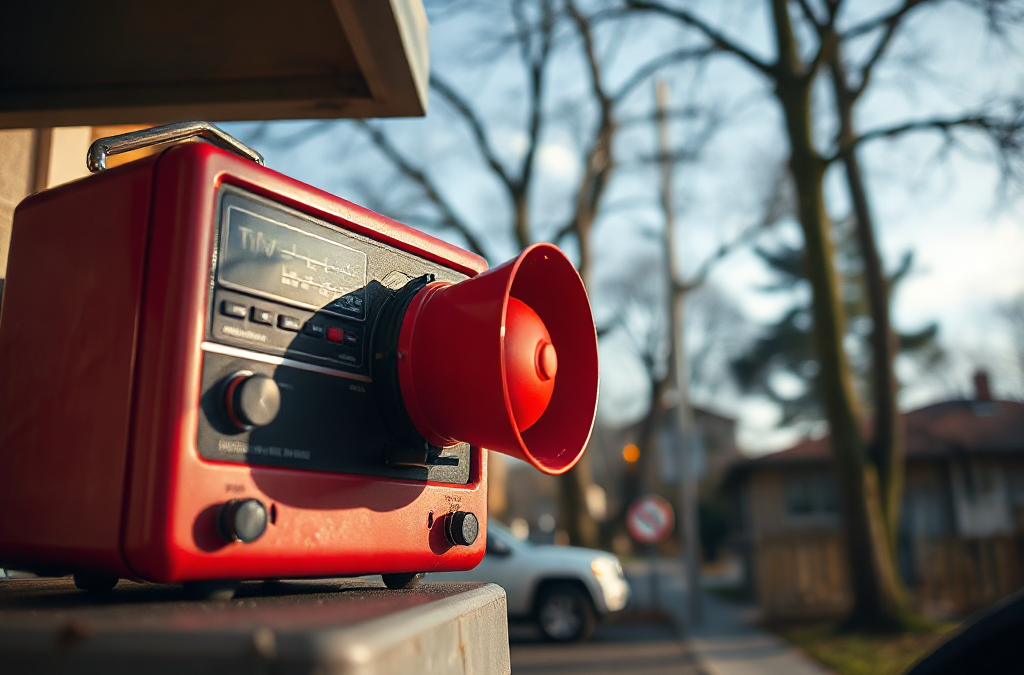
Offline emergency communication works best as a layered system rather than a single substitute for internet access. Official radio broadcasts, outdoor sirens, vehicle loudspeakers, public-address systems, printed notices, and trusted person-to-person messages each carry different amounts of information. A siren may tell you that an urgent hazard exists nearby, whereas a radio announcement may identify the affected area, protective action, shelter location, road closure, or time of the next update.
The difference matters because people often treat every signal as equally complete. A siren is designed to attract attention across a broad area, not to explain whether residents should shelter indoors, avoid a particular road, or leave immediately. Loudspeaker announcements can add words, but wind, traffic, closed windows, and building insulation may make them difficult to understand. Printed notices are slower but can preserve instructions after a broadcast has ended.
Begin by identifying the official channels used in the specific place where you live, work, or stay. Local emergency management offices, fire departments, public safety agencies, and broadcasters commonly publish information about siren meanings, designated radio stations, reception areas, and emergency meeting points. Save that information on paper rather than relying on a website that may be unavailable during a power or network outage.
A practical offline information map should record the source, coverage, detail, and likely failure point for each channel:
Radio: detailed instructions, but dependent on batteries, reception, and a functioning broadcast service.
Sirens: fast local attention, but often limited or ambiguous meaning.
Public announcements: potentially specific, but easy to miss or mishear.
Printed notices: durable and reviewable, but delayed and dependent on someone distributing them.
Contact networks: useful for reaching people who missed a broadcast, but vulnerable to rumors and individual mistakes.
Use the internal reference manual methods for receiving official alerts without internet as a planning reminder, but confirm local procedures through the responsible public agency. An offline method is only useful if the household knows what the signal means and what action follows it.
Building a Reliable Radio and Siren Routine
A battery-powered or hand-crank radio is usually the strongest household tool for receiving detailed official information without internet access. Choose a model that receives the broadcast bands used locally, then test it from the rooms where it may be needed. Reception can differ sharply between an upper floor, basement, interior room, and exterior wall. A radio that works clearly beside a window may produce static in a reinforced concrete room.
Store spare batteries separately from the radio so corrosion does not damage both supplies at once. If the device has a charging function, treat that feature as backup rather than assuming it replaces batteries. Write the relevant station frequencies, call signs, and local agency names on a card attached to the radio. During an incident, searching through stations can waste time and expose the listener to unofficial speculation.
Sirens require a different preparation method. Ask the local authority what each tone, duration, or repeated pattern means, and whether an all-clear signal is used. Some communities use sirens for multiple hazards; others reserve them for a narrower purpose. Never invent meaning from the sound alone. If the local explanation says the siren means to seek more information, do not automatically interpret it as an evacuation order.
Run a short household drill under realistic conditions. Place the radio where it is stored, use only its normal power source, and have someone read the written station card aloud. Then ask each person what they would do after hearing a siren but before receiving detailed instructions. This reveals practical failures such as dead batteries, missing glasses, an unreadable frequency card, or disagreement about where to listen.
A common mistake is testing equipment only once. Batteries discharge, knobs move, antennas break, and stations change procedures. A modest monthly check is more useful than a sophisticated device that remains untouched for years. Check the radio, spare batteries, written frequencies, flashlight, and paper instructions together. Keep the set accessible during a storm or other event; a device locked in a vehicle or buried in storage may be operational but functionally unavailable.
Using Contact Trees, Door-to-Door Messages, and Posted Notices
Person-to-person communication fills gaps that broadcasts cannot. A contact tree assigns each person a small number of neighbors, relatives, coworkers, or household members to reach through an agreed offline method. That method might be a landline call, a visit to a designated address, or a message carried by a specific runner. The arrangement should state who initiates contact, what words identify an official instruction, and where people go if they cannot reach anyone.
Contact trees are not substitutes for official sources. Their value is distribution: one person who hears a radio instruction can help someone who is elderly, hearing impaired, away from a radio, or unfamiliar with the local language. The risk is distortion. A message such as “leave the eastern zone using Route 4” can become “everyone must leave immediately” after passing through several people. Use short, exact wording and require the recipient to repeat the instruction back.
Paper notices and community message boards can provide a stable reference when people miss a moving announcement. Useful notices should show the issuing agency, date and time, affected location, action requested, and next update point. A handwritten sheet with no source or timestamp should be treated as unverified, even if it appears on an official-looking door or pole.
Door-to-door communication is particularly valuable in neighborhoods where sirens are difficult to hear indoors. It also has limits: volunteers may not reach every building, hazardous areas may be inaccessible, and a messenger may carry incomplete information. Never send an untrained person into a restricted or dangerous area merely to confirm a rumor. A safer arrangement identifies a nearby check-in point outside the hazard zone.
Prepare a paper contact card with names, addresses, landline numbers if available, meeting locations, accessibility needs, and language preferences. Keep one copy at home and another with a responsible contact. Review it after moves, job changes, or changes in household composition. The internal link manual methods for receiving official alerts without internet is most useful when paired with this local, human distribution layer.
Verifying Instructions and Acting on Incomplete Information
Offline alerts often arrive with missing context, so verification should focus on source, time, location, and requested action. A trustworthy message identifies who issued it or points back to a known official channel. It should make clear whether it applies to your area, when it was issued, and what residents should do next. If one of those elements is absent, do not fill the gap with guesswork.
Use two independent channels when the situation allows. For example, a siren can prompt you to turn on the designated radio station, while a neighbor can confirm that the sound was heard across the district. Two people repeating the same rumor are not independent confirmation if both received it from the same unknown source. A radio announcement and a posted notice from the responsible agency provide stronger corroboration.
Do not delay a clearly stated urgent protective action while seeking perfect confirmation. The sensible balance is to act on a direct official instruction and verify details that affect route, timing, or destination. If a message says to shelter indoors because of an external hazard, move inside and close openings while listening for more specific information. If it says to evacuate a named zone, follow the stated route rather than selecting a shortcut based on hearsay.
Record important updates on paper with the time, source, location, and action. Written notes prevent an early message from being confused with a later revision. They also help household members who were asleep, outside, or away from the radio. Mark canceled instructions clearly instead of crossing them out so the sequence remains understandable.
Weak assumptions create avoidable danger. Silence does not mean the hazard has ended; a broadcast transmitter, siren, or messenger may have failed. A familiar voice does not prove accuracy, and an official-sounding vehicle announcement may be hard to understand at a distance. If the signal is unclear, seek the designated official channel, move away from the suspected hazard when appropriate, and avoid spreading an unverified claim. More planning detail is available through manual methods for receiving official alerts without internet, especially when a household needs a written decision sequence.
Frequently Asked Questions
What is the most useful offline alert method at home?
A battery-powered or hand-crank radio is often the most useful because it can provide detailed instructions, but it should be paired with local siren knowledge and written agency information.
Can a siren tell me exactly what to do?
Usually not. Learn the local siren meanings, then use the designated radio station or official announcement channel for the hazard, location, and required action.
How should a neighborhood contact tree work?
Assign each person a small set of contacts, specify the initiating source and exact wording, and provide a meeting location if calls or visits fail.
How can I identify an unreliable paper notice?
Check for the issuing agency, date and time, affected area, requested action, and a way to confirm the message. Missing details make the notice unverified.
What should I do if official information is incomplete?
Follow any clear protective instruction, avoid spreading assumptions, write down the source and time, and continue monitoring the designated official channel for updates.
Further Reading
Authoritative Sources
Ready.gov ready.gov
Official household preparedness guidance, emergency plans, and supply checklist resources.
FEMA fema.gov
Federal emergency management information, disaster planning resources, and recovery guidance.
American Red Cross Emergency Preparedness redcross.org
Practical emergency preparation, safety, and response guidance for households.
CDC Emergency Preparedness and Response cdc.gov
Public health guidance for disasters, emergency response, and recovery conditions.
Conclusion
Receiving official alerts without internet access depends on preparation before the signal arrives. Keep a tested radio with spare power, record local frequencies and siren meanings, and maintain a paper contact network that can reach people who miss broadcasts. Treat each channel according to its strengths: sirens attract attention, radio supplies detail, notices preserve instructions, and personal contacts extend reach. Verification should check the source, time, location, and requested action without delaying a plainly stated urgent protective measure. Review the system periodically, replace damaged supplies, and practice locating the radio and contact card in low-light conditions. That modest routine turns disconnected devices and local relationships into a more dependable warning system when online services are unavailable.
Reducing electricity use during an outage begins with separating essential loads from convenient ones. A refrigerator, medical device, sump pump, modem, phone charger, or well pump may have a direct safety or continuity role. Lighting in every room, entertainment equipment, decorative appliances, and comfort devices usually do not. The distinction matters because backup systems have limited energy storage or generation capacity, and a small number of high-wattage appliances can consume more capacity than many low-power devices combined.
Make an inventory before the next outage if possible. Note whether each appliance is powered by the utility, a portable battery, a generator, an inverter, or a dedicated backup circuit. Check the rating plate for watts or amps; motors may draw more power briefly when starting than they use while running. A refrigerator that appears modest on its label can still cause an inverter to trip if another motor or heating element starts at the same time.
A practical first pass divides equipment into three groups:
Essential: medically necessary devices, emergency lighting, refrigeration for safety-sensitive food, communications, and equipment needed to prevent immediate property damage.
Useful but deferrable: a freezer, internet equipment, a small fan, or a laptop used for work or emergency information.
Nonessential: electric cooking appliances, laundry equipment, space heaters, gaming systems, and high-output lighting.
The common mistake is to count outlets rather than electrical demand. Ten phone chargers may use less energy than one hair dryer. Another weak assumption is that a device is harmless because it is switched off; many televisions, computers, speakers, and chargers continue drawing standby power. Unplugging those items, or switching off a power strip, preserves capacity without affecting essential service.
Use safe ways to reduce household electricity demand during outages as a household-specific plan rather than a universal appliance list. A home with a gas furnace may need only a small blower circuit, while a home using electric resistance heat may face a much larger demand problem. The equipment connected to the backup source, not the size of the home alone, determines the immediate priority.
Cut Demand Without Damaging Equipment
Load reduction is safest when it follows the equipment manufacturer’s instructions and avoids improvised electrical connections. Turn off or unplug nonessential devices before connecting a generator, inverter, or battery system. When power returns, reconnect loads gradually instead of switching on every appliance at once. This reduces the chance of a combined startup surge that causes a breaker, inverter, or generator protection system to shut down.
Heating elements deserve special attention. Electric space heaters, kettles, toaster ovens, hair dryers, irons, ovens, clothes dryers, and electric water heaters convert electricity into heat and commonly demand far more power than electronics or LED lamps. Removing one such appliance may free more capacity than turning off several rooms of lights. If cooking is necessary, choose the method that uses the available energy source safely and briefly; never use an outdoor fuel-burning appliance indoors or in an attached garage.
Motors create a different problem. Refrigerators, freezers, pumps, fans, and furnace blowers may have a starting surge. A backup source that handles the running wattage may still fail when a motor starts. Avoid running multiple motor-driven appliances at the same time, especially a refrigerator and pump on a small inverter. Let the refrigerator complete a cycle before adding another demanding load, but do not repeatedly unplug and restart it if that interferes with its normal operation.
Reducing demand does not mean repeatedly flipping breakers without knowing what they control. A breaker may supply a furnace, sump pump, or medical outlet that is not obvious from the room location. Label circuits in advance, and have a qualified electrician install transfer equipment or a properly configured interlock where a generator will connect to household wiring. Never backfeed a wall outlet with a generator cord; that can energize wiring unexpectedly and expose occupants or utility workers to lethal voltage.
Watch for signs that the arrangement is failing: warm plugs, buzzing, damaged insulation, burning odors, flickering lights, repeated overload trips, or a battery that becomes unusually hot. Stop using the affected equipment and follow its shutdown instructions. A lower load is not a substitute for ventilation, dry placement, correct extension-cord ratings, or protection from rain and flooding. Electrical conservation and electrical safety have to be managed together.
Prioritize Heating, Cooling, Food, and Water
Comfort loads can become safety loads depending on temperature, age, health, and the condition of the building. In mild weather, reducing thermostat changes and using daylight may be enough. During extreme heat or cold, preserving a safe room or supporting a medically necessary device takes priority over extending backup runtime. A household should decide where people will gather, which room can be cooled or warmed most efficiently, and which occupants need a different plan if conditions become unsafe.
Electric resistance heaters are among the hardest loads for small backup systems to support. Running one heater may consume the available capacity of a portable power station or overload a small generator. Instead of trying to heat the entire home, close unused rooms, block drafts without covering vents, wear suitable layers, and monitor vulnerable occupants. In hot weather, a small fan may use much less electricity than an air conditioner, but fans do not lower body temperature safely in every environment. If heat illness or dangerous cold develops, relocation to a functioning cooling or warming site may be safer than forcing a marginal backup system to run.
Refrigeration requires disciplined use. Keep refrigerator and freezer doors closed as much as practical, group items to reduce warm air exchange, and avoid adding warm food. A backup source may be scheduled for intermittent refrigerator operation if the appliance can start reliably and food temperatures are monitored with an appliance thermometer. That approach saves energy compared with continuous operation, but it is not a reason to guess about food safety. When temperature history is uncertain, follow recognized food-safety guidance rather than relying on smell or appearance.
Water systems can create hidden demand. A well pump, pressure booster, sewage ejector, or basement sump pump may start automatically and draw a large surge. If a pump prevents immediate flooding, it may outrank refrigeration; if it is only supporting convenience, conserve water and monitor the area instead. Do not disable a pump blindly. Understand what risk appears if it is off, and arrange a manual or alternate response before reducing its runtime.
The best priority order is specific to the household: medical needs and immediate hazards first, then communication and water, then food protection, followed by limited comfort. A family relying on a powered oxygen concentrator needs a different load plan from a household whose main concern is keeping a freezer cold. Review the plan through the lens of actual occupants, not an abstract list of appliances.
Use Backup Power Within Its Limits
Backup power should be treated as a finite budget, not as a smaller version of normal utility service. Generators are limited by output and fuel, batteries by stored watt-hours and inverter capacity, and vehicle-based systems by both battery condition and safe connection methods. Reducing household demand extends operating time only when the remaining loads stay within the system’s continuous and surge ratings.
Read the backup unit’s manual before an outage. Identify its continuous output, surge capability, receptacle limits, charging requirements, and approved extension cords. A power station may show a percentage estimate, but that display is only a planning aid; temperature, battery age, inverter efficiency, and startup surges can change actual runtime. A fuel generator may run for hours, yet fuel availability and safe refueling become constraints. Never refuel a hot generator, and never operate a fuel-burning generator, camp stove, or vehicle in a home, garage, basement, or enclosed porch.
Use one connection method at a time and keep cords protected from water, pinch points, and vehicle traffic. Extension cords should be suitable for the load and in good condition. Do not use household wiring as a distribution system unless the home has professionally installed transfer equipment. A generator connected incorrectly can send power back toward utility lines or create dangerous voltage differences inside the home.
Scheduling is often more effective than trying to power everything continuously. A refrigerator may receive priority for a planned interval, followed by a communication period for charging phones and checking alerts. A pump may be run only when its function is needed, provided that delaying it does not create flooding or sanitation problems. Keep a written log of which loads are active and when the backup source trips. The log can reveal that an overlooked appliance, rather than the expected major load, is causing failures.
Do not chase maximum runtime at the expense of warning signs. If an inverter repeatedly shuts down, a generator hunts or stalls, or cords and plugs heat up, reduce the load and investigate before restarting. Those symptoms may indicate overload, a defective appliance, poor ventilation, or a connection problem. The household electricity demand plan should include a clear stop point: if safe operation cannot be confirmed, disconnect nonessential equipment and seek another source of shelter or service.
Build a Simple Outage Load Plan
A written load plan turns rushed decisions into a repeatable sequence. List the devices that must run, their estimated wattage, the backup outlets or circuits they use, and the person responsible for checking them. Include items that start automatically, such as a sump pump or refrigerator, because unplanned cycling can change the total demand without anyone adding a new appliance.
Use this order when an outage begins:
Disconnect high-draw, nonessential appliances and switch off unnecessary room circuits.
Confirm that the backup source is outdoors or otherwise installed exactly as its instructions require, with cords and connections dry and undamaged.
Connect the highest-priority loads one at a time, allowing motors to start before adding another demanding device.
Check for heat, odor, flicker, unusual noise, or overload warnings after each change.
Reassess the plan whenever weather, medical needs, water levels, food conditions, or battery charge changes.
Keep the plan realistic. A list that assumes everyone will avoid all cooking, entertainment, and laundry for several days may fail because it ignores medication storage, infant needs, work obligations, or fatigue. A better plan identifies the few comforts that preserve safety and cooperation, such as one lamp, a small fan, or scheduled phone charging, while removing the large loads that provide little value during the outage.
Test the arrangement during a planned exercise, not for the first time in a storm. Check whether the refrigerator starts, whether the selected circuit actually powers the intended outlet, whether cords reach without unsafe routing, and whether household members understand what not to connect. Mark the main shutoff, backup outlets, and generator operating area. The safe outage electricity checklist should be updated after every real event, especially if a load unexpectedly tripped protection or a critical device lacked power.
Conservation has limits. If the home cannot maintain safe temperatures, medical equipment cannot be powered reliably, water is unavailable, or electrical faults appear, moving to an equipped location may be the prudent decision. Cutting demand works best as part of a broader outage plan that includes communication, fuel or battery charging, food decisions, and a way to obtain help.
Frequently Asked Questions
Which appliances should be turned off first during an outage?
Turn off electric heaters, ovens, dryers, irons, water heaters, and other heating elements first. They usually draw much more electricity than lights, chargers, or networking equipment.
Does unplugging devices really save backup power?
Yes, especially for electronics with standby functions. Unplug televisions, computers, speakers, chargers, and similar devices when they are not needed, or switch off their power strip.
Can a small generator power a refrigerator?
It may, if its continuous and startup ratings support the refrigerator and no incompatible loads run at the same time. Check the generator instructions and allow for motor startup demand.
Is it safe to connect a generator to a wall outlet?
No. Connecting a generator through a wall outlet can backfeed household or utility wiring. Use approved receptacles, transfer equipment, or a professionally installed interlock as applicable.
How can electricity be conserved during extreme temperatures?
Concentrate people in one suitable room, close unused areas, reduce drafts or heat gain, and power only the equipment that supports safe conditions. Relocate if temperatures become dangerous or medical needs cannot be met.
Further Reading
Authoritative Sources
Academy of Nutrition and Dietetics eatright.org
Professional nutrition guidance, healthy eating resources, and practical dietitian-reviewed advice.
U.S. Department of Agriculture usda.gov
Official food, nutrition, agriculture, and consumer guidance from the USDA.
NIH Office of Dietary Supplements ods.od.nih.gov
Research-based fact sheets on nutrients, supplements, dietary intake, and safety considerations.
International Society of Sports Nutrition sportsnutritionsociety.org
Evidence-informed sports nutrition resources and position stands for active people and athletes.
Conclusion
Lowering electrical demand during an outage is a process of ranking risks, not simply switching off random appliances. Remove high-draw heating elements and standby electronics, protect essential refrigeration and medical equipment, and account for the startup demands of motors and pumps. Keep generators outdoors, use approved connections, and treat unusual heat, odor, flickering, or repeated shutdowns as reasons to stop and reassess. A written load plan should identify priority devices, backup limits, safe connection points, and the conditions that require relocation. Test that plan before an emergency and revise it after each outage. The goal is dependable access to essential services without overloading equipment or creating electrical and carbon monoxide hazards.