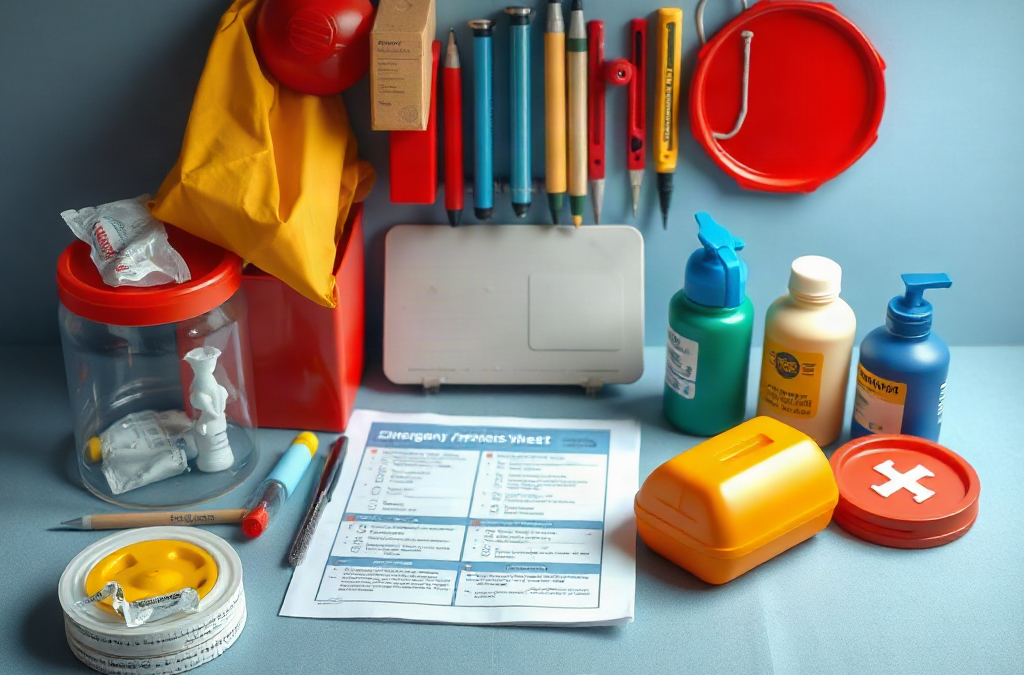
The version of the official Emergency Preparedness merit badge requirements controls the work, not the layout of a downloaded worksheet. Workbooks can be helpful organizational tools, but files found through search results may reflect an earlier requirement set, omit revisions, or use shortened wording. Obtain the current requirements from an official Scouting source and compare them line by line with the worksheet before entering answers.
Start by writing the publication or revision date on the worksheet if the document provides a place for it. Then mark each requirement according to the type of evidence it calls for. Some entries may ask for an explanation, while others involve discussion, planning, participation, inspection, teaching, or demonstration. A written paragraph cannot substitute for an action when the requirement uses an action verb such as demonstrate, show, participate, or inspect.
For example, a worksheet might offer several lines beneath a requirement involving a family emergency plan. Those lines can capture contact information and procedures, but the requirement may involve discussing or reviewing that plan with other people. The notes preserve what was decided; they do not prove that the conversation occurred. Record the date of the activity and the people involved so the counselor can distinguish planning notes from completed work.
A useful first-pass notation is compact and practical:
Write: Information or explanations that belong directly on the worksheet.
Do: Activities, inspections, demonstrations, or participation that must happen outside the page.
Discuss: Topics that should be explained to the counselor in the Scout’s own words.
Confirm: Items whose interpretation or approval should be checked with the counselor.
The common mistake is assuming that every visible blank must be filled and every filled blank represents completion. Some worksheet prompts are note-taking aids rather than separate requirements. Conversely, a small answer area may correspond to a substantial activity. If the wording in the workbook conflicts with the current official requirement, follow the official requirement and ask the counselor how to annotate the older page. That approach prevents wasted work without encouraging the counselor to waive or rewrite a requirement.
How Should You Complete Each Worksheet Section?
Complete each section with enough detail to show a real decision, while keeping the Scout prepared to explain the reasoning aloud. Strong entries identify who acts, what action occurs, where people go, how communication happens, and what condition changes the plan. Weak entries rely on phrases such as “stay safe,” “call for help,” or “get supplies” without identifying the actual procedure.
For emergency scenarios, separate immediate protective actions from later recovery tasks. A severe-weather response, for instance, should identify the safest available location and how household members receive warnings before discussing cleanup or replacement supplies. A home fire response should emphasize leaving the building and using the household meeting place rather than retrieving possessions. The worksheet should reflect the family’s residence and local hazards, not a dramatic scenario copied from a generic preparedness list.
Worksheet Area
Useful Details to Record
Sign of an Incomplete Answer
Communication
Primary and backup contacts, contact method, and an out-of-area person
Only “call family” is written
Evacuation
Exit routes, meeting locations, transportation, and a backup destination
No destination or alternate route appears
Sheltering
Chosen room or location, relevant supplies, and the event that triggers sheltering
The answer treats all hazards alike
Responsibilities
Named person, assigned task, and backup if that person is absent
Every task is assigned to “parents”
Supplies
Actual item, storage location, condition, and replacement need
A copied shopping list replaces an inspection
When a prompt asks for causes, risks, or responses, use plain language rather than trying to sound technical. Explain the connection between the hazard and the action. If power is lost, battery lighting avoids relying on household electricity; if mobile networks are congested, an out-of-area contact may help family members relay their status. The explanation matters because it shows that the entry was chosen for a reason.
Do not invent details just to remove blank space. A family may not have a second vehicle, a nearby relative, or identical communication options for every member. Record the constraint and create a workable alternative, such as identifying a neighbor authorized to help, selecting a walkable meeting point, or keeping a printed contact card for a younger family member. Honest limitations produce a plan that can be tested; fictional resources create answers that fail when used.
Turn Family Plans Into Specific Answers
A family emergency plan becomes worksheet-ready when broad intentions are converted into locations, roles, triggers, and backups. “Meet outside” is less useful than naming a safe meeting point away from the home. “Take the emergency kit” remains incomplete unless the family knows where the kit is stored, who can carry it, and whether retrieving it would delay a safe exit.
Work through one plausible event at a time with the household members affected by the plan. Consider where each person is likely to be, how they would receive information, and what could block the preferred response. During a weekday, adults may be at work and Scouts may be at school, so the immediate plan may depend on institutional procedures before family reunification. At night, the same household might need accessible footwear, flashlights, and a known outdoor meeting location.
Use this sequence to convert the discussion into defensible worksheet entries:
Choose a hazard relevant to the home or community.
Identify the warning sign or official instruction that starts the response.
Assign immediate actions to named household members.
Record a primary meeting place, destination, or shelter location.
Add a backup communication method and alternate destination.
Check whether children, older adults, pets, medications, mobility needs, or transportation limits change the plan.
Test one part of the plan and revise any assumption that did not work.
Testing does not require turning every discussion into a full-scale drill. A contact check can reveal that a number has changed. Walking to the meeting point can show that the route crosses a gate that may be locked. Inspecting the supply container can uncover expired batteries, missing water, or equipment that household members do not know how to use. Record what changed after the check; that revision demonstrates more useful preparation than copying an idealized answer.
Distinguish a household preference from an instruction issued by emergency officials. The family can preselect possible destinations and routes, but an actual event may require a different route, shelter location, or evacuation timing. Worksheet answers should preserve that flexibility with wording such as “follow official evacuation directions and use the planned destination if it remains accessible.” A plan is failing when it depends on one person, one route, one charged phone, or supplies that have never been located and inspected.
What Does the Merit Badge Counselor Need to Review?
The merit badge counselor reviews whether the Scout has satisfied the current requirements, while the worksheet serves as supporting notes and an organizational record. Bring the completed pages, dates of activities, relevant plans or inspection notes, and any other material the counselor previously requested. The Scout should be ready to describe the work without reading every response word for word.
Contact the counselor early when a requirement involves advance approval, participation, a community activity, or an interpretation that affects how the work will be done. Waiting until every page is complete can expose a mismatch between the activity performed and the actual requirement. Early contact is especially useful when local opportunities, family circumstances, accessibility needs, or safety limits affect the available method.
During review, concise notes often work better than polished essays. Suppose the worksheet lists two meeting places and an out-of-area contact. The counselor may ask why those locations were selected, what happens if the first site is inaccessible, or how a family member without a phone would communicate. A strong response connects the written choice to the household’s circumstances. A long copied definition does not provide that evidence.
Before the meeting, make a requirement-by-requirement check. Confirm that written explanations are in the Scout’s own words, named activities actually occurred, dates and participants are accurate, and required demonstrations can still be performed if requested. Flag uncertainties rather than quietly filling them with guesses. If a page was completed before the current requirement wording was checked, compare it again and note any missing work.
Do not ask a parent, unit leader, or online answer key to compose the final responses. Family members should contribute household facts, and adults should address sensitive information responsibly, but the Scout needs to understand and explain the plan. Avoid placing unnecessary private details on pages that may be carried to meetings; a relationship and phone number may be useful, while account credentials, alarm codes, or confidential medical records generally do not belong on a merit badge worksheet. The completion process is working when the document is accurate, the planned actions are realistic, and the Scout can explain both the primary response and its backup.
Frequently Asked Questions
Is the BSA emergency preparedness worksheet itself required?
A worksheet is generally an organizational aid rather than a substitute for the official merit badge requirements. Confirm the current requirements and the counselor’s expectations before relying on any workbook.
Should every blank on the worksheet contain an answer?
Complete prompts that correspond to current requirements, but do not invent information to fill unused space. Ask the counselor about fields that appear outdated, duplicated, or unrelated to the current wording.
Can a parent complete the family plan sections?
Family members should supply accurate household information and participate in planning, but the Scout should record and understand the answers well enough to explain the decisions to the counselor.
What should be done if the worksheet and official requirements differ?
Follow the current official requirements and show the discrepancy to the counselor. An older worksheet can still hold notes, but it should not determine what work is required.
Does completing the worksheet mean the merit badge is finished?
No. Written answers may document part of the work, while discussions, demonstrations, participation, or other actions still require counselor review under the current requirements.
Further Reading
Authoritative Sources
Scouting America Merit Badges scouting.org
Use the official Scouting site to locate current merit badge information and confirm requirements rather than relying only on a downloaded worksheet
Ready.gov Make a Plan ready.gov
This federal resource provides practical prompts for household communication, shelter, evacuation, and individual needs
American Red Cross: Make a Plan redcross.org
This resource helps families think through meeting locations, contacts, evacuation decisions, and plan practice
Conclusion
A useful Emergency Preparedness worksheet is accurate, current, and connected to actions the Scout and family could realistically carry out. Begin by comparing the workbook with the official requirement wording, then separate written responses from discussions, demonstrations, inspections, and other activities. Replace generic statements with named contacts, usable destinations, assigned roles, backup methods, and honest constraints.
Before meeting the counselor, check that the Scout can explain why each major choice was made and what would happen if the preferred option failed. Verify dates, inspect any supplies referenced in the answers, and flag uncertain requirements instead of guessing. The next step is to review the worksheet with the merit badge counselor, complete any remaining action-based requirements, and update the household plan when testing exposes an assumption that does not hold.
A useful decision trigger converts changing conditions into a specific action before stress, incomplete information, or disagreement causes a dangerous delay. It identifies the signal to watch, the threshold that activates the response, who has authority to act, and what happens next. “Monitor the storm” is not a trigger. “Move everyone to the interior shelter area when a tornado warning covers our location” is actionable because the hazard, geographic threshold, and response are defined.
Triggers can come from official instructions, direct observations, or a combination of both. An evacuation order from local authorities is an official trigger. Water entering a basement near electrical equipment is an observed-condition trigger. A forecast alone may justify preparation, such as charging devices and loading essential items, without necessarily justifying departure. Separating preparation triggers from action triggers reduces two opposite risks: waiting too long and repeatedly taking disruptive action on weak signals.
Every trigger should contain four practical elements:
Source: the alert service, authority, instrument, or visible condition being monitored.
Threshold: the precise change that causes action, such as a warning for the location or loss of indoor heat during severe cold.
Action and owner: what must occur and who initiates it.
Fallback: what to do if information, transportation, power, or the assigned person is unavailable.
Lead time matters as much as clarity. A trigger that activates only when flames are visible may be far too late for a household that needs time to assist a mobility-limited resident, secure a pet, or travel on a single exit road. The same threshold may be reasonable for one home and inadequate for another. Plans should account for transportation access, caregiving duties, medical equipment, weather exposure, local terrain, and how quickly the hazard can change.
A common failure is treating a trigger as a prediction of what will happen. It is better understood as a preselected point at which the cost of waiting has become less acceptable than the cost of acting. No threshold removes uncertainty. Its purpose is to prevent the household from renegotiating the entire decision while conditions deteriorate.
A Worked Household Plan With Specific Triggers
The following example shows how one household might connect likely disruptions to observable thresholds. It is a model to adapt, not a universal prescription. Local instructions take priority, and people with medical, mobility, transportation, or caregiving constraints may need earlier action points.
Situation
Decision trigger
Immediate action
Responsible role and fallback
Evacuation
Officials issue an evacuation order for the home’s zone, or responders direct residents to leave
Take people, medicines, identification, communication equipment, and prepared bags to the selected destination using the safest open route
Primary adult initiates departure; any available adult acts if that person cannot be reached
Shelter indoors
A tornado warning includes the location, or officials direct residents to shelter in place
Move to the designated protected room with phones, footwear, a radio, lighting, and needed medicines
Nearest capable adult accounts for everyone and brings the communication kit
Communication
Household members are separated and normal calls fail or the area is under an emergency warning
Send brief text updates, then contact the designated out-of-area person
Each member follows the same check-in sequence rather than making repeated calls
Power loss
Electricity fails and a resident depends on powered medical equipment, indoor temperature becomes unsafe, or restoration information does not fit the household’s needs
Use the equipment backup procedure or relocate to the preselected accessible destination
Caregiver leads; backup contact arranges transport if the usual vehicle is unavailable
Water or gas concern
A utility or emergency authority issues instructions, or there is a suspected leak, unusual odor, visible damage, or rapidly entering water
Move away from the suspected hazard and contact emergency services or the utility from a safe place
Any person noticing the condition acts; no one improvises a shutoff without knowing the correct procedure
This structure prevents one trigger from trying to solve every problem. An evacuation order activates departure, but an earlier readiness trigger could activate packing the vehicle, contacting a care provider, or moving livestock. For example, a household with only one road out might prepare when officials publish a nearby wildfire advisory and leave when its locally chosen threshold is met, provided that action remains consistent with current official directions.
Destinations also need triggers and alternatives. “Go to a relative’s home” fails if that area is affected, the route is closed, or the relative cannot host anyone. A stronger plan identifies a nearby meeting location for a neighborhood-scale incident, a more distant destination for a regional event, and an accessible public shelter option. The action should include checking official route and shelter information at departure rather than assuming yesterday’s route remains safe.
Utility actions require particular caution. People sometimes write “turn off gas” into every evacuation plan, but unnecessary shutoff may create restoration complications, and approaching a suspected leak is hazardous. The plan should record where controls are, preserve utility instructions, and distinguish between leaving the area, calling for help, and performing a shutoff that household members have been properly shown how to complete.
How Do You Set Safe Trigger Thresholds?
Safe thresholds begin with the time needed to complete the action, not with a desire to predict the hazard perfectly. Work backward from the point at which travel, shelter access, medical continuity, or another protective option may no longer be dependable. Add time for gathering people, assisting children or animals, loading mobility equipment, and handling foreseeable delays. A household needing forty minutes to depart should not use a signal that commonly leaves only a few minutes to act.
Use official alerting systems as the foundation, then add narrowly defined personal triggers for circumstances officials cannot see inside the home. Relevant personal conditions could include dwindling battery capacity for medical equipment, loss of safe indoor temperature, floodwater approaching the building, or a caregiver becoming unavailable. Avoid thresholds based only on anxiety, rumor, social-media posts, or a single unverified message. Those signals may prompt verification, but they should not automatically override credible local direction.
Use a Trigger Ladder
A trigger ladder assigns different actions to escalating conditions. This preserves options without forcing a choice between doing nothing and fully evacuating:
Awareness: verify alerts, review the hazard, and identify who may need help.
Readiness: charge equipment, gather medications, fuel or position transportation when safe, and confirm destinations.
Protective action: shelter, evacuate, relocate medically vulnerable people, or follow another hazard-specific instruction.
Fallback: use the alternate route, contact, destination, or communication method when the primary option fails.
Consider a winter outage. A forecast might activate readiness tasks, while a power failure activates conservation and monitoring. Relocation could then begin when backup power cannot support essential equipment for the expected gap, indoor conditions are becoming unsafe, or authorities advise leaving. By contrast, a fast-moving hazard such as a tornado may allow no staged departure; the warning should send occupants directly to shelter. Trigger design must match the hazard’s speed.
Write thresholds in plain language and remove ambiguous modifiers such as “serious,” “nearby,” or “for a while.” If “nearby wildfire” is retained, define the geographic boundary and trusted source. If “extended outage” appears, define the household condition that matters rather than guessing a universal number of hours. The test is simple: two household members reading the line separately should reach the same action without debating what the words mean.
How Should You Test and Maintain the Plan?
Testing should measure whether the household can recognize a trigger, communicate the decision, and complete the associated action under realistic constraints. A discussion-only review can find missing phone numbers, but a timed walk-through exposes blocked exits, bags that are too heavy, inaccessible supplies, confused roles, and transportation assumptions that do not hold. The exercise need not simulate danger; it should safely test the sequence.
Start with one scenario and announce the initiating condition. For example: “An evacuation order now covers our zone, mobile data is unreliable, and the primary driver is away.” Observe who checks the alert, who helps dependents, which items are collected, how the backup driver is contacted, and whether everyone knows the destination. Stop the exercise if any step would be unsafe, especially when practicing around utilities, generators, roads, or medical devices.
Signs that the plan is working include prompt recognition of the threshold, consistent interpretation among household members, access to required items, and a usable fallback when one resource is removed. Signs of failure include waiting for one person’s permission, searching for account details, relying on a dead phone, discovering that a destination is inaccessible, or taking so long that the chosen trigger no longer provides adequate lead time.
After the drill, change the document rather than blaming participants for following unclear instructions. Record which trigger caused confusion, what resource was missing, and whether the assigned role was realistic. A teenager may be able to send the out-of-area text but should not be assigned a hazardous utility task. A person who travels frequently should not be the only one authorized to start evacuation.
Review the plan whenever contact details, medications, mobility needs, vehicles, schools, workplaces, pets, or local alert systems change. A periodic calendar review is useful, but life changes are more meaningful maintenance triggers than an arbitrary date alone. Check batteries and expiration dates separately from the decision logic; a current supply inventory does not prove that the household knows when to use it.
Keep the working plan short enough to use. A one-page action sheet can list triggers, roles, contacts, destinations, and fallback choices, while supporting pages hold insurance details, medical information, maps, and equipment instructions. Store copies where they remain accessible during a power or network failure, and protect sensitive personal information appropriately. Complexity that cannot be recalled or retrieved under pressure is a warning that the plan needs simplification.
Conclusion
A workable plan replaces phrases such as “when things get bad” with conditions that different people can recognize and act on consistently. Start with the hazards most credible for the location, calculate the time needed to protect everyone, and assign an owner and fallback to each action. Give extra lead time to medical, mobility, caregiving, animal, and transportation needs rather than assuming the official threshold will leave enough time for every household.
Draft a short trigger ladder for one scenario, then conduct a safe walk-through with a missing resource or unavailable decision-maker. Revise any instruction that causes disagreement, delay, or unsafe improvisation. Keep official alerts central, preserve alternate contacts and destinations, and update the plan when household circumstances change. The best next step is not adding more pages; it is testing whether the existing trigger produces the intended action soon enough.
Frequently Asked Questions
What is a decision trigger in an emergency plan?
It is a defined condition that activates a specific action. A strong trigger names the information source or observable event, the threshold, the person responsible, and the fallback if the primary option is unavailable.
Should an evacuation warning always trigger immediate departure?
Follow instructions from local authorities and distinguish carefully among advisories, warnings, and orders. Some households may choose an earlier departure threshold because of mobility, medical, transportation, animal-care, or limited-route constraints.
How many triggers should a household plan include?
Include only the thresholds tied to credible local hazards and essential household functions. Covering alerts, evacuation, shelter, communication, medical continuity, and critical utilities is usually more useful than creating a long list that nobody can apply.
What if household members disagree about whether a trigger has been met?
Rewrite the threshold around a named official source, geographic boundary, measurable condition, or direct observation. The plan should also identify who has final authority and allow any capable person to act when delay presents an immediate danger.
Can the same triggers be used for every type of emergency?
No. A fast-onset tornado warning calls for immediate shelter, while a forecast storm may allow staged preparation. Match each threshold to the hazard’s speed, likely consequences, available lead time, and official local instructions.
Further Reading
Authoritative Sources
Make a Plan ready.gov
Federal planning guidance covers household communication, shelter, evacuation, and needs that should shape emergency decisions
Evacuation ready.gov
This resource explains evacuation preparation, transportation planning, destinations, routes, and compliance with local instructions
Weather Safety weather.gov
National Weather Service safety pages provide hazard-specific information that can inform weather alert and shelter triggers
Emergency Alerts ready.gov
This page describes official alert channels households can use as reliable sources for decision thresholds
A useful emergency kit supports three immediate functions: staying hydrated and fed, receiving reliable information, and managing basic health and safety when normal services are interrupted. The American Red Cross advises households to assemble emergency supplies before a disaster, but the practical value comes from choosing items that remain usable under conditions such as darkness, loss of running water, damaged roads, or an urgent departure.
Water, nonperishable food, a flashlight, a battery-powered or hand-crank radio, spare batteries, first-aid materials, medications, sanitation items, and copies of important records form the core. Add a manual can opener when packed food requires one. Include phone-charging options, but do not make a power bank the only communication backup; stored power runs out, cables become misplaced, and cellular networks may be congested. A radio can provide instructions when internet access is unavailable.
A compact checklist keeps purchases focused:
Water and food: potable water, shelf-stable foods, utensils, and foods that household members can safely eat.
Light and information: flashlights, radio, batteries, charging cables, and a written contact list.
Health: first-aid supplies, necessary medications, glasses, hearing-device batteries, and relevant medical information.
Sanitation and protection: soap or sanitizer, waste bags, hygiene products, weather-appropriate clothing, sturdy footwear, and blankets.
Access and records: cash in practical denominations, spare keys, identification copies, insurance details, and local maps.
Separate items by purpose instead of putting everything into one heavy container. A portable evacuation bag should hold what must leave with you quickly, while larger water containers, extra food, bedding, and sanitation supplies can remain in a home kit. This distinction matters when stairs, public transportation, disability, or limited vehicle space makes a large tote unrealistic.
Common mistakes include buying unfamiliar food, leaving batteries installed until they corrode, and storing the kit in a garage or basement that may become inaccessible. Another weak assumption is that owning camping equipment automatically creates an emergency kit. A camp stove, for example, may be useful only where it can be operated safely and in accordance with its instructions; it should never be treated as an indoor cooking solution unless the manufacturer explicitly permits that use. Pack for the conditions in which an item will actually be used.
How Should Supplies Match Household Needs?
Household-specific needs determine whether standard supplies remain practical after an evacuation or prolonged outage. Age, medical needs, disability, language, diet, climate, pets, and available transportation all change what belongs on the list. The better approach is to walk through a normal day and identify every product, device, assistance arrangement, or piece of information that would become difficult to replace during a disruption.
Medication planning deserves special attention. Keep an up-to-date medication list with names, doses, allergies, pharmacy information, and prescriber contact details. Refill timing and the amount that can legally or practically be kept on hand vary, so questions about an emergency reserve should go to the pharmacist, prescriber, or insurer rather than being answered with a universal quantity. Temperature-sensitive medicine, powered medical equipment, and mobility devices also require a realistic backup plan that accounts for transport and electricity loss.
For an older adult who uses a walker and hearing aids, a kit might include spare hearing-device batteries, written instructions, a lightweight blanket, copies of care information, and a plan for moving the walker. A family with an infant needs feeding supplies, diapers, wipes, clothing changes, and safe water appropriate to its feeding method. Pet owners should account for food, water, medication, carriers or leashes, identification, sanitation supplies, and destinations that can accommodate animals.
Household factor
What to add or verify
Failure to avoid
Daily medication
Current list, supply plan, storage instructions
Packing expired medicine or omitting dosage details
Mobility or sensory needs
Assistive devices, batteries, transport help, written instructions
Choosing a destination without checking animal policies
Extreme weather
Seasonal clothing, blankets, sun protection, safe hydration
Leaving last season’s supplies packed year-round
Budget constraints are best handled by prioritizing consequences, not by buying a prepacked kit and assuming the work is finished. Begin with water storage, essential health items, light, communication, and foods already used at home. Add specialized equipment only after confirming who will operate it and under what conditions. Commercial kits offer convenience, but they may contain low-value duplicates while omitting prescription needs, suitable food, document copies, or properly sized protective items.
A customized kit is working when each household member can access essential items and the load can be carried or transported as planned. It is failing when critical supplies depend on one unavailable person, instructions exist only on a locked phone, or the packed container cannot be moved by the people expected to move it.
Evacuation, Shelter, and Communication Planning
Supplies cannot replace decisions about where to go, how to reconnect, and whose instructions to follow. Emergency plans should cover both evacuation and sheltering because the safer action depends on the hazard and official directions. A wildfire warning may require immediate movement, while severe outdoor air conditions or hazardous weather may call for staying inside. Do not assume the same response fits every event.
Choose more than one meeting place: one near the home for a localized incident and another outside the immediate area if the neighborhood cannot be entered. Identify at least two possible routes, while recognizing that a familiar road may be closed. Households without a vehicle should discuss transportation with nearby contacts and investigate local emergency arrangements before an incident. Anyone who needs physical assistance should know who will help and what equipment must travel with them.
Communication plans work better when they are written on paper as well as stored digitally. Include household numbers, an out-of-area contact, schools, caregivers, workplaces, medical contacts, and relevant local emergency numbers. During network congestion, a text message may go through when a voice call does not, but no single method is dependable in every situation. Agree on a brief check-in format so messages convey location, condition, and intended next step without requiring a long exchange.
Consider a weekday power outage that disrupts transportation while family members are at work and school. A plan limited to “meet at home” fails if the home is within an evacuation zone. A stronger arrangement names who may pick up children, where school reunification information will be obtained, which out-of-area person will collect updates, and where everyone should go if the primary meeting location is inaccessible.
Document protection is part of this plan. Keep copies of identification, insurance information, relevant medical records, property details, and contact information in a protected format. Physical copies remain usable without power, while encrypted digital copies can reduce the burden of carrying paper; using both avoids dependence on one method. Protect account numbers and personal information from casual access, and do not store the only copy somewhere exposed to the same fire or flood risk as the originals.
A plan is credible when household members can explain it without consulting the person who wrote it. Warning signs include outdated pickup permissions, an inaccessible meeting site, no arrangement for pets, and reliance on a single route or contact. Correct those dependencies before adding less critical gear.
How Do You Maintain and Test the Checklist?
Emergency readiness declines as food expires, medications change, batteries discharge, children grow, and contact details become outdated. Maintenance should therefore be tied to a recurring household event, such as a seasonal clock change, lease renewal, or school-term transition. The precise interval matters less than using a schedule that is remembered and actually completed.
Inspect food and water according to their labels and storage conditions rather than assuming every item has the same shelf life. Look for damaged packaging, leaks, swelling, corrosion, moisture, pests, and temperature exposure. Rotate suitable foods into normal meals before their quality declines, then replace them with fresh stock. Test flashlights and radios, recharge power banks, verify cables, and store spare batteries in a manner consistent with manufacturer instructions.
Maintenance also means checking whether the plan still fits the people. Update medication and allergy details, emergency contacts, insurance information, school arrangements, pet records, clothing sizes, and mobility requirements. Replace unreadable document copies and confirm that household members can unlock any protected digital files. Seasonal changes may require swapping cold-weather layers for heat protection or adjusting water and transportation plans.
Testing reveals failures that visual inspection misses. Conduct a short evacuation exercise in which everyone gathers the portable bags, leaves through an alternate exit, and checks whether the load is manageable. Run a separate communication check from normal weekday locations. A home-outage exercise can test whether flashlights are easy to find in darkness and whether necessary devices have a workable backup. Follow real safety limits; do not disable essential medical equipment, create fire risks, or simulate hazardous conditions.
After each exercise, record only actionable corrections. “Improve communication” is too vague. “Print the school number and place it in both adult wallets” identifies an owner and a result. Fix high-consequence gaps first: inaccessible medication, no safe destination, missing transportation help, unusable water, or an unmanageable bag. Comfort items and equipment upgrades come later.
The checklist is functioning when supplies are within date, equipment turns on, bags can be moved, contacts respond, and every person knows the next action. Repeated confusion about destinations, gear that no one can operate, or supplies stored behind clutter show that the system exists on paper but not in practice. A shorter, tested plan is more dependable than a large inventory that has never been used.
Conclusion
A dependable checklist connects supplies to specific decisions: whether to evacuate or shelter, how to receive instructions, where household members will reunite, and how medical or mobility needs will be handled. Prioritize drinkable water, suitable food, essential health items, lighting, information, sanitation, and protected records before purchasing specialized gear. Divide portable evacuation items from larger home stores so neither kit becomes impractical.
Next, assign responsibility for contacts, transportation, children, pets, and anyone who may need assistance. Test the radio and lights, carry the packed bag, practice an alternate route, and correct any failure that could delay departure or interrupt essential care. Revisit the checklist when seasons, medications, addresses, schools, or household members change. Preparedness becomes usable when the people, plan, and supplies work together under realistic constraints.
Frequently Asked Questions
Is a preassembled emergency kit enough?
Usually not by itself. Check its water, food, lighting, first-aid contents, sizes, and expiration dates, then add medications, documents, charging options, clothing, dietary items, and supplies for children, disabilities, or pets.
Where should an emergency kit be stored?
Choose a cool, dry, readily accessible location that is unlikely to be blocked by the hazard you face. Keep portable evacuation supplies near a practical exit and consider smaller kits for vehicles or workplaces.
How often should emergency supplies be checked?
Use a recurring schedule you will remember and inspect items whenever household needs change. Follow product dates and storage directions, test powered equipment, and update documents, contacts, clothing, food, and medicine information.
Should cash be included in the kit?
A modest amount in practical denominations can be useful if card terminals or networks are unavailable. The appropriate amount depends on household circumstances, and cash should be stored discreetly and reviewed as part of the kit.
What documents belong with emergency supplies?
Consider protected copies of identification, insurance details, essential medical information, prescriptions, emergency contacts, pet records, and relevant property information. Use secure physical and digital copies so one failure does not remove access.
Further Reading
Authoritative Sources
American Red Cross: How to Prepare for Emergencies redcross.org
Provides official Red Cross planning, emergency-kit, hazard-preparation, and household safety resources
Ready.gov: Build a Kit ready.gov
Offers federal guidance for assembling and maintaining disaster supplies around individual household needs
CDC: Emergency Supplies cdc.gov
Explains health-related supplies and planning considerations for emergencies that disrupt normal services
FDA: Emergency Preparedness fda.gov
Provides official information concerning food, water, medicine, and medical-product considerations during emergencies