
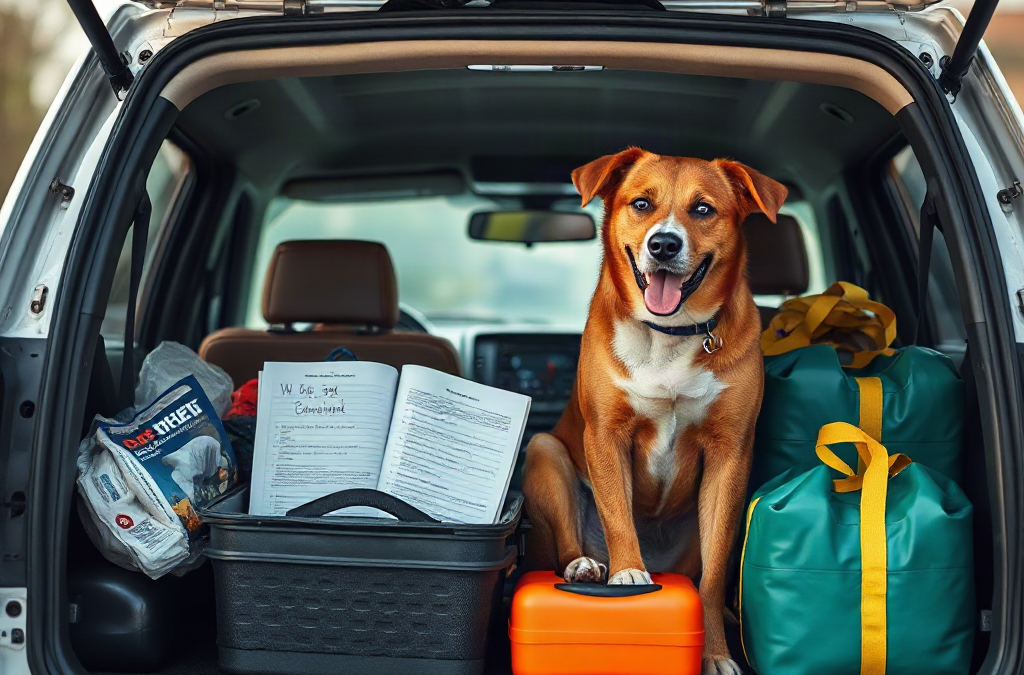
Pet evacuation planning with limited transport space should reserve secure animal positions before loading replaceable supplies. Match each pet to a labeled carrier, assign carriers to measured vehicle locations, and keep leashes, identification, medication, water, and sanitation items within reach. Use flexible bags for food and bedding so rigid containers do not consume space needed for safe restraint and ventilation. Rehearse the arrangement with every passenger aboard, because a layout that works in an empty vehicle may block doors or overload footwells. Prepare a fallback destination and backup driver for animals that cannot safely fit in the primary vehicle.
What you’ll learn
This guide covers the following practical points:
- Measure Animal and Vehicle Capacity — Usable transport capacity is determined by secured positions, not by the apparent amount of empty cargo space.
- Assign Safe Transport Positions — Animals should receive fixed transport positions before food bins, suitcases, and other replaceable cargo are loaded.
- Build a Space-Efficient Pet Kit — A compact evacuation kit should preserve care essentials while replacing bulky packaging with safe, labeled formats.
- Rehearse the Load and Create Backup Options — A full rehearsal reveals conflicts that measurements alone miss.
Measure Animal and Vehicle Capacity
Usable transport capacity is determined by secured positions, not by the apparent amount of empty cargo space. Count every person, pet carrier, restraint location, mobility aid, and piece of equipment that must travel. Then inspect which doors must remain accessible and where air circulation could be restricted. A carrier that physically fits behind a seat may still be unsuitable if it prevents the seat from locking or leaves the animal beside shifting cargo.
Measure each carrier at its widest and tallest points, including handles and projecting fasteners. Measure the intended vehicle location with seats in the positions passengers will actually use. Test whether carriers can enter through the planned door; cargo openings and interior spaces often have different dimensions. Cats and small animals should have individual secure enclosures unless a veterinarian or species-specific transport authority advises otherwise. Dogs need an appropriately sized carrier or vehicle restraint suited to the animal and vehicle.
A common mistake is assuming pets can share passenger laps or move loose in the cabin to save room. That arrangement may interfere with the driver, complicate a rapid exit, and allow an frightened animal to escape when a door opens. Treat every unsecured animal position as unresolved capacity rather than usable space.

Illustrative Capacity Audit
| Transport Need | Assigned Position | Check Before Departure |
|---|---|---|
| Two adults | Front seats | Full seat movement and belt access |
| One medium dog | Rear-seat secured carrier | Door closes and carrier cannot shift |
| Two cats | Separate carriers in cargo area | Ventilation openings remain clear |
| Pet supplies | Soft bag beside carriers | No loose items above or against animals |
This example is a layout test, not a universal recommendation. Vehicle design, carrier construction, pet size, temperature, and restraint options may require a different arrangement.
Assign Safe Transport Positions
Animals should receive fixed transport positions before food bins, suitcases, and other replaceable cargo are loaded. Place each carrier on a stable surface where it can be restrained according to its instructions and reached without unloading the entire vehicle. Keep ventilation panels unobstructed, and do not stack carriers unless the products are designed for that use and remain stable under travel conditions.
Loading order should reflect exit needs. Animals most likely to panic, require medication, or need frequent observation should not be buried behind bulky gear. Keep a leash or species-appropriate transfer enclosure immediately beside each carrier, but avoid opening carriers beside traffic or in an unsecured public area. Attach identification to carriers as well as to collars or harnesses because either item can become separated from the pet.
When the vehicle cannot safely accommodate every animal, do not solve the shortage by squeezing carriers into unstable positions. Divide animals between prearranged drivers, use a second trip only when conditions and official instructions permit it, or identify a trusted boarding, veterinary, or sheltering option outside the affected area. Confirm acceptance requirements beforehand; a destination that allows people may not accept pets, and some facilities may require records or specific carrier types.
Heavy objects present another load-order hazard. Water containers, litter, tools, and canned food can shift during abrupt braking. Place dense supplies low and secure them away from carrier doors and ventilation openings. A neat arrangement that moves when pushed firmly is not ready for travel.
Build a Space-Efficient Pet Kit
A compact evacuation kit should preserve care essentials while replacing bulky packaging with safe, labeled formats. Pack food in sealed portions suitable for the expected travel period, but retain product identification and feeding information. Use collapsible bowls, compact waste bags, a small cleaning cloth, and an absorbent liner appropriate for the carrier. Water must remain accessible rather than being wedged beneath other cargo.
Medication deserves protected, reachable storage. Keep it in its original labeled container when possible, include dosing instructions, and discuss temperature-sensitive products or travel anxiety with the pet’s veterinarian before an evacuation occurs. Do not improvise sedatives or change a dose solely to make transport easier. Copies of vaccination information, prescriptions, recent photographs, microchip details, and veterinary contacts consume little room when stored in a waterproof pouch, with a secure digital backup where practical.
Prioritize the kit in three layers:
- Immediate control: carrier, leash or harness, identification, medication, and handling supplies.
- Basic care: water, food, bowls, sanitation materials, and species-appropriate bedding.
- Destination support: records, comfort items, spare restraint equipment, and replenishment information.
Bulky toys, full-size food sacks, rigid storage tubs, and duplicate grooming supplies should not displace secure carrier positions. One familiar cloth or small toy may be more space-efficient than an entire bedding set. Vacuum-compressed soft goods can save room in storage, but they are less useful if unpacking them blocks access during a roadside stop.
Rehearse the Load and Create Backup Options
A full rehearsal reveals conflicts that measurements alone miss. Load the vehicle with all passengers, empty or normally weighted carriers, mobility equipment, and the intended supply bags. Check driver visibility, door operation, seat-belt use, carrier stability, ventilation clearance, and access to medication and water. Then time the process without rushing and note which items cause delays.
Introduce pets to carriers and vehicle entry during calm periods, using methods appropriate to their temperament and health. The aim is not to force prolonged confinement but to reduce novelty and identify handling problems. Warning signs include a carrier that flexes excessively, a dog backing out of its harness, a cat escaping during transfer, or a pet showing severe distress. A veterinarian can advise on health or behavior concerns that make travel unusually difficult.
The backup arrangement should be specific enough to use under pressure. Record who can transport which pet, where the handoff can occur, what carrier accompanies the animal, and which records or medications must transfer with it. Confirm that the backup vehicle has compatible space rather than relying on a verbal promise.
Recheck the layout after changing vehicles, carriers, passenger needs, or the number and size of animals. A plan is failing if supplies must be removed to close a door, carriers block an exit, animals cannot be reached, or the driver’s movement and visibility are reduced. Correct those conflicts before adding convenience items.
Frequently Asked Questions
Should pets ever travel loose to save carrier space?
No. A loose pet may distract the driver, escape through an open door, or be injured by shifting occupants and cargo. Use a suitable carrier or vehicle restraint and verify that it fits before departure.
What should be removed first when the vehicle is too full?
Remove bulky, replaceable convenience items before reducing secure pet positions, essential medication, water, identification, or basic sanitation supplies. Large food packages can often be replaced with labeled travel portions.
Can two cats share one evacuation carrier?
Separate carriers are generally easier to handle and reduce conflict under stress. Ask a veterinarian about animals with medical, behavioral, or bonded-pair considerations rather than assuming shared transport will be safe.
Where should pet medication be packed?
Keep medication in a protected, quickly reachable bag with its label and dosing instructions. Ask the prescribing veterinarian how to transport products requiring refrigeration or other controlled conditions.
What if all pets cannot fit safely in one vehicle?
Arrange a compatible backup driver or confirmed destination before an evacuation. Document the handoff, carrier, records, medication, and contact details; do not rely on unsafe crowding or an unverified shelter option.
Conclusion
Limited vehicle space should be allocated first to secure animal positions, accessible care supplies, and unobstructed passenger movement. Measure carriers and door openings, test the complete load, and remove bulky replaceable items when conflicts appear. If every pet cannot travel safely in the primary vehicle, confirm a second driver or suitable destination now. Repeat the rehearsal whenever the vehicle, pets, carriers, or passenger needs change.




