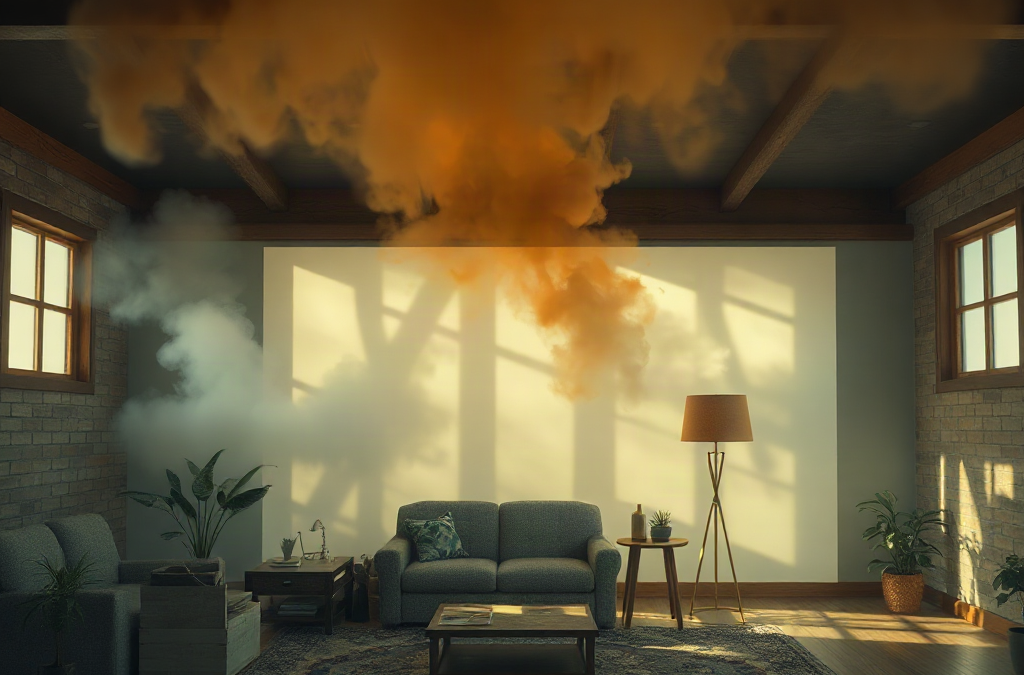
Smoke exposure planning during regional wildfires at home means preparing to reduce indoor particle infiltration, monitor changing air quality, and relocate when the building cannot provide cleaner air. Choose one room with few exterior openings, confirm that heating or cooling equipment can recirculate indoor air, and obtain an appropriately sized portable air cleaner before smoke arrives. Limit activities that create additional indoor particles, including frying, burning candles, and unnecessary vacuuming. Watch local air-quality reports alongside household symptoms, and arrange an alternative location early for anyone with breathing or heart conditions, pregnancy, advanced age, or other heightened vulnerability.
What you’ll learn
This guide covers the following practical points:
- Assess Household Smoke Risk Before the Fire Season — A useful household assessment begins with the people, the building, and the likely duration of exposure.
- Create a Cleaner-Air Room That Can Actually Work — A cleaner-air room concentrates filtration in a manageable space instead of trying to treat an entire leaky building.
- Manage Indoor Air While Smoke Is Present — Indoor protection depends on limiting incoming smoke while avoiding particle sources generated inside the home.
- Decide When Staying Home Is No Longer the Safer Option — Relocation decisions should account for air quality, indoor temperature, health status, travel conditions, and official fire instructions together.
Assess Household Smoke Risk Before the Fire Season
A useful household assessment begins with the people, the building, and the likely duration of exposure. Children, older adults, pregnant people, and those with heart or lung conditions may need a lower threshold for seeking medical advice or moving to cleaner air. Medication access, mobility, transportation, pets, and the distance to an alternative location also affect whether remaining home is realistic.
The building matters because outdoor smoke can enter through gaps, open doors, exhaust fans, and ventilation systems that draw in outside air. A newer home is not automatically protected, and an older home is not automatically unsuitable. Notice whether windows close securely, doors have large gaps, a fireplace damper seals, and the cooling system can operate without continuously introducing outdoor air. Renters should ask the property manager how the building ventilation works rather than guessing from the thermostat settings.
Plan for changing conditions rather than a single bad afternoon. Regional smoke may arrive before flames threaten the area, shift with the wind, or linger after a nearby fire is controlled. Record two destinations: a nearby indoor public space with filtered air for a short break and an overnight location outside the affected area. A common failure is naming a destination without confirming transportation, operating hours, accessibility, pet policies, or whether that location is experiencing the same smoke.
Gather relevant medical contacts and refill essential prescriptions through normal channels before conditions deteriorate. Anyone with an existing respiratory or cardiovascular condition should follow their clinician’s personal instructions rather than replacing them with a generic household plan. New or severe symptoms require appropriate medical evaluation.

Create a Cleaner-Air Room That Can Actually Work
A cleaner-air room concentrates filtration in a manageable space instead of trying to treat an entire leaky building. Select a room where household members can spend substantial time, preferably with a door, few windows, no fireplace, and enough space for sleeping or quiet activities. A bedroom or interior living area often works better than a kitchen, garage, or room beside a frequently used exterior entrance.
Portable air cleaners should be matched to the room size and operated according to the manufacturer’s placement, filter, and safety instructions. A unit that is too small, blocked by furniture, or left on a low setting may not keep pace with smoke entering the room. Place it where airflow is unobstructed, keep spare compatible filters if prolonged smoke is plausible, and learn how to inspect or replace the filter without shaking accumulated dust into the room.
Central heating and cooling systems can sometimes complement room filtration when configured to recirculate indoor air, but system designs differ. Check the equipment manual or consult a qualified HVAC professional before changing filters or fan settings. A denser filter is not automatically better if the equipment cannot move air through it; excessive resistance may reduce airflow or create equipment problems.
Test the setup on an ordinary day. Close the room, run the cleaner at the setting the household can tolerate, and listen for noise that could disrupt sleep. Confirm that extension cords are not required, the outlet is sound, and the unit does not create a tripping hazard. The plan is failing if people repeatedly switch the cleaner off because it is loud, hot, inaccessible, or poorly located.
Manage Indoor Air While Smoke Is Present
Indoor protection depends on limiting incoming smoke while avoiding particle sources generated inside the home. Close windows and exterior doors when outdoor smoke is elevated, but do not ignore dangerous indoor heat. If the home becomes too hot to occupy safely, moving to an air-conditioned cleaner-air location may be more appropriate than keeping every opening sealed.
Operate the designated room’s air cleaner continuously at the highest practical setting during smoky periods, following its instructions. Keep time at exterior doors brief, and avoid using window fans or ventilation modes that deliberately pull smoky air inside. Vehicle occupants should close windows and use the recirculation setting temporarily, while still following the vehicle manufacturer’s guidance and remaining alert to fogging or ventilation needs.
Indoor activities can undermine filtration. Smoking, vaping, candles, incense, wood fires, aerosol sprays, frying, and broiling can add particles or irritants. Postpone these activities where possible. Vacuuming may resuspend settled material unless the equipment is designed to capture fine particles effectively, so damp dusting of hard surfaces may be a more suitable interim option.
Odor is an unreliable measure of safety because people can become accustomed to a smell, and smoke concentrations can change without an obvious visual cue. Follow official local air-quality reporting and emergency messages instead. Low-cost indoor particle monitors may help reveal trends between rooms, but their readings vary by device and should not override evacuation orders, medical symptoms, or official alerts.
Consider an illustrative household with two adults, a child with asthma, one portable cleaner, and no central air conditioning. Their priority would be the child’s bedroom as the cleaner-air room, with medications kept accessible and a confirmed air-conditioned destination available if indoor heat rises or symptoms worsen. Moving the cleaner from room to room all day would provide less consistent protection than maintaining one dependable space.
Decide When Staying Home Is No Longer the Safer Option
Relocation decisions should account for air quality, indoor temperature, health status, travel conditions, and official fire instructions together. A cleaner-air room does not make a home safe from approaching fire, mandatory evacuation conditions, utility failures, or extreme heat. Wildfire evacuation directions take priority over a shelter-in-place smoke plan.
Leave earlier when a household member is developing concerning symptoms, filtration cannot be maintained, indoor smoke is visibly worsening, the home is overheating, or power loss stops essential equipment. Seek urgent medical help for severe trouble breathing, chest pain, confusion, fainting, bluish lips or face, or other signs of a medical emergency. Symptom thresholds should be discussed in advance with a clinician when someone has a known health condition.
Compare destinations before traveling. A nearby building may have stronger filtration but could lie under the same smoke plume, while a farther destination may offer cleaner air but require driving through hazardous conditions. Check the route, fuel level, wildfire alerts, destination air quality, and lodging availability. Do not drive into an evacuation zone solely to escape smoke.
Respirators may reduce exposure to airborne particles when a person must be outdoors and the device fits and is worn correctly, but they do not replace cleaner indoor air. Loose face coverings and poorly fitting respirators may offer less protection than users expect. People who have medical concerns about respirator use should seek individualized advice, and children require products and guidance appropriate to their size and circumstances.
Use a Smoke-Response Checklist
A written checklist reduces rushed decisions when smoke, alerts, and changing wind affect several communities at once. Keep the list with household emergency contacts and review it before the local fire season or whenever regional conditions become unusually dry.
- Monitor: Check official air-quality information, weather, fire notices, and evacuation messages.
- Prepare the room: Close exterior openings, start the correctly sized air cleaner, and verify that airflow is not blocked.
- Reduce indoor pollution: Pause burning, smoking, frying, aerosol use, and other particle-producing activities.
- Check people: Keep prescribed medications available and watch for symptoms or unusual fatigue.
- Protect against heat: Track indoor comfort and move if closing the home creates unsafe temperatures.
- Confirm the exit option: Recheck the destination, route, transport, fuel, pet arrangements, and local orders.
Signs that the plan is functioning include a room that remains comfortable enough to occupy, filtration that can run consistently, stable access to medications and communications, and a viable relocation option. Reassess promptly if filters clog unusually quickly, smoke odor or haze intensifies indoors, household members cannot tolerate the room, or official instructions change. Waiting until every backup has failed leaves fewer safe choices.
Conclusion
Effective smoke preparation links indoor filtration with health needs, heat safety, and a realistic relocation option. Identify a room that can be isolated, test the air cleaner before smoke arrives, confirm how the building handles outside air, and remove indoor particle sources. Keep official alerts and symptoms central to decisions. If the room cannot remain tolerable, essential equipment loses power, or fire authorities issue evacuation instructions, shift to the backup destination without waiting for conditions to deteriorate further.
Frequently Asked Questions
Should windows stay closed throughout a wildfire smoke event?
Keep them closed while outdoor air is smoky when the home remains safely cool. If indoor heat becomes dangerous or unbearable, relocate to an air-conditioned cleaner-air building rather than relying on a sealed, overheating room.
Is a portable air cleaner enough for an entire house?
Usually not unless the device is specifically rated for that area and the building conditions support it. Concentrating a properly sized unit in one closed room is often more workable than expecting a small unit to clean several open rooms.
Can an air conditioner remove wildfire smoke?
Performance depends on the system, filter, and ventilation mode. Recirculation may limit outdoor-air intake, but some systems introduce outside air; check the manual or ask a qualified HVAC professional before changing settings or filter types.
When should someone seek medical care for smoke exposure?
Contact a healthcare professional when symptoms are new, persistent, worsening, or inconsistent with an existing care plan. Severe breathing difficulty, chest pain, confusion, fainting, or bluish lips or face warrants urgent medical help.
Does a respirator replace a cleaner-air room?
No. A well-fitting, appropriate respirator may reduce particle exposure during necessary outdoor activity, but it cannot make an unsafe home or evacuation area suitable for continued occupancy.