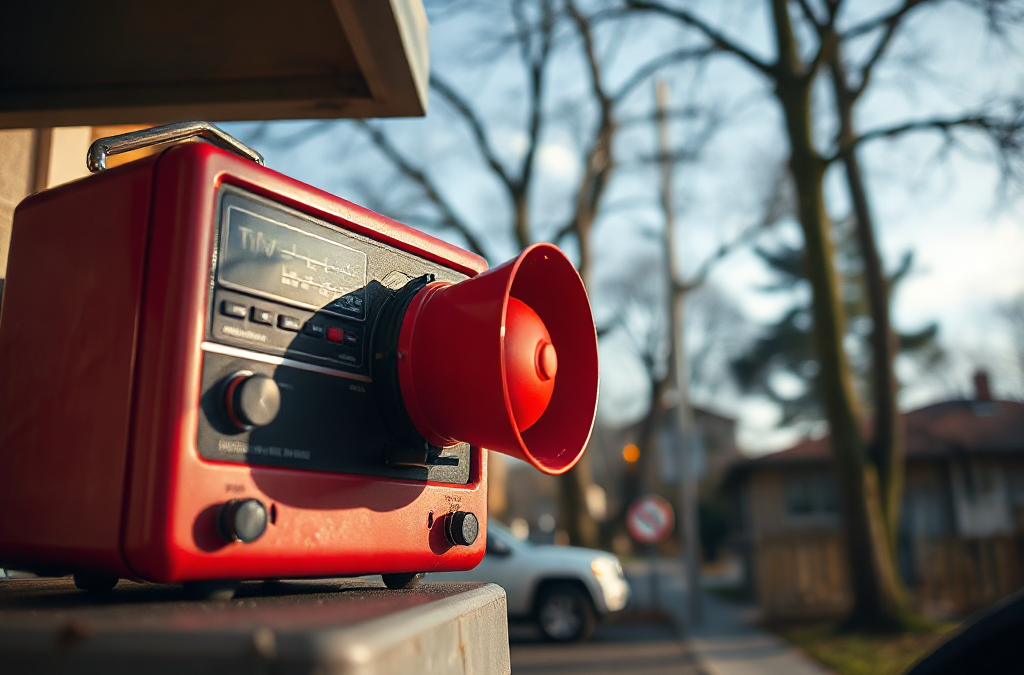
Offline emergency communication works best as a layered system rather than a single substitute for internet access. Official radio broadcasts, outdoor sirens, vehicle loudspeakers, public-address systems, printed notices, and trusted person-to-person messages each carry different amounts of information. A siren may tell you that an urgent hazard exists nearby, whereas a radio announcement may identify the affected area, protective action, shelter location, road closure, or time of the next update.
The difference matters because people often treat every signal as equally complete. A siren is designed to attract attention across a broad area, not to explain whether residents should shelter indoors, avoid a particular road, or leave immediately. Loudspeaker announcements can add words, but wind, traffic, closed windows, and building insulation may make them difficult to understand. Printed notices are slower but can preserve instructions after a broadcast has ended.
Begin by identifying the official channels used in the specific place where you live, work, or stay. Local emergency management offices, fire departments, public safety agencies, and broadcasters commonly publish information about siren meanings, designated radio stations, reception areas, and emergency meeting points. Save that information on paper rather than relying on a website that may be unavailable during a power or network outage.
A practical offline information map should record the source, coverage, detail, and likely failure point for each channel:
Radio: detailed instructions, but dependent on batteries, reception, and a functioning broadcast service.
Sirens: fast local attention, but often limited or ambiguous meaning.
Public announcements: potentially specific, but easy to miss or mishear.
Printed notices: durable and reviewable, but delayed and dependent on someone distributing them.
Contact networks: useful for reaching people who missed a broadcast, but vulnerable to rumors and individual mistakes.
Use the internal reference manual methods for receiving official alerts without internet as a planning reminder, but confirm local procedures through the responsible public agency. An offline method is only useful if the household knows what the signal means and what action follows it.
Building a Reliable Radio and Siren Routine
A battery-powered or hand-crank radio is usually the strongest household tool for receiving detailed official information without internet access. Choose a model that receives the broadcast bands used locally, then test it from the rooms where it may be needed. Reception can differ sharply between an upper floor, basement, interior room, and exterior wall. A radio that works clearly beside a window may produce static in a reinforced concrete room.
Store spare batteries separately from the radio so corrosion does not damage both supplies at once. If the device has a charging function, treat that feature as backup rather than assuming it replaces batteries. Write the relevant station frequencies, call signs, and local agency names on a card attached to the radio. During an incident, searching through stations can waste time and expose the listener to unofficial speculation.
Sirens require a different preparation method. Ask the local authority what each tone, duration, or repeated pattern means, and whether an all-clear signal is used. Some communities use sirens for multiple hazards; others reserve them for a narrower purpose. Never invent meaning from the sound alone. If the local explanation says the siren means to seek more information, do not automatically interpret it as an evacuation order.
Run a short household drill under realistic conditions. Place the radio where it is stored, use only its normal power source, and have someone read the written station card aloud. Then ask each person what they would do after hearing a siren but before receiving detailed instructions. This reveals practical failures such as dead batteries, missing glasses, an unreadable frequency card, or disagreement about where to listen.
A common mistake is testing equipment only once. Batteries discharge, knobs move, antennas break, and stations change procedures. A modest monthly check is more useful than a sophisticated device that remains untouched for years. Check the radio, spare batteries, written frequencies, flashlight, and paper instructions together. Keep the set accessible during a storm or other event; a device locked in a vehicle or buried in storage may be operational but functionally unavailable.
Using Contact Trees, Door-to-Door Messages, and Posted Notices
Person-to-person communication fills gaps that broadcasts cannot. A contact tree assigns each person a small number of neighbors, relatives, coworkers, or household members to reach through an agreed offline method. That method might be a landline call, a visit to a designated address, or a message carried by a specific runner. The arrangement should state who initiates contact, what words identify an official instruction, and where people go if they cannot reach anyone.
Contact trees are not substitutes for official sources. Their value is distribution: one person who hears a radio instruction can help someone who is elderly, hearing impaired, away from a radio, or unfamiliar with the local language. The risk is distortion. A message such as “leave the eastern zone using Route 4” can become “everyone must leave immediately” after passing through several people. Use short, exact wording and require the recipient to repeat the instruction back.
Paper notices and community message boards can provide a stable reference when people miss a moving announcement. Useful notices should show the issuing agency, date and time, affected location, action requested, and next update point. A handwritten sheet with no source or timestamp should be treated as unverified, even if it appears on an official-looking door or pole.
Door-to-door communication is particularly valuable in neighborhoods where sirens are difficult to hear indoors. It also has limits: volunteers may not reach every building, hazardous areas may be inaccessible, and a messenger may carry incomplete information. Never send an untrained person into a restricted or dangerous area merely to confirm a rumor. A safer arrangement identifies a nearby check-in point outside the hazard zone.
Prepare a paper contact card with names, addresses, landline numbers if available, meeting locations, accessibility needs, and language preferences. Keep one copy at home and another with a responsible contact. Review it after moves, job changes, or changes in household composition. The internal link manual methods for receiving official alerts without internet is most useful when paired with this local, human distribution layer.
Verifying Instructions and Acting on Incomplete Information
Offline alerts often arrive with missing context, so verification should focus on source, time, location, and requested action. A trustworthy message identifies who issued it or points back to a known official channel. It should make clear whether it applies to your area, when it was issued, and what residents should do next. If one of those elements is absent, do not fill the gap with guesswork.
Use two independent channels when the situation allows. For example, a siren can prompt you to turn on the designated radio station, while a neighbor can confirm that the sound was heard across the district. Two people repeating the same rumor are not independent confirmation if both received it from the same unknown source. A radio announcement and a posted notice from the responsible agency provide stronger corroboration.
Do not delay a clearly stated urgent protective action while seeking perfect confirmation. The sensible balance is to act on a direct official instruction and verify details that affect route, timing, or destination. If a message says to shelter indoors because of an external hazard, move inside and close openings while listening for more specific information. If it says to evacuate a named zone, follow the stated route rather than selecting a shortcut based on hearsay.
Record important updates on paper with the time, source, location, and action. Written notes prevent an early message from being confused with a later revision. They also help household members who were asleep, outside, or away from the radio. Mark canceled instructions clearly instead of crossing them out so the sequence remains understandable.
Weak assumptions create avoidable danger. Silence does not mean the hazard has ended; a broadcast transmitter, siren, or messenger may have failed. A familiar voice does not prove accuracy, and an official-sounding vehicle announcement may be hard to understand at a distance. If the signal is unclear, seek the designated official channel, move away from the suspected hazard when appropriate, and avoid spreading an unverified claim. More planning detail is available through manual methods for receiving official alerts without internet, especially when a household needs a written decision sequence.
Frequently Asked Questions
What is the most useful offline alert method at home?
A battery-powered or hand-crank radio is often the most useful because it can provide detailed instructions, but it should be paired with local siren knowledge and written agency information.
Can a siren tell me exactly what to do?
Usually not. Learn the local siren meanings, then use the designated radio station or official announcement channel for the hazard, location, and required action.
How should a neighborhood contact tree work?
Assign each person a small set of contacts, specify the initiating source and exact wording, and provide a meeting location if calls or visits fail.
How can I identify an unreliable paper notice?
Check for the issuing agency, date and time, affected area, requested action, and a way to confirm the message. Missing details make the notice unverified.
What should I do if official information is incomplete?
Follow any clear protective instruction, avoid spreading assumptions, write down the source and time, and continue monitoring the designated official channel for updates.
Further Reading
Authoritative Sources
Ready.gov ready.gov
Official household preparedness guidance, emergency plans, and supply checklist resources.
FEMA fema.gov
Federal emergency management information, disaster planning resources, and recovery guidance.
American Red Cross Emergency Preparedness redcross.org
Practical emergency preparation, safety, and response guidance for households.
CDC Emergency Preparedness and Response cdc.gov
Public health guidance for disasters, emergency response, and recovery conditions.
Conclusion
Receiving official alerts without internet access depends on preparation before the signal arrives. Keep a tested radio with spare power, record local frequencies and siren meanings, and maintain a paper contact network that can reach people who miss broadcasts. Treat each channel according to its strengths: sirens attract attention, radio supplies detail, notices preserve instructions, and personal contacts extend reach. Verification should check the source, time, location, and requested action without delaying a plainly stated urgent protective measure. Review the system periodically, replace damaged supplies, and practice locating the radio and contact card in low-light conditions. That modest routine turns disconnected devices and local relationships into a more dependable warning system when online services are unavailable.
Reducing electricity use during an outage begins with separating essential loads from convenient ones. A refrigerator, medical device, sump pump, modem, phone charger, or well pump may have a direct safety or continuity role. Lighting in every room, entertainment equipment, decorative appliances, and comfort devices usually do not. The distinction matters because backup systems have limited energy storage or generation capacity, and a small number of high-wattage appliances can consume more capacity than many low-power devices combined.
Make an inventory before the next outage if possible. Note whether each appliance is powered by the utility, a portable battery, a generator, an inverter, or a dedicated backup circuit. Check the rating plate for watts or amps; motors may draw more power briefly when starting than they use while running. A refrigerator that appears modest on its label can still cause an inverter to trip if another motor or heating element starts at the same time.
A practical first pass divides equipment into three groups:
Essential: medically necessary devices, emergency lighting, refrigeration for safety-sensitive food, communications, and equipment needed to prevent immediate property damage.
Useful but deferrable: a freezer, internet equipment, a small fan, or a laptop used for work or emergency information.
Nonessential: electric cooking appliances, laundry equipment, space heaters, gaming systems, and high-output lighting.
The common mistake is to count outlets rather than electrical demand. Ten phone chargers may use less energy than one hair dryer. Another weak assumption is that a device is harmless because it is switched off; many televisions, computers, speakers, and chargers continue drawing standby power. Unplugging those items, or switching off a power strip, preserves capacity without affecting essential service.
Use safe ways to reduce household electricity demand during outages as a household-specific plan rather than a universal appliance list. A home with a gas furnace may need only a small blower circuit, while a home using electric resistance heat may face a much larger demand problem. The equipment connected to the backup source, not the size of the home alone, determines the immediate priority.
Cut Demand Without Damaging Equipment
Load reduction is safest when it follows the equipment manufacturer’s instructions and avoids improvised electrical connections. Turn off or unplug nonessential devices before connecting a generator, inverter, or battery system. When power returns, reconnect loads gradually instead of switching on every appliance at once. This reduces the chance of a combined startup surge that causes a breaker, inverter, or generator protection system to shut down.
Heating elements deserve special attention. Electric space heaters, kettles, toaster ovens, hair dryers, irons, ovens, clothes dryers, and electric water heaters convert electricity into heat and commonly demand far more power than electronics or LED lamps. Removing one such appliance may free more capacity than turning off several rooms of lights. If cooking is necessary, choose the method that uses the available energy source safely and briefly; never use an outdoor fuel-burning appliance indoors or in an attached garage.
Motors create a different problem. Refrigerators, freezers, pumps, fans, and furnace blowers may have a starting surge. A backup source that handles the running wattage may still fail when a motor starts. Avoid running multiple motor-driven appliances at the same time, especially a refrigerator and pump on a small inverter. Let the refrigerator complete a cycle before adding another demanding load, but do not repeatedly unplug and restart it if that interferes with its normal operation.
Reducing demand does not mean repeatedly flipping breakers without knowing what they control. A breaker may supply a furnace, sump pump, or medical outlet that is not obvious from the room location. Label circuits in advance, and have a qualified electrician install transfer equipment or a properly configured interlock where a generator will connect to household wiring. Never backfeed a wall outlet with a generator cord; that can energize wiring unexpectedly and expose occupants or utility workers to lethal voltage.
Watch for signs that the arrangement is failing: warm plugs, buzzing, damaged insulation, burning odors, flickering lights, repeated overload trips, or a battery that becomes unusually hot. Stop using the affected equipment and follow its shutdown instructions. A lower load is not a substitute for ventilation, dry placement, correct extension-cord ratings, or protection from rain and flooding. Electrical conservation and electrical safety have to be managed together.
Prioritize Heating, Cooling, Food, and Water
Comfort loads can become safety loads depending on temperature, age, health, and the condition of the building. In mild weather, reducing thermostat changes and using daylight may be enough. During extreme heat or cold, preserving a safe room or supporting a medically necessary device takes priority over extending backup runtime. A household should decide where people will gather, which room can be cooled or warmed most efficiently, and which occupants need a different plan if conditions become unsafe.
Electric resistance heaters are among the hardest loads for small backup systems to support. Running one heater may consume the available capacity of a portable power station or overload a small generator. Instead of trying to heat the entire home, close unused rooms, block drafts without covering vents, wear suitable layers, and monitor vulnerable occupants. In hot weather, a small fan may use much less electricity than an air conditioner, but fans do not lower body temperature safely in every environment. If heat illness or dangerous cold develops, relocation to a functioning cooling or warming site may be safer than forcing a marginal backup system to run.
Refrigeration requires disciplined use. Keep refrigerator and freezer doors closed as much as practical, group items to reduce warm air exchange, and avoid adding warm food. A backup source may be scheduled for intermittent refrigerator operation if the appliance can start reliably and food temperatures are monitored with an appliance thermometer. That approach saves energy compared with continuous operation, but it is not a reason to guess about food safety. When temperature history is uncertain, follow recognized food-safety guidance rather than relying on smell or appearance.
Water systems can create hidden demand. A well pump, pressure booster, sewage ejector, or basement sump pump may start automatically and draw a large surge. If a pump prevents immediate flooding, it may outrank refrigeration; if it is only supporting convenience, conserve water and monitor the area instead. Do not disable a pump blindly. Understand what risk appears if it is off, and arrange a manual or alternate response before reducing its runtime.
The best priority order is specific to the household: medical needs and immediate hazards first, then communication and water, then food protection, followed by limited comfort. A family relying on a powered oxygen concentrator needs a different load plan from a household whose main concern is keeping a freezer cold. Review the plan through the lens of actual occupants, not an abstract list of appliances.
Use Backup Power Within Its Limits
Backup power should be treated as a finite budget, not as a smaller version of normal utility service. Generators are limited by output and fuel, batteries by stored watt-hours and inverter capacity, and vehicle-based systems by both battery condition and safe connection methods. Reducing household demand extends operating time only when the remaining loads stay within the system’s continuous and surge ratings.
Read the backup unit’s manual before an outage. Identify its continuous output, surge capability, receptacle limits, charging requirements, and approved extension cords. A power station may show a percentage estimate, but that display is only a planning aid; temperature, battery age, inverter efficiency, and startup surges can change actual runtime. A fuel generator may run for hours, yet fuel availability and safe refueling become constraints. Never refuel a hot generator, and never operate a fuel-burning generator, camp stove, or vehicle in a home, garage, basement, or enclosed porch.
Use one connection method at a time and keep cords protected from water, pinch points, and vehicle traffic. Extension cords should be suitable for the load and in good condition. Do not use household wiring as a distribution system unless the home has professionally installed transfer equipment. A generator connected incorrectly can send power back toward utility lines or create dangerous voltage differences inside the home.
Scheduling is often more effective than trying to power everything continuously. A refrigerator may receive priority for a planned interval, followed by a communication period for charging phones and checking alerts. A pump may be run only when its function is needed, provided that delaying it does not create flooding or sanitation problems. Keep a written log of which loads are active and when the backup source trips. The log can reveal that an overlooked appliance, rather than the expected major load, is causing failures.
Do not chase maximum runtime at the expense of warning signs. If an inverter repeatedly shuts down, a generator hunts or stalls, or cords and plugs heat up, reduce the load and investigate before restarting. Those symptoms may indicate overload, a defective appliance, poor ventilation, or a connection problem. The household electricity demand plan should include a clear stop point: if safe operation cannot be confirmed, disconnect nonessential equipment and seek another source of shelter or service.
Build a Simple Outage Load Plan
A written load plan turns rushed decisions into a repeatable sequence. List the devices that must run, their estimated wattage, the backup outlets or circuits they use, and the person responsible for checking them. Include items that start automatically, such as a sump pump or refrigerator, because unplanned cycling can change the total demand without anyone adding a new appliance.
Use this order when an outage begins:
Disconnect high-draw, nonessential appliances and switch off unnecessary room circuits.
Confirm that the backup source is outdoors or otherwise installed exactly as its instructions require, with cords and connections dry and undamaged.
Connect the highest-priority loads one at a time, allowing motors to start before adding another demanding device.
Check for heat, odor, flicker, unusual noise, or overload warnings after each change.
Reassess the plan whenever weather, medical needs, water levels, food conditions, or battery charge changes.
Keep the plan realistic. A list that assumes everyone will avoid all cooking, entertainment, and laundry for several days may fail because it ignores medication storage, infant needs, work obligations, or fatigue. A better plan identifies the few comforts that preserve safety and cooperation, such as one lamp, a small fan, or scheduled phone charging, while removing the large loads that provide little value during the outage.
Test the arrangement during a planned exercise, not for the first time in a storm. Check whether the refrigerator starts, whether the selected circuit actually powers the intended outlet, whether cords reach without unsafe routing, and whether household members understand what not to connect. Mark the main shutoff, backup outlets, and generator operating area. The safe outage electricity checklist should be updated after every real event, especially if a load unexpectedly tripped protection or a critical device lacked power.
Conservation has limits. If the home cannot maintain safe temperatures, medical equipment cannot be powered reliably, water is unavailable, or electrical faults appear, moving to an equipped location may be the prudent decision. Cutting demand works best as part of a broader outage plan that includes communication, fuel or battery charging, food decisions, and a way to obtain help.
Frequently Asked Questions
Which appliances should be turned off first during an outage?
Turn off electric heaters, ovens, dryers, irons, water heaters, and other heating elements first. They usually draw much more electricity than lights, chargers, or networking equipment.
Does unplugging devices really save backup power?
Yes, especially for electronics with standby functions. Unplug televisions, computers, speakers, chargers, and similar devices when they are not needed, or switch off their power strip.
Can a small generator power a refrigerator?
It may, if its continuous and startup ratings support the refrigerator and no incompatible loads run at the same time. Check the generator instructions and allow for motor startup demand.
Is it safe to connect a generator to a wall outlet?
No. Connecting a generator through a wall outlet can backfeed household or utility wiring. Use approved receptacles, transfer equipment, or a professionally installed interlock as applicable.
How can electricity be conserved during extreme temperatures?
Concentrate people in one suitable room, close unused areas, reduce drafts or heat gain, and power only the equipment that supports safe conditions. Relocate if temperatures become dangerous or medical needs cannot be met.
Further Reading
Authoritative Sources
Academy of Nutrition and Dietetics eatright.org
Professional nutrition guidance, healthy eating resources, and practical dietitian-reviewed advice.
U.S. Department of Agriculture usda.gov
Official food, nutrition, agriculture, and consumer guidance from the USDA.
NIH Office of Dietary Supplements ods.od.nih.gov
Research-based fact sheets on nutrients, supplements, dietary intake, and safety considerations.
International Society of Sports Nutrition sportsnutritionsociety.org
Evidence-informed sports nutrition resources and position stands for active people and athletes.
Conclusion
Lowering electrical demand during an outage is a process of ranking risks, not simply switching off random appliances. Remove high-draw heating elements and standby electronics, protect essential refrigeration and medical equipment, and account for the startup demands of motors and pumps. Keep generators outdoors, use approved connections, and treat unusual heat, odor, flickering, or repeated shutdowns as reasons to stop and reassess. A written load plan should identify priority devices, backup limits, safe connection points, and the conditions that require relocation. Test that plan before an emergency and revise it after each outage. The goal is dependable access to essential services without overloading equipment or creating electrical and carbon monoxide hazards.
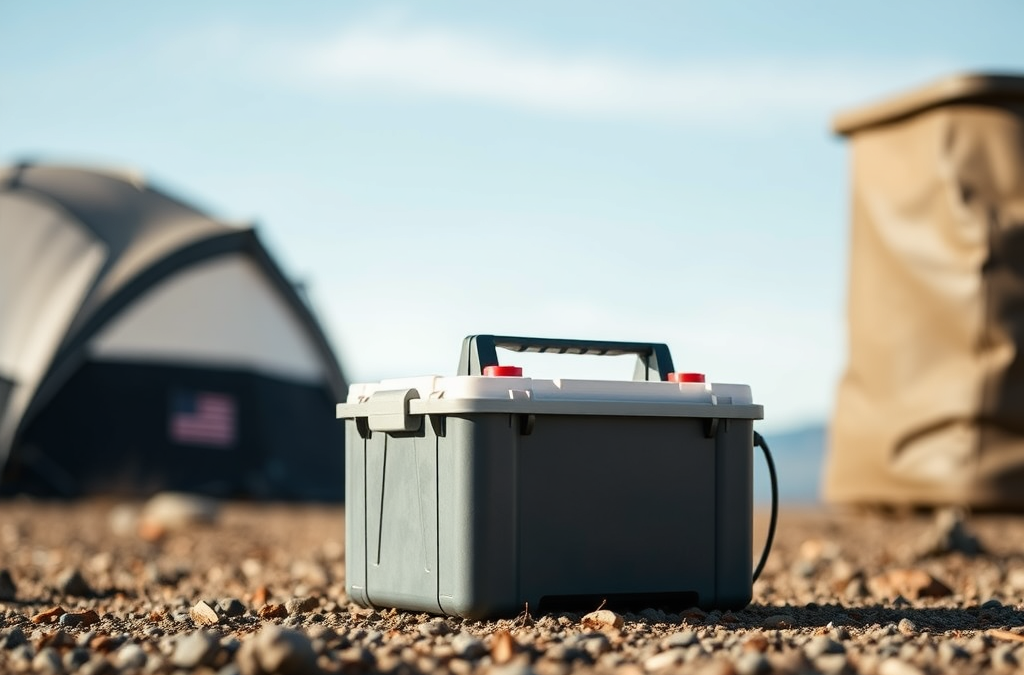
Portable battery runtime is best estimated from usable watt-hours rather than the battery’s advertised capacity alone. Watt-hours represent stored energy, while watts represent the rate at which a connected device consumes it. The basic calculation is runtime in hours = usable watt-hours ÷ average load in watts. A unit rated at 1,000 watt-hours does not necessarily deliver 1,000 watt-hours to an AC appliance because the inverter, wiring, battery-management system, and low-voltage cutoff consume or reserve part of that energy.
Suppose a power station provides 1,000 rated watt-hours and your planning assumption is that 85% reaches the outlet. The usable estimate is 850 watt-hours. A steady 100-watt device would then have a theoretical runtime of 8.5 hours, before accounting for inverter idle draw or changes in the appliance’s demand. At 300 watts, the same battery would provide roughly 2.8 hours under that simplified model. The comparison shows why a high-wattage heater and a low-wattage router should not be judged by the same label-based shortcut.
Average demand matters more than the maximum number printed on a charger or appliance. A laptop may draw 45 watts while charging, then fall to 12 watts once its internal battery is nearly full. A refrigerator may use a modest average amount over a long period but require a much higher startup surge. Measuring only the peak can make a runtime forecast unnecessarily pessimistic; measuring only the lowest operating draw can make it dangerously optimistic.
For a practical first estimate, record the device’s operating watts, identify whether the AC or DC output is being used, and apply a conservative efficiency allowance. Direct DC power may avoid some inverter loss, but it is not automatically preferable if the voltage conversion is inefficient or the connector is unsuitable. The common mistake is treating rated watt-hours as guaranteed outlet energy. Use the label as a starting point, then replace it with measured load data whenever the device will support a critical function.
Account For Intermittent Charging Windows
Intermittent charging changes the calculation from a simple countdown into an energy-balance problem. During each interval, the battery loses energy to the connected load and gains energy from the charger. A useful model is ending energy = starting energy + charging energy received − load energy consumed − conversion losses. If the charger operates for only part of an hour, its nameplate input is not the same as the energy actually recovered.
For example, a battery running a 75-watt load for four hours consumes about 300 watt-hours before additional losses. A 200-watt charging source that functions for only 45 minutes contributes about 150 watt-hours at its input rating. If the battery accepts less because of cable loss, temperature, charge limits, or a taper near full capacity, the recovered amount may be lower. The battery therefore ends the period with a net loss even though a charger was connected.
Charging windows should be treated as separate events rather than averaged across an entire day. A solar panel may produce useful input in bright midday conditions, weak input through cloud cover, and no input at night. A vehicle outlet may be available only while the engine is running. A generator may operate in scheduled blocks, with a portion of its fuel consumed by the charger and the battery’s own idle draw. An average daily input number can conceal a long period in which the battery continues discharging without meaningful replenishment.
Write down the expected start and end of each charging window, the likely input watts, and the load that remains connected during that period. Then calculate the energy recovered as input watts multiplied by charging hours, applying a cautious allowance for system losses. Charging while a device is operating can extend service, but it does not guarantee that the battery percentage will rise; the charger must provide more power than the active load and conversion overhead. A frequent failure mode is counting the charger’s full rated output while ignoring clouds, thermal reduction, connector limits, or the battery’s charge-acceptance ceiling.
Correct The Assumptions That Distort Results
Runtime estimates become unreliable when they assume a constant load, perfect efficiency, or a battery that can use every displayed percentage point. Real devices cycle, batteries protect themselves, and power stations may consume energy even when the connected appliance appears inactive. The displayed state of charge is useful for trend tracking, but it is not a laboratory measurement of remaining outlet energy.
Inverter idle draw deserves special attention. An AC inverter can consume power while supplying little or no load, so leaving it enabled for a small USB device may waste more energy than using a direct USB or DC output. The right comparison is not AC versus DC in the abstract; it is the complete path from battery to device. If a 10-watt network device runs through an inverter that consumes 15 watts at idle, the battery is serving a 25-watt combined demand before other losses are included. Turning off unused output modes may extend the usable interval more effectively than reducing the device’s own setting.
Temperature also changes expectations. Cold conditions can reduce the energy a battery can deliver at a given current, while heat may trigger protective limits or reduce charging performance. High-current loads are particularly sensitive because they cause greater voltage drop and may reach a cutoff earlier than a low-current load with the same nominal wattage. A battery that runs a lamp for many hours may shut down sooner than expected when asked to supply a compact cooking appliance, even if the theoretical watt-hour division appears acceptable.
Startup surges create a second kind of error: the battery may have enough energy but insufficient output capability. Motors, compressors, and some tools briefly demand more power than their running rating. If the inverter trips, the issue is output capacity rather than runtime. Check continuous and surge ratings separately, and avoid solving a surge problem by simply buying more watt-hours. More stored energy does not automatically provide a stronger inverter.
Use Field Measurements To Set A Reserve
A short controlled test usually produces a better planning number than a manufacturer’s optimistic runtime table. Connect the intended device, disable outputs that are not needed, and record the battery percentage, load watts, and charging watts at regular intervals. The goal is not to drain the unit completely; it is to observe the rate of decline under the same operating pattern expected in use.
A useful test sequence has four parts:
Run the device without charging long enough to establish its normal demand and identify cycling.
Introduce the actual intermittent charging source and record its delivered input rather than its label rating.
Repeat under a different likely condition, such as a cloudier solar interval or a lower vehicle charging output.
Set the operating limit above the point where the battery’s cutoff, display error, or charging taper could interrupt the service.
Imagine a communication device drawing 40 watts continuously, with a battery that begins at an estimated 680 usable watt-hours. A four-hour charging window delivers 120 watt-hours in practice, while the load consumes 160 watt-hours during that same period. The battery loses 40 watt-hours during the window, not gains 120. If the following eight hours provide no charging, another 320 watt-hours disappear. The relevant question is whether the starting reserve covers the full no-input stretch, not whether a charger is present at some point in the schedule.
Use the result to create three planning values: an expected runtime, a conservative runtime under weaker charging, and a shutoff point that protects the service you value most. The conservative figure should reflect the lowest credible charging input and the highest credible average load, not an extreme combination that is unlikely to occur. Signs that the model is working include a battery trend close to the forecast across repeated tests. Signs that it is failing include sharp percentage drops, charging watts that repeatedly fall below expectation, unexpected inverter shutdowns, or a device that cycles more aggressively than it did during the initial test.
Keep a simple log for each operating period, using portable battery runtime estimates under intermittent charging as a planning reference rather than a fixed promise. Compare the log with the battery’s own display and with direct measurements from a suitable meter when available. That record can reveal whether the main problem is insufficient capacity, excessive idle consumption, inadequate charging duration, or an output limit.
Choose A Practical Operating Plan
The best operating plan prioritizes the load that must remain available, then assigns charging energy to that load before adding conveniences. A router, medical-support device, communication receiver, or low-power lighting circuit may justify a larger reserve than a discretionary appliance. Separating essential and optional loads also makes the estimate easier to update when charging conditions deteriorate.
Use direct-output options when they are compatible and demonstrably efficient, but do not compromise connector fit, voltage requirements, polarity, or manufacturer limits. Consolidating several small devices onto one efficient charging arrangement may reduce duplicated idle draw, while connecting every device through an AC inverter may increase losses. The alternative approach—keeping all equipment plugged in for convenience—can produce a smooth-looking setup that quietly consumes energy between active tasks.
Intermittent input may be more valuable when used strategically. A short charging window can restore enough energy for a brief high-priority task, but it may not justify recharging a nearly full battery if the charger then tapers sharply. Conversely, operating a load directly from a reliable source while the battery charges may preserve stored energy, provided the power station supports that mode without unusual limitations. Check the manufacturer’s documentation for pass-through behavior, charge limits, and whether output remains stable during source changes.
Apply the same calculation to the portable battery runtime estimates under intermittent charging for every major load combination. A compact priority list is useful:
Protect the reserve needed for the longest period without meaningful input.
Remove idle loads before reducing essential device settings.
Measure actual charging delivery under the weakest realistic condition.
Test startup behavior separately from steady-state runtime.
Do not treat a single successful run as proof that the plan will work under every condition. Recheck it after adding a device, changing the cable path, moving a solar panel, or operating in colder weather. The final estimate should tell you when to reduce nonessential loads, when to seek another charging window, and when the remaining reserve is no longer sufficient for the intended service.
Frequently Asked Questions
Should runtime be calculated from rated watt-hours?
Use rated watt-hours as the starting point, then reduce them for inverter losses, battery protection limits, temperature, and other system overhead.
How do short charging periods affect the estimate?
Multiply the charger’s actual delivered watts by the duration of each charging period, then subtract the load’s consumption during that same period.
Can a battery charge while powering a device?
Often it can, but the battery percentage rises only when charging input exceeds the device load and conversion overhead. Confirm the unit’s pass-through limits.
Why does a small device sometimes drain a battery faster than expected?
AC inverter idle draw, inefficient adapters, display systems, and standby circuits can add substantial consumption relative to a low-power device.
What reserve should be used for an essential load?
Base the reserve on the longest credible period without useful charging and the highest realistic load, while leaving margin above the unit’s low-voltage or low-charge cutoff.
Further Reading
Authoritative Sources
Academy of Nutrition and Dietetics eatright.org
Professional nutrition guidance, healthy eating resources, and practical dietitian-reviewed advice.
U.S. Department of Agriculture usda.gov
Official food, nutrition, agriculture, and consumer guidance from the USDA.
NIH Office of Dietary Supplements ods.od.nih.gov
Research-based fact sheets on nutrients, supplements, dietary intake, and safety considerations.
International Society of Sports Nutrition sportsnutritionsociety.org
Evidence-informed sports nutrition resources and position stands for active people and athletes.
Conclusion
Reliable runtime planning comes from tracking energy in and energy out across each charging window, not from dividing a label capacity by a single appliance rating. Start with measured watts, convert the battery rating into a cautious usable figure, and subtract inverter and standby consumption. Treat solar, vehicle, or generator input as time-limited and variable; record what the battery actually accepts rather than what the source claims to provide. Test the intended load, check startup behavior, and preserve a reserve for the longest likely gap in charging. If the forecast fails in practice, identify whether capacity, input delivery, idle draw, temperature, or output limits caused the difference before changing equipment. That diagnosis produces a more dependable plan than simply buying a larger battery.
How Carbon Monoxide Builds Around Backup Equipment
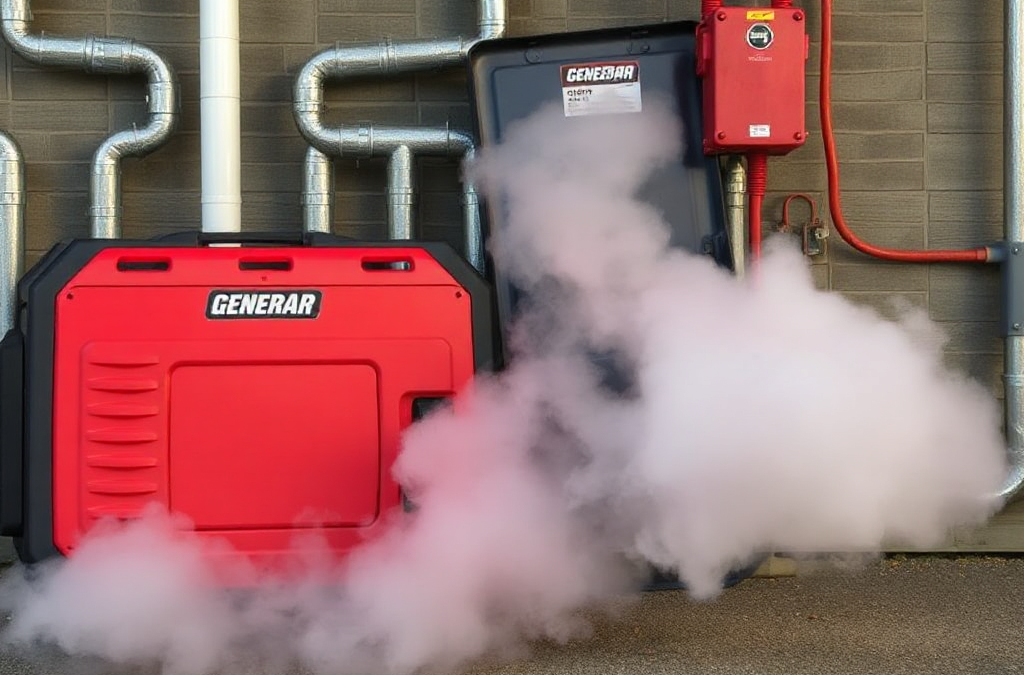
Carbon monoxide is produced when gasoline, diesel, propane, natural gas, or other carbon-based fuels burn. A portable generator may be operating normally and still create a lethal exhaust hazard if its discharge reaches a building. The gas has no reliable smell, color, or visible signal, so people often notice the danger through an alarm, a cluster of symptoms, or a change in where exhaust is accumulating.
Location matters more than the apparent size of the machine. A generator placed beside a garage, beneath a porch, near a crawl-space opening, or close to a window can send exhaust toward the building even when the operator believes the equipment is outdoors. Wind can push fumes against a wall, while fans, pressure differences, and open doors can draw contaminated air inside. A partly open garage door is not equivalent to outdoor operation because the garage can collect exhaust faster than it disperses.
Backup power creates additional confusion because several sources may operate at once. A generator outside, a propane heater inside, an idling vehicle, and a gas appliance with poor venting can produce overlapping exposure patterns. Connecting equipment through a transfer switch or approved inlet may solve electrical hazards, but it does not make exhaust safe. Electrical isolation and carbon monoxide control are separate decisions.
A common mistake is judging safety by distance alone. The generator may be several feet from a window yet still discharge toward it under a new wind direction. Another weak assumption is that a newer engine or a “clean-running” fuel means harmless exhaust. Fuel type and engine design affect emissions, but neither replaces outdoor placement, functional alarms, and a clear escape response.
For a household preparing to use backup power, write down every combustion source and every opening that connects outside air to living space. Include basement windows, vents, garage doors, crawl-space grilles, and adjoining units in multifamily buildings. That simple map is more useful than relying on a single remembered placement rule. Review it whenever the generator location, weather, or building conditions change, and keep recognizing dangerous carbon monoxide patterns around backup power as part of the operating plan.
Patterns That Signal a Dangerous Exposure
The most concerning pattern is a combination of combustion equipment and people developing headache, dizziness, weakness, nausea, unusual sleepiness, confusion, or shortness of breath. Symptoms may affect more than one person and may improve after leaving the building. That improvement does not prove the cause, but it makes continued indoor exposure especially unsafe. Children, older adults, pregnant people, and anyone with heart or lung disease may require prompt medical attention even when symptoms seem mild.
An alarm is another high-priority signal, whether or not anyone feels ill. Carbon monoxide alarms can activate because of a real concentration increase, a sensor problem, low battery, end-of-life condition, or environmental interference. The correct first move is not to identify which explanation is most likely. Leave the building, move into fresh air, and contact emergency services or the fire department from outside. Responders can assess the atmosphere and advise on reentry.
Pay attention to timing and location. If an alarm sounds soon after a generator starts, suspect exhaust intrusion until proven otherwise. If symptoms begin in a room beside a garage or near a fuel-burning appliance, treat that relationship seriously. If a problem appears only when wind shifts, a door closes, or a vehicle idles, changing airflow may be moving the gas rather than eliminating it.
People often compare a carbon monoxide alarm with a smoke alarm and assume a quiet alarm means the room is safe. Carbon monoxide can be present before a person notices a smell or visible smoke, and an alarm is only one part of protection. Low batteries, blocked power, expired sensors, poor placement, or a device located far from the sleeping area can reduce warning value. Follow the alarm manufacturer’s instructions, test units regularly, and replace them according to the stated service life.
Do not silence an alarm and return indoors to investigate. Do not open windows and wait to see whether the warning stops, because ventilation may lower the concentration temporarily while the source continues operating. A practical pattern log can record the equipment running, rooms affected, weather direction, alarm time, and symptoms, but documentation comes after evacuation and medical attention, never before. Use recognizing dangerous carbon monoxide patterns around backup power to distinguish a changing exposure from a routine equipment nuisance.
Safe Generator Placement and Ventilation Decisions
A portable generator belongs outdoors in a location where exhaust can disperse freely and cannot be carried into the structure. The exact placement must follow the generator manual and applicable local safety requirements, but the decision should account for windows, doors, vents, roof overhangs, neighboring buildings, and wind. A clear open yard is generally a better setting than a narrow side passage, recessed patio, carport, or porch.
Ventilation is not a substitute for distance and open-air dispersion. Opening a garage door, placing a fan near a window, or running a duct improvised from household materials can redirect exhaust unpredictably. Fans may even pull contaminated air toward occupied rooms. Permanent mechanical ventilation designed by a qualified professional is a different matter, but a temporary household workaround should not be treated as an engineered exhaust system.
Consider the real operating scenario rather than the calm conditions present during setup. A generator positioned safely on a still afternoon may become hazardous after wind changes, rain forces doors shut, or snow blocks an exhaust path. Snow, leaves, tarps, boxes, and temporary shelters can restrict discharge. A generator should never be operated under a tent or enclosed cover simply to protect it from weather.
Fuel storage creates a separate risk. Keep fuel in approved containers away from ignition sources and follow the equipment instructions for refueling. Shut the engine down and allow it to cool before adding fuel. Spilled fuel can create fire danger, while moving a hot generator or changing its position during operation can expose people to burns and electrical hazards. Carbon monoxide planning should fit into the same operating procedure rather than being treated as a last-minute add-on.
For a useful pre-start check, confirm four conditions: the machine is outside in open air; exhaust points away from structures and openings; alarms have power and are within their service life; and every household member knows the evacuation route. If any condition is uncertain, delay startup and choose a safer arrangement. The tradeoff may be a longer extension-cord run, fewer powered appliances, or a different location, but reducing electrical convenience is preferable to moving exhaust closer to occupied space.
What to Do When an Alarm or Symptom Appears
When a carbon monoxide alarm sounds or exposure symptoms appear, leave immediately using the nearest safe exit and take people and pets into fresh air. Do not stop to locate the generator, collect belongings, reset the alarm, or search for the source. Call emergency services from outside and report the alarm or symptoms clearly. If anyone is confused, fainting, having trouble breathing, or otherwise seriously ill, request urgent medical help.
Reentry requires more than a quiet alarm. Carbon monoxide can remain or return if the engine, appliance, vehicle, or exhaust pathway is still active. Emergency responders may use instruments to evaluate the building and identify hazards. If a fuel-burning appliance is suspected, leave it off and arrange inspection by a qualified technician rather than restarting it to test the theory.
Medical evaluation is appropriate when symptoms follow a possible exposure, even if they improve outdoors. Carbon monoxide symptoms can resemble influenza, dehydration, exhaustion, or food-related illness, and people may misattribute them during a power outage. Never use symptom improvement as permission to return inside. A household member who was asleep may have had fewer noticeable warning signs than someone awake and active.
A frequent failure mode is moving the generator farther away while people remain inside. That action may reduce future exposure but does not make the current air safe, and moving fuel-burning equipment can create additional hazards. Another is replacing an alarm battery and assuming the event is resolved. A battery warning and a full carbon monoxide alarm are not interchangeable; record the alarm type and let responders or a technician investigate.
After the immediate event, review the setup: generator position, exhaust direction, doors and windows used during the outage, appliance condition, alarm placement, and household response time. Correct the underlying arrangement before the next test run. A written plan should identify who takes children or pets, who calls for help, where everyone gathers, and how power is shut down only if doing so is safe. For broader preparation decisions, recognizing dangerous carbon monoxide patterns around backup power should be paired with the equipment manual and local emergency guidance.
Frequently Asked Questions
Can a generator cause carbon monoxide poisoning outside?
Yes. Exhaust can collect near walls, under overhangs, or beside openings and then enter a building. Outdoor operation is safer only when the generator has unrestricted air around it and its exhaust remains away from structures.
Does carbon monoxide have a smell?
No. Carbon monoxide is odorless and colorless. Smelling fuel or exhaust may indicate another hazard, but the absence of an odor cannot be used to judge whether carbon monoxide is present.
What should I do if the carbon monoxide alarm stops?
Stay outside, call emergency services, and do not assume the air is safe because the alarm became quiet. The concentration may have changed, the alarm may have malfunctioned, or the source may still be active.
Can opening windows make generator use safe?
Opening windows may change airflow but cannot reliably control generator exhaust. A generator should be placed outdoors in open air, away from doors, windows, vents, and other paths into the building.
Should I run a generator in a garage with the door open?
No. A garage can accumulate exhaust even with the door open. Keep portable generators outside and away from the building, and follow the manufacturer's placement instructions.
Further Reading
Authoritative Sources
Academy of Nutrition and Dietetics eatright.org
Professional nutrition guidance, healthy eating resources, and practical dietitian-reviewed advice.
U.S. Department of Agriculture usda.gov
Official food, nutrition, agriculture, and consumer guidance from the USDA.
NIH Office of Dietary Supplements ods.od.nih.gov
Research-based fact sheets on nutrients, supplements, dietary intake, and safety considerations.
International Society of Sports Nutrition sportsnutritionsociety.org
Evidence-informed sports nutrition resources and position stands for active people and athletes.
Conclusion
Safe backup power depends on recognizing relationships, not waiting for a dramatic warning. A running engine near an opening, changing wind, a recessed location, an alarm, or symptoms affecting several people can point to the same carbon monoxide problem. Treat alarms and possible exposure as emergencies: get into fresh air, call for help, and do not reenter until the building has been assessed. Before the next outage, test alarms, check their service life, identify every combustion source, and choose an open outdoor generator location that remains suitable in realistic weather. If an appliance or exhaust path is suspected, leave it off until qualified inspection. Fewer powered devices, a longer cord, or a revised equipment position is a worthwhile tradeoff when it keeps exhaust away from living space.
Why a Closed Primary Route Changes the Evacuation Decision
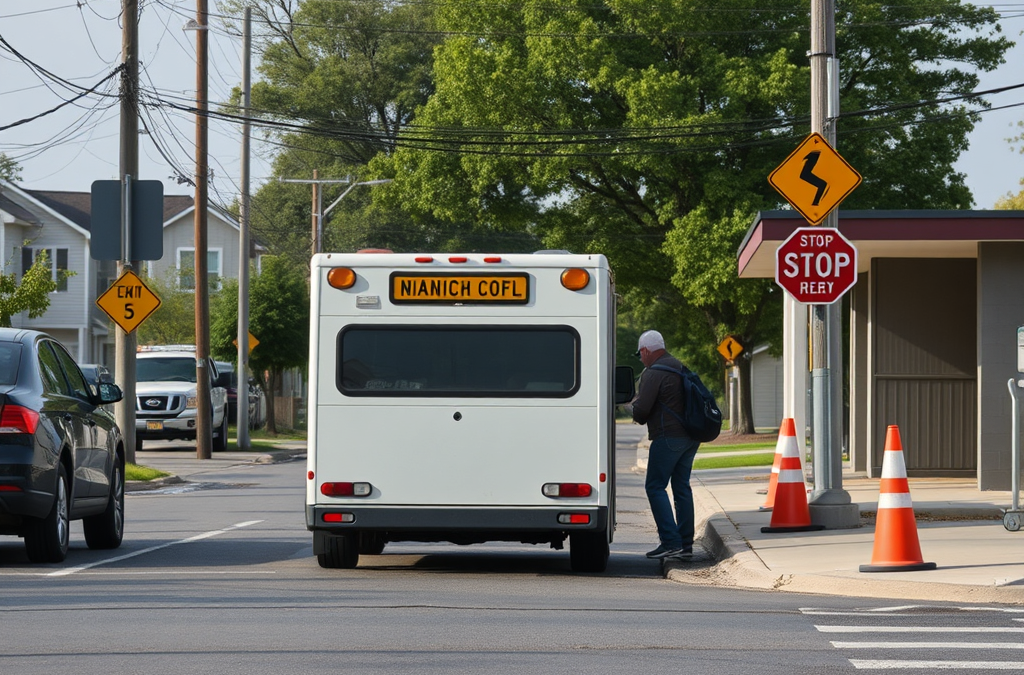
A road closure is not merely a navigation inconvenience. It can indicate that conditions have changed across the wider area, particularly if the obstruction results from wildfire, flooding, landslide activity, damaged bridges, fallen utility lines, or emergency vehicle operations. The original evacuation plan was based on assumptions about access, travel time, and destination availability. Once the main corridor closes, those assumptions require a fresh review.
The first distinction is between a route that is temporarily congested and one that is unsafe or officially closed. Heavy traffic may justify a slower alternative, while a flooded roadway, active fire perimeter, unstable slope, or law-enforcement barricade should remove that road from consideration. A navigation application may still display a closed road because map data can lag behind field conditions. Official emergency alerts and local transportation agencies should take precedence over an estimated arrival time.
Consider a family leaving an area threatened by wildfire. Their primary highway may close because smoke reduces visibility, fire crews need access, or wind shifts the hazard. A rural side road may appear shorter on a map but have limited turnarounds, no dependable communications, and a single bridge. The longer highway detour may be preferable if authorities identify it as open and it leads to a confirmed reception center. Distance alone does not measure route quality.
Reassessing the plan also means accounting for the people and equipment in the vehicle. A route suitable for a high-clearance vehicle may be inappropriate for a small car, trailer, or mobility-accessible transport. A detour that looks manageable in daylight can become difficult in darkness, heavy smoke, snow, or intense rain. The safer choice is the one that preserves options if the vehicle slows, fuel becomes scarce, or another segment closes.
Use reconsidering evacuation after the primary route closes as a planning exercise before an emergency: identify more than one departure corridor, mark bridges and low-water crossings, and record destinations beyond the nearest town. A route plan is useful only if it can adapt to changing conditions.
How to Verify an Alternate Route Under Pressure
An alternate route should be verified through more than one reliable signal before departure. Start with official emergency management messages, law-enforcement notices, transportation department updates, and local fire or weather warnings. These sources can clarify whether a road is open to all traffic, restricted to residents, subject to escorted movement, or closed in both directions. A map display by itself does not establish that a route is usable.
Next, compare the route’s physical constraints with the vehicle and passengers. Check bridge crossings, steep grades, narrow lanes, known flood-prone sections, road surface, and opportunities to turn around. If a route depends on one bridge or passes through a valley with no parallel exit, it carries a different risk from a route with multiple junctions. The best alternate is not always the shortest; it is often the one with fewer single points of failure and clearer official status.
Information quality can deteriorate quickly. Cellular service may be intermittent, crowds may overwhelm emergency phone lines, and online posts may repeat old warnings. Downloading local maps in advance can preserve basic navigation, but offline mapping will not show a newly established barricade or a fast-moving hazard. A paper map, charged power banks, a vehicle radio, and written contact information provide useful backups without creating a false sense of certainty.
Before committing to a detour, write down the route in decision-sized segments. Note the first junction, the next confirmed open road, the destination, and a point where the plan will be reconsidered. A driver who remembers only a town name may miss a closure at an intermediate intersection. A passenger should handle map checks and updates whenever possible so the driver can concentrate on road conditions.
Confirm status: Verify that the road is open now, not merely shown as historically available.
Check direction: Determine whether traffic is moving toward safety or into a restricted zone.
Identify a fallback: Mark a second route or safe stopping location before leaving.
Set a no-go condition: Turn back or stop if authorities close the route, visibility collapses, or conditions exceed the vehicle’s capability.
Avoid asking an unfamiliar driver or social media poster to settle a safety-critical uncertainty. Local observations can be useful clues, but they should be checked against current official information. The practical goal is not perfect certainty; it is enough verified information to avoid making a blind commitment.
Choosing Between a Detour, Delay, and Nearby Shelter
The decision after a primary route closes usually falls into three broad options: take a verified detour, wait for authoritative instructions or improved conditions, or move to a designated nearby shelter. Each option has different risks. Continuing may increase exposure to the hazard, waiting may reduce daylight or fuel reserves, and sheltering may be unsuitable if the building is inside the threatened area or cannot accommodate the group’s needs.
Hazard direction should guide the choice. A fire moving with wind, rising floodwater, or an approaching storm can make delay more dangerous than a longer departure. Conversely, if the closure is caused by a traffic-control operation and official messages indicate that residents should remain in place temporarily, rushing onto minor roads may create unnecessary exposure. The relevant question is not “Which option is fastest?” but “Which option keeps the group away from the hazard while preserving a workable next move?”
Destination capacity matters as much as road access. A relative’s home may be unavailable, a hotel may have no vacancies, and a public reception center may redirect arrivals. Confirm where the group can safely stop, especially when traveling with children, older adults, animals, medical equipment, or someone who cannot walk far from a vehicle. A destination that requires crossing the closed corridor is not a genuine alternative.
Fuel and daylight create hard limits. A detour that is technically open may consume more fuel than expected because of idling, slow traffic, hills, or repeated rerouting. Leaving with a nearly empty tank narrows choices and may force a stop in an exposed location. Night travel can also make smoke, standing water, debris, and unmarked road damage harder to detect. If the route cannot be completed with a reserve for unexpected delays, reassess before departure rather than hoping conditions remain ideal.
Use a simple comparison for each option:
Detour: Choose it when officials confirm access, the vehicle can manage the terrain, and fuel and visibility support completion.
Delay: Consider it only when official guidance supports waiting and the current location remains outside the hazard zone.
Designated shelter: Prefer it when travel options are deteriorating and authorities identify a safe, accessible facility.
Do not confuse familiarity with safety. A road used regularly may be more dangerous than an unfamiliar arterial if it passes through a low crossing or narrows near the hazard. Conversely, a remote shortcut should not be selected simply because it avoids traffic.
A Practical Reassessment Sequence for the Next Move
A short, repeatable reassessment sequence reduces impulsive decisions without treating the situation as predictable. First, stop at a lawful and safe location if continuing would require distracted driving or an illegal turn. Account for every person, check for injuries or urgent medical needs, and determine whether the current position is exposed to smoke, water, fire, falling debris, or another immediate threat.
Second, establish what actually closed the primary route. A closure caused by a crash may clear; a closure caused by a rising river or expanding fire zone may worsen. The cause affects whether waiting has a reasonable prospect of improving the situation. If the information is uncertain, treat the road as unavailable rather than planning around an assumption.
Third, gather current information and compare at least two sources. Record the time of the update because an old “open” report can become misleading quickly. Fourth, select a destination and route that are both confirmed enough to use. Fifth, communicate the plan to a contact outside the affected area, including the starting point, intended destination, route, vehicle description, and the condition that would trigger another change.
A practical sequence looks like this:
Stabilize: Stop safely, account for the group, and protect the vehicle from immediate hazards.
Diagnose: Identify the closure cause, direction of threat, and whether the current location remains viable.
Verify: Check official alerts, road status, weather or hazard updates, and destination instructions.
Commit carefully: Follow the confirmed route, monitor conditions, and preserve a fallback rather than improvising at every junction.
Signs that the plan is failing include repeated loss of route confirmation, unexpected barricades, rapidly worsening visibility, fuel falling below the amount needed to reach a safe stop, or passengers developing urgent needs. Those signs call for a controlled pause, a return to a confirmed safe point if possible, or compliance with new official instructions. They do not justify crossing barriers or relying on a road that responders have closed.
For future planning, pair the written sequence with reconsidering evacuation after the primary route closes during household drills. Practice assigning one person to communications, identifying a lawful stopping location, and finding offline map information. Familiarity with those roles can reduce confusion without encouraging anyone to ignore changing conditions.
Common Errors That Make a Route Change More Dangerous
The most damaging mistake is treating the original evacuation deadline as the only deadline that matters. A blocked route changes travel time, exposure, and destination access. Continuing with the old plan can lead drivers toward the same hazard from a different entrance. Recalculate the trip using current conditions, not the distance and arrival estimate saved before departure.
Another error is following the crowd without knowing why traffic is moving. A line of vehicles may be headed toward an official checkpoint, or it may be trapped behind an obstruction. Leaving a queue for an unverified side road can remove the protection of a managed evacuation corridor. If traffic is stopped, use official updates to determine whether the delay is temporary or whether authorities are redirecting vehicles.
Drivers also overestimate what a navigation application can do. Automated rerouting may favor a narrow road, private access lane, seasonal crossing, or route that is technically mapped but unsuitable under current conditions. The application can help calculate options, but it cannot replace closure notices, hazard reports, or judgment about vehicle and passenger limitations.
In closing, people often wait too long to define a fallback. A fallback is not “we will figure it out near the next town.” It is a named safe location, an alternative junction, or an official shelter with a reason it remains usable. Keep enough fuel, water, medication, charging capacity, and basic food to tolerate delays, while recognizing that supplies do not make a dangerous road safe.
The strongest plan combines flexibility with firm boundaries. Change the route when verified conditions demand it, but do not relax no-go rules because the detour is inconvenient. A calm reassessment protects decision quality; it does not guarantee that every option will remain available.
Frequently Asked Questions
Should I use a side road to avoid a closed evacuation route?
Use a side road only if current official information confirms it is open and suitable for your vehicle. An unverified shortcut may pass through the same hazard or leave you without a safe turnaround.
What should I do if mapping apps disagree with emergency alerts?
Follow current official closure and evacuation instructions over automated map routing. Save the alert or note its time, then seek clarification from local authorities if the instructions are unclear.
When is waiting safer than taking a detour?
Waiting may be safer when authorities direct residents to remain in place, the current location is outside the hazard area, and the alternate route is unverified or worsening.
How much fuel should I have before taking an alternate route?
There is no universal amount because terrain, traffic, vehicle type, and route length vary. The vehicle should have enough for the confirmed route plus delays and a safe fallback; a nearly empty tank sharply limits choices.
What if every route out appears blocked?
Do not cross barricades or drive into visible hazards. Move to an official shelter or safer location if instructed and possible, and follow emergency communications for controlled departures or protective actions.
Further Reading
Authoritative Sources
Academy of Nutrition and Dietetics eatright.org
Professional nutrition guidance, healthy eating resources, and practical dietitian-reviewed advice.
U.S. Department of Agriculture usda.gov
Official food, nutrition, agriculture, and consumer guidance from the USDA.
NIH Office of Dietary Supplements ods.od.nih.gov
Research-based fact sheets on nutrients, supplements, dietary intake, and safety considerations.
International Society of Sports Nutrition sportsnutritionsociety.org
Evidence-informed sports nutrition resources and position stands for active people and athletes.
Conclusion
A closed primary route changes the evacuation problem from following a prepared path to evaluating current access, hazard movement, fuel, daylight, vehicle limits, and destination capacity. Stop safely, identify why the closure occurred, verify alternate roads through authoritative sources, and choose the option that preserves the most safety margin. A longer documented route may be wiser than a short rural shortcut, while waiting is reasonable only when the present location remains viable and official guidance supports it. Set a clear fallback before moving, assign communication duties, and define conditions that require another reassessment. Preparing alternate routes and stopping points in advance makes those decisions less rushed, but every departure still needs to reflect the conditions authorities are reporting now.
Electricity returning is a change in conditions, not proof that every system is safe. A long outage may leave wiring damp, appliances stalled in abnormal states, pumps unable to operate, and protective devices affected by heat or water. Once current flows again, those weaknesses can produce warmth, noise, odors, leaks, or repeated trips that were absent while the property was without power.
The timing varies by hazard. A damaged receptacle may spark as soon as a device is connected, while an overloaded extension cord may become hot only after sustained use. A refrigerator may begin running but fail to cool properly, and a sump pump may start several minutes later when water reaches its float. Tracking tracking delayed hazards after electricity is restored means observing these changing conditions rather than conducting one quick walk-through.
Weak assumptions create avoidable risk. A reset breaker is not an inspection, and a quiet appliance is not necessarily a functioning appliance. Floodwater can contaminate electrical components even when the visible water has receded. Likewise, a home that appears dry may still contain moisture inside outlets, junction boxes, crawlspaces, or equipment cabinets.
Use a written log with the time, circuit, appliance, smell, sound, temperature, and action taken. A note such as “kitchen outlet warm at 7:20 p.m., unplugged toaster, breaker did not trip” is more useful than “checked kitchen.” The record helps reveal patterns and gives an electrician, utility worker, or emergency responder specific information.
The First Inspection Before Normal Use
The first inspection should be visual and cautious, with high-demand equipment left off until the electrical area and surrounding property appear stable. Look for water near outlets, scorch marks, cracked covers, loose fixtures, exposed conductors, damaged service equipment, and fallen lines outside. Do not touch wet electrical equipment or enter standing water that may conceal energized parts.
If the outage followed flooding, fire, a severe storm, or physical damage to the service connection, professional assessment may be more appropriate than homeowner testing. Avoid removing panels or opening appliances to investigate. A person can identify warning signs without attempting repairs, and that boundary matters because restored voltage can make previously inactive damage dangerous.
Check the main service area from a safe position, then move through rooms without plugging in everything at once. Turn on only necessary lights or one low-demand device, allowing time to notice buzzing, flickering, heat, or odor. Compare current behavior with what was normal before the outage, but do not treat familiar appearance as proof of safe operation.
A useful first-pass sequence is:
Confirm there are no downed lines, smoke, arcing, or active water leaks.
Keep damaged, wet, or heat-marked equipment disconnected.
Identify which circuits are energized and whether breakers trip repeatedly.
Start essential loads individually instead of using a single power strip for several devices.
Write down every abnormal observation and the exact time it occurred.
The common mistake is to restore convenience loads first: heaters, cooking equipment, laundry machines, chargers, and multiple refrigeration units. Those loads can conceal a developing problem by creating heat faster than a damaged connection can dissipate it. Prioritize lighting, communications, medical equipment, and other genuinely necessary circuits, then add loads slowly.
A Practical Monitoring Timeline
A staged timeline makes delayed changes easier to recognize. During the first 15 minutes, watch for immediate electrical symptoms: flashes, crackling, burning smells, unstable lights, warm switches, and breakers that trip as soon as a load starts. Disconnecting a device may be reasonable only if it can be reached without touching water or damaged material. Do not repeatedly reset a breaker that trips again.
Over the next one to three hours, inspect equipment that runs continuously or cycles on and off. Refrigerators, freezers, furnaces, water heaters, well pumps, chargers, and dehumidifiers may reveal trouble through unusual vibration, excessive heat, failure to cycle, or a new odor. A device that works for ten minutes and then stops may have a thermal protection problem, a blocked motor, or a damaged control component; continued testing can worsen the situation.
Later checks should include spaces that are easy to ignore. Visit the basement, crawlspace, garage, utility closet, and exterior equipment if they can be accessed safely. Look for rising water, a failed pump, condensation, animal activity disturbed by the outage, or generator-related fumes. If carbon monoxide is suspected, leave the area and use emergency services or qualified assistance rather than relying on smell.
Compare two monitoring styles. A single end-of-outage inspection is faster but may miss heat buildup and cycling failures. A timed log requires more attention yet is better suited to hazards that emerge only after sustained operation. For a small residence, checks at roughly 15 minutes, one hour, three hours, and before sleep can provide a practical record; the exact schedule should become more frequent if symptoms appear.
Signs that conditions are stabilizing include normal appliance cycles, dry surfaces, steady lighting, and no new odor or heat. Signs that monitoring is failing include repeated breaker trips, unexplained dimming, worsening moisture, warm cords, smoke, or an appliance that repeatedly starts and stops. Treat those signs as escalation points, not invitations to conduct more experiments.
Tracking Appliances, Water, Heat, and Air Quality
Appliances deserve individual attention because restoration affects each one differently. Refrigeration equipment may run without reaching a safe temperature, while a microwave, range, or space heater can draw substantial current immediately. A pump may fail mechanically after sitting idle, and a furnace may require a separate fuel, venting, or control system even though its electrical supply has returned.
Reconnect essential appliances one at a time and observe the plug, cord, outlet, and device body. A warm cord, discoloration, odor, rattling, or unexpected shutdown is a reason to stop using that item. Do not substitute a larger fuse or defeat a breaker to keep equipment operating. The protective device may be signaling a fault rather than an inconvenience.
Water-related hazards often lag behind electrical restoration. A well pump can pressurize plumbing after a delay, exposing a split pipe or failed fitting. A sump pump may start only when groundwater rises. Water heaters, boilers, and filtration equipment can also resume automatically. Check ceilings, cabinets, appliance connections, floor drains, and pump discharge routes. A small drip deserves attention before it reaches an outlet or causes hidden structural moisture.
Heat and air quality require separate observation. A generator used near a building, a blocked exhaust path, overheated wiring, or a malfunctioning fuel-burning appliance can create dangerous conditions. Carbon monoxide has no reliable smell, so an alarm is more useful than trying to detect it personally. Keep fuel-burning equipment outdoors and follow its manufacturer’s clearance and ventilation instructions; never use a kitchen range or oven as a substitute for heating.
Food safety is another delayed decision. A refrigerator may appear cold while its contents have warmed during the outage, and restoring power does not reverse spoilage. Use time and temperature information when available, discard food with questionable handling, and consult a recognized food-safety authority for specific items. Do not taste food to decide whether it is safe. The practical mistake is treating a working appliance as evidence that its contents remained safe.
When Observation Is Not Enough
Monitoring is useful only while conditions remain within a safe observation range. Smoke, visible arcing, a burning-plastic smell, a hot wall or outlet, water entering electrical equipment, repeated breaker trips, or a damaged service mast calls for immediate separation from the hazard and qualified help. If a line is down, assume it may be energized and keep people and pets away.
Contact the utility for service-equipment concerns and a licensed electrician for building wiring or appliance connections. A plumber may be needed for pressure-related leaks, while heating or fuel equipment may require a qualified technician. Describe the sequence clearly: when power returned, which circuit was used, what changed, and whether the symptom continued after the load was removed. That information is more valuable than repeatedly resetting equipment.
Do not confuse silence with resolution. A circuit can remain unused while damaged insulation slowly dries, a pump can fail only under demand, and a refrigerator can continue running without adequate cooling. Conversely, not every flicker proves severe damage; utility-side fluctuations can occur during restoration. The safe response is to document the symptom, reduce the load, and obtain the appropriate assessment rather than guessing at the cause.
Use this priority order when several issues appear at once:
Move people away from fire, smoke, exposed wiring, standing water, and suspected carbon monoxide.
Notify emergency services or the utility when the hazard involves immediate danger or public equipment.
Stop using the affected circuit or appliance if it can be done without contact with danger.
Protect essential functions on known-safe circuits, avoiding improvised connections.
Continue the log until repairs, inspection, or safe disposal resolves the issue.
For future outages, keep a flashlight, paper log, battery-powered carbon monoxide alarm if appropriate for the property, and appliance manuals accessible without relying on internet service. Mark the location of the main disconnect and water shutoff only if you already know how to operate them safely. A modest recordkeeping habit can prevent a delayed symptom from being dismissed as a harmless restart quirk.
Frequently Asked Questions
How long should delayed hazards be monitored after power returns?
Make several checks over the first few hours, especially after appliances begin cycling. Continue longer if moisture, unusual heat, odor, or equipment damage is present.
Should a breaker be reset repeatedly after restoration?
No. A breaker that trips again may indicate a fault, overload, or damaged equipment. Leave the circuit off and seek qualified assistance if the cause is not obvious and safe to isolate.
What should be checked first in a flooded area?
Keep out of standing water and avoid touching electrical equipment. Have the affected electrical system assessed before using outlets, appliances, or controls exposed to moisture.
Can an appliance be safe if it works after the outage?
Not necessarily. Watch for overheating, unusual sounds, odor, repeated shutdowns, and poor performance. Operation alone does not prove that internal components or connected wiring are undamaged.
When is professional help needed?
Get help for smoke, arcing, burning odors, hot outlets, exposed wiring, repeated trips, water near electrical parts, damaged service equipment, or suspected carbon monoxide.
Further Reading
Authoritative Sources
Academy of Nutrition and Dietetics eatright.org
Professional nutrition guidance, healthy eating resources, and practical dietitian-reviewed advice.
U.S. Department of Agriculture usda.gov
Official food, nutrition, agriculture, and consumer guidance from the USDA.
NIH Office of Dietary Supplements ods.od.nih.gov
Research-based fact sheets on nutrients, supplements, dietary intake, and safety considerations.
International Society of Sports Nutrition sportsnutritionsociety.org
Evidence-informed sports nutrition resources and position stands for active people and athletes.
Conclusion
Restored electricity should begin a period of observation, not an immediate return to full household demand. Inspect for water and visible damage, bring essential loads back individually, and record heat, odors, sounds, breaker behavior, pump activity, and appliance performance at timed intervals. Give special attention to systems that cycle or activate only after pressure, temperature, or water levels change. Stop testing when smoke, arcing, repeated trips, exposed wiring, or suspected carbon monoxide appears, and involve the utility, emergency services, or a qualified technician as appropriate. The most reliable record is specific: circuit, device, time, symptom, and action. That information turns a vague post-outage concern into a safer decision about continued use, isolation, repair, or replacement.