Build Around the First 24 Hours, Not a Large Stockpile
Limited storage changes the objective from collecting everything to covering the earliest, most disruptive needs. A compact kit should help one person manage a short interruption in power, water access, transportation, communication, or shelter. That usually means choosing a small core load that can be carried or moved quickly, then storing a few household-specific items elsewhere when space allows.
Water deserves early attention because it is difficult to compress and often cannot be replaced by a gadget. Store some drinking water if your space permits, but do not let a large container crowd out medications, phone power, or sanitation supplies. A collapsible bottle can save space when empty, while purification tablets or a compact filter may provide an additional option. These tools have different limitations: treatment products may require clear instructions and a filter may not address every contaminant. Follow the product label rather than assuming one method works for every water source.
Food selection should favor ready-to-eat items that tolerate room temperature and do not require cooking. Small nut or seed packets, shelf-stable nutrition bars, crackers, canned fish with a pull tab, and single-serve fruit can provide variety without a large cooking setup. Check allergy, medical, and cultural requirements before buying a generic assortment. A compact kit filled with foods nobody can eat is less useful than a smaller kit matched to the person carrying it.
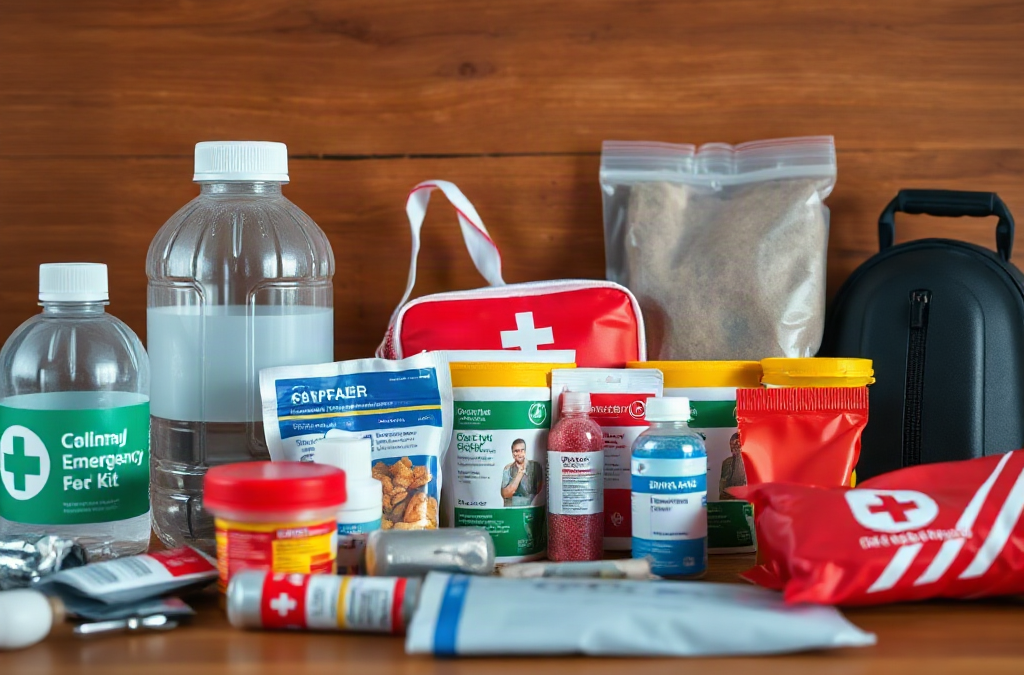
Use Emergency kits for people without storage space as a starting point, then remove anything that duplicates an item already carried daily. The first working version might fit in a commuter backpack: water container, food, light, power bank, charging cable, basic first aid, hygiene items, copies of key information, and a small communication aid. The common failure is trying to create a miniature warehouse. A deliberately limited first-day kit is easier to store, move, inspect, and actually use.
Choose Supplies by Volume, Weight, and Multiple Uses
Every item in a small emergency kit should earn its space through frequency, consequence, or versatility. A headlamp, for example, provides hands-free light while a person carries water, unlocks a door, or manages a minor injury. A phone power bank supports communication, navigation, alerts, and access to digital records. Multipurpose choices reduce volume, but only when their primary function remains reliable.
Start with a simple priority test. Ask what problem the item addresses, whether another item already covers it, whether it needs batteries or maintenance, and whether a lighter alternative exists. A small pair of scissors may be more useful than a bulky multitool for some users, while a multitool may suit someone who routinely needs pliers or screwdrivers. Neither is automatically better; the choice depends on likely tasks and the user’s ability to handle it safely.
Flat and soft packaging can make a meaningful difference in a studio apartment or shared room. Resealable pouches, compact soap sheets, folded masks, travel tissues, and a small towel occupy less irregular space than rigid kits. Keep critical supplies visible and grouped rather than scattering them through drawers. A zippered pouch inside a backpack can hold first aid and medication information, while a separate outer pocket can hold the light and phone cable for quick access.
Do not confuse high density with usefulness. A compressed blanket may occupy little room but does not replace warm clothing, and a tiny first-aid pouch may contain dressings too small for the injuries it claims to address. Compare a “survival gadget” against ordinary items already owned: a spare eyeglasses case, durable socks, a whistle, or a sealable bag may solve a specific problem more simply. Include written instructions for unfamiliar equipment. An item that requires internet access, a special battery, or complex assembly may fail precisely when the kit is needed.
Make a compact checklist that reflects the person rather than a catalog:
Communication: charged power bank, cable, contact card, and a small radio when appropriate.
Light and navigation: headlamp or flashlight, spare batteries if required, and a paper address or route note.
Health: essential medication information, prescribed supplies, glasses, basic first aid, and protective gloves.
Water, food, and sanitation: refillable container, treatment option, ready-to-eat food, wipes, tissues, and waste bags.
That list is a decision aid, not a fixed shopping order. Someone with diabetes, mobility limitations, pets, or an infant will need to allocate space differently and should not remove medically necessary supplies to preserve a minimalist aesthetic.
Use Small-Space Storage Locations Without Creating New Problems
The best storage location is compact, accessible, and protected from heat, moisture, and accidental disposal. Under-bed space, the back of a closet, a coat pocket, a desk drawer, or the area beside an exit can work better than a high cabinet. The correct choice depends on the building and the person’s routine. A kit hidden behind seasonal boxes may technically exist but be unavailable during a nighttime evacuation or power failure.
Use containers that match the space rather than forcing every item into one large bin. A backpack is useful when the kit may need to leave with its owner. A shallow lidded box suits a bed frame or shelf, while a soft organizer can fit in a narrow closet. In a shared home, label the container clearly and tell everyone where it is. In a dormitory, shared housing, or small apartment, avoid blocking hallways, exits, heaters, electrical panels, or building equipment.
Storage conditions affect reliability. Heat can damage some medications, batteries, adhesives, and food; dampness can ruin paper records, cardboard packaging, and metal tools. Keep documents in a sealed sleeve, but avoid sealing items that need ventilation or are prone to condensation. Inspect the container after moving furniture or changing rooms. A formerly convenient spot may become inaccessible once luggage, a bicycle, or a new appliance occupies the same area.
Consider a two-layer arrangement instead of one oversized kit. The first layer is a grab-and-go pouch with light, phone power, identification copies, medication details, glasses, and keys. The second layer is a compact reserve with food, water treatment, sanitation items, clothing, and extra medical supplies. This approach suits a person who cannot store a large tote but still needs more than can fit in a coat pocket. The tradeoff is that separate layers can be forgotten or divided between roommates, so both locations should be labeled and checked together.
Common storage mistakes include placing batteries loose beside metal objects, keeping food where pests can reach it, and storing the kit in a vehicle without considering temperature swings. A vehicle may be a useful supplemental location for certain durable items, but it should not be the only place for medication, identification, or supplies needed immediately at home. Test whether you can retrieve the kit in low light and with one hand occupied; that practical test reveals problems a tidy shelf arrangement can hide.
Rotate, Test, and Adapt the Kit to Your Situation
A small kit stays useful through short, repeatable checks rather than a once-a-year shopping session. Set a calendar reminder every few months to inspect expiration dates, battery condition, water containers, food packaging, medication needs, and the fit of clothing or protective equipment. Replace items before they become unusable, and use suitable food in ordinary meals when possible so rotation does not create waste.
Test equipment under ordinary conditions. Turn on the flashlight, connect the power bank to the intended phone, check that the cable fits, read the water-treatment directions, and confirm that the radio or other communication device functions as expected. If a light flickers, a battery leaks, a cable is missing, or a device has an unfamiliar interface, the problem is easier to solve at home than during an outage.
Personal changes should trigger an update. New prescriptions, a change in eyesight, a move to another building, a new pet, or a different commute can alter priorities. A person who works from home may need less commuting equipment but more power and printed contact information. Someone who spends long periods outside may prioritize weather protection. A resident on an upper floor may need a different carrying method than someone who can leave directly at street level.
Keep a short record of what was used during drills or minor disruptions. If the phone cable was difficult to find, move it to the outer pouch. If the food required a can opener, replace it with pull-tab packaging or add a compact opener. If the backpack was too heavy, remove duplicates before purchasing lighter versions. Signs the approach is working include quick retrieval, familiar equipment, intact packaging, and a load the user can carry comfortably. Signs it is failing include forgotten contents, expired supplies, inaccessible storage, or a bag so bulky that it is left behind.
Use official emergency-management guidance for hazards specific to your location, since flood, wildfire smoke, winter weather, earthquake, and building evacuation needs differ. The compact kit should support those plans, not replace them. Add only items tied to a credible local need or a clear personal requirement; space is too limited for impressive-looking objects that do not solve a likely problem.
Frequently Asked Questions
What container works best when storage space is extremely limited?
A backpack or shallow lidded box is usually practical because it protects supplies while remaining easy to move. Choose the container based on where it will live and whether you may need to carry it.
How much water should a compact kit include?
Store as much safe drinking water as your space and local guidance allow, while adding a refillable container and an appropriate treatment option. Do not assume a filter or tablet solves every water-quality problem.
Which items should be prioritized over bulky emergency gear?
Prioritize prescribed medications and health information, light, phone power, water, ready-to-eat food, sanitation supplies, identification copies, and weather-appropriate protection before specialized gadgets.
Can a car serve as the main storage location?
A vehicle can supplement a home kit with durable items, but temperature extremes and distance may make it unreliable. Keep medication, documents, and immediately needed supplies accessible where you live.
How often should a small emergency kit be checked?
Check it every few months and whenever prescriptions, household members, pets, seasons, or living arrangements change. Test lights, power banks, packaging, and other equipment instead of checking dates alone.
Further Reading
Authoritative Sources
Build a Kit ready.gov
Provides official guidance for selecting supplies and adapting an emergency kit to household needs
Survival Kit Supplies redcross.org
Offers practical supply categories that can be scaled for small homes and individual situations
Food Safety and Emergency Preparedness Resources cdc.gov
Helps readers evaluate food, water, medication, and sanitation concerns during disruptions
Conclusion
People with little storage space do not need to imitate a large household stockpile. A compact, reachable kit should cover the first day’s most consequential needs: communication, light, water, food, sanitation, health supplies, and essential information. Use a backpack, shallow box, or divided pouch system; select items that are flat, durable, familiar, and useful for more than one task when that does not compromise reliability. Keep the kit away from heat and moisture, test equipment, and rotate food, batteries, and personal supplies on a calendar. Reassess it after a move, prescription change, seasonal shift, or local hazard warning. The strongest small kit is not the one with the most gadgets; it is the one a person can find, carry, understand, and maintain.
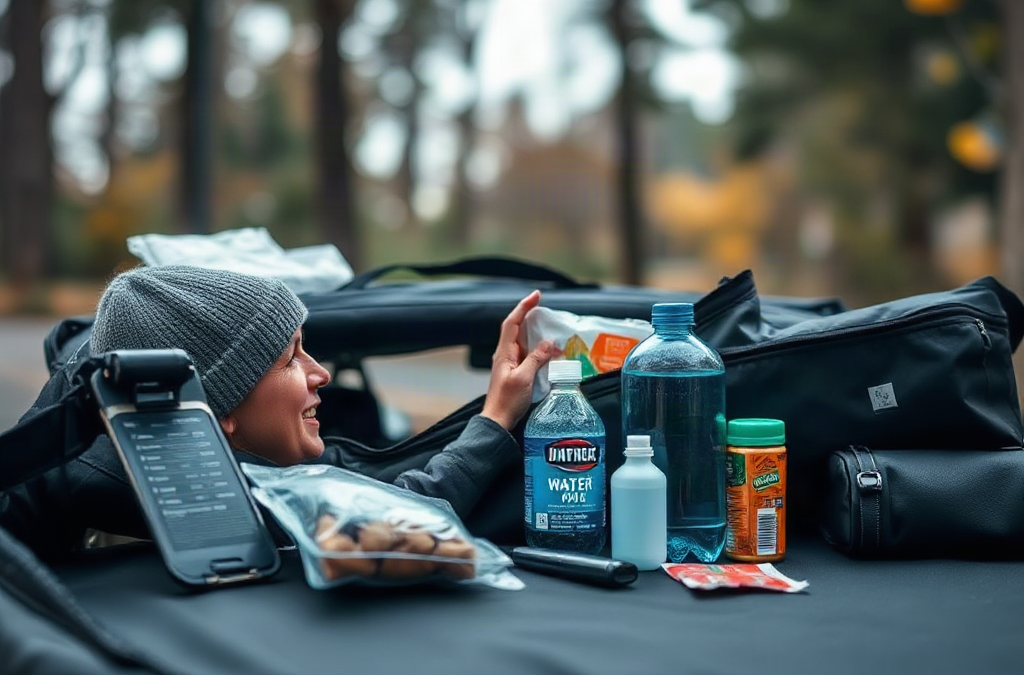
A miniprep kit is best treated as a short-duration bridge, not a miniature version of a large emergency stockpile. Its job is to help one person remain safer and more functional during a delay, sudden closure, transportation problem, power interruption, or unplanned overnight stay. The compact format imposes a useful discipline: every item must solve a likely problem, serve more than one purpose, or protect a personal need that cannot be replaced easily.
Start by defining the situation the kit must cover. A commuter may need to walk home, wait several hours for transportation, or remain at work after public services slow down. A person who travels by car may need supplies for a roadside delay, while someone working remotely may need a small household grab pouch near the entryway. These scenarios do not require identical contents. A heavy blanket may be reasonable in a vehicle during cold weather but wasteful in a desk drawer.
A practical 24-hour kit usually addresses five functions: hydration, energy, basic health, visibility and communication, and personal continuity. Water is difficult to compress, so the kit may use a small sealed bottle, a collapsible container, or a method for obtaining and treating water where that is lawful and appropriate. Food should be familiar, shelf-stable, and usable without cooking. First aid should cover minor cuts, blister care, pain relief that the user already tolerates, and any prescribed medication that can be safely carried.
Personal continuity deserves equal attention. A contact card, small charging cable, spare cash, identification copy stored securely, glasses, menstrual supplies, hearing-device batteries, or allergy-related items may matter more than another general-purpose gadget. The common mistake is building around dramatic scenarios while ignoring the ordinary constraint that actually stops a person: a dead phone, inaccessible medication, wet socks, or inability to contact family.
Use Miniprep kits for compact personal readiness as a design exercise rather than a shopping category. Write down the first six hours of the likely disruption, then identify what could prevent movement, communication, warmth, hydration, or medication access. That list is more reliable than copying a universal checklist.
Choosing Compact Supplies Without Creating Gaps
Compactness should reduce friction, not merely reduce size. A tiny item that breaks easily, requires an obscure battery, or cannot be used in poor light is not automatically a good choice. The strongest supplies are familiar, durable, and easy to verify. Packaging matters as much as the object: a crushed food wrapper, leaking liquid, or loose medication can compromise the rest of the pouch.
Choose food according to calories, tolerance, temperature, and preparation limits. A nut-free bar, crackers, dried fruit, shelf-stable spread, or other familiar snack may work for one person, while allergies, dental limitations, diabetes, or medication timing may require a different combination. Avoid testing a new product during a disruption. A compact food item that causes stomach upset or cannot be opened without a knife has failed its main purpose.
Water planning requires realistic expectations. A small bottle provides immediate access but does not equal a full day of hydration, particularly in heat or during physical exertion. A collapsible bottle saves space when empty but may be less convenient to refill and more vulnerable to puncture. Water treatment products can be useful in specific travel or outdoor contexts, but instructions, expiration dates, and source-water limitations must be understood before relying on them.
Lighting and power deserve a similar comparison. A small LED light is usually more useful than a phone flashlight because it preserves the phone battery for communication and can be positioned hands-free. A power bank adds capability but also adds weight and needs periodic charging. Carrying a cable that does not match the phone, or storing a power bank at zero charge, creates false confidence. The practical test is simple: connect the cable, turn on the light, and confirm that both work before returning them to the kit.
Medical supplies need restraint and personalization. A few adhesive bandages, gauze, tape, antiseptic wipes, blister protection, and gloves may cover common minor problems. Prescription medication should remain in original labeling when possible and should follow the user’s clinician or pharmacist guidance. Do not substitute a generic medicine merely because it is small, and do not use the kit as a place to store loose pills without clear identification. The better tradeoff is a modest, familiar medical layer plus personal items that are genuinely difficult to replace.
Building the Kit for Work, Travel, and Home
The container should match the way the kit will move. A slim zip pouch works for a desk, backpack, or coat pocket; a brighter, tougher case may be better in a vehicle; and a small handled bag can serve a home entry point. The container should open quickly, resist ordinary moisture, and make missing items visible. Multiple small cases can be useful when one contains medication or hygiene supplies, but excessive compartmentalization makes inspection slower.
For a workplace kit, prioritize quiet, low-mess items that can stay in a drawer: sealed water, a familiar snack, compact light, charging cable, basic first aid, hand-cleaning supplies, a mask if the wearer uses one, and a contact card. Include weather-appropriate comfort items if the commute may involve walking, such as thin gloves or foldable rain protection. A desk kit should not depend on access to a kitchen, locker, or personal vehicle unless those are reliably available.
A vehicle kit can carry more weight but faces heat, cold, vibration, and theft risk. Food, medication, batteries, and adhesives may degrade faster in temperature extremes, so not every household kit belongs permanently in a car. A reflective item, water, work gloves, light, phone power support, basic first aid, and a paper map or local contact information may be more useful than a large collection of tools. Check vehicle-specific needs separately, because a tire problem and a personal delay require different equipment.
At home, a miniprep kit is most useful when it can leave with the person quickly. Place it near an exit rather than burying it in a storage room. It can hold a small radio or charging solution, light, medication information, hygiene supplies, snacks, water containers, and copies of essential contact details stored with appropriate privacy protection. If several people share the home, individual medication and comfort needs should not be hidden inside one undifferentiated communal bag.
One compact priority list is more useful than an overfilled pouch:
First: medication, glasses, communication, and personal medical needs.
Second: water access, familiar food, light, and weather protection.
Third: basic first aid, hygiene, documents, cash, and small repair items.
Last: specialized tools, duplicate gadgets, and items included only because they appear on broad lists.
Compare the kit with the alternative of carrying nothing. The purpose is not to eliminate every inconvenience; it is to prevent a short interruption from becoming a medical, communication, or mobility problem. A commuter who already carries water and a power bank may need only the missing pieces, while a person with no regular carry system may benefit from a slightly larger pouch. Reusing a Miniprep kits for compact personal readiness checklist is sensible only after adapting it to the person and location.
Testing, Refreshing, and Improving the Kit
A kit becomes dependable through use and inspection, not through assembly alone. Test it under the conditions in which it may be needed: open the food with cold or wet hands, locate the light without turning on a room light, connect the charging cable, and read medication labels. These small trials expose problems that a visual inventory misses.
Run a short access test every few months and whenever the kit changes location. Check seals, leaks, battery charge, cable compatibility, food dates, medication dates, and the legibility of contact information. Seasonal changes should alter the contents: hot-weather commuting may call for sun protection and additional water planning, while cold-weather travel may require gloves, warmer layers, or a safer way to stay visible. Do not assume that a kit stored in a temperature-controlled room can be moved to a vehicle without review.
Look for signs that the design is working. The user can name the location of each critical item, open the container quickly, identify what needs replacing, and carry it without abandoning it for being uncomfortable. Failure signs include supplies remaining unused because they are inconvenient, multiple dead batteries, food that no one will eat, missing medication, or a pouch so full that its contents cannot be found. Each failure points to a design change rather than a need for more gear.
Refresh the kit after travel, illness, a weather change, a phone replacement, a move, or a change in work schedule. Replace consumed items immediately instead of waiting for the next scheduled check. Keep a small note inside with the inspection month and any item that must be remembered, but avoid writing sensitive health details where strangers could read them.
The most common misconception is that a larger kit is automatically safer. More equipment creates more weight, more maintenance, and more opportunities for confusion. A smaller kit with tested items, accurate personal information, and a clear purpose is often easier to carry and more likely to be present when needed. For related planning, the Miniprep kits for compact personal readiness approach works best when it is reviewed alongside household supplies rather than treated as a replacement for them.
For additional planning, consult local public-safety agencies, transportation providers, workplace policies, and medication guidance from a pharmacist or clinician. Those sources can clarify conditions that a generic compact kit cannot, including local weather, travel restrictions, accessibility needs, and safe medication storage.
Frequently Asked Questions
How large should a miniprep kit be?
It should hold the supplies needed for the intended short disruption without becoming too heavy or difficult to access. A desk pouch, backpack insert, vehicle case, and home grab bag may each need a different size.
Should water be included in a compact readiness kit?
Yes, when practical, but treat a small bottle as immediate support rather than a complete daily supply. Add a refill approach only if its use and limitations are understood.
What food works best in a small kit?
Choose familiar, shelf-stable food that matches allergies, dietary needs, medication timing, and the available preparation method. Test packaging before storing it.
Can medication be kept in a miniprep kit?
Personal medication needs should be planned with a pharmacist or clinician. Keep identification clear, respect storage requirements, and avoid relying on unlabeled loose tablets.
How often should the kit be checked?
Inspect it every few months and after use, travel, seasonal changes, a phone change, or any change in health or schedule. Batteries, food, seals, cables, and medication deserve particular attention.
Conclusion
A compact readiness kit earns its place by solving the disruptions most likely to affect the person carrying it. Define the scenario first, then protect medication access, communication, hydration, food, light, basic health, and weather comfort before adding specialized equipment. Match the container to its location, test every item in realistic conditions, and remove supplies that are too fragile, unfamiliar, or difficult to maintain. A workplace pouch may need different choices from a vehicle case or home exit bag, and none should be treated as a complete substitute for larger household planning. Build a modest first version, carry it for a normal week, note what was awkward or missing, and revise it during the next inspection rather than buying more items by default.
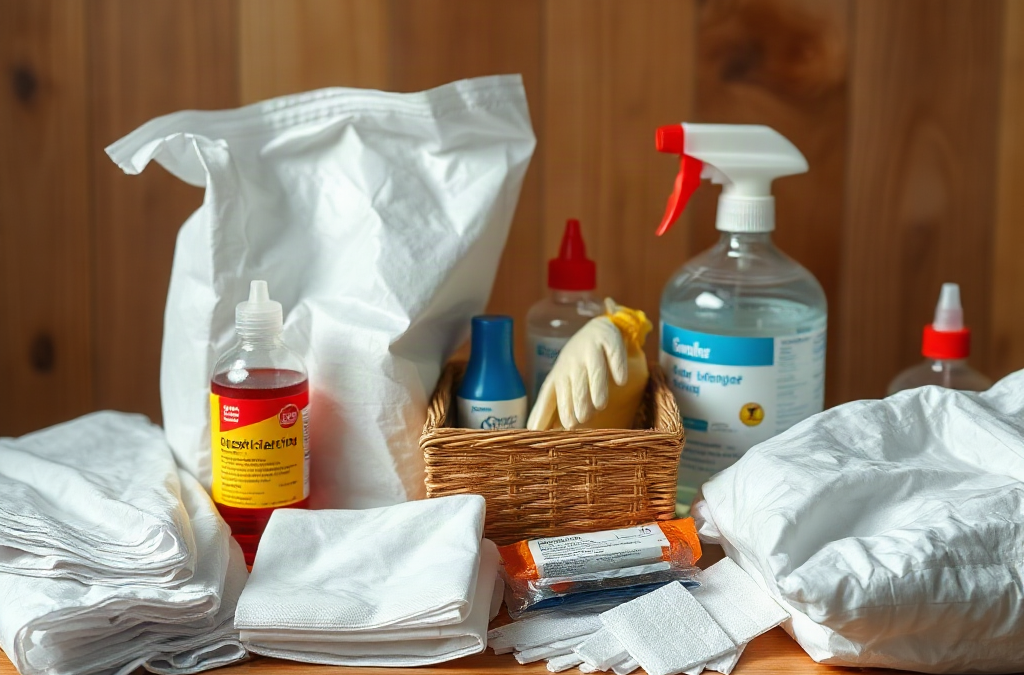
A prophylactic kit for contamination prevention is a prepared collection of barriers, cleaning aids, containment materials, and instructions intended to reduce accidental transfer before, during, and after a contamination event. The emphasis is prevention: keeping a substance from reaching skin, eyes, clothing, clean equipment, food-contact areas, or other people. A kit is most useful when it is assembled before an incident, because searching for gloves or waste bags after exposure has already begun increases hurried handling and cross-contamination.
Contamination commonly spreads through a chain rather than a single dramatic failure. A person touches a questionable surface, handles a phone or door handle, removes gloves incorrectly, and then touches their face or clean supplies. Clothing can carry residue beyond the original work area, while damp cloths and shared brushes can move material across a wider surface. The kit should therefore support the entire sequence: approach, isolation, protection, removal, cleaning, disposal, and hand hygiene.
For example, a small spill of an unknown household chemical requires a different response from a known, low-risk dirt transfer or a suspected biological exposure. The first situation may require distance and professional advice rather than hands-on cleanup. The second may be manageable with gloves and cleaning materials suited to the surface. Treating both events as identical is a common mistake because protective equipment only works when its material and use match the hazard.
Use the kit to control a defined, limited task, not to justify entering an unsafe area. If there is strong odor, visible vapor, fire, a large spill, a needle or sharp object, suspected infectious material, or an unknown substance, stop and seek guidance from emergency services, poison-control resources, workplace safety personnel, or the relevant authority. A well-stocked kit supports cautious action; it does not turn an untrained person into a hazardous-materials responder.
Essential Components and How They Work Together
The most useful kit contains compatible layers rather than a random assortment of products. Disposable nitrile gloves are often practical for routine surface contact, but glove choice depends on the substance and the manufacturer’s resistance information. Add eye protection that covers the sides, a disposable apron or coverall when clothing may be splashed, and a face covering only when it is appropriate for the identified hazard. A face covering should not be treated as protection against every vapor, gas, or airborne risk.
Hand hygiene supplies are equally important. Include soap access where possible, alcohol-based hand sanitizer for situations in which hands are not visibly soiled, and disposable towels. Cleaning and disinfection are separate functions: cleaning removes soil and residue, while disinfection uses a product and contact time appropriate to the target organism or surface. A disinfectant cannot reliably work through heavy dirt, and mixing cleaning chemicals can create dangerous reactions.
Containment supplies prevent a used item from becoming a second contamination source. Useful additions include sealable bags, absorbent material selected for the substance, disposable cloths, sturdy labels, and a marker. Add a small flashlight and a simple instruction card if the kit may be used in poor lighting or by more than one person. The instruction card should identify what not to touch, where clean items are stored, how used items are isolated, and who to contact for escalation.
Barriers: gloves, eye protection, and protective clothing suited to the task.
Control materials: absorbent pads, disposable wipes, bags, labels, and ties.
Hygiene supplies: soap, sanitizer, towels, and a clean-water option when feasible.
Information: product labels, hazard instructions, contact numbers, and replacement dates.
A compact kit is easier to inspect and carry, while a larger kit provides more sizes and replacement stock. The tradeoff is not simply quantity. Excess supplies can become disorganized, expired, or difficult to identify under pressure. Arrange unused protective items in one clean section and containment or waste materials in another. That separation makes it less likely that a clean glove will be handled with contaminated hands.
Readers building a broader supply inventory can connect this kit with A prophylactic kit for contamination prevention as part of a clearly labeled preparation-supplies area. The useful test is whether a person can identify the first three actions without opening every container.
Choosing Supplies for Different Contamination Risks
Supply selection should begin with the exposure route and the material involved. Contact contamination calls for barriers, controlled handling, and hand hygiene. Splash risk raises the priority of eye and face protection. Dust or airborne particles may require a properly selected respirator and a fit-related process that ordinary disposable masks do not provide. Chemical exposure requires checking the product’s safety information and glove compatibility rather than relying on the label “heavy duty.”
Consider a kitchen surface, a bathroom cleanup, and a workshop spill. A kitchen task may prioritize food-safe cleaning procedures and separation of clean utensils. A bathroom task may involve body fluids, requiring careful containment and disinfection according to product instructions. A workshop spill may involve solvents, fuels, or corrosives for which household gloves and paper towels are unsuitable. The same plastic bag and disposable glove may appear useful in all three settings, but their limitations differ sharply.
Known information improves decisions. Keep original product labels, safety data sheets where available, and manufacturer directions with the kit. Record whether a cleaner is intended for hard, nonporous surfaces, whether it must remain wet for a stated contact period, and whether ventilation is required. Never assume that a stronger concentration is safer; excessive concentration can damage surfaces, increase fumes, or create skin hazards without improving the result.
Budget constraints favor a small, replaceable core: several glove sizes, eye protection, bags, labels, towels, soap, and a suitable general-purpose cleaning product. Higher-risk workplaces may need task-specific chemical gloves, face shields, spill-control materials, or professionally selected respiratory protection. The advanced option is worthwhile when the setting routinely handles a known hazard; it is not worthwhile to collect specialized equipment that no one has been trained to use.
Use this decision sequence before opening the kit:
Identify the substance if it can be done without approaching or touching it.
Estimate whether contact, splash, dust, vapor, or sharps create the main exposure route.
Isolate people, pets, food, and clean equipment from the area.
Choose protection and cleaning materials supported by the product instructions.
Escalate when the substance is unknown, the area is large, or symptoms occur.
One weak assumption is that “more protective” always means better. Bulky clothing can impair vision and dexterity, leading to poor glove removal or accidental contact. Protection should be sufficient for the credible risk and usable for the task. If the risk cannot be characterized, distance and expert advice are safer than improvisation.
Safe Use, Packing, and Replacement
A kit works best when its sequence is visible before use. Store it in a dry, accessible location away from heat, sunlight, food, and ordinary household chemicals. Keep clean supplies sealed, label the outside by function, and place the instruction card where it can be read without opening the contaminated section. A monthly visual check is useful for damaged packaging, depleted gloves, dried wipes, leaking bottles, and missing labels.
During use, establish a clean zone and a contaminated zone. Put on protection before approaching the material, limit movement, and take only the supplies required for the task. Avoid touching phones, light switches, cabinet handles, or personal items while wearing used gloves. If a glove tears, stop, move to a safe position, remove it carefully, wash hands, and replace it; continuing because the task is nearly finished is a frequent failure mode.
Removal of protection deserves as much attention as putting it on. Treat the outer surfaces of gloves, aprons, and eye protection as contaminated. Remove them slowly without snapping or shaking, place disposables directly into the designated bag, and wash hands afterward. Reusable goggles or tools should be cleaned according to their material and the suspected contaminant before returning to the clean section. Do not place used items on a kitchen counter or back into the original kit.
Replacement timing should follow condition and manufacturer information rather than an arbitrary promise of indefinite shelf life. Replace gloves or bags when packaging is damaged, products are brittle, wet, contaminated, or past their stated use period. Review the kit after every deployment and record what was used. A kit that looks full but lacks the correct glove size, working cleaner, or intact bags is not operationally ready.
For a home or small workplace, a short written checklist may outperform a larger collection of supplies. Link the checklist with the contamination-prevention kit inventory and identify the person responsible for inspection. That simple ownership step prevents the common problem in which everyone assumes someone else replaced the missing items.
Common Mistakes and Practical Boundaries
The most damaging mistakes involve cross-contamination, chemical improvisation, and overconfidence. Wiping a surface with a dry cloth may spread residue; spraying an unknown substance may create droplets or fumes; wearing gloves may encourage a person to touch more objects. Gloves protect hands only while they remain intact and are used correctly. They do not make face touching, food handling, or careless disposal safe.
Another mistake is using bleach, ammonia, solvents, or other cleaners together or outside their labeled purpose. Keep products in their original containers, follow label directions, and provide ventilation only when the instructions and hazard allow it. If eyes, skin, or breathing are affected, move away from the exposure and seek appropriate medical or emergency advice rather than continuing cleanup.
Disposal is also context-dependent. Ordinary household waste rules may not apply to contaminated sharps, chemical residues, large amounts of biological material, or items from a regulated workplace. Seal and label waste temporarily when appropriate, but do not assume a sealed bag makes hazardous material suitable for regular trash. Local authorities, workplace procedures, product manufacturers, or emergency services can clarify the correct route.
The practical priority is a usable barrier-and-containment system supported by clear limits. Test the kit by asking someone unfamiliar with its contents to locate gloves, eye protection, bags, hand-cleaning supplies, and contact instructions. If that person cannot do so quickly, reorganize the kit. Readers seeking related planning material may also review contamination prevention supplies and handling procedures before adding specialized equipment.
Frequently Asked Questions
What is the most important item in a contamination-prevention kit?
No single item is sufficient. Intact gloves, eye protection, hand-cleaning supplies, sealable waste bags, and clear instructions work together to interrupt transfer.
Can one kit handle every type of contamination?
No. Chemical, biological, particulate, and sharps hazards may require different materials, procedures, disposal methods, or professional response.
How should used disposable items be handled?
Place them directly into a suitable labeled bag or container without touching clean surfaces, then follow local or workplace disposal requirements.
How often should the kit be checked?
Inspect it regularly and after every use. Replace damaged, depleted, leaking, or expired supplies and confirm that instructions and contact details remain current.
When should a person avoid using the kit?
Avoid hands-on cleanup when the substance is unknown, the area is extensive, fumes or fire are present, sharps are involved, or symptoms develop. Seek qualified assistance instead.
Conclusion
A useful contamination-prevention kit is not defined by how many items it contains. Its value comes from matching barriers, cleaning materials, containment supplies, and instructions to the exposure that could realistically occur. Keep clean and used materials separate, make hand hygiene part of the sequence, and inspect the kit often enough to catch damaged packaging or missing components. Treat unknown substances, strong fumes, sharps, and significant exposures as escalation situations rather than ordinary cleanup tasks. Assemble a compact core for routine, limited incidents, then add specialized equipment only when the hazard is known and users understand its limitations. The next practical step is to inventory the kit, label its zones, and rehearse safe removal and disposal without an active contamination event.