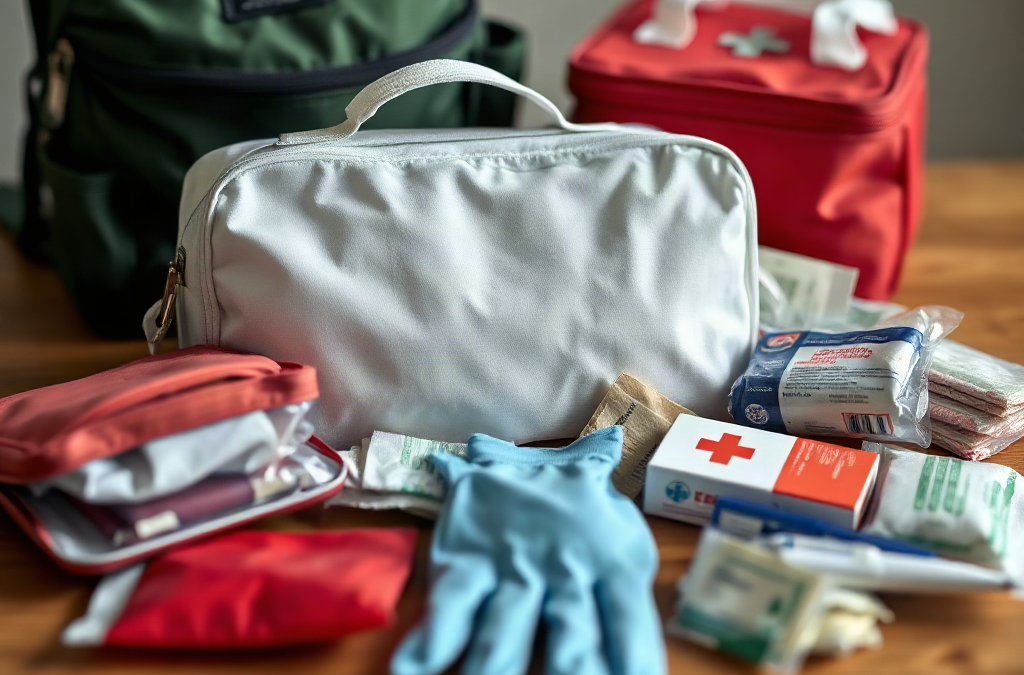
A first aid kit is ready for use when its contents can be identified, reached, and used safely under pressure. A large container filled with miscellaneous products may look well supplied but still fail if sterile dressings are buried, gloves have degraded, or nobody knows which items are intended for serious bleeding. Readiness is an operational condition, not a shopping-list total.
Build the kit around three needs: protecting the responder, controlling immediate threats, and supporting care until professional help arrives. Nitrile gloves, hand sanitizer, barrier protection for rescue breathing when appropriate, gauze, adhesive dressings, medical tape, bandages, antiseptic supplies, scissors, tweezers, and a digital thermometer cover common minor injuries. Trauma-focused additions may include pressure dressings, wound-packing gauze, a commercial tourniquet, and a marker for recording key information. A flashlight, spare batteries, emergency blanket, and written emergency contacts can matter when power or visibility is poor.
The best contents depend on location and users. A home kit for children may need child-appropriate medication guidance and burn supplies, while a hiking kit must stay compact and tolerate moisture. A workplace kit may need several pairs of gloves and supplies for multiple people. Avoid assuming that a larger kit is automatically safer; excess packaging can slow access and encourage storage in a place nobody checks.
A common failure is mixing first aid equipment with unrelated household items. If pain relievers, sewing materials, expired creams, and loose batteries fill the same pouch, a person responding to a cut may waste time searching. Keep the core kit limited to recognizable supplies, label unusual items, and place a short emergency instruction card on top. The related first aid equipment readiness checklist should be treated as a living inventory rather than a one-time purchase.
How to Organize Supplies for Fast Access
Organization should follow the order in which a responder is likely to act. Put gloves and a face covering in an exterior pocket or clearly marked top compartment, followed by bleeding-control materials and large dressings. Minor wound care, medications, cold packs, and comfort items can occupy separate sections. This arrangement reduces the need to empty the entire container while someone is bleeding.
Use transparent pouches or strong labels such as “Bleeding,” “Burns,” “Wounds,” and “Medication.” Color coding can help, but labels should remain readable in low light and should not depend on a phone or electronic inventory. Keep scissors, tape, and a flashlight in fixed locations. If several people share the kit, every regular user should be able to return items to the same compartment.
Consider the difference between a grab-and-go kit and a household supply cabinet. A portable kit should contain the minimum equipment needed to leave quickly: gloves, dressings, tape, trauma supplies, a light, identification information, and essential personal medications where appropriate. A larger reserve can hold replacement dressings, extra water, sanitation supplies, and additional protective equipment. Combining both roles in one oversized box creates a tradeoff: it increases stock but decreases portability and search speed.
Test the layout with a simple timed rehearsal. Ask someone unfamiliar with the kit to locate gloves, gauze, a pressure dressing, and the flashlight without coaching. If that person opens every pouch or cannot distinguish sterile from non-sterile material, the system needs revision. A frequent misconception is that memorizing the contents is enough; visible placement and consistent labeling are more dependable when stress narrows attention.
Top or outer pocket: gloves, barrier protection, emergency contacts, and a light.
Immediate-care compartment: gauze, pressure dressings, tape, bandages, and burn coverings.
Support compartment: thermometer, cold pack, tweezers, scissors, blanket, and spare batteries.
Separate reserve: replacement stock and items that are not needed for the first response.
Inspection, Replacement, and Storage Checks
Readiness deteriorates through expiration, heat, moisture, contamination, and ordinary use. Inspect the kit on a recurring schedule and after every incident. Check that sterile wrappers are sealed, adhesive products still stick, elastic materials have not become brittle, and liquids have not leaked. Batteries should be tested in the device they power rather than assumed usable because they are present.
Storage conditions affect equipment differently. Adhesives and medications may degrade in hot vehicles; fabric dressings can become damp in poorly sealed containers; plastic packaging can crack when repeatedly crushed. A cool, dry, clearly marked location near an exit or common living area is usually more useful than a hidden “secure” location that nobody can access quickly. Keep supplies away from children unless the container is secured in a way responsible adults can still open promptly.
Medication storage requires extra caution. Do not transfer tablets into unmarked bags, and do not rely on a general medicine supply for someone else’s prescription. Retain original labels, follow package directions, and consider allergies, age, pregnancy, and existing conditions. A first aid kit should support basic care, not encourage improvised prescribing. If a medication has changed color, texture, smell, or packaging condition, replace it according to the manufacturer’s guidance.
Use an inventory card with the date checked, items used, items nearing expiration, and the person responsible for restocking. Rotate consumables before they expire rather than waiting for a crisis. The most common inspection mistake is counting products without opening the case. A kit can contain ten rolls of gauze and still be functionally unavailable if they are wet, unsealed, or packed beneath heavy equipment. For more detailed planning, compare the storage approach with your emergency supply setup and identify which items must remain portable.
Matching Equipment to Real Emergency Scenarios
Equipment choices should reflect the injuries and conditions most plausible in the setting. A kitchen requires burn coverings, clean dressings, gloves, and supplies for cuts. A garage or workshop may justify stronger eye-protection support, larger dressings, and bleeding-control equipment. Outdoor travel adds weather exposure, blisters, insect-related concerns, and the need to carry the kit without damaging it.
For severe bleeding, the priority is immediate pressure and rapid contact with emergency services. Gloves protect the responder, while gauze or a pressure dressing can support sustained compression. A commercial tourniquet may be appropriate for life-threatening limb bleeding when the user has suitable training, but it should not be treated as a universal substitute for direct pressure or professional guidance. Supplies should be stored together so the responder does not lose time deciding which compartment contains trauma materials.
For burns, clean cool running water is often more useful initially than a crowded collection of creams. Dressings should not be applied in a way that traps heat or adheres to damaged tissue, and severe burns require urgent medical assessment. For suspected fractures or spinal injury, the kit cannot replace evaluation; improvised movement may worsen harm. A flashlight, blanket, and phone power bank may be more useful than another small adhesive strip when an incident occurs outdoors after dark.
Scenario testing exposes weak assumptions. Imagine a cyclist with road rash, a child with a deep cut, or an adult who becomes faint after an injury. Ask what the first responder needs within thirty seconds, what can wait, and which symptom requires escalation. A kit designed only for paper cuts may be inadequate for a remote location, while a trauma-heavy kit in a supervised office may be unnecessarily complex. Choose equipment by exposure, distance from medical care, number of users, and responder skill.
Using a Kit Without Delaying Professional Care
First aid equipment supports immediate actions while help is being arranged; it does not diagnose serious illness or replace emergency treatment. Call local emergency services for uncontrolled bleeding, breathing difficulty, loss of consciousness, chest pain, serious allergic symptoms, major burns, suspected stroke, or severe injury. The person calling can often remain on speaker while another responder retrieves the kit.
Use protective barriers first when blood or other body fluids are present. Apply only procedures you understand, follow instructions supplied with unfamiliar equipment, and monitor the injured person rather than focusing exclusively on the wound. Note the time of major actions, such as applying a tourniquet or giving an authorized medication, so that information can be passed accurately to responders. Do not remove an embedded object simply because the kit contains tweezers.
Training changes the value of equipment. A pressure dressing is more useful when the user has practiced opening the package and applying firm pressure; a tourniquet can create confusion when it is bought but never handled. Consider a recognized first aid or CPR course for household members, caregivers, and workplace responders. Training should include when to stop self-care and seek urgent assistance, because overconfidence can be more dangerous than a modestly stocked kit.
After an incident, isolate contaminated materials, replace used supplies, clean reusable equipment according to its instructions, and document what happened while details are fresh. If symptoms worsen, bleeding resumes, the person becomes confused, or normal breathing is absent, escalate immediately. A reliable kit is therefore part of a larger response: clear communication, protective behavior, appropriate first aid, and timely medical care work together.
Frequently Asked Questions
What should be checked first in an emergency kit?
Check gloves, bleeding-control supplies, dressings, the flashlight, and any item needed for the immediate injury. Confirm that packaging is sealed and equipment is reachable.
How often should first aid equipment be inspected?
Inspect it on a recurring household or workplace schedule, after every use, and after exposure to heat, moisture, flooding, or rough transport. Review expiration dates during each inspection.
Is a larger first aid kit always better?
No. A larger reserve can provide useful replacements, but an overloaded kit may be difficult to carry or search. Keep immediate-use supplies compact and store reserve stock separately.
Should a first aid kit include prescription medication?
Keep personal prescriptions in their original labeled containers and follow the prescribing instructions. Do not share prescription medication or place unidentified tablets in a communal kit.
When should first aid give way to emergency medical care?
Seek urgent help for uncontrolled bleeding, breathing problems, unconsciousness, severe burns, chest pain, serious allergic symptoms, suspected stroke, or any rapidly worsening condition.
Further Reading
Authoritative Sources
American Red Cross First Aid redcross.org
Provides recognized first aid education and guidance on responding to common injuries while arranging professional care
Build a Kit ready.gov
Explains how emergency supply kits can be assembled, stored, and adapted for household needs
Medical Services and First Aid osha.gov
Offers workplace-oriented information about first aid supplies, access, and emergency response arrangements
Drug Expiration Dates fda.gov
Clarifies why expiration dates and storage conditions matter when medications are kept in an emergency kit
Conclusion
Reliable first aid equipment is defined by access, condition, organization, and fit for the setting. Put protective gear and bleeding-control supplies where they can be reached immediately, separate them from minor-injury items, and test the layout with someone who did not pack the kit. Inspect seals, batteries, medications, adhesives, and moisture damage on a recurring schedule, then restock after every use. Match the kit to likely hazards, travel distance, weather, and the skill level of the people expected to use it. Pair supplies with basic first aid training and a clear decision to call emergency services when symptoms are severe or worsening. A smaller, maintained kit that people can use confidently is more valuable than a larger box that is inaccessible or outdated.
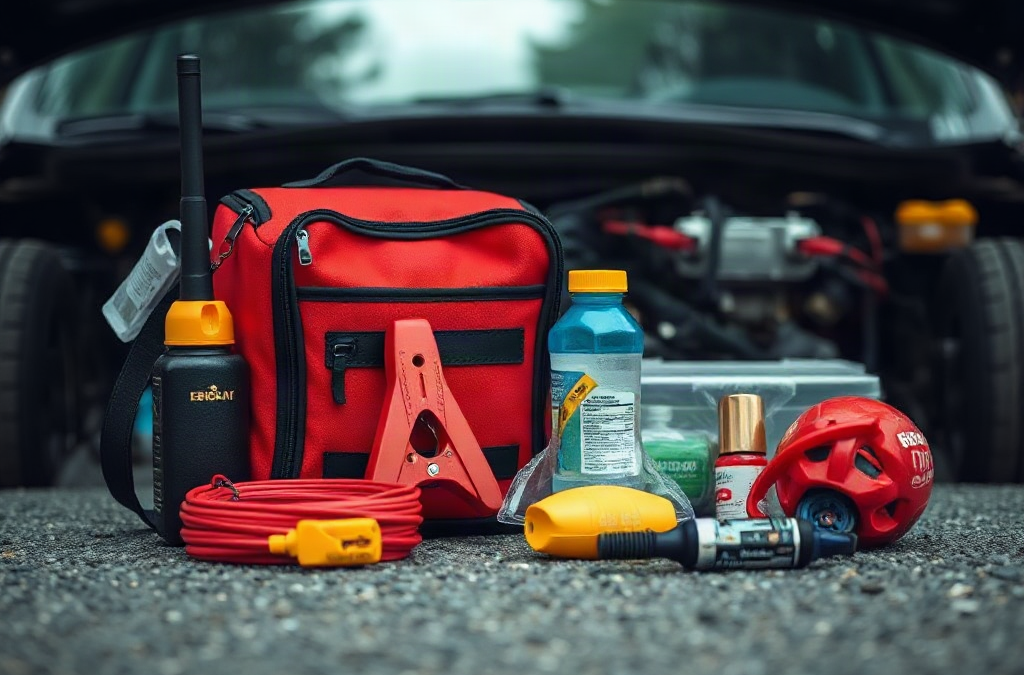
A roadside jumpstart pack is a compact set of equipment for making a stalled vehicle safer and addressing a limited number of common problems. Its purpose is not to turn a driver into a mechanic. It should provide enough capability to restore power when a battery is discharged, make the vehicle visible to approaching traffic, support communication, and reduce exposure while help is arranged.
That distinction determines what belongs in the pack. Jumper cables may help when another vehicle is available, while a portable jump starter can work without a second vehicle but depends on battery charge and correct connection. Neither option repairs a failed alternator, a damaged battery, or an engine problem. A useful roadside preparedness pack therefore combines recovery equipment with warning and waiting supplies rather than treating the jump starter as the whole solution.
Location also changes the priority. A breakdown on a well-lit suburban street presents a different risk from a stop on a narrow shoulder, at night, during rain, or in extreme heat. In the second situation, reflective equipment, a reliable flashlight, a charged phone, and a way to contact roadside assistance may matter more than an expanded tool collection. Drivers should avoid unpacking beside traffic when moving to a safer location or remaining in the vehicle is the better choice.
A common mistake is buying a large emergency bag without checking whether its main device works with the vehicle. Some jump starters are unsuitable for larger engines, and some cables are too short or poorly insulated for convenient use. Read the vehicle and equipment instructions, confirm compatibility, and treat manufacturer limits as real limits rather than suggestions.
Core Battery and Visibility Equipment
The battery section deserves the most attention because an attempted jump involves electrical energy, awkward positioning, and traffic exposure. A dependable pack should contain either heavy-duty jumper cables or a portable jump starter, plus gloves and eye protection. Cables need intact insulation, clean clamps, and enough length to reach safely. A jump starter needs a charged internal battery, secure clamps, clear polarity markings, and a storage case that prevents accidental contact between terminals.
For a traditional jump, the order and connection points in the vehicle manual take priority. Drivers should park the assisting vehicle as instructed, switch off both vehicles before making connections, keep clamps from touching each other, and remove the cables in the specified reverse sequence. Hybrid and electric vehicles require extra care because their starting systems differ; the owner’s manual should identify whether the vehicle has an approved jump point and what the high-voltage system does not permit. Guessing can damage electronics or create a personal hazard.
Visibility equipment is just as important as the electrical device. Keep a high-visibility vest, a bright flashlight with spare batteries, and reflective warning triangles or equivalent warning devices where local rules and conditions permit. Hazard lights can help, but they are not a substitute for a flashlight or reflective marking when the vehicle is hard to see. A phone power bank and charging cable should be stored with the kit, not left in a separate drawer at home.
Choose between cables and a jump starter based on driving patterns. Cables are inexpensive and do not lose charge while stored, but they require another vehicle and a willing driver. A jump starter offers independence and is often more useful for a lone driver, although it must be recharged periodically and may fail if stored empty or in unsuitable temperatures. Carrying both is sensible for frequent long-distance driving if the added weight and maintenance are acceptable.
Items for Tires, Weather, and Personal Safety
A well-rounded roadside kit covers the problems that can leave someone waiting after the battery issue has been ruled out. Add a tire-pressure gauge, a vehicle-compatible inflator, and a tire sealant only when the product suits the tire and the manufacturer allows its use. A sealant can be a temporary measure for some small punctures, but it is not appropriate for every tire failure, sidewall damage, or a tire that has come off the rim. The spare tire, jack, and lug wrench should be checked separately because many drivers assume they are present without confirming their condition.
Weather supplies reduce exposure while assistance is delayed. Water, a compact blanket, hand warmers for cold conditions, sunscreen, and a small rain layer may be more practical than a bulky collection of tools. Include nonperishable snacks if occupants may wait for an extended period, especially on rural routes. A first-aid kit should contain basic wound-care supplies, but it should not encourage a driver to handle serious injuries instead of contacting emergency services.
Personal safety items should match the vehicle and passengers. Work gloves protect hands from hot, dirty, or sharp components; closed footwear is safer than sandals when inspecting a tire; and a seat-belt cutter or window-breaking tool may be considered if it can be stored where the driver can reach it. Keep medication, mobility aids, and child-specific needs in a separate regularly checked supply rather than assuming a generic kit covers them.
Tools require restraint. A screwdriver set, adjustable wrench, pliers, duct tape, cable ties, and a small utility light can support simple tasks such as securing a loose trim panel or replacing a fuse when the manual permits it. They will not make an unsafe roadside repair safe. The failure mode to avoid is spending time under a vehicle, near traffic, or in poor visibility because the kit contains tools. If smoke, fuel leakage, severe damage, a high-voltage warning, or an unsafe stopping position is present, move away from the hazard and request professional help.
How to Build, Store, and Check the Pack
Build the pack in priority order: make the vehicle visible, communicate your location, address a simple battery or tire issue, and remain protected while waiting. A compact checklist prevents expensive but less useful purchases from displacing essential items. Start with a charged jump starter or sound cables, flashlight, reflective warning equipment, gloves, phone charging gear, water, first aid, and the vehicle’s own spare-tire equipment. Add weather and passenger-specific supplies after those basics are covered.
Inspect monthly: test the flashlight, check cable insulation and clamps, confirm the jump starter charge, and replace damaged or expired supplies.
Inspect seasonally: review water, snacks, batteries, clothing, and temperature-sensitive equipment before hot or cold travel periods.
Check before a trip: verify the spare tire’s pressure, locate the jack points, save roadside assistance details, and confirm the phone has a charging cable.
Storage involves a practical tradeoff. A trunk kit is protected from passengers and keeps the cabin clear, but it may be inaccessible if the trunk cannot open after a crash or if the vehicle is stopped on a dangerous shoulder. Keep the smallest critical items—phone power, flashlight, reflective vest, and emergency contact information—within reachable cabin storage, while heavier equipment can remain secured in the cargo area. Never allow loose tools or jump starters to become projectiles.
Practice matters more than collecting equipment. Read the jump starter instructions before an emergency and identify the approved battery terminals or jump points. Learn how to release the spare tire and jack without lifting the vehicle during practice. A useful test is whether a driver can locate the warning equipment in darkness, explain where to stand safely, and decide when not to attempt a repair. If those steps are unclear, another accessory will not solve the underlying problem.
Drivers should also record the vehicle’s assistance number, insurance contact, and location-sharing method. When calling, provide the road name or route, direction of travel, nearby landmarks, vehicle description, and whether anyone is injured or exposed to traffic. That information can shorten the handoff to a tow or emergency service. The related vehicle preparedness checklist should be reviewed whenever the vehicle, driver, or usual route changes.
Common Packing Mistakes and Better Priorities
The most frequent mistake is treating a jumpstart kit as a guarantee that the vehicle can continue. A successful restart does not prove the battery is healthy or that the charging system is functioning. If the engine starts and warning lights remain on, the vehicle may stop again. Arrange testing or professional assistance rather than repeatedly restarting and driving farther from help.
Another mistake is overlooking basic visibility. Drivers often buy cables first and discover that the flashlight has dead batteries, the vest is buried under luggage, or the reflective warning equipment is unavailable. Put safety and communication items where they can be reached without standing in traffic. If the shoulder is narrow, traffic is fast, or weather is severe, staying belted inside with hazard lights and contacting assistance may be safer than opening the hood.
Do not rely on online connection diagrams when the vehicle manual gives different instructions. Battery layouts vary, and modern vehicles may have designated terminals, sensitive electronics, or special procedures. A portable jump starter also needs careful handling: verify polarity, keep the clamps separated until connected, and disconnect it promptly after the vehicle is running according to its instructions.
The best pack is proportionate to the driver’s real conditions. A commuter in a populated area may prioritize a charged phone, visibility gear, and a reliable jump starter. A rural traveler may add more water, warm clothing, food, and navigation backup. A household with children or medical needs should adapt the contents around those occupants. Revisit the pack after every use and replace what was consumed instead of assuming the kit is ready because it remains in the vehicle.
For a final review, use the roadside equipment checklist and ask three questions: Can I be seen? Can I call and power my phone? Can I address a simple battery or tire problem without creating a greater hazard? If the answer to any question is no, that gap deserves priority over adding another specialized tool.
For vehicle-specific jump procedures, tire limitations, and designated connection points, consult the owner’s manual and the instructions supplied with the jump starter. Local transportation agencies and recognized roadside-assistance organizations can also provide current advice about stopping safely, warning approaching traffic, and requesting help.
Frequently Asked Questions
Are jumper cables or a portable jump starter better?
Cables are inexpensive but require another vehicle. A portable jump starter works independently, provided it is compatible, charged, and used according to its instructions. Frequent long-distance drivers may carry both.
Should a jumpstart pack include a spare tire?
The vehicle’s spare tire, jack, and lug wrench are separate from the pack but should be checked as part of roadside preparedness. Confirm that the spare is inflated and that the tools fit the vehicle.
Where should the kit be stored?
Store heavy equipment securely in the cargo area, but keep a flashlight, reflective vest, phone charger, and emergency contact details reachable from the cabin when practical.
Can a jump starter fix a failing battery?
It may provide enough power for a temporary start, but it does not repair a damaged battery or charging system. Repeated failure, warning lights, or rapid shutdown calls for professional diagnosis.
What should I do if the vehicle stops in an unsafe place?
Prioritize people over repairs. Turn on hazard lights, contact emergency or roadside assistance, move to a safer location when possible, and avoid standing near moving traffic or attempting work in a dangerous position.
Conclusion
A roadside jumpstart pack should solve a narrow problem without creating a larger one. Give priority to a compatible, maintained power solution, clear visibility equipment, phone power, gloves, water, basic first aid, and weather protection. Keep the vehicle’s spare-tire equipment ready, but recognize when a puncture, electrical fault, collision, fuel leak, or unsafe shoulder requires professional assistance. Test the jump starter, inspect cables and batteries, and place critical items where they can be reached quickly. Before the next long trip, read the vehicle manual, check the route and weather, and confirm that every regular passenger’s needs are covered. The strongest kit is not the largest one; it is the one that supports a safe decision when a restart is possible and helps the driver recognize when it is not.
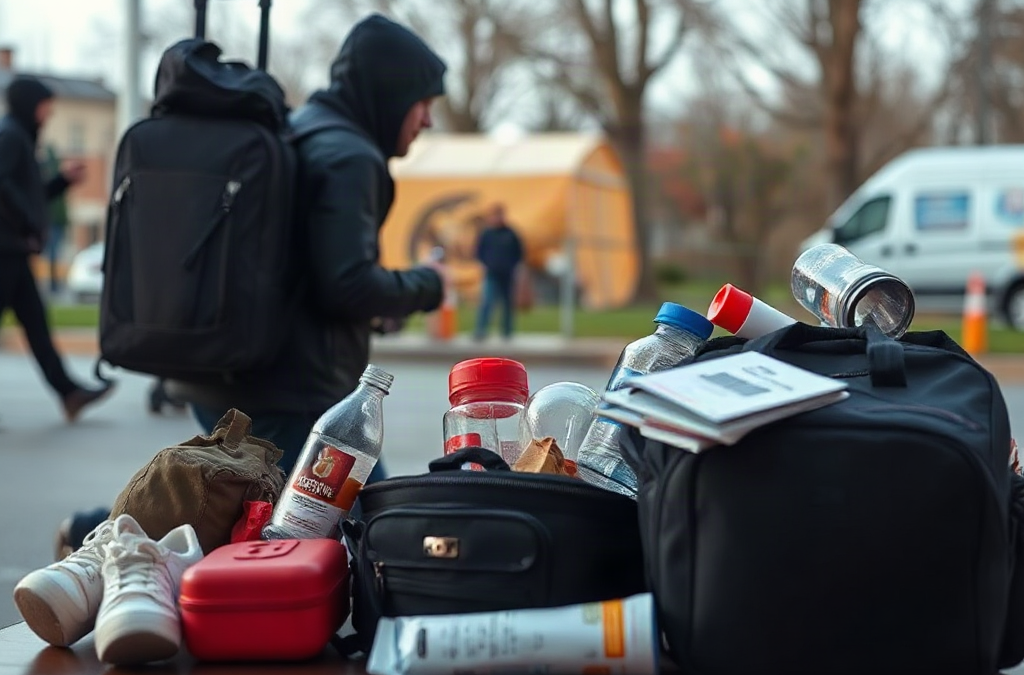
Rapid departure changes packing from a shopping exercise into a time-and-access problem. Smoke, flooding, a damaged road, a utility failure, or an official evacuation notice may leave little opportunity to search drawers, charge devices, or compare options. A useful bag therefore protects the first few hours away from home rather than attempting to recreate an entire household.
Use a priority order based on consequences. Items that protect life, preserve access to care, or enable communication belong at the top. Documents, medications, water, a phone charger, keys, glasses, and payment methods generally deserve space before entertainment, extra cookware, or multiple outfit changes. A bag that is technically complete but too heavy to carry can fail at the doorway, so weight is part of the safety calculation.
Identity and access: identification, insurance details, emergency contacts, keys, cash, and payment cards.
Communication and power: charged phone, charging cable, power bank, flashlight, and a small radio if appropriate.
Water, food, and protection: bottled water, ready-to-eat food, weather-appropriate layers, sturdy shoes, and hygiene supplies.
The most common mistake is treating every item as equally urgent. If a household has only ten minutes, someone should be able to grab the bag, take essential medication, secure pets, and leave without debating what to remove. Use An emergency packing list for rapid departure as a written reference, but tailor the order to actual medical, mobility, and transportation needs.
Build the First-Departure Bag
The core bag should support movement, communication, and basic self-care for the initial period away from home. A durable backpack or soft-sided carry bag is usually easier to manage than a rigid container because it leaves both hands available and fits more readily in a vehicle. Choose a size that a smaller or older household member can lift; a large bag packed to its maximum capacity often becomes a burden rather than an advantage.
Place frequently needed items in exterior or top compartments. Medication, identification, keys, a flashlight, and a phone cable should not be buried under clothing. Put paper records and electronics in resealable waterproof pouches, but do not assume a plastic bag makes equipment safe in every flood or prolonged exposure. Keep a duplicate of important contacts on paper because a dead phone, damaged screen, or weak signal can remove access to digital information.
A compact starting load can include:
Identification copies, insurance information, emergency contacts, and a small amount of cash.
At least one refill or supply of regularly used medication when medically and legally practical, plus a medication list showing names, doses, and prescribers.
Water, shelf-stable snacks, a manual can opener if canned food is included, and a small reusable cup or bottle.
Phone charging cable, power bank, flashlight, spare batteries where compatible, and a whistle.
Basic hygiene items, hand sanitizer, tissues, menstrual supplies, and necessary incontinence products.
Lightweight clothing layers, socks, sturdy footwear if the departure location makes changing shoes difficult, and a simple rain layer.
Food selection should reflect immediate practicality. Choose items that can be eaten without refrigeration, heating, or complicated preparation, such as packaged crackers, nut or seed products where safe, dried fruit, or ready-to-eat bars. Avoid adding foods that melt, leak, require a utensil, or conflict with allergies. Water is heavy, so households may divide bottles among bags or keep additional water in the vehicle rather than making one person carry the entire supply.
Another weak assumption is that a first-departure bag must contain every emergency tool. A compact multitool, duct tape, or a large cooking kit may be useful in a longer-term supply cache, but they should not displace medication, identification, or footwear in a bag designed for immediate movement. The better approach is to maintain a light departure bag and a separate household reserve.
Adapt Supplies for People, Pets, and Weather
A general list becomes reliable only after it reflects the people who must use it. Children, older adults, people with disabilities, and anyone managing a chronic condition may need specific equipment, extra time, or a different carrying arrangement. Write down the item and the reason it matters rather than relying on memory. For example, “spare glasses” is more actionable than “vision supplies,” especially when someone else may be packing.
Medication deserves special handling. Keep an up-to-date list with drug names, strengths, dosing instructions, allergies, and relevant clinician or pharmacy contact information. Do not place heat-sensitive medication in a hot vehicle for extended periods, and follow the product’s storage instructions. If a supply is difficult to replace, ask a pharmacist or clinician about a lawful, medically appropriate backup approach rather than improvising during a crisis.
Mobility and sensory needs also change the packing plan. A wheelchair user may need a charging cable, cushion, transfer equipment, or repair information. A person who relies on hearing aids may need batteries or a charging case. Someone with a service animal may require food, medication, identification, waste bags, and a leash or harness. Comfort items for children can reduce distress and make transit more manageable, but they should be compact and attached to the child’s or caregiver’s bag so they are not left behind.
Pets need a separate, clearly marked supply pouch or container. Include food, water, a bowl, leash, carrier access, medications, waste supplies, and a recent photograph or identifying information. Never assume an emergency shelter or transportation service will accept an animal without conditions; check local arrangements when possible. The same principle applies to livestock or outdoor animals, whose needs may require a separate relocation plan rather than a backpack.
Weather determines which tradeoffs are sensible. Cold conditions increase the value of insulation, dry socks, gloves, and head protection. Heat increases the need for water, shade, breathable clothing, and a plan to avoid leaving people or animals in parked vehicles. Flood conditions may make sandals unsafe and can damage paper records, while wildfire smoke may make eye protection or well-fitting respiratory protection relevant. These additions should be scenario-specific; carrying every possible item creates weight that slows departure.
Use An emergency packing list for rapid departure alongside a short household profile: medical needs, mobility limits, allergies, pets, likely transport, and seasonal hazards. That profile prevents a common failure—owning a generic kit that does not work for the actual people leaving.
Store, Test, and Improve the Kit
Storage determines whether a packed bag is usable. Keep it near a normal exit, not in a locked basement, inaccessible attic, or vehicle that may be blocked. Every household member should know its location, and at least one person should know how to retrieve medication, documents, and pet supplies if the primary packer is absent. A bright label can help visitors or caregivers identify the bag without opening every container.
Test the bag under realistic conditions. Lift it with one hand, walk it to the vehicle or meeting point, and check whether the contents shift, leak, or snag. Try locating the flashlight and medication in low light. Confirm that charging cables match current phones and that batteries have not corroded. A kit that looks organized on a shelf but takes several minutes to open is not ready for a rushed exit.
Review the contents on a schedule tied to real changes: medication refills, seasonal weather, school or work changes, new pets, a move, or a new mobility requirement. Replace expired food, damaged packaging, wet documents, and clothing that no longer fits. Recharge power banks after use and test flashlights rather than assuming a spare battery solved the problem.
Separate “leave now” items from “take if time allows” items. The first group should fit in one manageable bag and include health, identity, communication, water, and protection. The second group might include additional clothing, a laptop, sentimental items, extra food, or specialized tools. If both groups are mixed together, people often spend valuable minutes sorting through low-priority belongings.
Practice also reveals transportation conflicts. A bag that works for a car may be too large for a bus, while a family with no vehicle may need smaller individual packs and a folding carrier for supplies. Decide who carries which item, where people meet if separated, and which documents can be accessed digitally without relying on a single device. Those decisions make the checklist operational rather than merely comprehensive.
For a more detailed household setup, connect this checklist with An emergency packing list for rapid departure and keep a second supply cache for situations in which leaving is not required. The two purposes should not compete: rapid-departure gear favors low weight and immediate access, while a home reserve can hold bulkier food, water, tools, and sanitation supplies.
Frequently Asked Questions
How large should a rapid-departure bag be?
Use a bag that the person assigned to carry it can lift and walk with comfortably. A smaller, prioritized bag is usually more useful than an oversized pack that cannot be moved quickly.
What should be packed first?
Pack medication, identification, keys, phone power, water, communication tools, and weather protection before comfort items or bulky equipment.
Should emergency food require cooking?
Food for immediate departure should normally be ready to eat and stable without refrigeration or heating. Cooking equipment belongs in a separate longer-term supply cache unless the situation specifically requires it.
Where should the bag be stored?
Keep it near a normal exit in a dry, accessible location known to everyone who may need to leave. Avoid placing it where a locked door, debris, or a vehicle could make retrieval difficult.
How often should the contents be checked?
Review the bag whenever medications, household members, pets, seasons, or transportation arrangements change, and periodically inspect food, batteries, electronics, clothing, and documents.
Further Reading
Authoritative Sources
Build a Kit ready.gov
Provides federal guidance on assembling supplies for emergencies and adapting a kit to household needs
Survival Kit Supplies redcross.org
Offers practical supply categories and considerations for people, pets, and different emergency situations
Conclusion
A rapid-departure bag succeeds when it can be found, lifted, understood, and used without sorting. Put health information, medication, identification, keys, communication power, water, and weather protection ahead of bulky gear. Adjust the contents for mobility needs, children, pets, allergies, climate, and the transportation available to your household. Store the bag near an exit, divide responsibilities, and test the arrangement by walking it through an actual departure drill. Keep a separate reserve for supplies that support a longer disruption so the quick-exit bag remains light. Review it after any change in prescriptions, household membership, season, or travel pattern. The next useful step is to pack one bag today, weigh it, label it, and remove anything that delays access to the items most difficult to replace.