Demanding emergency work rarely tests one isolated fitness quality. A responder may need to climb stairs while carrying equipment, move a person from a confined position, kneel and rise repeatedly, drag an uneven load, or work in heat while wearing restrictive clothing. Physical readiness therefore means maintaining useful movement and judgment across several efforts, not simply achieving a fast run time or a heavy gym lift.
The first training decision is to identify the repeated actions that matter. Stair climbing stresses the heart and legs; a drag or carry demands trunk stiffness, grip endurance, and force through the hips; floor-level work tests mobility and the ability to stand without wasting motion. A strong athlete who has never trained with a vest, tool, hose, or irregular load may discover that familiar exercises do not automatically transfer to a scene.
That does not make highly specific simulation the best starting point. Maximal task practice performed while unconditioned can produce poor mechanics and excessive soreness. General capacity should come first, followed by controlled exposure to the positions, implements, and work-rest patterns likely to appear in the role. Someone returning after a long break may benefit from brisk incline walking and moderate carries before attempting repeated stair sprints with equipment.
A practical readiness check looks beyond completion. Notice whether the back rounds during a lift, the knees collapse during step-ups, the grip opens during a carry, or breathing becomes so uncontrolled that instructions are missed. Those signs show where training should be adjusted. Use Physical readiness training for demanding emergency tasks as a process of matching capacity to exposure, not as a contest to imitate the worst possible call every session.
Building the Physical Qualities That Transfer
Useful conditioning combines an aerobic base with short, repeatable bursts of strength and power. Steady walking, jogging, cycling, or stair work performed at a conversational intensity can improve tolerance for longer efforts and help a person recover between harder bouts. Intervals are more specific to urgent work, but using them exclusively often leaves the trainee unable to recover after the first intense sequence.
Strength training should emphasize movements that support lifting, bracing, climbing, and carrying. Squats or split squats train the legs; deadlift variations develop hip-driven lifting; rows and presses build upper-body capacity; carries challenge grip and trunk control. A sandbag, water container, or uneven implement may be more informative than a perfectly balanced barbell once basic technique is reliable. The tradeoff is precision: irregular loads resemble field demands but can make technique harder to monitor.
Power is different from slow strength. A controlled step-up may build force, while a fast but technically sound step-up or medicine-ball throw develops the ability to produce force quickly. Power work should stop when speed or coordination visibly declines. Adding fatigue until every repetition becomes slow may create more exhaustion without improving the quality needed for a rapid obstacle, lift, or change of direction.
Mobility deserves a functional test rather than a long list of stretches. Can the trainee kneel, rotate, reach, and stand while keeping control? Can the ankles flex enough for stairs without the heels lifting excessively? Brief mobility work before training may improve movement quality, while longer stretching or low-intensity recovery work can fit after sessions. A common mistake is treating flexibility as a substitute for strength in the positions where a person must stabilize an awkward load.
A simple weekly mix might include two strength sessions, two aerobic sessions, one interval or task circuit, and at least one full rest day. Beginners can use fewer hard sessions and more walking; experienced trainees may add load or density, but not every variable simultaneously. The companion Physical readiness training for demanding emergency tasks should change according to the actual role, available equipment, and recovery response.
A Progressive Six-Week Training Structure
A six-week structure works best when it develops capacity before testing it. During weeks one and two, keep resistance moderate and practice clean patterns: step-ups, hinges, squats, rows, presses, carries, crawling, and controlled floor transfers. Aerobic sessions should be long enough to build tolerance but easy enough that speech remains possible. The target is repeatable movement, not soreness that interferes with the next session.
Weeks three and four can introduce more specific stress. Add moderate stair intervals, timed carries, short sled drags, or circuits that combine a few movements without turning the session into an uncontrolled race. For example, a circuit might use stair walking, a 20- to 30-meter carry, a controlled dummy or sandbag drag, and a brief recovery period. The exact distance and load should reflect the trainee’s experience and equipment rather than an arbitrary benchmark.
Weeks five and six can emphasize repeatability under fatigue. Use several work bouts with planned recovery and record whether pace, posture, grip, and breathing remain acceptable. A useful session may alternate a loaded stair climb with an unloaded movement, then repeat the sequence after a longer recovery. The purpose is not to prove that a person can survive one heroic effort; it is to reveal whether useful output returns between efforts.
Progression should follow a narrow rule: increase only one major demand at a time. Add a little load while keeping the distance and pace stable, or add one interval while preserving technique and recovery. Increasing weight, speed, duration, and circuit complexity in the same week makes it difficult to identify the cause of pain or declining performance. A session that looks impressive on paper may be poorly designed if the trainee needs several days to move normally afterward.
Use a compact readiness checklist before advancing:
Movement stays controlled during the final repetitions.
Breathing settles during the planned recovery period.
There is no new joint pain, altered gait, or persistent swelling.
The trainee can repeat the session without unusual exhaustion the next day.
Task equipment can be handled without unsafe compensations.
If two or more items fail, repeat the current level or reduce one variable. Training at a lower level with consistent quality is usually more useful than chasing a benchmark that encourages rushed lifting. For additional context, Physical readiness training for demanding emergency tasks should be coordinated with the physical demands and selection standards of the intended position.
Managing Fatigue, Recovery, and Injury Risk
Fatigue changes technique before it always changes motivation. A person may continue completing repetitions while losing trunk position, shortening steps, gripping too tightly, or failing to control the lowering phase. Those changes matter in emergency work because an awkward environment leaves less room to correct a poor lift or stumble. Stop a set when safe mechanics disappear, not only when the muscles feel completely spent.
Recovery includes sleep, food, hydration, and spacing between demanding sessions. A trainee who performs heavy lower-body work, hard stair intervals, and a loaded simulation on consecutive days may mistake accumulated fatigue for insufficient toughness. Place easier aerobic work or mobility between hard sessions. Regular meals containing carbohydrate and protein can support training fuel and repair, while fluid needs rise with heat, protective clothing, and long sessions; no single hydration formula fits every person or environment.
Equipment changes the cost of movement. Boots may restrict ankle motion, gloves may reduce grip feedback, and a vest can alter breathing and balance. Introduce one equipment change at a time at low intensity. Practice with realistic items only after basic movement is dependable, and avoid using damaged, unstable, or excessively heavy objects merely because they feel more authentic.
Common warning signs include sharp pain, pain that changes movement, dizziness, chest pressure, fainting, unusual shortness of breath, or symptoms that persist after stopping. Those signs warrant ending the session and obtaining appropriate medical advice. Previous injuries, cardiovascular conditions, medication use, pregnancy, and long periods of inactivity also justify individualized clearance rather than a generic progression.
The most useful measure is not the hardest workout completed. Track whether the trainee can perform the relevant task with stable mechanics, recover on schedule, and repeat the effort later. If performance improves while soreness, technical errors, and recovery time decline, the program is moving in the right direction. If every session becomes a test, reduce intensity and restore the foundation before adding more realism.
Readers can compare their program with occupational fitness materials from relevant fire, emergency medical, rescue, military, or public-safety organizations and with guidance from qualified clinicians or strength professionals. Official job descriptions and agency testing documents are especially useful for identifying the actual carries, climbs, lifts, distances, and protective equipment that training should eventually resemble.
Frequently Asked Questions
How often should demanding task circuits be performed?
Usually once weekly is enough for a developing trainee, with strength and aerobic work on separate days. More frequent simulation can be appropriate for advanced trainees only when technique and recovery remain stable.
Should running be the main form of preparation?
Running can build aerobic capacity, but it does not replace loaded carries, stair work, floor transfers, grip training, or controlled lifting. Choose low-impact conditioning if impact aggravates an existing problem.
When should external load be added?
Add load after the unloaded movement is controlled and repeatable. Begin with a manageable implement, preserve posture and breathing, and increase either load or duration before increasing both.
How can someone train with little equipment?
Use stairs, step-ups, backpacks loaded conservatively, water containers, crawling, bodyweight squats, split squats, push-ups, and brisk intervals. Household objects should be stable and easy to release if control is lost.
What shows that a program is progressing too quickly?
Persistent soreness, declining movement quality, worsening joint pain, slower recovery, disrupted sleep, or repeated missed sessions suggests that volume or intensity is exceeding current capacity.
Conclusion
Effective readiness training connects general fitness to the movements and fatigue patterns of emergency work. Build an aerobic base, develop lower-body and upper-body strength, practice power without sacrificing control, and introduce carries, stairs, drags, and floor transfers in measured stages. Treat equipment as a progression rather than a shortcut, and judge success by repeatable technique and recovery instead of one dramatic effort. A six-week block can establish a useful baseline when each increase is deliberate and warning signs are respected. Next, list the physical tasks most likely in the intended role, assess current movement quality, and schedule a manageable first week. Adjust the plan when pain, poor mechanics, or delayed recovery shows that the present workload is ahead of the trainee’s capacity.
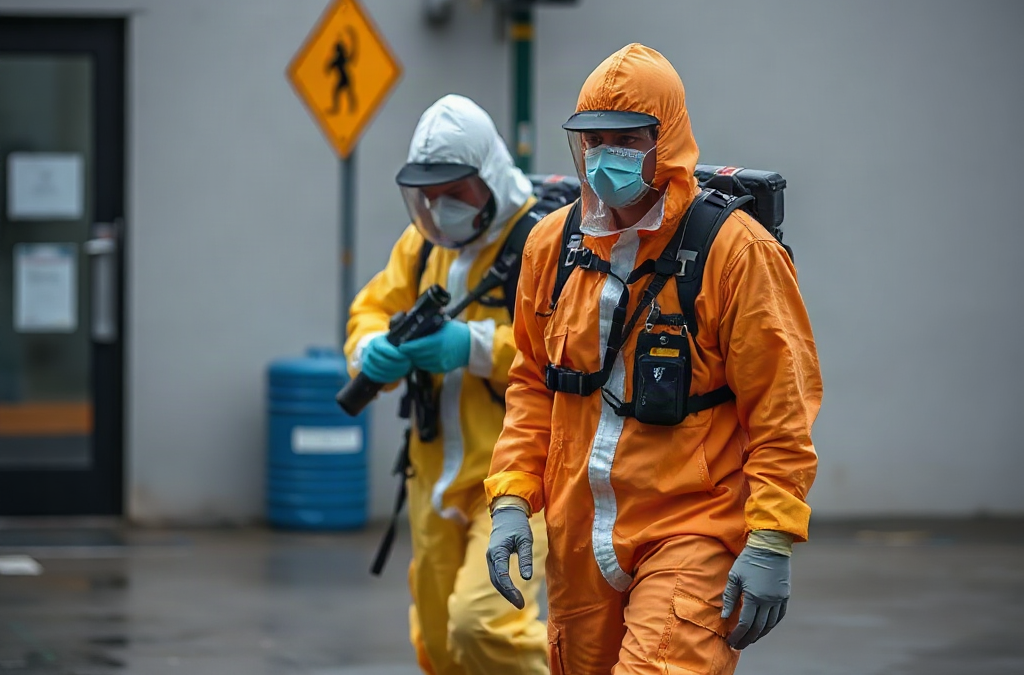
Early responders rarely have complete information when they reach a suspected contamination scene. The first operational problem is not choosing a cleaning method; it is preventing an uncertain hazard from becoming a larger exposure area. Responders should pause long enough to assess visible clues, wind or airflow, casualties, suspicious containers, unusual odors, symptoms, and the route used by people leaving the scene. A short delay for positioning and communication may reduce exposure more effectively than an immediate approach.
The initial plan should distinguish between the suspected source area, the transition space, and the clean support area. Many agencies describe these as hot, warm, and cold zones, but the labels matter less than the controls attached to them. The source area should have restricted entry. The transition area should support removal of contamination and controlled movement. The clean area should contain unexposed personnel, transport coordination, records, and supplies. Boundaries must be visible enough to work in poor light, weather, crowding, or smoke.
A useful first-arrival sequence is:
Approach from the safest practical direction and stop unnecessary movement through the suspected source.
Notify dispatch and request the specialist, medical, fire, hazardous-materials, or public-health support appropriate to the situation.
Separate potentially exposed people from unexposed people without forcing unnecessary contact or movement.
Establish a controlled route for responders, patients, equipment, and waste.
Record observations, actions, and transfers so later teams understand who may have been exposed.
The plan should account for people who cannot walk, children, older adults, people with disabilities, and those whose symptoms require urgent care. A blanket instruction to “decontaminate everyone” can create dangerous delays when airway compromise, severe burns, trauma, or altered consciousness requires medical attention. Conversely, moving every person directly into an ambulance can contaminate the vehicle and crew. The practical choice depends on the suspected hazard, exposure route, symptoms, available protection, and direction from qualified incident leadership.
A common failure is treating the first visible casualty as the entire incident. A person may have carried contamination into a vehicle, building, waiting area, or responder staging point. The planning question is therefore broader than where to wash someone: it is where contamination may have traveled, which surfaces need control, and how to stop further movement while preserving access to care. A clear decontamination planning for early emergency responders framework keeps scene safety ahead of speed without abandoning patients.
Building a Decontamination Process That Controls Movement
A workable decontamination process is a sequence of controlled decisions rather than a single shower operation. It should specify who receives assistance first, where clothing and personal items go, how people cross from contaminated to clean areas, and what happens when water is unavailable or inappropriate. The process must match the suspected substance and incident conditions. Water may be useful for some exposures, while uncontrolled washing may spread material, create runoff, damage skin, or complicate a reactive substance incident. Responders should follow agency protocols and specialist direction rather than improvising a universal method.
Clothing removal often has a major effect because garments can hold or transfer contamination. The plan should provide privacy, bags or containers suitable for the incident, labels, and a method for keeping removed items away from clean clothing and medical supplies. People should not be encouraged to shake clothing, brush unknown powders, or handle contaminated objects unnecessarily. Assistance should be organized so that one responder is not moving repeatedly between contaminated and clean areas.
Patient flow deserves the same attention as washing technique. A person who has completed a decontamination step should not walk back through the entry route to reach treatment. Marked lanes, one-way movement, staff assigned to each zone, and a simple handoff signal reduce cross-contamination. If several people are involved, triage may need to separate ambulatory patients from nonambulatory patients, while still preserving a route for urgent medical intervention.
Consider a warehouse release where workers exit through one door and gather beside a responding vehicle. A response that places a hose near the vehicle may clean some surfaces but leave the vehicle, crew, and gathering point exposed. A stronger arrangement moves the crowd away from the vehicle, establishes an upwind or otherwise safer control point when feasible, keeps ambulatory people in a managed queue, and reserves a protected path for patients needing immediate care. The best arrangement may be slower than a spontaneous rinse, but it gives responders a chance to control who crosses each boundary.
Wastewater and discarded materials also belong in the plan. Do not assume that runoff can enter ordinary drains or that sealed bags can be left beside a public road. Local procedures, environmental direction, and incident-command decisions may determine containment and disposal. When resources are limited, prioritize boundary control, patient separation, protective measures, and communication before adding equipment that cannot be managed safely.
The common misconception is that visible cleanliness proves successful decontamination. Odor, residue, or appearance may not reliably show whether a hazard remains. Conversely, excessive scrubbing can damage skin and increase absorption for some substances. The responder decontamination plan should define observable completion criteria, medical reassessment, and the authority responsible for releasing a person or area.
Equipment, Staffing, and Communications Under Pressure
Equipment supports a decontamination plan only when responders know where it is, who carries it, and how it will be replenished. A stockpile that remains locked in a distant facility is not an operational capability during the first minutes of an incident. Early-arrival kits should be checked for protective clothing, gloves, eye and face protection, respiratory protection where authorized and trained, barriers, marking materials, waste containers, lighting, communications equipment, privacy screens, patient coverings, and supplies for documentation.
Protective equipment must be selected for the suspected hazard and the task. More equipment is not automatically safer if it restricts vision, communication, dexterity, heat loss, or movement beyond what the responder can manage. Respiratory protection may require fit, training, medical clearance, or a defined level of respiratory hazard control. A responder should not enter a suspected contaminated area simply because a mask or disposable suit is available.
Staffing plans should assign specific functions: entry control, patient movement, decontamination support, medical triage, equipment monitoring, communications, and clean-area protection. These roles should not be left to whoever happens to arrive first. A responder handling a contaminated garment should not simultaneously manage clean-area records or distribute food and water. Relief personnel are also necessary because heat, protective clothing, stress, and repeated lifting can degrade judgment.
Communications must work across the zone boundary. Radios may be difficult to operate with gloves, hearing may be reduced by respiratory protection, and distressed patients may not understand technical instructions. Use short phrases, preassigned signals, large visual markers, and a backup communication method. Tell people where to stand, what not to touch, and when they may move. If a message cannot be heard or repeated accurately, the process is not ready for a crowded scene.
Imagine a small volunteer fire crew arriving before specialized support. The first crew may not be able to establish a full decontamination corridor, treat every patient, and protect its own members at once. The plan should identify the minimum safe actions: stop uncontrolled entry, isolate the likely source, request additional resources, prevent contaminated people from entering the apparatus, and provide life-saving care within the limits of available protection. This is safer than pretending a small team can reproduce a fully staffed hazardous-materials operation.
One recurring failure is confusing possession with readiness. Inspect kits, replace expired or damaged items, test lighting and radios, and verify that containers fit the supplies they are meant to hold. The early responder planning process should also identify supply gaps honestly. A plan that names its limits gives incident leaders better choices than a checklist that implies capabilities the team does not possess.
Training, Review, and Failure-Point Testing
Training should rehearse decisions as well as physical tasks. Responders need to practice recognizing when to stop an approach, establish a perimeter, request specialized support, protect a clean route, and communicate uncertainty. A drill that demonstrates only hose placement may look successful while leaving responders unable to manage patient flow, contaminated clothing, documentation, or a changing wind.
Use scenarios that expose the plan’s weak points. A useful exercise might begin with an unknown powder in a public building, then add an unconscious patient, a family member trying to cross the boundary, a damaged radio, and a shortage of protective garments. The purpose is not to reward fast improvisation. It is to reveal whether roles, escalation thresholds, and alternate routes remain clear when the original assumption fails.
After each exercise or incident, review what actually happened. Ask where people crossed boundaries, which instructions were misunderstood, how long equipment took to reach the scene, whether clean supplies stayed clean, and whether medical care was delayed. Also check responder welfare, heat stress, contamination of vehicles, and the handling of personal information. A decontamination plan improves when observations become specific changes rather than general praise or blame.
Keep the written plan usable in low light and under stress. A short first-arrival card can list the initial notification, approach restrictions, zone controls, patient-flow direction, protective-equipment limits, and the location of specialist contacts. Detailed procedures can remain in the larger incident manual. The quick-reference version should not contain so much text that a responder cannot find the next decision.
Training also needs boundaries around public messaging. People may remove clothing, wash at home, or travel to hospitals before responders arrive. Public instructions should be clear, hazard-specific, and coordinated with authorities; broad claims about what is safe can cause unnecessary exposure or dangerous crowd movement. When information is uncertain, explain the immediate protective action and where official updates will come from.
A weak assumption is that one successful exercise validates the whole system. Weather, terrain, crowd size, night operations, water access, staffing, and the substance involved can change the answer. Test the plan against those constraints, update contact lists and supply locations, and repeat the exercise after major equipment or staffing changes. Readiness is shown when a small team can recognize its limits early and hand control to the right support without creating a second exposure event.
For operational details, responders should consult current guidance from their local emergency-management authority, hazardous-materials program, fire service leadership, public-health agency, and occupational-safety authority. Those sources can address jurisdiction-specific protective equipment, medical monitoring, waste handling, training requirements, and incident-command procedures that a general article cannot establish.
Frequently Asked Questions
What should early responders do before approaching a suspected contaminated area?
Pause outside the suspected area, assess hazards and airflow, restrict unnecessary movement, notify dispatch, and request specialized support. Do not enter solely to investigate an odor, package, powder, or casualty.
Should every exposed person be washed immediately?
Not automatically. The method depends on the suspected substance, exposure route, symptoms, available protection, and specialist direction. Life-threatening medical needs may change the order of actions.
How can responders prevent contamination of ambulances?
Keep potentially contaminated people out of vehicles until the incident plan or qualified authority establishes an appropriate pathway. Separate clean transport operations from the contaminated movement route.
What equipment should a small first-arriving team prioritize?
Prioritize communication, boundary-marking materials, appropriate authorized protection, patient coverings, waste containers, lighting, documentation supplies, and a reliable way to request additional resources.
How often should a decontamination plan be exercised?
Exercise it periodically and whenever staffing, equipment, facilities, or local hazards change. Include scenarios involving poor communications, limited water, nonambulatory patients, and contaminated vehicles.
Conclusion
Effective decontamination planning for early emergency responders begins before anyone crosses the scene boundary. The first priorities are safe approach, movement control, clear separation of contaminated and clean areas, appropriate protection, and rapid coordination with specialist and medical resources. Plans should explain how patients move, where clothing and waste go, how ambulances and equipment are protected, and what the first crew cannot safely do. Practice those decisions with realistic constraints rather than relying on equipment lists or a single washing demonstration. After every drill, correct a specific weakness—an unclear handoff, missing supply, poor radio method, or unsafe vehicle route. That disciplined review turns a written procedure into a safer first-arrival operation.
Why Communication Failure Drills Must Match Real Conditions
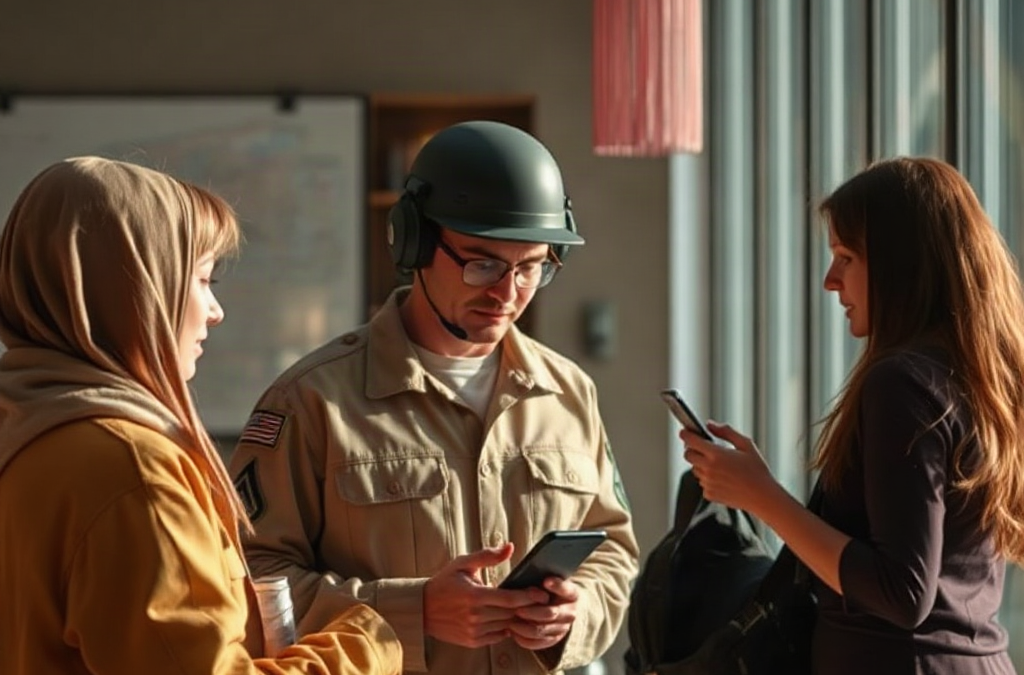
Communication practice becomes useful when it recreates the constraints that make ordinary contact unreliable. A routine test call confirms only that two devices and one network worked at a particular moment. It does not show what people will do when cellular service is congested, a phone battery is nearly empty, a family member is away from home, or two messages give different instructions.
The failure itself may be technical, behavioral, or informational. A damaged tower can interrupt calls, while a powered-off phone creates a different problem that a spare battery might solve. A person who receives an unverified message may spread confusion even when the network is functioning. A sound Situational practice plans for communication failures approach separates these causes so the response can match the problem.
Begin with the consequences rather than the equipment. Ask what decision cannot be made if contact fails: confirming a child’s pickup, checking on an older relative, coordinating a meeting point, or reporting a hazard. That answer determines which information must travel first. A plan focused on reunion may prioritize a fixed meeting location and time window; a plan focused on coordination may prioritize short status messages and a designated relay person.
Practice should also reflect people’s actual habits. If participants rarely use radio equipment, a radio-only plan may look impressive but fail under stress. If one person holds every contact number, the household has a single point of failure. The practical goal is not to test the most sophisticated method. It is to find the simplest combination of channels and behaviors that still works when the preferred option disappears.
Build Scenarios Around Specific Breakdowns
Each exercise should begin with one defined communication failure and a believable setting. Useful scenarios include a mobile outage during a commute, a home internet failure while a person is working remotely, a dead phone during a planned pickup, or conflicting reports after a local incident. Specific conditions produce observable decisions; vague instructions such as “pretend communications are down” rarely reveal where the plan is weak.
Write the scenario as a short prompt containing the starting location, available devices, known information, and restriction. For example: cellular calls fail, text messages are delayed, one participant has 20 percent battery, and the usual meeting place is inaccessible. The group then has to choose among a landline, public information source, trusted in-person relay, alternate meeting place, or delayed check-in. The restriction matters because it prevents participants from silently using the normal solution.
Different failures call for different practice objectives:
Network failure: test alternate channels, delay tolerance, and prearranged meeting points.
Power failure: test battery conservation, charging access, and device prioritization.
Device loss: test memorized numbers, printed contacts, and access to shared information.
Conflicting information: test source verification, message labeling, and who can authorize a change.
Separated people: test time windows, location descriptions, and safe fallback actions.
A beginner plan can use one scenario, two channels, and a ten-minute decision window. A more developed plan can add a moving participant, a failed backup, or a misleading but plausible message. Adding complexity too early is counterproductive: participants may spend their energy interpreting the exercise instead of identifying the first failure. Increase difficulty only after the basic message and meeting procedure work reliably.
One common mistake is practicing only successful contact. A stronger exercise ends with a failed attempt and requires participants to act without immediate confirmation. That reveals whether the plan depends on constant reassurance. It also exposes assumptions such as “someone will know where I am” or “everyone has the same map, address, and time.”
Create Channel Rules, Message Formats, and Escalation Triggers
A communication plan needs rules for choosing a channel, not merely a list of channels. The primary option may be a voice call, with text, email, radio, a trusted relay, or an in-person meeting as alternatives. Each option has different strengths: text can preserve a short written record, voice can clarify ambiguity, radio may reach a group, and a meeting point works without a functioning network but requires time and safe access.
Set a switching rule before the drill begins. For instance, one unanswered call might justify a text, while repeated failed attempts over a defined interval might activate the alternate channel or meeting procedure. The exact timing should fit the situation. A school pickup may require faster action than a routine welfare check, while a widespread outage may make repeated dialing waste battery and add congestion.
Messages should contain enough structure to prevent avoidable back-and-forth. A compact format can include the sender, current location, status, intended destination, next check-in time, and any urgent need. “I’m okay” is less useful than “Maya, safe at library entrance, staying there until 6:15, phone at 12 percent.” The format should remain short enough to send under pressure and understandable without background context.
Verification rules matter when information may be false, outdated, or incomplete. Participants should know which sources are trusted, how a changed instruction is authenticated, and who can cancel a previous plan. A forwarded screenshot should not automatically override a prearranged meeting point. On the other hand, rigidly refusing every new message can be unsafe if conditions genuinely change. The plan should define what evidence prompts reconsideration, such as a direct confirmation from an agreed contact or a reliable official channel.
Use this compact priority sequence when a channel fails:
Preserve battery and stop repeated attempts that provide no new information.
Send one concise status message through the next available channel.
Record the last known location, intended destination, and next decision time.
Follow the prearranged meeting or relay procedure if confirmation remains unavailable.
Reassess only when new information is verified or the agreed time limit expires.
The failure mode to avoid is channel accumulation. Ten possible apps do not equal ten dependable options if they require the same internet connection, login, charger, or phone. Map dependencies: several messaging services may fail together because they rely on one network, while a printed contact card and a fixed meeting location do not. The best backup is not always the most advanced one; it is the one participants can access, understand, and use under the stated conditions.
Run, Evaluate, and Improve the Practice Plan
Run the exercise with a facilitator who records decisions without rescuing participants. The facilitator can introduce the failure, note when a message is sent, mark whether it is confirmed, and inject one realistic change. Participants should not be graded on speed alone. Accuracy, appropriate escalation, battery use, and recognition of uncertainty are equally important.
Afterward, reconstruct the timeline. Identify the first point at which the normal method failed, the next action taken, and the information that was missing. If a participant kept calling for fifteen minutes, the plan may need a clearer switching trigger. If people reached the alternate meeting point but arrived at different entrances, the location description needs more precision. If no one knew who could change the plan, assign decision authority before the next exercise.
Look for signs that the approach is working: messages become shorter but more informative, participants can state the next check-in time, and everyone knows what happens after an unanswered contact. Signs of failure include duplicated efforts, contradictory instructions, unverified forwarding, battery depletion, and dependence on one person’s contact list. These observations are more valuable than a simple declaration that the drill was successful.
Revise one or two elements at a time. Change the meeting location, add a printed contact sheet, rehearse a relay message, or test a low-battery condition. Changing everything at once makes it difficult to identify which adjustment helped. Include people who may face different constraints, such as limited mobility, hearing difficulties, language barriers, unfamiliarity with local streets, or responsibility for children. A plan that works only for the fastest and most connected participant is incomplete.
Keep the final plan visible and maintainable. Record primary and backup channels, contact details, meeting points, check-in windows, verification rules, and the date for review. A paper copy can complement digital storage, but it should be protected from unnecessary exposure of private information. Rehearse after major changes in household routines, workplaces, schools, devices, or transportation routes. The practical value of communication failure practice comes from keeping decisions familiar without pretending that every disruption will follow the same script.
For additional planning context, consult official emergency-management guidance from your local government and public-safety agencies, especially material on alerts, family communication, and meeting locations. Those sources can clarify local hazards and available warning systems without replacing a scenario test built around your household, workplace, or community constraints.
Frequently Asked Questions
How often should a communication failure drill be repeated?
Repeat it after major changes to contacts, devices, routines, or meeting locations, and periodically enough that participants remember the switching rules. Short refreshers are often more useful than infrequent, elaborate exercises.
What should a backup communication channel be?
Choose an option that does not share every dependency with the primary channel. A different messaging app may still fail with the same internet connection, whereas a printed contact sheet, radio, trusted relay, or fixed meeting procedure may provide genuine diversity.
What information belongs in a failure message?
Include the sender, current location, safety status, intended destination, next check-in time, and urgent needs. Short, structured messages reduce follow-up questions and make relayed information less likely to become distorted.
How can a plan handle conflicting messages?
Define trusted sources and a method for authenticating changes before an incident. Participants should record the last confirmed instruction and avoid replacing it with an unverified forwarded message.
Should children or visitors participate in the drills?
Yes, when the exercise is age-appropriate and safe. They should know the essential contact method, meeting location, and trusted adults, while more complex verification and decision authority remain with responsible adults.
Conclusion
Reliable communication planning is less about collecting applications than about rehearsing decisions after a familiar option stops working. Build scenarios around distinct failures, assign switching triggers, use short structured messages, and make meeting or relay procedures specific enough to follow without improvisation. Evaluate battery use, message accuracy, source verification, and authority to change the plan—not just whether someone eventually made contact. Begin with one realistic exercise, such as a cellular outage during a separation, then correct the first weakness it exposes. A maintained paper record, independent fallback, and clear next check-in time can matter more than a sophisticated tool that everyone assumes will remain available.