In a world teeming with uncertainties, the ability to respond effectively during emergencies can be the difference between chaos and calm. Understanding the importance of emergency preparedness is essential—not merely as a precaution but as a proactive strategy that empowers individuals and families to navigate crises with confidence. Whether facing natural disasters like hurricanes, wildfires, or man-made events, being prepared can save lives and protect property.
*Assessing Risks: Identify Potential Emergencies in Your Area**
The first step in your journey toward preparedness is assessing the risks specific to your geographical area. Are you in a flood zone? Is your region prone to earthquakes or severe storms? Conduct thorough research into local hazards. Engage with community resources or consult governmental agencies that provide insights about historical emergencies. Once you have identified potential threats, you can tailor your preparedness efforts to address those unique challenges effectively.
*Building Your Emergency Kit: What to Include**
An essential component of emergency preparedness is assembling an emergency kit. This kit should be comprehensive yet portable, ensuring you can take it if evacuation becomes necessary. Begin by including items such as non-perishable food and water—aim for at least one gallon per person per day for three days. Don’t forget important documents (like identification), first aid supplies, medications, flashlights with extra batteries, and multi-tools or Swiss army knives. Personalize your kit further by adding comfort items like blankets or games for children; these little touches can make a significant difference during stressful times.
*Creating a Family Emergency Plan: Communication and Evacuation**
Once you’ve built your kit, focus on crafting a family emergency plan that outlines how everyone will respond during various scenarios. Effective communication is crucial—designate meeting places both near home and outside of the immediate area where family members can regroup if separated. Discuss how you’ll communicate if phone lines are down; consider using text messages or social media updates as alternatives when traditional methods fail. Planning escape routes from home ensures everyone knows where to go should evacuation become necessary; practicing these routes together helps solidify understanding and builds confidence.
*Staying Informed: Utilizing Alerts and Resources**
In our digitally connected age, staying informed is easier than ever—but it’s crucial not to overlook this aspect of preparedness. Sign up for local alert systems that notify residents about impending dangers such as severe weather warnings or public safety announcements. Monitor trusted news sources for real-time information on emergencies affecting your community. Additionally, familiarize yourself with local resources such as shelters or community centers that may open during crises; knowing where help is available can alleviate stress when every second counts.
*Regularly Reviewing and Updating Your Preparedness Plan**
In closing, remember that preparedness isn’t a one-time task but an ongoing commitment that evolves over time. Regularly review your emergency plan and update it based on changes in family dynamics—new members joining the household or kids growing older may necessitate adaptations in communication plans and escape routes. Revisit your emergency kit at least twice a year; check expiration dates on food items, replace batteries annually, and ensure everything remains functional.
By taking these steps towards comprehensive emergency preparedness today, you’re not just preparing for tomorrow’s unknowns—you’re instilling peace of mind within yourself and loved ones amidst uncertainty. After all, readiness truly leads to resilience!
Hey there, fellow adventurers! If you’re anything like me, the great outdoors calls to you like a siren song. But before you set off on your next epic journey, there’s one crucial set of skills you have to have under your belt—navigation. I can’t tell you how many times I’ve been out there trying to find my way back home, and let me tell you, those moments can be a little scary. That’s why I want to share some essential navigation skills that will help keep you safe and oriented. Buckle up, let’s dive in!
Understanding Your Map
The Different Types of Maps
First off, we need to talk about maps. There are plenty out there, but not all of them are created equal. You have topographic maps, which are like the superheroes of the navigation world. They give you a detailed view of the terrain, like elevation and landforms, which is super handy for hiking. Then there are road maps, which are great for driving but won’t help you much when you’re scaling a mountain.
Next, you’ve got digital maps, found on your phone or GPS devices. They’re convenient, but you know what? They can be a bit finicky—like when you’re deep in the woods, and your signal drops. That’s why I always have a paper map as backup. No battery needed, just good old-fashioned paper!
Lastly, let’s not forget about special interest maps, like birding maps or ski trail maps. These can be useful for niche activities, and if you’re really into one particular sport, having the right map can make all the difference. So, choose wisely!
Using a Compass
Getting to Know Your Compass
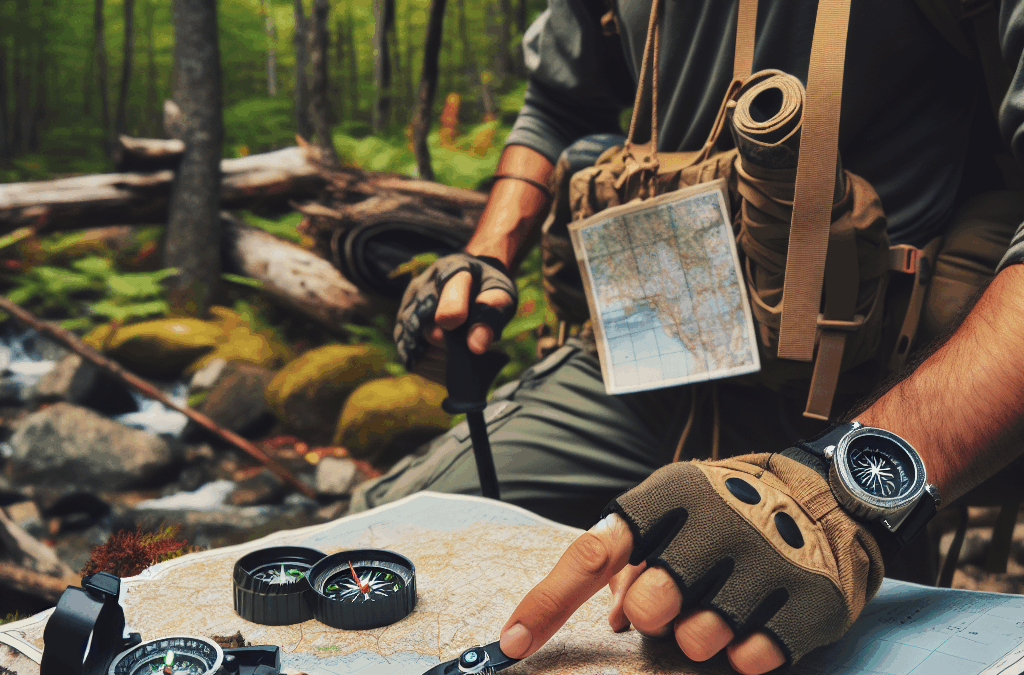
Alright, so now that we’ve got the map down, let’s talk about compasses. This little gadget is a game-changer. First things first, you’ve gotta understand how to read one. Most compasses have a housing, needle, and a baseplate, and they work together to point you towards magnetic north.
But wait, what’s magnetic north? It’s not the same as true north—there’s often a little discrepancy you’ve got to be aware of. This means you’ll want to familiarize yourself with your area’s magnetic declination. You can usually find this info on your map.
And hey, practice makes perfect. I always take my compass out with me, even on short hikes. It’s like a dance; you need to get used to the movement and flow. Trust me, once you get the hang of it, you won’t want to leave home without it!
Reading Terrain
Identifying Land Features
Next up is understanding the land around you. Learning to read the terrain can seriously up your navigation game. Look around! Observing landmarks—like rivers, mountains, or unique rock formations—can help keep you oriented. I often use these as reference points; they’re like the nature version of street signs.
Don’t forget about elevation changes! Climbing up a hill can give you a whole new perspective. I can’t tell you how many times I’ve reached a summit and been able to spot my destination from up there. It’s like seeing a video game map unfold before your eyes.
Lastly, pay attention to the slope of the land. Steep terrain can be tricky and may require different navigation tactics. If you’re planning a tough hike, consult the elevation profile on your map—it’s like a sneak peek at what’s to come. Trust me, it makes a huge difference!
Tracking Your Position
Using Land Navigation Techniques
Now let’s get into tracking your position as you go along. One of my favorite methods is dead reckoning. This means you’re estimating your current position based on your previous position and the direction you’ve traveled. It sounds complex, but it’s really just a simple mental calculation.
Another method I love is terrain association. This is about matching the features around you to your map. If I’m passing by a creek or a specific rock formation, I check if it matches up on my map. This technique can really help keep your bearings straight.
Ultimately, I can’t stress enough the importance of regularly checking your location. You don’t want to end up too far off-course, especially in unfamiliar territory. A quick glance at your map and compass every now and then can make all the difference in your adventure.
Emergency Navigation Skills
Creating Backup Plans
Alright, let’s get real. Emergencies happen, and it’s always smart to have backup plans. First, I always carry a whistle. If I get lost, a whistle can carry much farther than my voice. Plus, it keeps my hands free for other tasks.
Next, always have a designated meeting point. If you’re hiking with friends and you get separated, knowing where to regroup can save the day. I like to choose a landmark that’s easy to spot and won’t be missed.
Last but not least, practice makes you prepared. Make it a routine to navigate in different conditions—day, night, different weather. The more you expose yourself to various situations, the more confident you’ll become. And trust me, that confidence will serve you well!
Frequently Asked Questions
1. What should I always carry for navigation?
Great question! Always have a map, a compass, and a backup navigation tool—like a GPS or a smartphone app. These three together can cover you in most situations!
2. How do I choose the right map for my trip?
Consider the area you’ll be exploring. Topographic maps are great for hiking, while road maps are better for driving. If you’re heading to a national park, often they provide free maps at the visitor center.
3. What if my compass doesn’t seem to work?
First, check for any metal objects nearby that could distort the needle. If that isn’t the issue, it could be time for a new compass or to recalibrate your current one. Always trust your instincts combined with other navigation tools!
4. How often should I check my surroundings while navigating?
I recommend checking regularly! Every 15 minutes or so is a good rule of thumb. It will help you stay on track and adjust as necessary. Plus, you’ll catch those beautiful views along the way!
5. Can I learn these skills without going into the wilderness?
Absolutely! You can practice in your local park, or even just your backyard. Try using a map and compass to find your way around. The more comfortable you are, the more prepared you’ll be for your next big adventure!
In my early days of adventuring outdoors, one thing stood out: you gotta know where you are. It sounds basic, but understanding your environment is critical for survival. Reading books like “SAS Survival Handbook” provides insights into various terrains—be it forest, desert, or tundra. You learn to recognize edible plants and dangerous wildlife.
Another essential skill is understanding weather patterns. Watching clouds can be your first clue to an incoming storm. The more you know this stuff, it becomes second nature. You’ll be amazed at how the weather isn’t just about checking your phone app anymore.
Lastly, map reading might feel outdated with GPS around, but trust me, it’s a life-saver. Books with practical exercises can really help hone this skill, teaching you how to navigate even when your devices fail you.
Fire Crafting and Management
If there’s one thing that changes the wilderness game, it’s fire. I remember trying to start a fire for the first time—it felt like a rite of passage. Books like “The Ultimate Guide to Wilderness Living” break down various methods, from using flint and steel to modern fire starters.
Learning about different tinder materials and how to gather them can really amp up your fire-starting success rate. Many authors include practical tips that you’ll wish you had when your lighter is nowhere to be found.
Lastly, fire management isn’t just about starting one; it’s about maintaining and using it correctly. You don’t want to be the person causing a forest fire! Understanding the fire triangle—heat, fuel, and oxygen—enables you to control your fire effectively.
Building Shelter
Building a shelter can mean the difference between life and death in survival situations. I love reading survival books that emphasize using natural resources creatively. For instance, “Outdoor Survival Skills” talks about constructing various types of shelter like lean-tos and debris huts.
The critical part here is location. When selecting a spot for your shelter, you’ll want to avoid low-lying areas prone to flooding and consider wind direction. Every survival expert has a favorite tip—mine is always to build near a water source while ensuring it’s safe.
Ultimately, your materials matter. Finding the right local wood or foliage can significantly improve your shelter’s durability. Books often detail this, guiding you on the best materials based on your environment.
Food Gathering Skills
Hunting and Trapping
When it comes to self-sufficiency, understanding how to hunt and trap is key. I recall my first attempts at tracking animals; it was frustrating yet exhilarating. Books such as “Trapping and Gathering” break down techniques in a way that make it accessible for beginners, including tips on how to set traps effectively.
It’s fascinating to learn about animal behavior, too. Each species has a pattern that you can exploit. Being patient, watching and understanding these habits can help you significantly increase your success while hunting.
Before heading out, you’ll want to get familiar with your local regulations. Remember, ethical hunting and trapping are just as important as technique and skill. Books that cover these topics are invaluable for any aspiring survivalist.
Foraging for Edibles
Foraging has always been an interest of mine, and it’s surprisingly accessible with the right resources. A great book like “Edible Wild Plants” offers illustrations and descriptions of plants you can find in various environments. It’s a game-changer when you need food in the wild.
One thing I learned the hard way is to never eat something unless you’re 100% certain of its identity. There are dangerous look-alikes out there, and being able to identify them can save you from a nasty situation.
Another handy trick? Try to forage seasonally. Different plants will be available at different times of the year. Books often discuss seasonal cycles, which can help you plan your expeditions for maximum bounty.
Fishing Techniques
Fishing is one of the more relaxing yet rewarding survival skills. I remember the first fish I caught; it boosted my confidence like nothing else! Essential reading includes “The Total Fishing Manual,” which provides insights on best practices, gear, and local fish species identification.
Understanding local regulations is just as crucial. Many areas have guidelines on what you can catch and sizes you can keep. This is often emphasized in fishing guides and can prevent legal headaches.
Lastly, mastering different fishing techniques, from fly fishing to netting, broadens your skill set. Each method has its unique benefits depending on your situation, and reading more about them can prepare you mentally when the time comes to get your catch!
First Aid and Emergency Response
Basic First Aid Skills
First aid skills are paramount in survival scenarios. I can’t stress enough how beneficial it is to know basic procedures for cuts, sprains, and burns. Books like “The Survival Medicine Handbook” are excellent for this, combining practical info with medical insights.
One of my go-to techniques is the R.I.C.E method for injuries: Rest, Ice, Compression, Elevation. Simple as it may sound, following this can make a significant difference in recovery.
Learning how to build a basic first aid kit is also covered in many survival manuals. Having the right supplies can be a real lifesaver when you need them the most.
Dealing with Emergency Situations
Sometimes, even with preparation, funk happens! Books that tackle emergency management offer insights on how to keep calm and act swiftly. Developing a plan of action is often emphasized—something I wish I had earlier in my outdoor experiences.
Communication is vital, especially when you have companions in a survival situation. Knowing how to send distress signals or even just a local emergency number can help save lives.
Practice makes perfect. Over time, scenarios can become less daunting through role-playing or simulations, which many books recommend for honing your quick reaction skills.
Mental Resilience Techniques
Survival is as much mental as it is physical. Trust me when I say the headspace you bring to a tough situation can be the difference between giving up and pushing through. Books like “The Gift of Fear” emphasize the importance of trust in your instincts, which is something I’ve learned from experience.
Visualizing success can be a powerful motivator. A solid mindset can see you through major challenges, and survival books often share techniques from sports psychology to enhance this aspect.
Lastly, connecting with nature can be a way to maintain mental balance. Spending time in natural settings has shown to improve overall well-being, which many authors nod towards in their writings.
FAQs
What are the best books on survival skills?
A good starting point includes “SAS Survival Handbook,” “Outdoor Survival Skills,” and “The Survival Medicine Handbook.” These books cover a wide range of survival topics in great detail.
How do I start learning survival skills?
Diving into books is a fantastic start! Consider joining local survivalist groups or taking workshops to get hands-on experience. Practice makes perfect.
Are survival skills difficult to learn?
They can be challenging at first, but with patience and practice, you’ll find them more manageable. The key is to start small and build your knowledge over time.
Can survival skills be learned through online resources?
Yes, there are many online courses and instructional videos! While they can be helpful, I recommend combining that with reading and in-person experiences for full understanding.
Why are mental resilience and attitude important in survival skills?
Your mental state influences your decision-making and ability to cope with stress. The right mindset enables you to stay focused, make sound choices, and increase your chances of survival.