Quick Answer: Keep water, shelf-stable food, prescription medicines, first-aid supplies, flashlights, a radio, batteries, phone power, hygiene products, clothing, cash, document copies, local maps, and necessary items for children, disabilities, or pets. Maintain a larger shelter-at-home supply and a lighter evacuation bag each person can carry, tailoring both to local hazards and household needs.
Why This Happens: Disasters can interrupt water, electricity, communications, transportation, medical access, and retail supplies at the same time. Separating home and evacuation supplies prevents a household from depending on an oversized container when it must leave or an undersized backpack when it must remain home.
How To Fix It:
List every household member’s daily needs, including medicines, medical devices, infant supplies, mobility support, and pet care.
Build the kit first with water, practical food, first aid, lighting, communication, sanitation, documents, and weather protection.
Divide supplies between an accessible home container and carryable evacuation bags, then weigh and test each bag.
Set recurring review dates to rotate consumables, charge power banks, test equipment, and update documents and contacts.
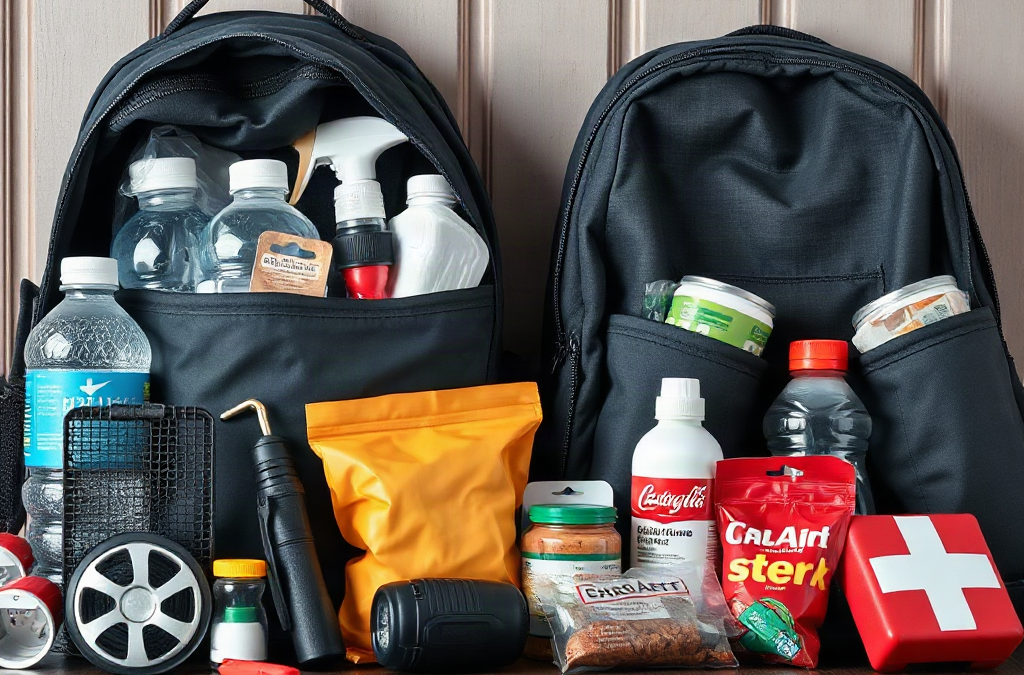
A useful disaster preparedness kit supports two different situations: sheltering at home and leaving quickly. Keep a larger home kit in a dry, accessible container, then place a smaller evacuation kit in a backpack or other bag each person can carry. Build both around your household’s actual needs, local hazards, climate, likely evacuation routes, and the possibility that electricity, water, stores, mobile service, or transportation may be disrupted.
Start With Water and Practical Food
Water is the first supply to plan. Store commercially bottled water or water in food-grade containers, following the container maker’s storage and replacement directions. Include enough for drinking, basic food preparation, and essential hygiene. The right quantity depends on household size, climate, medical needs, pets, and guidance from local emergency officials. A home supply can be larger, while an evacuation bag must remain light enough to carry.
Keep water in a cool area away from fuels, cleaners, pesticides, and direct sunlight. Inspect containers for leakage, damage, or contamination during routine kit checks. If flooding is possible, elevate the supply. A portable water filter or treatment product may be a useful backup, but it does not make every contaminated source safe. Chemical spills and some toxins require specific public-health instructions, so follow local advisories rather than assuming boiling or filtering will solve every problem.
Choose shelf-stable food that family members already eat and that requires little water, fuel, or preparation. Examples include canned beans, fish or meat, nut or seed butter, ready-to-eat meals, dried fruit, crackers, shelf-stable milk, and food suitable for infants or special diets. Add a manual can opener and basic utensils. Avoid filling the kit with foods that cause excessive thirst or cannot be prepared during an outage. Rotate supplies before their labeled dates, and follow package directions for storage, allergens, and use after opening.
Add Medical, Hygiene, and Personal-Care Supplies
A basic first-aid section should contain adhesive bandages in several sizes, sterile gauze, medical tape, disposable gloves, antiseptic wipes, a thermometer, tweezers, scissors, and any familiar over-the-counter products your household can use safely. A first-aid reference is helpful when stress or poor connectivity makes online instructions unavailable. Supplies do not replace professional care; severe bleeding, breathing difficulty, poisoning, major burns, or other emergencies require emergency services when they are available.
Plan separately for prescription medicines, medical devices, glasses, hearing aids, mobility equipment, and refrigerated treatments. Refill rules and emergency dispensing options differ by medication, insurer, pharmacy, and jurisdiction. Ask a pharmacist or clinician what reserve is lawful and safe, how to protect temperature-sensitive products, and whether copies of prescriptions or a medication list are appropriate. Keep medicines in their original labeled containers unless a qualified professional directs otherwise. Include charging cables, spare batteries of the correct type, and a backup-power plan for essential devices, but never operate fuel-burning equipment indoors.
Pack soap, hand sanitizer, toothbrushes, toothpaste, menstrual products, toilet paper, moist wipes, diapers, incontinence supplies, trash bags, and ties. Include masks that fit household members if smoke, ash, dust, or illness is a concern. Respirators and other protective equipment have limitations and must match the hazard; occupational certification rules and public guidance vary, so do not treat one mask as protection against every gas, vapor, particle, or chemical.
Include Light, Communication, Tools, and Power
Every kit needs dependable lighting. Pack flashlights or headlamps with spare batteries stored to prevent accidental activation and terminal contact. Battery-powered candles are safer than open flames where gas leaks, unstable surfaces, children, or pets may be present. A battery-powered or hand-crank radio can carry official alerts when internet and mobile networks fail. If local warning systems require registration, complete that process before an emergency.
Add charged power banks, compatible charging cords, and a car charger if your household has a vehicle. Check stored batteries and recharge power banks on a schedule. Solar chargers can supplement power, but their performance depends on conditions and should not be the only plan for essential medical equipment. Keep emergency contact details, meeting places, and evacuation routes on paper because a dead, damaged, or locked phone may be unusable.
Useful tools include a whistle, work gloves, duct tape, plastic sheeting, a multipurpose tool, waterproof matches where appropriate, a wrench or pliers, and a small fire extinguisher suitable for likely household fires. Tools should only be used by someone who understands them. Utility shutoff procedures differ by building and provider; obtain local instructions in advance, and do not shut off or restore gas merely because a generic checklist suggests it. A broader preparedness timeline can help connect these supplies with decisions made before, during, and after an event.
Protect Documents, Clothing, and Household-Specific Items
Place copies of identification, insurance information, medical details, emergency contacts, property records, and key account information in a waterproof pouch. Keep limited emergency cash in small denominations because electronic payments may be unavailable. Protect sensitive information against theft: carry only what is useful, secure the home copy, and consider encrypted digital backups. Original-document requirements, replacement procedures, and privacy rules vary by issuing authority and jurisdiction, so copies may support a claim or request without serving as legal substitutes for originals.
Pack sturdy shoes, socks, underwear, weather-appropriate layers, rain protection, blankets or compact sleeping bags, and a change of clothes. Add sun protection, insect repellent, and hand warmers when local conditions make them relevant. Clothing for a hot coastal evacuation differs from supplies for winter travel, so use local hazard guidance rather than copying a universal packing list.
Children may need formula, bottles, comfort items, quiet activities, identification information, and properly sized clothing. Older adults and people with disabilities may need transfer aids, communication cards, extra mobility supplies, or caregiver instructions. Pets need water, food, medications, a leash or carrier, waste supplies, identification, and vaccination or ownership records. Confirm which shelters accept animals and what records they request; service-animal access and shelter rules are governed by the applicable jurisdiction and facility, not by a general kit list.
Include spare keys and a local map with two possible routes marked. Write down an out-of-area contact who can relay messages if local lines are congested. Supplies work best when responsibilities are assigned, and a shared household plan can clarify who carries medication, assists children, collects pets, and takes the document pouch.
Separate Home Supplies From Evacuation Bags
A home kit can contain bulk water, additional food, sanitation supplies, blankets, larger batteries, basic cooking equipment approved for safe use, and items needed during an extended outage. Keep it where household members can reach it without entering a flooded basement, damaged garage, or locked room. If space allows, divide supplies among more than one safe location so a single blocked area does not eliminate the entire stock.
An evacuation bag should prioritize immediate needs rather than miniature versions of everything at home. Include water, compact food, essential medicine, first aid, a flashlight, radio, phone power, documents, cash, weather protection, hygiene items, a whistle, and household-specific supplies. Weigh and carry the finished bag. If it is too heavy for its assigned person, reduce nonessential items or redistribute shared gear. Keep footwear, outerwear, keys, and mobility aids beside the bag when safe to do so.
A vehicle kit may add reflective gear, a blanket, water, food, a phone charger, gloves, and seasonally appropriate supplies. Avoid storing products in a vehicle when their labels prohibit extreme heat or cold. Medicines, batteries, aerosols, food, and water can deteriorate in temperature extremes. Vehicle supplies complement rather than replace a carryable bag because the vehicle may be inaccessible or unusable.
Store, Inspect, and Practice With the Kit
Label containers by purpose and place frequently needed items near the top. Use smaller waterproof bags to separate first aid, documents, sanitation items, and electronics. Record contents, quantities, expiration or review dates, and storage locations. A shared inventory reduces overlooked gaps and unnecessary buying; these shopping and inventory methods can help households coordinate purchases.
Review the kit at least on a regular household schedule and whenever needs change. Replace expired food, leaking water, depleted batteries, outgrown clothing, and obsolete documents. Update prescriptions, contact details, pet records, and seasonal gear. Test flashlights, radios, chargers, and alarms according to manufacturer instructions. Inspect the container itself for moisture, pests, broken handles, or excessive weight.
Finally, practice retrieving the home kit and leaving with evacuation bags. Confirm that everyone knows the meeting place, communication method, and assigned tasks. A disaster preparedness kit is not a single universal box; it is a maintained set of supplies matched to the people using it. Start with water, food, medicine, first aid, light, communication, documents, clothing, sanitation, and special-needs items, then adjust the contents as risks and household needs change.
Popular Questions
Where should emergency supplies be stored?
Store the home kit in a dry, accessible place away from chemicals, pests, flooding, and extreme temperatures. Household members should be able to reach it without entering a hazardous basement, garage, or locked room. Keep evacuation bags near a safe exit, and consider dividing supplies between locations so one blocked area does not eliminate everything.
How often should kit contents be checked?
Use a recurring household schedule and inspect the kit whenever medications, family members, pets, addresses, seasons, or medical needs change. Rotate food and water according to their storage guidance, replace damaged items, charge power banks, test radios and lights, update document copies, and make sure clothing still fits.
Can a vehicle kit replace an evacuation bag?
No. A vehicle may be inaccessible, damaged, low on fuel, or unsafe to use during an evacuation. Keep a carryable bag for essential medicine, water, food, documents, communication, light, and weather protection. A vehicle kit can add seasonal supplies, blankets, reflective gear, gloves, and charging equipment where storage temperatures permit.
What should be added for pets?
Pack pet water, familiar food, medicines, bowls, waste supplies, a leash or secure carrier, identification, and copies of relevant veterinary records. Add a recent photo that may help with identification. Check local shelter policies and alternatives in advance because animal admission, documentation, and service-animal rules depend on the facility and applicable jurisdiction.
Quick Answer: Emergency preparedness matters because even a limited outage, evacuation, or road closure can interrupt water, medication, communication, transportation, and safe shelter. A usable plan reduces rushed decisions, protects people with specific needs, and helps a household remain stable while responders handle the most urgent threats.
Why This Happens: Disasters create cascading problems: damaged infrastructure affects services, high call volumes delay assistance, and stress makes routine choices harder. Planning before an incident connects supplies to decisions, assigns responsibilities, and reveals dependencies that are easy to overlook during normal life.
How To Fix It:
Identify the hazards most likely in your area and enroll in official local alerts.
Write two meeting locations, an out-of-area contact, evacuation routes, and backup responsibilities.
Build an inventory around water, food, medication, lighting, communication, sanitation, dependents, and pets.
Practice one realistic scenario, record what failed, and update the plan and supplies.
Emergency preparedness is more important than it may appear because disasters do not have to destroy a home to disrupt daily life. A power outage, wildfire warning, flood, severe storm, earthquake, hazardous-material incident, or extended water interruption can quickly affect communication, transportation, health care, food safety, income, and family contact. Disaster preparedness gives people a practical way to protect essential needs while public agencies and utilities manage the larger emergency.
Preparedness protects decisions, not just supplies
Emergency planning is often reduced to buying bottled water, flashlights, and packaged food. Those supplies matter, but their greatest value comes from being connected to a plan. A household must still decide whether to shelter or leave, how to receive reliable warnings, who will collect children, where family members will meet, and what to do if mobile service fails. Making those decisions during calm conditions reduces confusion when information is incomplete and time is limited.
Stress can narrow attention and make ordinary choices harder. People may forget medication, overlook a pet, drive toward a hazard, or assume another family member has completed an important task. A written plan assigns responsibilities before that pressure develops. It can identify one person who checks official alerts, another who gathers essential documents and medication, and another who accounts for dependents or animals. The assignments should include backups because the first person may be away, injured, or unable to travel.
Preparedness also helps households recognize when a familiar routine is no longer safe. For example, a usual road may flood, an elevator may stop during an outage, or a home may become dangerously hot or cold. Working through questions that reveal planning gaps can uncover these assumptions before an emergency exposes them.
Small disruptions can create serious consequences
A short interruption may be inconvenient for one person but dangerous for another. Loss of electricity can affect powered medical equipment, refrigerated medicine, mobility devices, heating, cooling, well pumps, and the ability to charge a phone. Closed roads can prevent access to prescriptions or routine care. A boil-water notice can complicate infant feeding, food preparation, and sanitation. Preparedness matters because these secondary effects often reach beyond the original hazard.
Households should plan around their actual needs rather than a generic survival scenario. Consider medications, allergies, communication abilities, mobility limits, service animals, dietary needs, pregnancy, infant care, and the needs of older adults. Keep an updated medication list and relevant medical information in an accessible place. Ask health professionals and equipment providers how to handle outages or evacuation, including safe backup-power arrangements. Medical storage, oxygen use, generators, and fuel involve product-specific safety limits, so manufacturer instructions and qualified professional guidance take priority over general preparedness advice.
Financial disruption deserves attention too. An evacuation may require transportation, temporary lodging, meals, replacement clothing, or missed work. Even a modest emergency reserve, some usable payment options, copies of insurance information, and a list of key account contacts can reduce the damage. Important records should be protected from water and unauthorized access, with secure backups where appropriate.
Outside help may not arrive immediately
Emergency services prioritize threats to life, major fires, serious injuries, and incidents affecting many people. Roads, weather, damaged infrastructure, call volume, and unsafe conditions can delay assistance. Preparedness does not replace firefighters, emergency medical services, utilities, relief organizations, or local government. It helps a household remain safer while those systems assess conditions and direct limited resources.
This is one reason communication planning is as important as stored supplies. Every household member should know how to receive local alerts and where to find instructions from emergency management, public safety agencies, public health authorities, and utilities. Alerts may direct residents to evacuate, shelter indoors, avoid tap water, or stay away from particular roads. Instructions vary by incident and jurisdiction; a general checklist should never override a lawful evacuation order or current direction from local authorities.
Choose an out-of-area contact who can relay status if local networks are congested. Write down important numbers because a damaged or uncharged phone may make saved contacts unavailable. Establish a nearby meeting place and another outside the immediate neighborhood. People who use sign-language interpretation, translated information, accessible transportation, or other assistance should identify local registration or support options in advance. Availability and eligibility differ among cities, counties, states, territories, and countries, so confirm details directly with the responsible local agency.
Preparation makes evacuation and sheltering safer
Evacuation and sheltering require different actions, and some events can force a quick change from one to the other. An evacuation plan should include multiple routes, transportation alternatives, fuel considerations, destinations, pet arrangements, and the items that must leave with the household. A sheltering plan should address safe indoor space, water, food, sanitation, lighting, temperature, communication, and hazard-specific instructions.
A practical kit supports both choices. Common categories include water, ready-to-eat food, prescription medication, first-aid supplies, flashlights, spare batteries, phone-charging options, hygiene items, weather-appropriate clothing, copies of key information, a radio, and supplies for children or animals. Quantities should reflect household size, likely hazards, climate, storage space, health needs, and guidance from local emergency officials. Rotate perishables and test equipment rather than assuming an unopened item will work years later.
Do not let shopping become a substitute for planning. Check what is already available, identify true gaps, and purchase gradually if cost is a concern. A shared inventory can support preparedness shopping without duplicates. Store priority items where household members can reach them, and keep a smaller set of essentials in a vehicle or work location when temperature, theft risk, workplace policy, and local law allow.
Special caution for hazardous equipment
Generators, camp stoves, grills, candles, heaters, and stored fuel can create fire, burn, electrical, or carbon-monoxide hazards. Generators and combustion devices must not be used in enclosed or partly enclosed living areas; safe placement and connection depend on the equipment, building, and applicable codes. Follow manufacturer directions and local fire, electrical, storage, and building requirements. Never improvise a connection to household wiring. When uncertain, consult the fire authority, utility, or a properly qualified professional in the applicable jurisdiction.
Household readiness strengthens community response
Disasters affect connected systems, not isolated homes. Neighbors may notice smoke, blocked access, damaged utility lines, or a person who needs assistance before responders can reach the area. Households that can manage basic needs are better positioned to share reliable information, check on others without taking unsafe risks, and avoid placing preventable demands on emergency services.
Community-level preparation should start with consent and realistic boundaries. Learn who may need a check-in, who has relevant skills, and who can offer transportation or temporary practical support. Do not assume that a disabled or older neighbor needs help, disclose another person’s medical information, enter an unsafe structure, or perform work beyond your training. Call emergency services for immediate threats and follow official instructions around damaged power lines, gas odors, floodwater, fire, unstable buildings, and hazardous materials.
Schools, workplaces, landlords, care facilities, faith communities, volunteer groups, and neighborhood organizations also have roles. Ask how they communicate closures, reunify families, support access needs, and account for people during an incident. Strong plans clarify responsibilities rather than relying on vague promises. This broader approach explains why preparedness starts at the community level: household readiness and coordinated local action reinforce one another.
A plan only works when it is maintained
A plan written once can fail because phone numbers change, children move schools, prescriptions are updated, batteries corrode, food expires, and evacuation routes become unsuitable. Review the plan after household changes and at regular intervals. Use a visible reminder or calendar entry to check contacts, alerts, documents, medication needs, equipment, and stored supplies.
Practice should be simple and relevant. Test whether everyone can find flashlights in the dark, silence utilities only if instructed and trained to do so, send a check-in message, reach a meeting point, or load essential items without blocking exits. Discuss what worked, what was confusing, and what needs to change. Children should receive calm, age-appropriate roles rather than frightening scenarios. Pets should be included in transport and destination planning.
Emergency preparedness is therefore more than insurance against a rare catastrophe. It improves the quality and speed of decisions during ordinary disruptions, protects people with time-sensitive needs, and helps public response systems focus on the most urgent dangers. Begin with local hazards, communication, essential needs, and one realistic practice session. A modest plan that people understand, maintain, and can actually use is more valuable than an expensive collection of supplies with no clear purpose.
Popular Questions
How should a household decide which hazards to plan for first?
Start with information from local emergency management, public safety agencies, utilities, and weather authorities. Prioritize hazards that are likely locally and those with the greatest effect on household members, such as extreme heat for someone using temperature-sensitive medication. Then address common consequences—including outages, blocked roads, water interruption, and communication failure—that can occur during many different emergencies.
Is buying an emergency kit enough preparation?
No. A kit is useful only when its contents match the household’s needs and people can reach and use them. Pair supplies with alert enrollment, evacuation routes, meeting locations, contact information, medical planning, and assigned responsibilities. Inspect food, water, batteries, chargers, documents, and equipment periodically, and practice at least one scenario to expose missing items or unclear decisions.
What should people with medical or accessibility needs add to a plan?
Document medications, providers, equipment, communication needs, transportation options, and trusted contacts. Ask clinicians, pharmacists, equipment suppliers, and local agencies about safe outage procedures and available assistance. Requirements and programs differ by jurisdiction, and equipment has specific operating limits, so confirm current local eligibility details and follow professional and manufacturer guidance rather than relying only on a general checklist.
How can neighbors prepare together without creating extra risk?
Exchange contact details voluntarily, discuss check-in preferences, identify useful skills and resources, and agree on clear limits. Protect private medical information and never assume someone wants assistance. Neighbors should not enter unsafe structures, approach damaged utilities, or perform tasks beyond their training. Immediate dangers belong with emergency services, while official instructions should guide evacuation, sheltering, and access restrictions.
Which Partners Belong in the Preparedness Network?
A useful preparedness network includes organizations that control essential decisions, services, facilities, information, or access to affected populations. Depending on the setting, that may include emergency management, fire and law enforcement agencies, emergency medical services, hospitals, utilities, public works, schools, transportation providers, businesses, nonprofit organizations, faith communities, disability advocates, and neighborhood groups. A long contact list is not the same as a functioning partnership. Each participant should have a defined reason for being involved and a realistic contribution to make.
Selection should begin with local consequences rather than organizational prestige. A community exposed to prolonged power interruption needs utility coordination, fuel planning, support for electrically dependent residents, traffic control, and public messaging. A workplace preparing for a building evacuation needs facilities personnel, security, floor wardens, property management, accessibility support, and a method for accounting for employees and visitors. The relevant partners change with the hazard, geography, operating hours, and people who may need assistance.
Community organizations often provide capabilities that formal responders do not maintain. They may know which languages residents use, where isolated people live, which buildings are trusted gathering points, or how to reach individuals who do not use official alert channels. Those relationships can improve message delivery and identify unmet needs, but community partners should not be assigned clinical, security, or technical duties beyond their competence. Good coordination respects both capability and limits.
A practical stakeholder check examines four questions:
Authority: Who can order closures, evacuations, shutdowns, or emergency spending?
Capability: Who has personnel, equipment, facilities, data, transportation, or specialist knowledge?
Reach: Who can communicate credibly with employees, residents, customers, or people needing additional assistance?
Dependency: Which outside service must continue for the response to work?
A common mistake is inviting every organization to every meeting. That creates crowded discussions while operational dependencies remain unresolved. A better model uses a stable core group for shared decisions and hazard-specific participants for particular needs. Signs that the network is working include named representatives, acknowledged responsibilities, and clear paths for requesting help. Repeated attendance without assigned work, uncertain points of contact, or partners who have never reviewed the plan indicate that the network exists mainly on paper.
How Should Coordinated Roles Be Assigned?
Roles should be assigned around decisions and deliverables, not broad promises to “assist as needed.” Every critical function needs one accountable lead, supporting partners, an activation condition, and a backup. The lead does not have to perform every task; the lead makes sure the function is addressed, reports its status, and escalates obstacles. This distinction keeps collaboration from turning into shared but ownerless responsibility.
Start by mapping the functions that must continue across the likely incident timeline. Before impact, partners may monitor conditions, issue warnings, secure facilities, stage supplies, or prepare transportation. During response, they may account for people, manage access, open shelters, assess damage, restore services, or communicate protective actions. Recovery can add debris removal, temporary operations, financial documentation, welfare checks, and restoration priorities. Assigning roles by phase reveals duties that disappear when a plan focuses only on the first hour.
A compact role record should capture the following elements for every major function:
Role Element
Question to Resolve
Useful Evidence
Accountable lead
Who owns the result?
Named position and delegated authority
Supporting partners
Who contributes people, information, or assets?
Specific capability or service
Activation trigger
When does the role begin?
Warning level, service loss, or formal request
Handoff
When does responsibility transfer?
Documented condition and receiving role
Backup
Who acts if the primary is unavailable?
Alternate position and contact route
Consider a school used as a temporary community shelter. The school district may control facility access and building systems, while a relief organization manages shelter operations. Public health personnel may advise on sanitation concerns, transportation partners may move residents, and law enforcement may manage external security. Calling all of them “shelter partners” hides important boundaries. A role map identifies who may open the building, who registers occupants, who requests supplies, and who decides that the site can no longer operate safely.
The opposing mistake is excessive detail. A plan that scripts every action can fail when staffing, access, or incident conditions differ from assumptions. Define outcomes, authority, interfaces, and nonnegotiable safety limits while leaving qualified role owners room to adapt. Review legal authority, contracts, insurance conditions, labor rules, and professional limitations with the appropriate advisers. A planning document cannot grant powers that an organization or individual does not possess.
Communication, Authority, and Resource Control
Coordination becomes operational only when partners know where information goes, who may approve action, and how scarce resources are requested. Contact directories help, but they do not resolve competing messages or delayed decisions. The plan needs communication routes for routine coordination, urgent notification, public information, executive decisions, and field-level updates. Each route should have an alternative that does not depend on the same device, network, or person.
Decision rights deserve particular attention. A field team may be able to stop unsafe work but lack authority to close an entire facility. A communications officer may draft a warning while an authorized official approves release. A nonprofit may distribute supplies but be unable to redirect government-owned equipment. Recording those boundaries prevents well-intentioned partners from waiting for unnecessary approval or acting beyond their mandate.
Resource coordination requires similar precision. Partners should identify what they own, what they can share, who can release it, how transport will be arranged, and whether reimbursement or documentation is expected. Availability should never be assumed merely because an asset appears in a resource inventory. A bus may lack a driver, a generator may be incompatible with a facility connection, and stored supplies may be inaccessible after hours. Resource records are more useful when they include operational constraints rather than just quantities.
For example, several organizations may receive requests for bottled water after a service interruption. If each responds independently, one location may receive duplicate deliveries while another receives none. A shared request process records the requesting site, verified need, priority, assigned provider, delivery status, and unresolved shortfall. Central visibility does not require every organization to surrender control of its assets; it provides a common operating picture for allocation decisions.
Public communication should follow the same discipline. Partners can tailor messages for their audiences, but protective instructions, locations, hours, and eligibility details should come from an agreed source. Translation and accessibility work must be incorporated before release rather than added after contradictory versions circulate. A message log helps teams identify what was approved, when it was issued, and what correction is needed.
Warning signs include executives bypassing the agreed coordination channel, field teams receiving different priorities, unverified requests consuming limited supplies, and public posts appearing before operational partners are informed. When those patterns appear, reduce the number of approval steps, clarify who owns the decision, and establish a predictable reporting rhythm. More messages do not create better coordination; timely, verified information delivered to the person able to act does.
How Do Partners Test and Improve the Arrangement?
Partners should test interfaces between organizations, because that is where otherwise capable plans often separate. Internal drills may confirm that each organization can perform its own tasks, yet leave unanswered how a request crosses boundaries, how leaders reconcile priorities, or how responsibility transfers between shifts. Joint exercises expose those issues before an emergency makes them costly.
A discussion-based exercise is useful for reviewing authority, triggers, and assumptions without disrupting operations. Participants can work through a scenario such as a regional power loss that closes roads, interrupts communications, and affects a care facility. The facilitator should ask who notices the condition, who is contacted, what decision is required, what information is missing, and which partner owns the next action. Answers should be recorded against the role map rather than treated as informal conversation.
Operational drills provide a stronger test when equipment, notification systems, or physical handoffs matter. Partners might send an alert through primary and backup channels, establish a coordination call, submit a resource request, or open a reception site. The aim is not to create theatrical pressure. It is to observe elapsed handoffs, unreachable contacts, ambiguous forms, incompatible terminology, access barriers, and decisions that lack an authorized owner.
An improvement review should distinguish symptoms from underlying causes. A late delivery may reflect an unavailable vehicle, but it may also reveal that no one could approve release, the destination changed without notification, or the request omitted unloading requirements. Corrective action should name an owner, a due date, the document or process being changed, and a way to verify completion. “Improve communication” is not a corrective action; revising the notification sequence and testing the alternate contact route is.
Exercises also need realistic absence and degradation. Remove a primary decision-maker from the scenario, interrupt the preferred communication channel, or introduce competing demands for the same asset. Partners then learn whether backups have genuine authority and whether priorities can be explained. Testing only ideal conditions rewards familiarity with the script rather than resilience.
Signs of improvement include faster confirmation of activation, fewer duplicate requests, accurate handoffs, consistent public instructions, and corrective actions that remain closed during a later test. Failure is indicated when the same ambiguity reappears, alternates have not been briefed, or partners quietly use unofficial workarounds. Plans should be reviewed after exercises, actual incidents, leadership changes, major vendor changes, and changes to facilities or services. The review interval matters less than updating the arrangement whenever its assumptions no longer match operations.
Frequently Asked Questions
Who should lead a multi-organization preparedness partnership?
The lead should be the organization or position with the relevant authority and coordination capacity, not automatically the largest participant. Leadership may shift by function or incident phase, so those transfers should be documented.
What is the simplest way to document coordinated roles?
Use a role map listing each critical function, accountable lead, supporting partners, activation trigger, decision authority, handoff condition, and backup. Keep detailed procedures in each partner's operating documents.
How often should partners review their assignments?
Review them after exercises, incidents, leadership or vendor changes, and material changes to facilities, hazards, or services. A scheduled periodic review is useful, but event-driven updates prevent outdated assumptions from lingering.
Can one partner hold several emergency roles?
Yes, when staffing and authority make that realistic. The plan should address competing demands, identify which function takes priority, and provide alternates if one person or organization becomes overloaded.
What shows that partner coordination is failing?
Conflicting instructions, duplicate resource deliveries, unassigned requests, unreachable decision-makers, and repeated use of unofficial contacts are strong indicators. These failures call for clearer ownership and tested communication routes.
Conclusion
Effective partnership depends on operational clarity rather than the number of organizations named in a plan. Begin with the consequences the community or organization must manage, then select partners with relevant authority, capability, reach, or service dependencies. Give every critical function an accountable lead, supporting roles, an activation trigger, a defined handoff, and a prepared alternate.
The next practical step is to review one plausible incident from notification through recovery. Trace each decision, message, request, and transfer of responsibility across organizational boundaries. Record where authority is uncertain, where information could split, and where a resource depends on an untested assumption. Convert those findings into assigned corrective actions and verify them in a later exercise. A concise arrangement that partners understand and test is more dependable than an elaborate document that cannot survive staff absence, communication loss, or competing priorities.