The first planning task is to identify what each person must have to remain safe and functional if normal services are interrupted. A household inventory should cover more than stored goods. It should connect people, daily routines, medical requirements, utilities, transportation, documents, and practical limitations. Someone who uses a refrigerated medication, relies on a powered device, or cannot use stairs has a different planning problem from a healthy adult who can walk several miles.
Begin with an ordinary week rather than an imagined catastrophe. Note the supplies and services that support eating, drinking, hygiene, communication, transportation, and health. Include prescription medicines, glasses, hearing-device batteries, infant supplies, pet food, mobility aids, sanitation items, and copies of essential records. The point is not to buy every possible product; it is to reveal dependencies. A portable battery may be useful, but it does not solve a problem if the device needs a special cable or the battery cannot be recharged.
Separate needs by time horizon. Immediate needs cover the first several hours, when a person may need shoes, a flashlight, identification, basic first aid, and a way to receive reliable information. Short-duration needs cover the period before a household can shop, travel, or obtain outside assistance. Longer disruptions require rotation, waste management, temperature control, and a realistic source of replenishment. This distinction prevents a common mistake: spending heavily on specialized equipment while overlooking ordinary necessities such as sanitation, cash access, or a usable contact list.
A simple worksheet can record the item or service, the person who depends on it, the substitute available, and the condition that would make the substitute inadequate. For example, shelf-stable food may be practical for an adult but unsuitable for someone with a restricted diet unless acceptable alternatives are selected. Link this work to the broader personal preparedness planning process by ranking needs according to consequences, replacement difficulty, and the time available to respond.
The best result is a short priority register, not an enormous inventory. Mark needs as essential, useful, or optional, then revisit the register after a move, pregnancy, diagnosis, new pet, job change, or change in household membership. A plan that reflects actual routines is more valuable than a larger collection of supplies built around assumptions.
Assign Responsibilities and Decision Triggers
The second task is turning household intentions into named responsibilities. Preparedness often fails when everyone assumes someone else will check the news, collect a child, contact an older relative, or shut off a service. Assigning duties in advance reduces delay and makes the plan usable when people are separated, tired, or working with incomplete information.
Responsibilities should match capability and location. A teenager may be able to collect a go-bag or feed a pet, while an adult handles medication decisions or transportation. A person who works across town may be a poor choice for a first contact at home but a good choice for confirming conditions near the workplace. Record a primary person and a backup for each important task. The backup matters because the primary person may be injured, unreachable, or already responsible for another urgent duty.
Decision triggers are just as important as assignments. “Leave if things get bad” is too vague to guide action. A workable trigger identifies the source of information, the decision, and the fallback if communication fails. A household might agree that an official evacuation instruction changes its location plan, while a building alarm prompts immediate exit without waiting for a group discussion. These are not predictions; they are pre-agreed responses to recognizable conditions.
Consider a household with one car, two workplaces, and a child at school. Its plan should address who collects the child, what happens if the school closes before pickup, where the family reunites if phones fail, and which adult has authority to change the arrangement. The alternative—letting everyone improvise—may appear flexible, but it creates conflicting decisions and unnecessary travel. Conversely, an overly rigid plan can fail when a road closes or an authorized pickup person is unavailable, so each assignment needs a substitute.
Write the responsibilities in plain language and keep a copy where people can access it without an internet connection. A compact section of the preparedness plan can list contacts, permissions, transportation roles, care duties, and decision thresholds. Avoid assigning tasks that require skills no one has practiced. If a duty involves operating a generator, assisting with mobility, or caring for a medical device, training and safe alternatives belong in the plan as well.
Build Communication and Relocation Options
The third task is planning how people will exchange information and move when their usual channels or routes are unavailable. Communication planning is not simply collecting phone numbers. It requires a contact sequence, a meeting arrangement, a message format, and a backup method that fits the household’s abilities.
Choose an out-of-area contact who can receive updates from multiple household members, but do not depend on that person as the only solution. A written contact card should include full names, phone numbers, addresses, workplace or school details, medical information that responders may need, and an agreed message such as “safe at work” or “at the secondary location.” Short, consistent messages reduce confusion when networks are congested or people have limited battery power.
Relocation planning should include at least two destinations and more than one route to each. The best destination is not necessarily the farthest one. It may be a relative’s home, a trusted friend’s apartment, a community shelter, or another place with accessible sleeping arrangements and space for pets. Confirm practical conditions before relying on it: whether the occupants agree, whether transportation is possible, and whether the location creates a different hazard.
A family living in a high-rise building illustrates the tradeoff. Staying may offer security, familiar supplies, and access to a person who cannot travel easily, but a lift outage or smoke condition could make the building unsafe. Leaving may reduce exposure to the immediate problem but create medication, transport, or reunification challenges. The plan should therefore state what information changes the decision and what equipment or assistance makes either option viable.
Test communication and movement under realistic constraints. Send a practice message using the agreed wording, walk the exit route, identify a barrier-free alternative, and check whether a person carrying supplies can manage the distance. Do not treat a navigation app as a complete route plan; phones can lose power, maps can be outdated, and access may change. A paper map, visible landmarks, and a known meeting point provide useful redundancy without assuming that every backup will work.
Test, Review, and Maintain the Plan
A plan becomes dependable when it is tested against ordinary friction. Set aside a short session to verify that people can find supplies, understand their assignments, reach the meeting points, and explain what would cause a change in action. Testing is not a performance exercise. Its purpose is to expose gaps while the household still has time to correct them.
Use small scenarios instead of staging a dramatic event. Ask what happens if the power fails overnight, a caregiver is at work, a phone is lost, a pet cannot travel, or the planned destination is closed. Then follow the process far enough to find a failure. A household may discover that its emergency light has no accessible batteries, that its contact card contains an old address, or that the person assigned to collect a child lacks the required authorization.
Maintenance should follow changes that affect the plan. Check expiration dates, chargeable equipment, medicine availability, document copies, clothing sizes, food preferences, and pet requirements. Rotate items through normal use where appropriate rather than storing unfamiliar products that no one will accept or operate. Recheck routes and destinations after a move, major construction, severe weather, or a change in employment or school schedules.
Prioritize corrections by consequence and effort. A missing prescription may deserve attention before an upgraded storage container; an unclear reunification arrangement may matter more than adding another tool. Keep a dated review note so the household knows what was tested and what remains unresolved. If a limitation cannot be fixed—such as limited transport capacity—state it plainly and build an outside-assistance option rather than pretending the gap does not exist.
Signs that the approach is working include quick agreement about who acts, supplies that can be located without searching, and alternatives that remain usable when a preferred resource disappears. Signs of failure include duplicated purchases, contradictory instructions, reliance on one person, or a plan nobody has read. The three-task framework is strongest when review produces specific changes rather than another general promise to prepare.
For location-specific alerts, evacuation instructions, shelter information, and public safety guidance, consult your local emergency management agency and official government communications. Household planning should follow current local conditions and the needs of the people who may rely on the plan.
Frequently Asked Questions
Which planning task should a beginner do first?
Map essential needs first. Knowing who depends on medication, power, transportation, specific foods, or assistance gives the other planning tasks a realistic foundation.
How detailed should a household preparedness plan be?
It should be detailed enough to name priorities, responsibilities, contacts, destinations, and decision triggers, but short enough for everyone to read and use during stress.
Should every household store the same supplies?
No. Basic needs overlap, but medication, dietary, mobility, pet-care, climate, housing, and transportation requirements vary. Personal dependencies should determine additions.
How often should the plan be reviewed?
Review it after major household or location changes and periodically during the year. A brief practice session can reveal problems that a calendar reminder alone will not.
What is the most common planning mistake?
Relying on a single person, route, device, or destination is a frequent weakness. Assign backups and confirm alternatives before they are needed.
Conclusion
Personal preparedness improves when planning reflects the household that actually exists, not an abstract average family. Identify essential needs and the dependencies behind them, assign primary and backup responsibilities, then establish communication and relocation choices that remain usable when phones, roads, workplaces, or services do not cooperate. Testing turns assumptions into observable results: a dead battery, inaccessible route, missing document, or unclear pickup arrangement can be corrected before pressure arrives. Keep the written plan compact, review it after meaningful changes, and prioritize high-consequence gaps over attractive but less useful additions. A practical next move is to hold one household meeting, complete the needs register, and schedule a short communication or route test before expanding the supply collection.
Emergency preparedness is a continuous cycle rather than a binder that is completed once. The phases usually described as prevention, mitigation, preparedness or readiness, response, and recovery overlap in practice. A household may be recovering from a storm while preparing for another outage, or improving fire safety while responding to a local evacuation notice. Treating the phases as connected decisions makes the plan more realistic.
Each phase answers a different question. Prevention asks how exposure can be avoided. Mitigation asks how damage can be reduced when a hazard cannot be avoided. Readiness focuses on whether people, supplies, information, and transportation are usable. Response covers immediate protective action. Recovery addresses safe return, essential services, financial records, repairs, and lessons learned.
The distinction matters because a strong performance in one phase cannot fully compensate for neglect in another. A well-stocked emergency kit does not solve a blocked evacuation route. A family evacuation route does not replace smoke alarms or a way to receive warnings. A detailed recovery plan may still fail if identity documents, medication information, or insurance contacts are inaccessible.
Use the cycle as a review tool rather than a rigid sequence. For each likely hazard, identify one action that lowers exposure, one action that improves readiness, one decision that will matter during the event, and one recovery task that should begin as soon as conditions permit. The Emergency preparedness phases from prevention through recovery are most useful when translated into decisions that fit the household’s location, health needs, housing, budget, and transportation.
Prevention and Mitigation Before an Emergency
Prevention and mitigation reduce the chance that a hazard will become a household crisis. Prevention may involve avoiding known exposure, such as not storing combustible materials beside a heat source or not driving through floodwater. Mitigation accepts that some hazards cannot be eliminated and focuses on limiting consequences through structural improvements, protective equipment, maintenance, and sound information.
Start with hazards that are both plausible and consequential. A coastal household may prioritize storm surge and extended power loss; an apartment resident may face fire, smoke, elevator failure, or loss of water pressure. The correct priority is not the most dramatic hazard in the news. It is the event that could disrupt the household’s shelter, communication, medical care, mobility, or income for a meaningful period.
Small preventive actions often have a better risk-to-cost ratio than large purchases. Testing smoke and carbon monoxide alarms, securing tall furniture, clearing drainage areas, learning the location of utility shutoffs, and keeping vehicles maintained can reduce trouble before supplies are needed. Renters should document property condition, understand building evacuation rules, and ask management how emergency notices are distributed.
Mitigation also involves tradeoffs. A portable generator may provide useful backup power, but it creates fire and carbon monoxide hazards if used incorrectly and may not be suitable for every residence. Sandbags may help in a narrow situation but are not a substitute for official flood guidance or a safe evacuation decision. A practical prevention review should therefore ask:
What hazard can be reduced through maintenance or a low-cost household change?
What exposure requires professional assessment, landlord action, or local authority guidance?
Which proposed purchase introduces a new hazard, maintenance burden, or operating requirement?
A common mistake is treating mitigation as a shopping exercise. Supplies matter, but they cannot correct an unsafe sleeping area, an inaccessible exit, an unknown shutoff location, or a household member who has not been included in decisions. Begin with the physical and informational weaknesses that would make every later phase harder.
Readiness Measures That Work Under Pressure
Readiness converts risk awareness into actions people can perform when stressed, tired, separated, or working with incomplete information. It includes supplies, skills, contact arrangements, transportation, documents, shelter choices, and practice. The test is not whether a plan sounds complete; it is whether a person can use it without searching through several apps, guessing who is responsible, or relying on a service that may be unavailable.
Build readiness around functions rather than products. A household needs a way to receive warnings, a way to communicate if cellular service is unreliable, a way to leave or shelter, access to essential medications and identification, and enough basic resources to manage a disruption. Store important information in both a digital format that is protected and an offline format that can be reached without internet access.
Practice exposes hidden assumptions. A family may know its meeting place but discover that the designated route crosses a bridge that closes during severe weather. Someone who depends on powered medical equipment may have a battery but no charging plan or guidance from the equipment provider. A pet plan may fail because the chosen shelter does not accept animals. These are not reasons to abandon planning; they show why a short rehearsal is more valuable than a longer checklist.
Use a compact priority order when time or money is limited: life safety, medication and health needs, reliable warnings, communication, water and food, sanitation, transportation, then comfort items. That order is not universal. A person with mobility limitations may need transportation arrangements before ordinary household supplies, while a household in extreme cold may place safe heat and clothing near the top.
Readiness should also include a trigger-based plan. Write down what would cause the household to evacuate, shelter in place, contact an out-of-area person, or check on a neighbor. Avoid making the plan depend on one person being home or one communication channel working. The common failure is confusing possession with capability: owning a radio, extinguisher, or first-aid kit does not show readiness unless someone knows where it is, how it works, and when to use it.
For a practical review, use the preparedness phases timeline with one real scenario. Walk through a winter outage, apartment fire, or evacuation warning from the first alert to the first night away. Note every point where the plan requires a missing item, an uncertain decision, or outside assistance, then fix those points before adding optional gear.
Response Decisions During the Incident
Response begins when a hazard is occurring or an official warning requires action. The immediate objective is not to protect property at any cost; it is to protect life, reduce exposure, and follow reliable instructions. Response decisions may include evacuating, sheltering, moving to a safer part of the building, shutting off utilities if safe and appropriate, contacting emergency services, or accounting for household members.
Information quality becomes a major constraint. Use official alerts, local emergency management notices, weather information, building announcements, and emergency service instructions where available. Social media can reveal useful local observations, but unverified posts may contain outdated routes, incorrect shelter information, or dangerous advice. When sources conflict, consider the source’s authority, timestamp, location, and whether the instruction addresses the current hazard.
Response plans should be short enough to act on. A useful household card might state where to go, which route to avoid, who carries medications and documents, how pets are transported, and where separated members reunite. It should not require a long debate during smoke, flooding, severe weather, or a power failure. A preselected trigger, such as an official evacuation order or a known change in conditions, reduces delay caused by waiting for certainty.
Tradeoffs are unavoidable. Leaving early may mean extra travel, missed work, or an uncomfortable night elsewhere, but delaying can remove transportation options and increase congestion. Sheltering may be appropriate for one hazard and unsafe for another. Turning off utilities may reduce certain risks, yet a person should not enter a dangerous area or attempt unfamiliar work during an active emergency. Follow local instructions and use qualified help for tasks beyond ordinary household capability.
Accountability is a practical response task. After reaching safety, confirm household members through the agreed communication method, conserve phone battery, and share only information needed for coordination. Do not return for belongings until authorities indicate that reentry is safe. A frequent mistake is treating the first visible danger as the only danger; secondary hazards such as unstable structures, contaminated water, downed wires, traffic changes, and carbon monoxide can persist after the initial event.
Recovery, Documentation, and Plan Improvement
Recovery restores safe living conditions and reduces the chance that the next incident will repeat the same losses. It may involve temporary housing, cleanup, medical follow-up, replacement of essential documents, insurance communication, repairs, assistance applications, and emotional support. Recovery does not mean returning everything to its previous state immediately. Safety checks and stable access to essentials come before cosmetic repairs.
Document conditions when it is safe to do so. Photographs, dated notes, receipts, contractor information, and records of conversations may help with insurance or assistance processes, although coverage and reporting requirements vary. Keep damaged items available for inspection when instructions require it, and avoid unsafe cleanup involving electrical systems, structural damage, sewage, mold, or hazardous materials without suitable expertise and protection.
Prioritize recovery by function. Restore a safe place to sleep, medication access, drinking water, sanitation, communication, transportation, and income-related documents before replacing convenience items. A household with children, older adults, disabilities, pets, or ongoing treatment may need outside agencies or community organizations sooner than a household with fewer dependencies. Asking for help early can be more effective than waiting until temporary arrangements fail.
Recovery is also the best time to revise the plan because memories of confusion are still specific. Record what worked, what was inaccessible, which warning arrived first, how long batteries lasted, whether transportation was realistic, and which supplies remained unused. Replace expired items, recharge equipment, update contacts, and change routes or meeting places that proved impractical.
A common misconception is that recovery ends when the power returns or the household comes home. Hidden costs, disrupted routines, damaged records, and unresolved safety hazards can continue. Compare the old plan with actual conditions: if a phone tree failed, add a second channel; if supplies were scattered, consolidate them; if evacuation took too long, set an earlier trigger. The full preparedness cycle becomes stronger when every incident produces a specific correction rather than a vague intention to be more prepared.
Frequently Asked Questions
What are the main emergency preparedness phases?
The commonly used phases are prevention, mitigation, readiness, response, and recovery. They overlap and should be reviewed as a repeating cycle.
Which preparedness phase should a household address first?
Begin with hazards that could threaten life safety or disrupt shelter, medication, communication, transportation, or water. Then address low-cost prevention and mitigation measures before buying optional supplies.
How is prevention different from mitigation?
Prevention aims to avoid exposure or stop an incident from occurring, while mitigation reduces damage when the hazard cannot be completely avoided.
What should a response plan include?
Include warning sources, evacuation and shelter triggers, meeting locations, communication methods, medication responsibilities, pet arrangements, and routes that account for likely closures.
When does the recovery phase end?
Recovery ends gradually as safety, essential services, housing, records, finances, and routines stabilize. The final step is updating the plan with failures and useful observations from the event.
Further Reading
Authoritative Sources
Ready.gov ready.gov
Provides federal guidance on household planning, alerts, evacuation, sheltering, and recovery actions
FEMA National Preparedness Frameworks fema.gov
Explains how prevention, protection, mitigation, response, and recovery capabilities connect across emergencies
Food Safety During Power Outages cdc.gov
Offers practical guidance for reducing foodborne illness risks during a loss of refrigeration
Conclusion
Effective preparedness moves beyond storing supplies. Prevention and mitigation reduce exposure, readiness makes decisions executable, response protects people during changing conditions, and recovery restores essential functions while correcting weaknesses. Review the phases against one realistic hazard in your area, such as an evacuation warning, building fire, winter outage, or flood. Identify the first action, the person responsible, the backup communication method, and the point at which outside help is needed. Test the plan in ordinary conditions, keep critical information accessible offline, and revise it after every drill or disruption. A smaller plan that matches the household’s actual abilities and constraints is more dependable than an elaborate plan no one can use.
Extended isolation changes the purpose of emergency supplies. The goal is not to create an extreme stockpile; it is to reduce unnecessary trips outside while preserving safe meals, medication access, sanitation, and basic household function. A household that can manage several weeks at home may need different items from a person living alone, a family with an infant, or someone who depends on refrigerated medicine.
Begin by estimating the people, animals, and routines that supplies must support. Record prescription names, refill dates, dietary restrictions, allergies, mobility needs, and the equipment that requires electricity. Include ordinary items that are easy to overlook, such as contact-lens solution, menstrual products, infant formula, pet food, glasses, hearing-aid batteries, and incontinence supplies. These gaps become more disruptive than a shortage of novelty preparedness gear.
Storage space and household budget also shape sensible choices. A compact apartment may favor concentrated cleaning products, stackable cartons, and foods that can be prepared with one pot. A larger home may allow bulk purchases, but volume still creates expiration, pest, and rotation problems. Buying more is not automatically safer if the supplies cannot be used, inspected, or replaced.
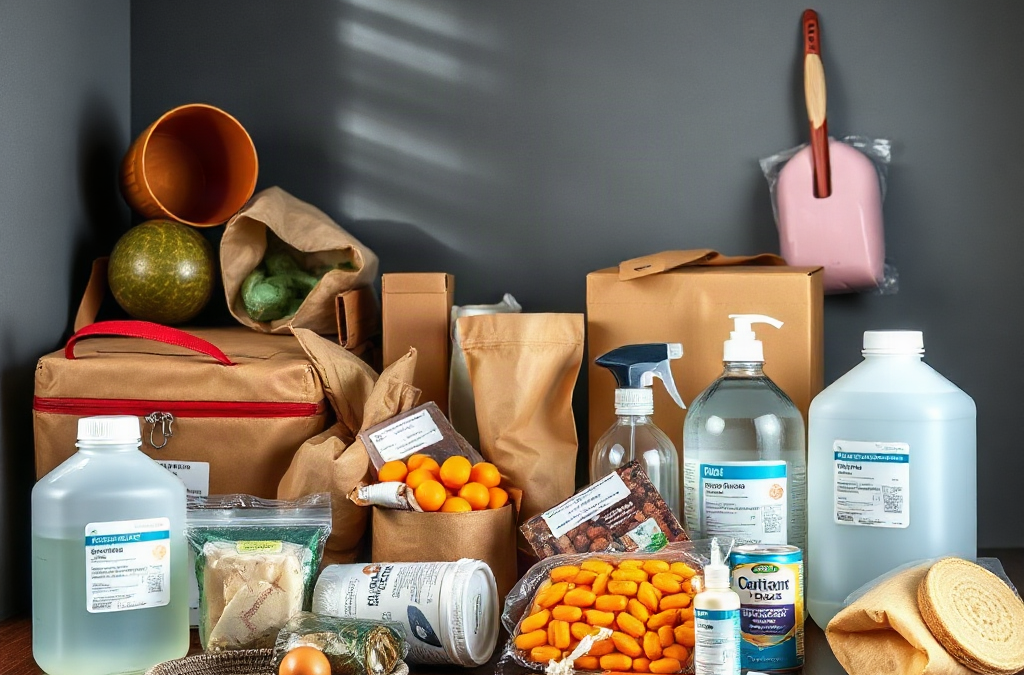
A useful baseline includes drinking water, familiar foods, medicine and first-aid materials, soap and toiletries, cleaning products, waste bags, lighting, charging equipment, and a method for receiving official updates. Review the Pandemic preparedness supplies for extended isolation needs of each household member rather than copying a generic shopping cart. The common failure is treating isolation as a food-only problem when medication, sanitation, and information access determine whether the household can function.
Choose Food, Water, and Medication for Homebound Days
Food for extended isolation should be familiar, nutritionally varied, easy to prepare, and realistic for the available cooking equipment. Shelf-stable beans, canned fish or poultry, canned vegetables, fruit, oats, rice, pasta, whole-grain crackers, nut or seed butters, powdered milk, and low-sodium soups can form a flexible base. Frozen foods are useful when electricity is dependable, but they should complement rather than replace shelf-stable options.
Prioritize foods that household members will actually eat. A large quantity of an unfamiliar product may look efficient but can create waste, digestive discomfort, or low intake during illness. Combine carbohydrates with protein and include fruits or vegetables in forms that require little preparation. Canned goods may be practical, while highly processed snacks can provide convenience without supplying a balanced meal pattern. People with diabetes, kidney disease, food allergies, or other medical needs should adapt choices to advice from their clinician.
Water planning requires more than purchasing containers. Consider drinking, cooking, medication use, handwashing, and the possibility that tap service or access to stores could be disrupted. Store water in clean, food-safe containers and follow the product label or local public-health guidance for replacement and handling. If a household uses a filtration device, keep the correct replacement cartridge and know whether it addresses the contaminant of concern; a filter is not a universal substitute for treated water.
Medication continuity deserves early attention because a missed refill cannot always be corrected quickly. Keep an updated medication list, prescriber and pharmacy details, and a small buffer obtained through lawful, pharmacist-approved refilling arrangements. Do not change doses or ration medicines to stretch a supply. Include nonprescription products the household routinely uses, such as fever-monitoring equipment or oral rehydration products, but follow labels and seek medical advice when symptoms are severe or unusual.
For a practical purchasing sequence, secure the items with the fewest substitutes first:
Prescriptions, medical devices, contact supplies, and medically appropriate foods.
Drinking water and meals that work with the household’s actual stove or appliance.
Basic toiletries, soap, tissues, and laundry supplies.
Flexible pantry ingredients, comfort foods, and replacement batteries.
The common mistake is buying dense bulk foods without checking cooking fuel, can-openers, storage temperature, or dietary tolerance. A smaller pantry that can be opened and prepared safely is more useful than a larger one that depends on unavailable equipment. See Pandemic preparedness supplies for extended isolation alongside a written household inventory so purchases solve specific gaps.
Build Hygiene, Cleaning, and Waste Controls
Hygiene supplies reduce the practical burden of staying home and can help limit contamination when someone is ill. Hand soap, running water, tissues, toilet paper, toothpaste, bathing products, menstrual care items, disposable towels, and laundry detergent should be treated as core supplies rather than optional extras. Alcohol-based hand sanitizer may be useful when soap and water are not immediately available, but it does not replace routine handwashing when hands are visibly dirty.
Cleaning and disinfecting are different tasks. Cleaning removes dirt and some germs from a surface; disinfecting uses an appropriate product according to its label to address remaining microorganisms. Focus on frequently touched surfaces and areas contaminated by respiratory secretions or bodily fluids instead of repeatedly treating every object in the home. Ventilation, product contact time, and safe storage matter more than spraying large amounts.
Never mix bleach with ammonia, acids, or other cleaners, and do not transfer chemicals into unmarked containers. Keep products away from children, pets, food, and heat. Gloves can protect skin during cleaning, but they do not make careless handling safe. Follow the manufacturer’s directions, including dilution, ventilation, surface compatibility, and whether rinsing is required around food-contact areas.
Waste management becomes a genuine constraint during a long stay indoors. Line bins, keep extra bags available, separate sharps or medical waste according to local instructions, and wash hands after handling trash. If a household member is sick, use the approach recommended by local health authorities and avoid shaking laundry or linens unnecessarily. Ordinary washable cloths may be more sustainable than disposable wipes, while disposable products can be useful when laundry capacity is limited.
A common misconception is that more disinfectant always provides more protection. Excess product can damage surfaces, irritate breathing, and create poisoning hazards without improving the cleaning result. A measured routine works better: clean visible soil, use the correct product when disinfection is warranted, observe the label’s contact time, and store the chemical securely. The Pandemic preparedness supplies for extended isolation inventory should show not only what is present but where it is stored and how it is used.
Cover Power, Communication, Health, and Household Needs
Isolation supplies must keep essential routines working when a household cannot shop normally. A thermometer, basic first-aid materials, prescribed medical equipment, spare eyeglasses, chargers, power banks, flashlights, and batteries can address small failures before they become urgent. People who use oxygen equipment, powered mobility devices, refrigeration, or other electrically dependent technology should identify backup arrangements with their clinician, utility provider, or equipment supplier before an emergency.
Communication is a health and logistics tool. Keep phones charged, record important numbers on paper, and identify official channels for public-health notices, pharmacy changes, food assistance, and emergency services. A battery-powered radio may be useful where mobile service is unreliable. Do not rely on a single app, website, or device, especially if the home has limited internet access or a power outage is possible.
Comfort supplies deserve measured attention because prolonged confinement can disrupt sleep, work, caregiving, and mood. Include reading material, simple games, headphones, a basic schedule, and items that help children or older adults maintain familiar routines. These are not substitutes for medical or mental-health care, but they can reduce avoidable friction. A household with remote workers may prioritize a power bank and extension cord; a family caring for children may need washable activities and extra snacks.
Consider how supplies will be obtained if delivery is delayed. Keep a short contact list for relatives, neighbors, community organizations, pharmacies, and local assistance services. Arrange contactless drop-off instructions before they are needed, and confirm whether pets require prescription food or medication. The tradeoff is between convenience and resilience: disposable plates may conserve water during illness, while reusable dishes reduce waste when washing capacity is normal.
The failure mode here is preparing for a dramatic outage while ignoring ordinary continuity. A household may own flashlights yet lack charging cables, or have canned food without a manual opener. Test every critical item in its intended setting. If a backup device cannot power the needed equipment, or a communication plan depends on one person answering immediately, revise it before isolation begins.
Rotate and Test the Supplies Before They Matter
Preparedness supplies remain useful only when they are known, accessible, and within safe use dates. Place newer products behind older ones, label opened packages, and inspect stored water, batteries, medications, and cleaning products on a regular schedule. “Best by” dates often describe quality rather than an automatic safety cutoff, but damaged packaging, unusual odors, swelling cans, expired medicines, and degraded equipment require cautious handling and replacement.
Use normal household consumption to rotate pantry goods. Add stored beans to a planned meal, replace them during the next grocery trip, and note whether preparation was practical. This test can expose problems such as excessive sodium, missing spices, an unsuitable can opener, or a cooking method that consumes more fuel than expected. The same principle applies to hygiene supplies: verify that products fit the household’s skin sensitivities and that gloves are available in usable sizes.
Create a compact inventory with item, quantity, location, expiration or replacement date, and the person responsible for checking it. Keep critical medicines and medical information easy to retrieve rather than buried in a storage area. Separate supplies that are needed immediately from reserve items so a sick or fatigued person does not have to unpack the entire cache.
Reassess after every illness, trip, power interruption, or change in household membership. If food ran out first, increase the foods that were actually eaten; if sanitation was difficult, add laundry detergent, bags, or soap rather than simply buying more snacks. A useful readiness check is whether another adult could find the water, medications, cleaning products, chargers, and emergency contacts without asking where they are. That practical test reveals more than a long inventory alone.
Frequently Asked Questions
How much food should a household store for extended isolation?
Choose an amount based on household size, likely isolation duration, storage space, medical needs, and cooking access. Build a usable reserve gradually rather than purchasing food that will expire before it is eaten.
Should water be included in pandemic supplies?
Yes. Include drinking and cooking water, and consider handwashing or service interruptions. Store it in clean, food-safe containers and follow local or product-specific handling guidance.
Which cleaning products are most useful?
Hand soap, detergent, trash bags, and an appropriate surface disinfectant are practical priorities. Use each product according to its label and never mix household chemicals.
How can medication shortages be reduced?
Keep an updated medication list, request refills early when permitted, and ask a pharmacist about lawful continuity options. Do not alter doses or substitute medicines without professional advice.
What supplies are often forgotten?
Common omissions include can-openers, batteries, charging cables, pet supplies, menstrual products, glasses, infant items, waste bags, and foods compatible with medical or allergy-related restrictions.
Conclusion
A practical isolation reserve protects continuity rather than chasing an impressive quantity of goods. Start with medication access, drinking water, familiar meals, soap, sanitation products, waste supplies, and the equipment needed to communicate and manage health at home. Then tailor the reserve to children, older adults, pets, dietary restrictions, powered devices, and limited storage.
Use ordinary meals to rotate food, inspect containers and batteries, and test chargers, can-openers, thermometers, and cleaning routines before they are needed. Keep an inventory that another household member can understand, and replace items based on use rather than fear-driven buying. Official public-health guidance should determine illness-specific precautions, while a measured household system handles the everyday demands of staying isolated safely and comfortably.