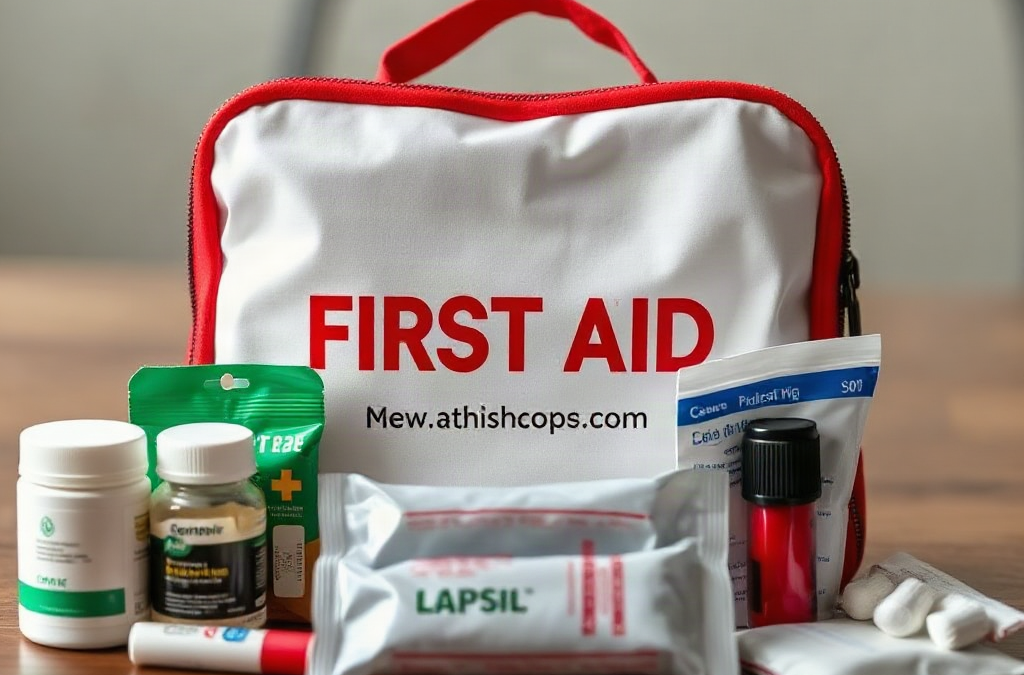
Premade kits are useful starting points, but their contents usually reflect a broad consumer market rather than one household’s risks, skills, climate, or duration of need. A compact pouch may be convenient for a vehicle or day trip, while a home kit needs greater quantities, better organization, and supplies for repeated minor injuries. The label “first aid” does not indicate that a kit covers every likely problem.
Manufacturers also face space and cost limits. Small boxes often contain several sizes of adhesive strips, a little gauze, antiseptic wipes, gloves, and perhaps a cold pack. Those items address minor cuts, but they may not cover burns, blisters, eye irritation, sprains, prolonged wound care, or a person’s regular medical needs. A kit can look full while having only one or two useful items for a particular injury.
Audit the kit by scenario rather than by item count. Ask what happens if someone cuts a hand while repairing equipment, develops a blister during an evacuation walk, or needs daily medication during a delayed return home. The answer reveals gaps more clearly than a generic inventory.
A practical review separates supplies into three layers: immediate first aid, ongoing care, and personal health requirements. Immediate first aid covers gloves, wound coverings, cleaning supplies, and simple tools. Ongoing care includes replacement dressings, waste bags, hygiene items, and additional lighting or labeling. Personal requirements may include prescription medicines, glasses, hearing-aid batteries, diabetes supplies, allergy medication, or mobility-related items. Each layer has different storage and replacement concerns.
Use the Premade first aid kit gaps preppers should address as a starting point for a household-specific inventory, not as a substitute for medical training. The most useful kit is one people can identify quickly, use correctly, and replenish after a small incident.
Wound Care and Bleeding-Control Shortfalls
Wound care is commonly underbuilt because premade kits favor low-cost, low-volume items. A few narrow adhesive strips are not equivalent to a system for cleaning, covering, securing, and monitoring wounds. Gauze may be present but insufficient for a larger injury, and a kit may lack a way to hold a dressing in place when adhesive does not work well on wet, hairy, or moving skin.
Look for a range of wound coverings, medical tape, rolled gauze, nonstick dressings, and a safe method for cleaning visible debris. Disposable gloves protect both the injured person and the helper from contact with blood or contaminated material. Small scissors can assist with cutting tape or clothing, but tools should be stored so they do not puncture sterile packaging.
Bleeding-control supplies deserve special attention, yet they should match the user’s training. A pressure dressing may be practical for someone who understands direct pressure and wound assessment. More advanced devices require instruction, careful storage, and an understanding of when they are appropriate. Buying specialized equipment without learning its use can create false confidence and delay a call for emergency help.
Consider a workshop or gardening scenario. A shallow cut may need cleaning and a small dressing; a deeper wound may require sustained pressure, larger coverings, and urgent professional care. A kit that contains only small bandages forces the responder to improvise with household fabric, which may be dirty, difficult to secure, or unsuitable for monitoring. Improvisation is sometimes necessary, but it should not be the planned baseline.
Burns, blisters, and eye exposures are other frequent omissions. Add dressings appropriate for minor burns, blister protection for people walking long distances, and eyewash or clean rinsing supplies where dust, chemicals, or workshop debris are plausible hazards. Avoid treating an antiseptic wipe as a universal solution; some injuries need flushing, protection, or medical evaluation rather than repeated application of a product.
Do not use a dressing checklist as permission to manage serious injuries at home. Heavy bleeding, deep wounds, severe burns, loss of function, embedded objects, and eye injuries can require urgent care. The kit should support immediate care while help is sought, not replace it.
Personal Medicines, Hygiene, and Protective Supplies
Personal health items are among the most consequential omissions in a generic kit. Commercial packages rarely include prescription medicines, adequate quantities of routine over-the-counter products, backup glasses, or supplies tied to a diagnosed condition. A household may have excellent gauze and still be unprepared if one person cannot access essential medication or monitoring equipment.
Build a private medication list that records names, strengths, instructions, allergies, prescriber information, and refill details. Store medicines according to their labeling, since heat, moisture, and freezing conditions can affect some products. Ask a pharmacist or clinician how to handle backup quantities, substitutions, and temperature-sensitive items. Do not place loose pills in an unlabeled bag, and do not assume that a medicine suitable for one adult is safe for another.
Hygiene supplies affect wound outcomes and usability. Add nitrile gloves in more than one size if needed, hand sanitizer, soap, disposable waste bags, tissues, and a way to keep clean materials separate from used ones. A compact kit may include one pair of gloves, but that is inadequate for repeated care or multiple people. Masks may be useful in dusty cleanup situations, although their protection varies by design and fit.
Age and activity change the inventory. Children may need appropriately sized coverings and dosing tools, while older adults may need hearing-aid batteries, skin-protection supplies, or mobility aids. A person with contact lenses may require glasses and lens-care planning; a person with severe allergies may need their prescribed emergency medication readily accessible. These are not optional “extras” if they determine whether someone can function safely.
Common assumptions create avoidable problems. Pain relievers can interact with existing conditions or medicines, and topical products can irritate sensitive skin. Antibiotics should not be added casually or used as a general response to every wound. A thermometer, written medical information, and emergency contacts may be more useful than another duplicated packet of adhesive strips.
Keep the personal section discreet and easy to remove when carrying the kit between locations. The Premade first aid kit gaps preppers should address will differ for a solo commuter, a family with young children, and a group working outdoors. The correct additions are determined by actual health needs and foreseeable tasks, not by the size of the box.
How to Audit, Pack, and Maintain the Kit
A useful audit begins with a written inventory and ends with a realistic practice check. Empty the premade kit onto a clean surface, record quantities and expiration dates, and discard damaged or unidentified items according to local disposal guidance. Then group supplies by use: bleeding and wounds, burns, sprains, medicines, hygiene, tools, and personal requirements. Grouping exposes duplication in one category and absence in another.
Prioritize additions in this order:
Personal necessities: prescription planning, glasses, hearing support, allergy needs, and condition-specific equipment.
Likely environment: blister care for walking, burn supplies for cooking, eye rinsing for dusty work, or cold protection for outdoor storage.
Duration and scale: enough consumables for the number of people and the period before resupply.
Organization: labels, a contents list, and quick access to the most frequently used items.
Pack for retrieval under stress. Clear pouches or labeled compartments are usually more useful than a tightly compressed assortment. Keep sterile dressings sealed, separate medications from general supplies, and place gloves where they can be reached without unpacking the entire kit. A duplicate small pouch can serve a vehicle or day bag, while a larger home cache holds replenishment stock.
Practice reveals failures that an inventory cannot. Have each responsible adult locate gloves, dressings, tape, and a flashlight without coaching. Check whether packaging opens with wet or cold hands, whether labels remain readable, and whether the kit fits its assigned storage location. If a user cannot identify an item or explain its purpose, replace it with a simpler option or obtain appropriate instruction.
Maintenance should follow use and calendar review. Replace opened, soiled, expired, leaking, or heat-damaged supplies immediately. Review the kit when seasons change, household members’ medicines change, or travel plans expand. A common mistake is buying a second premade kit before correcting the first one; duplication increases volume without improving capability. The better test is whether the kit covers the injuries and health interruptions your household can realistically face.
For additional planning context, use Premade first aid kit gaps preppers should address alongside recognized first-aid training and advice from qualified medical professionals. Supplies work best when their limits are understood.
For reliable guidance, consult recognized first-aid training organizations, local emergency medical services, pharmacists, and clinicians familiar with your household’s conditions. Official product labeling and training materials are more dependable than an unlabeled online packing list, especially for medicines and advanced bleeding-control equipment.
Frequently Asked Questions
What is the biggest gap in most premade first aid kits?
Personal medicines and enough supplies for repeated care are often missing. Many kits also lack varied dressings, adequate gloves, burn care, blister protection, and a practical cleaning method.
Should preppers add a tourniquet to a basic kit?
Advanced bleeding-control equipment may be useful in some settings, but users should receive appropriate training and understand its limits. It should supplement, not replace, basic first aid and emergency communication.
How much medication should be stored?
Ask a pharmacist or prescriber about lawful and medically appropriate backup quantities. Keep medicines labeled, protected from unsuitable temperatures, and reviewed whenever prescriptions or household needs change.
Are antiseptic wipes enough for wound cleaning?
Not always. Some wounds benefit from thorough rinsing and a suitable dressing, while chemical exposures or eye injuries may need prolonged flushing and professional assessment.
How often should a premade kit be checked?
Inspect it after every use and on a regular calendar schedule. Check expiration dates, package seals, storage temperature, quantities, labeling, and whether the contents still match the household’s activities and health needs.
Conclusion
A premade first aid kit is a container of starting supplies, not proof that a household is medically prepared. Review it against realistic injuries, personal health requirements, storage conditions, and the time that may pass before resupply. Add varied wound dressings, gloves, cleaning and burn supplies, blister protection, hygiene materials, and clearly managed personal medicines before buying more duplicates. Keep advanced tools within the limits of your training, and treat serious bleeding, deep wounds, severe burns, and eye injuries as situations requiring urgent professional help. Finish the audit with a hands-on retrieval test, then record what was used and replenish it promptly. A smaller, clearly organized kit matched to real needs is more dependable than a larger box filled with generic items.
A premade emergency kit reduces the time between deciding to prepare and having a usable collection of supplies. Most packages group items such as flashlights, batteries, a whistle, basic first-aid materials, sanitation products, blankets, and simple tools in a portable bag or tub. That packaging has practical value: supplies are easier to locate, carry, and inspect than loose purchases scattered through a home.
The limitation is that a labeled kit is not automatically a complete solution. A compact product may contain a small amount of water or food, but that does not establish how long it will serve a household. A kit designed for one person may be inadequate for four people, while a general first-aid pouch may omit prescription medicines, infant supplies, allergy products, or equipment used by someone with a disability. Read the itemized contents rather than relying on phrases such as “family emergency pack.”
Premade kits work especially well when time, storage space, or shopping access is limited. A renter moving into a new home, a student keeping supplies in a vehicle, or a person assembling a first workplace kit may reasonably value speed over customization. The purchase also creates a visible starting point for a broader emergency supply system.
Common failure points deserve attention. Batteries may be mismatched with the flashlight, food may require preparation that is impossible during a utility outage, and the carrying case may be too small for water or warm clothing. Treat the package as an inventory to audit, not as proof that every need has been covered.
Where a Custom-Built Kit Has the Advantage
Building your own kit gives you control over quantities, compatibility, and personal requirements. Instead of accepting a generic food bar, you can select shelf-stable foods your household will actually eat, such as canned beans, nut butter, crackers, dried fruit, or ready-to-eat meals. You can choose a water-storage method that fits the available space and add an opener, cups, and sanitation supplies that make those items usable.
Customization matters most where generic products routinely fall short. A household with a baby may need formula, bottles, diapers, and cleaning supplies. A pet owner needs food, a leash, waste bags, and a carrier or restraint plan. Someone who uses a mobility aid may need spare batteries, repair tools, transfer assistance information, or a way to keep the aid accessible if furniture shifts. These needs are rarely handled well by a one-size-fits-all box.
A self-built kit can also reflect the actual hazard and living arrangement. An apartment resident may prioritize a compact fire extinguisher, shoes near the bed, and supplies that can be carried downstairs. A rural household may need larger water containers, animal supplies, and tools for longer interruptions. A driver may build a separate vehicle kit with seasonal clothing, a charger, reflective gear, and items suited to being stranded rather than sheltering at home.
The tradeoff is responsibility. You must compare product quality, track dates, test equipment, and prevent important items from being divided among too many hiding places. A homemade collection can look comprehensive while lacking a working light or a safe way to open food. Use a written inventory and test each powered device with the batteries stored beside it. A custom kit is superior only when it is maintained as deliberately as it was assembled.
Comparing Cost, Quality, and Maintenance
Price comparisons are meaningful only when the contents and quantities match. A low-cost premade kit may appear economical because it includes many small items, but several tiny tools may be less useful than one durable flashlight, a larger first-aid supply, or additional water storage. Conversely, buying every item separately can lead to premium purchases that exceed the household’s realistic budget.
Premade products shift part of the selection work to the seller. That can improve convenience, but quality varies between components. Inspect stitching, zipper strength, battery type, packaging dates, tool construction, and food labels. A kit intended for a closet should not be judged by the same standard as one carried on foot, where weight and durability become more consequential. The bag itself should not consume so much space that essential additions must be left outside.
Building from scratch allows staged spending. A household can first secure light, water, sanitation, basic food, and a way to communicate, then add cooking equipment, comfort items, documents, and specialized needs. This approach often produces better value because each purchase answers a known gap. Its weakness is delay: repeatedly researching options can leave the household without a functional baseline.
Maintenance affects both choices. Replace expired food and damaged packaging, recharge power banks, rotate water according to the container maker’s guidance, and check that seasonal clothing still fits. Store a printed inventory with purchase dates and review it after a move, new prescription, pregnancy, pet adoption, or change in household size. The most expensive mistake is not choosing the wrong format; it is forgetting what was bought and discovering the gap during an outage.
A Practical Hybrid Buying and Building Method
A hybrid method combines the fast starting point of a premade kit with the accuracy of a household-built inventory. Begin by choosing a container or basic package that has a clear contents list and enough room for additions. Before storing it, separate included items into three groups: immediately useful, inadequate in quantity or quality, and irrelevant to the people who will use the supplies.
Next, build around actual functions rather than product categories. Someone needs to drink, eat, see, stay warm or cool, maintain hygiene, manage minor injuries, receive information, and move or communicate when conditions change. This functional check exposes omissions that a long item list can hide. For instance, canned food without an opener is not a complete meal option, and a phone charger without a compatible power source does not solve a prolonged outage.
Use a short priority sequence when money or time is limited:
Immediate operation: water, light, basic food, sanitation, and essential medicines.
Household fit: infant, pet, dietary, medical, mobility, and language needs.
Usability: openers, spare batteries, charging cables, clothing, and labeled storage.
Resilience: duplicates, repair tools, documents, and supplies for a vehicle or evacuation.
Test the result with a simple simulation. Turn off household lighting briefly and ask whether every person can find the kit, produce light, access water, open food, and locate critical medicines without searching online. If the process stalls at a missing cable, confusing packaging, or inaccessible shelf, revise the kit. This exercise is more informative than counting items because it tests whether supplies work together under pressure.
Do not let the hybrid approach become an excuse to buy a poor-quality package. A premade kit with unsuitable food, weak tools, or misleading quantities may take longer to correct than a carefully selected starter set. Compare the cost of replacing weak components with the cost of buying core supplies individually, then keep only items that pass the household’s practical test.
Choosing the Better Fit for Your Household
Choose a premade kit when speed, portability, or limited shopping capacity matters more than exact customization. It is a sensible first move for a new renter, a dorm room, a workplace drawer, or a vehicle where a compact baseline is better than having nothing. Confirm the intended number of people, inspect the food and water provisions, and reserve space for personal additions.
Build your own when the household has specialized requirements, established preferences, or enough time to compare durable equipment. Custom assembly is particularly useful for multiple family members, pets, strict dietary needs, regular prescriptions, extreme seasonal conditions, or separate home and vehicle use. The benefit is not theoretical flexibility; it is having supplies that a particular person can identify, operate, consume, or carry.
Budget and storage can change the answer. A person with limited funds may get more practical coverage by buying a flashlight, water containers, shelf-stable food, sanitation items, and medicines separately rather than paying for a decorative bag full of minor accessories. Someone in a small apartment may need a compact, prioritized kit instead of a large assortment that blocks access or becomes impossible to move.
Avoid two assumptions: that a higher price guarantees better contents, and that a homemade kit is automatically more thoughtful. Ask whether the supplies cover the likely duration, whether every item has a clear use, and whether the kit can be reached quickly. Readers comparing premade and self-built options should make a written gap list after inspecting a product, then buy only what closes those gaps. That creates a measurable decision instead of a label-based one.
For hazard-specific supply quantities, storage guidance, and household planning questions, consult current information from government emergency-management agencies, public health departments, and recognized consumer safety organizations. Those sources can provide advice that changes with local hazards, climate, water conditions, and public alerts.
Frequently Asked Questions
Are premade emergency kits worth buying?
They can be worthwhile as a fast baseline, especially when the contents are clearly listed and the package is easy to carry. Audit the kit before relying on it.
Is it cheaper to build an emergency kit yourself?
Often, separate purchases provide better value because you pay for needed quantities rather than bundled accessories. Staged buying also spreads the cost.
What should be added to a premade kit first?
Add household-specific medicines, water, food that needs no unavailable preparation, sanitation supplies, lighting, batteries, and infant or pet necessities.
How often should an emergency kit be checked?
Review it on a recurring schedule and after household changes. Replace expired food, damaged items, depleted batteries, and supplies that no longer fit.
Can one kit serve both home and car use?
It can serve as a starting point, but home sheltering and roadside delays need different items. A compact vehicle kit should complement, not replace, the home supply.
Conclusion
The better choice depends on how quickly you need a baseline, how specialized your household is, and whether you will maintain what you buy. Premade kits offer speed and organized storage, but their quantities and generic contents require scrutiny. Building your own kit offers stronger control over food, water, medicines, mobility needs, pets, and local conditions, while demanding more time and inventory discipline. For many people, a hybrid delivers the most practical result: purchase a sound starting container, test every component, replace weak items, and add supplies based on actual household use. Keep the finished kit accessible, label it clearly, and review it after meaningful changes. A smaller kit that people can find and use is more valuable than a larger package that remains untested.
Food qualifies as ready to eat during an outage or evacuation when it can be consumed safely from its package without a stove, microwave, boiling water, refrigeration, or lengthy preparation. That definition excludes many products marketed for emergencies. Freeze-dried meals, dry rice, pasta, dehydrated vegetables, and powdered mixes may store well, but they depend on clean water and a way to heat or rehydrate them. They can be useful as part of a broader supply, yet they should not be counted as the only food available when cooking is impossible.
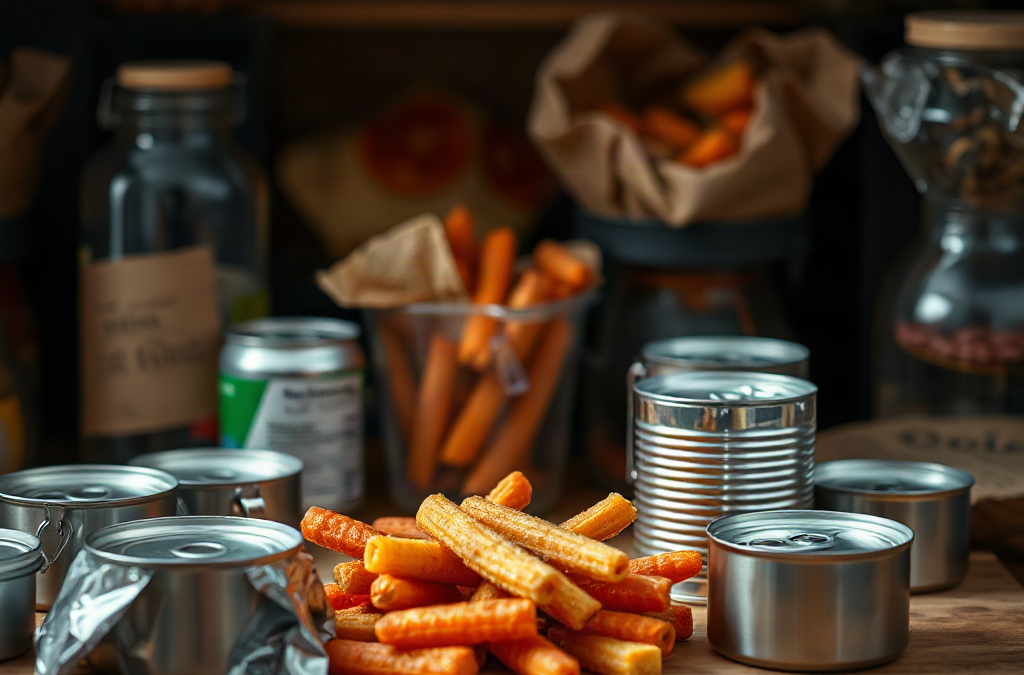
The practical test is simple: could a tired person open, portion, and eat the item in a dark room with limited water? Pull-tab cans, tear-open pouches, individually wrapped bars, and single-serving fruit cups generally perform better than large containers that require draining, refrigeration after opening, or several utensils. A shelf-stable meal that needs only a spoon is more useful than one that needs a pan, measuring cup, and added water.
Texture and appetite matter as much as storage life. People may reject an emergency supply made entirely of dry bars or salty crackers, especially during heat, illness, stress, or dehydration. Include moist foods, familiar flavors, and several textures. A meal of tuna, crackers, fruit, and shelf-stable milk is more workable than a pile of identical snack foods because it combines protein, carbohydrate, fluid, and variety.
A common misconception is that “no cooking” means “no equipment.” Keep a manual can opener even if most cans have pull tabs, along with disposable utensils, napkins, resealable bags, hand sanitizer, and a small amount of water for cleaning. Those items reduce contamination and make bulky or multi-serving packages manageable. For a fuller supply strategy, connect this food list with your Ready-to-eat emergency food without cooking storage inventory rather than treating food as a stand-alone purchase.
The Most Practical Foods to Store
The strongest no-cook supply uses several food groups instead of relying on one emergency product. Canned seafood, chicken, beans, and meat provide protein; nut or seed butter contributes concentrated energy; crackers, tortillas, and ready-to-eat cereals provide carbohydrates; fruit cups and canned fruit add moisture and variety. Shelf-stable milk or fortified dairy alternatives can contribute fluid and nutrients, although packaging and dietary needs vary.
Choose packaging according to the situation. Pull-tab cans are convenient but can have tabs that bend or break, so a backup opener remains worthwhile. Pouches are lighter for evacuation but may be less durable in a crowded storage bin. Single-serving items reduce leftovers and handling, while larger cans may cost less per serving but require a plan for what happens after opening. If power may return quickly, a large container can be practical; if the household may relocate, compact portions are usually easier.
Useful categories include:
Protein: canned tuna, salmon, chicken, beans, lentils, chickpeas, nut butter, and shelf-stable protein drinks.
Energy foods: granola bars, dense crackers, trail mix, dried fruit, and ready-to-eat cereal.
Moist foods: fruit cups, applesauce, canned vegetables, olives, and soups that are safe to eat cold if the label permits.
Product labels deserve close attention. “Shelf stable” does not mean every package is safe at every temperature, and a product that normally requires refrigeration should not be stored as an emergency item merely because it is sealed. Check the manufacturer’s storage instructions, allergen statement, serving size, and preparation directions. A ready-to-eat meal with a sauce packet may still require water, while a canned entrée may be edible cold but unpleasantly salty.
For example, a household with one vegetarian adult might choose beans, lentil pouches, nut butter, crackers, fruit, and shelf-stable milk rather than buying meat-heavy cases that will go unused. A person with swallowing difficulty may need softer foods such as applesauce, canned fruit, smooth spreads, or medically appropriate products. Dietary restrictions are not a minor detail: food that cannot be eaten is not part of the usable reserve.
How to Build a Balanced No-Cook Supply
Build the supply around eating occasions, not just individual packages. Start by estimating how many people need food, how long they may lack normal cooking, and whether the supply stays at home or travels. Then assign each eating occasion a protein source, an energy source, and a food with moisture or produce value. This approach exposes gaps that are easy to miss when shopping by category alone.
A simple example is a cold lunch: a tuna or bean pouch, crackers or a tortilla, fruit, and water. A breakfast could pair ready-to-eat cereal with shelf-stable milk and dried fruit. A snack may combine nut butter with crackers, provided no allergy concern exists. These combinations are not rigid menus; they are checks that prevent a stockpile from becoming all sugar, all sodium, or all dry food.
Prioritize the following in order:
Usability: no cooking, minimal water, accessible packaging, and suitable textures.
Safety: intact seals, appropriate storage conditions, and clear dates.
Dietary fit: allergies, medical diets, age, swallowing ability, and cultural preferences.
Variety: enough flavors and textures to make repeated cold meals tolerable.
Rotation: products the household already eats and can replace routinely.
Water must be considered separately. Some foods contain moisture, but they do not replace drinking water, and salty items may increase thirst. Foods requiring rehydration should be counted against the water budget rather than described as fully ready to eat. Likewise, canned fruit packed in juice may be easier to consume than dry fruit for someone with limited water, while dry crackers are lighter and less vulnerable to leakage.
Cost creates another tradeoff. Premium emergency entrees can simplify storage but may offer little advantage over ordinary canned foods, beans, nut butter, and crackers purchased during regular shopping. The cheaper option often works better when the household rotates it, understands the packaging, and actually enjoys the taste. A useful trial is to serve one planned meal cold at home. Notice whether the food needs a can opener, creates excessive waste, causes thirst, or leaves anyone hungry. Adjust before an emergency exposes the problem.
Keep a small “first access” container separate from deep storage. Place pull-tab foods, bars, fruit, utensils, and sanitation supplies where they can be reached without moving heavy cases. Link that container to your Ready-to-eat emergency food without cooking rotation notes so the easiest items do not quietly expire while less convenient products are consumed first.
Storage, Rotation, and Food Safety
Storage conditions determine whether packaged food remains usable. Keep supplies in a cool, dry, clean location away from direct sunlight, leaks, fuel, chemicals, and pest activity. Heat can shorten the quality life of some foods, while dampness can damage cardboard, labels, and outer packaging. A basement shelf may be convenient but unsuitable if it floods; a garage may provide space but experience temperature extremes.
Inspect packages whenever supplies are moved. Discard cans that are bulging, leaking, badly rusted, or deeply dented at the seam. Do not taste food to decide whether questionable packaging is safe. For pouches, look for swelling, punctures, broken seals, or unusual leakage. Follow the product’s storage directions and understand that a “best by” date commonly relates to quality, while safety also depends on package integrity and storage history. When uncertain about a specific product, use guidance from food-safety authorities or the manufacturer rather than guessing.
Rotation works best when it is built into ordinary meals. Put newer items behind older ones, mark the purchase month on cases, and review the supply when changing seasonal equipment. Use older cans in lunches and replace them during normal shopping. This method also reveals whether the chosen food is too salty, too dry, difficult to open, or disliked by a family member.
Opened food changes the risk picture. Without refrigeration, do not assume a partially eaten can or pouch can wait safely for later. Use single servings when possible, and if an opened product must be saved, follow safe refrigeration guidance and discard it if proper cooling is unavailable. Clean hands, utensils, and surfaces before eating. A sanitation failure can turn a useful food supply into an additional problem, particularly when clean water is limited.
Cold consumption may affect quality even when it does not affect safety. Some canned foods are designed to be heated, and their texture or flavor may be poor straight from the container. Test representative products before storing large quantities. The mistake to avoid is confusing technical edibility with practical acceptability: a meal people refuse, cannot chew, or cannot open has little emergency value.
Common Mistakes and a Better Shopping Method
The most frequent mistake is buying for storage life alone. A case of foods with long dates can still fail if it contains allergens, requires cooking, depends on a can opener, or produces more sodium and thirst than the household can manage. Another weak assumption is that one product can cover every need. Bars may travel well but become monotonous; canned meals provide moisture but add weight; nut butter is energy-dense but unsuitable for some allergies and difficult to portion without a utensil.
Shop in stages. First, list the people, likely duration, storage location, dietary limits, and available water. Second, select a small number of products from each useful category. Third, conduct a cold-meal test using the exact packaging and tools that would be available during an outage. Fourth, record what was eaten, what was wasted, and what caused difficulty. Only then buy larger quantities.
Use a practical inspection checklist:
Can every person eat it safely and comfortably?
Can it be opened without electricity?
Does it need added water, draining, refrigeration, or heating?
Is there a protein source and a filling carbohydrate nearby?
Will the package survive transport and storage?
Can older stock be rotated through ordinary meals?
Scenario testing improves the result. For a short power outage, refrigerated food may be consumed first while shelf-stable items remain untouched. For evacuation, weight, leakage, and compact packaging become more important. For a household with young children, familiar flavors and easy-to-chew textures may matter more than maximum calories per package. For someone managing diabetes, food choices should fit their established medical guidance rather than relying on generic emergency menus.
Build around real behavior, then refine the reserve. The right supply is not the most elaborate one; it is the set of foods people can open, tolerate, and eat safely under the specific constraints they face. Keep the related Ready-to-eat emergency food without cooking notes with the inventory, and update them whenever household needs change.
For product-specific storage advice and food-safety decisions, consult official USDA food-safety guidance, state or local public-health agencies, and the manufacturer’s label or customer documentation. These sources are more reliable than informal claims about dates, damaged cans, or shelf life.
Frequently Asked Questions
What foods can be eaten during an emergency without cooking?
Canned fish, chicken, beans, fruit, vegetables, nut butter, crackers, tortillas, dried fruit, bars, and suitable shelf-stable drinks are practical options. Verify the label before eating products normally intended to be heated.
Do ready-to-eat emergency foods require water?
They should not require water for preparation, but drinking water is still needed. Foods that must be rehydrated or mixed should be counted separately because they are not fully ready to eat without added resources.
Are canned foods safe to eat cold?
Many commercially canned foods are safe to eat cold when the container is intact and the product is labeled for normal consumption, although some are designed for better flavor when heated. Never use bulging, leaking, or severely damaged cans.
How should no-cook emergency food be rotated?
Store newer items behind older ones, mark purchase dates, and use the older products in ordinary meals. Replace them during routine shopping so the supply reflects current dietary needs and preferences.
What equipment belongs with a no-cook food supply?
Keep a manual can opener, disposable or washable utensils, napkins, resealable bags, hand-cleaning supplies, and a way to manage waste. These tools address packaging, hygiene, and leftovers when electricity or running water is limited.
Conclusion
A dependable no-cook food reserve is built around usability rather than impressive packaging. Select intact, shelf-stable foods that provide protein, energy, moisture, and acceptable textures, then test them cold with the tools and water actually available. Balance convenience against cost, weight, sodium, allergies, and the need to handle leftovers safely. Keep supplies cool and dry, rotate them through regular meals, and inspect packages before use. A short trial meal can reveal more than a product description: it shows whether anyone dislikes the texture, needs a can opener, becomes unusually thirsty, or remains hungry. Make those corrections while conditions are normal, and the stored food will be far more useful when cooking is unavailable.