Why a Pump Outage Can Precede a Water or Sewer Failure
A pump may stop while water service still appears normal because pressure, storage tanks, gravity flow, and building plumbing do not all depend on the same component. A booster pump can fail while a municipal main continues supplying lower floors. A well pump can stop while pressure remains in a tank for a limited period. A sewage lift pump can be offline while toilets still flush, even though wastewater is no longer being moved to the main sewer line. Treating every pump interruption as either harmless or a total water outage creates avoidable sanitation problems.
The first task is to identify what the pump serves. Check whether it supplies the whole property, only upper floors, a private well, a pressure system, a sump, or a sewage lift station. Ask the utility, landlord, building engineer, or facility operator whether the interruption affects incoming water, wastewater removal, or both. Do not rely only on whether a faucet produces water; a tap can flow briefly from stored pressure after the pump has stopped.
Wastewater equipment deserves particular attention. If a building depends on a lift station, continued flushing can fill a holding basin faster than the failed pump can empty it. The visible warning may not be a dry faucet but a slow drain, gurgling fixture, odor, alarm, or sewage appearing at a low drain. A gravity-connected home has a different risk profile, although a neighborhood sewer interruption can still cause backups.
Use a short status check before making household decisions:
Test cold water at a low and high fixture briefly, then stop if flow is weak, discolored, or sputtering.
Determine whether toilets drain normally and whether any fixture shows a backup warning.
Locate pump alarms, shutoff controls, pressure gauges, and the lowest drain or plumbing fixture.
Record the time the pump stopped and any utility estimate without assuming the estimate is exact.
A common mistake is to keep testing fixtures repeatedly. That consumes residual pressure, adds wastewater to a constrained system, and makes it harder to tell whether conditions are worsening. A single controlled check followed by monitoring gives better information. Readers who are building a broader sanitation planning when pumps stop before water service fails procedure should include this system-identification step before listing supplies.
Separate Water Priorities Before Pressure Changes
Stored water should be divided by purpose rather than treated as one interchangeable reserve. Drinking, food preparation, medication use, hand hygiene, toilet needs, and surface cleaning have different urgency and quality requirements. If a pump is failing but the public supply remains available, fill suitable containers while pressure is dependable, provided local advisories do not prohibit use. Avoid drawing so much water at once that neighbors, shared-building residents, or firefighting systems are affected.
Potable water belongs in clean, food-safe containers with secure covers. Mark containers by intended use and keep them away from fuel, chemicals, raw waste, and direct contamination. Water collected for toilet flushing or basic cleaning should not be confused with drinking water. If a source may be contaminated, boiling or treatment does not correct every chemical hazard, so follow the specific utility or public-health instruction rather than applying a universal treatment assumption.
Prioritization becomes more useful when the household has a realistic time horizon. A small family may protect drinking and handwashing water first, while a larger household, shared residence, childcare setting, or person with medical needs may need a formal allocation schedule. Flushing a toilet with several containers of potable water can consume a reserve needed for drinking and hand cleaning; a temporary toilet arrangement may use less water, but it introduces waste-handling responsibilities.
Keep a written allocation note showing:
the amount reserved for drinking and food;
the amount reserved for handwashing and personal hygiene;
the non-potable supply available for cleaning or carefully managed flushing;
the point at which normal fixture use stops and an alternate sanitation method begins.
Water conservation should not mean abandoning hygiene. Hand cleaning after toilet use, before food handling, and after contact with waste has higher sanitation value than washing every surface continuously. A basin, pour bottle, soap, disposable towels, and a covered graywater container can make limited water more effective. Alcohol-based hand sanitizer may be useful when hands are not visibly dirty, but it is not a complete substitute for soap and water in every contamination situation.
Weak planning often assumes that bottled water solves the entire problem. It covers drinking but does not address waste, odors, contaminated surfaces, or a toilet that cannot safely discharge. A useful sanitation plan therefore assigns water to tasks and identifies the equipment or method that replaces each unavailable pump function.
Build a Sanitation Setup for the First 24 Hours
A first-day sanitation setup should be ready before fixtures stop working, not assembled after a backup appears. Place supplies where they can be reached without crossing food-preparation areas: heavy-duty bags, a sturdy lidded container, absorbent material, gloves, soap, disinfecting products, paper towels, and a flashlight. Keep chemicals in original labeled containers, never mix cleaners, and provide ventilation when using them.
The container must be stable, washable on the outside, and large enough to prevent overfilling. A lined bucket or purpose-built emergency toilet can work for short-term use if it is kept away from food, closed between uses, and handled by an adult who understands the procedure. A flimsy open bin is a poor substitute because tipping, insects, leakage, and odor become harder to control. Absorbent material can reduce sloshing, but it does not make waste safe or eliminate the need for disposal instructions.
Personal hygiene needs its own arrangement. Set up a hand-cleaning station with a water container that pours without hands touching the outlet, soap or an appropriate sanitizer, and a way to collect runoff. Reserve a separate area for changing hygiene products, cleaning reusable items, and storing used towels. Households with infants, older adults, or someone with limited mobility should test the arrangement in advance; a toilet system that is technically available may still be impractical if it requires lifting, crouching, or a trip through a wet area.
A compact preparation sequence is:
Confirm the pump function and identify whether the problem involves supply, drainage, or both.
Collect and label water by use before pressure or service changes.
Position the alternate toilet and hand-cleaning station on a stable, accessible surface.
Stop food preparation in any area exposed to wastewater, leaks, or contaminated splash.
Write down who will monitor odors, leakage, fill level, alarms, and utility updates.
Testing the setup matters more than buying the largest quantity of supplies. Pour water through the hand station, check that bags fit the container, and verify that gloves and cleaning materials are accessible. A common failure is storing sanitation supplies in a basement, garage, or locked utility room that may become inaccessible if flooding or a building closure develops.
Short-term convenience also has a tradeoff. Disposable items simplify cleanup but create more waste; reusable items reduce waste but require a safe washing method. Choose the arrangement that keeps waste contained and hands clean under the actual space, staffing, and water limits. If a shared building is involved, coordinate rather than placing an individual container beside a communal hallway or drain.
Manage Toilets, Waste, and Backflow Risks
Toilet use depends on where the waste goes after the bowl empties. A flush that looks normal can still send wastewater toward a full or inactive lift station. Before flushing, determine whether the building operator has issued a restriction and whether the lowest fixtures show slow drainage or backup. If sewage is rising, stop using connected fixtures and keep people and pets away from the affected area.
Do not improvise by forcing water into a toilet when the drainage path is uncertain. In a gravity system with a clear sewer route, an appropriately sized manual flush may be possible, but the property operator or utility should guide that decision. In a pump-dependent system, conserving flushes may protect the building from an indoor overflow. These are different situations, so advice that treats all toilets alike is unreliable.
Waste containment should focus on leakage prevention and contact reduction. Close or tie the liner according to the product and local disposal guidance, keep the outer container covered, and clean gloves or hands after handling it. Do not pour human waste, contaminated graywater, wipes, or cleaning chemicals into storm drains, yards, or outdoor areas. Do not flush wipes, paper towels, diapers, or other bulky materials even after service returns; they may worsen a partially restored system.
Pay attention to early signs that the plan is failing:
a container is nearing its safe fill limit or the liner is slipping;
odor persists despite closure, suggesting leakage or poor separation;
drains gurgle, water level changes without use, or sewage appears at a low point;
clean water and waste-handling tools are being stored together;
people are skipping hand cleaning because the station is inconvenient.
Surface cleaning requires judgment. Remove visible contamination with disposable material first, contain the material, then use a suitable disinfectant according to its label. Disinfecting a visibly dirty surface without removing the soil may be less effective. Porous materials heavily contaminated by sewage may need disposal rather than repeated wiping. Wear protection appropriate to the task and seek public-health or professional advice for extensive contamination.
One misconception is that odor alone determines danger. Odor can signal a sanitation problem, but absence of odor does not prove that water, surfaces, or drains are safe. The better test is whether waste remains contained, hands can be cleaned, food areas are separated, and the plumbing status is known. For more detail, connect this section to the site’s sanitation planning when pumps stop before water service fails reference point.
Decision Points for Restoration and Escalation
Restoration should be treated as a verification process, not a single moment when a pump starts humming. A restart may produce pressure surges, cloudy water, trapped air, or repeated cycling. Wastewater equipment may operate intermittently while a basin is still recovering. Wait for the responsible utility or building operator to confirm the system status, then use a limited check rather than immediately running every fixture and appliance.
Begin with the information that changes the decision: Is water approved for normal use? Is sewage moving normally? Did the pump stop because of a power issue, a mechanical fault, a low source level, or an alarm condition? Has a boil-water, do-not-use, or sewer advisory been issued? A household can conserve stored water differently depending on those answers. A water-pressure problem calls for restraint and monitoring; a contamination advisory calls for compliance with the advisory even if water is flowing.
After authorization to resume, inspect low fixtures and visible pipe joints for leaks, run cold water briefly where instructed, and watch for unusual color, odor, sputtering, or drainage changes. Do not reset breakers repeatedly or bypass alarms. Electrical equipment, wet pump rooms, sewage-contaminated spaces, and damaged wiring require qualified help. Contact the utility, property manager, or licensed professional when sewage backs up, the pump trips again, a well system loses pressure, or contamination is suspected.
Escalate promptly for a household member who depends on powered medical equipment, has limited mobility, is very young, or cannot safely use an alternate toilet. Shared buildings should report conditions through the designated manager rather than creating competing repairs. Keep a simple log of pump status, water use, fixture behavior, alarms, and calls; that record helps distinguish a one-time interruption from a recurring failure.
The most practical success measure is not whether normal service returns quickly. It is whether the household avoids contaminated contact, protects its drinking reserve, prevents unnecessary wastewater loading, and knows when amateur troubleshooting has reached its limit. A prewritten contact list and a clearly marked sanitation station often matter more than an oversized supply pile because they reduce hesitation at the point when plumbing conditions change.
Frequently Asked Questions
Can water still run after a pump stops?
Yes. Stored pressure, elevated tanks, or gravity flow may keep fixtures running briefly. Flow does not prove that a well, booster, or wastewater pump is functioning normally.
Should toilets be flushed if a sewage pump is offline?
Ask the utility, building manager, or pump operator first. Continued flushing can fill a lift station and cause an indoor backup when wastewater cannot be moved.
What water should be saved first?
Protect water for drinking, food preparation, medication, and hand hygiene before allocating any reserve to flushing or general cleaning.
What is a practical temporary toilet option?
A sturdy, lined, covered container or purpose-built emergency toilet may work for short-term use when placed away from food and managed to prevent leaks and contact. Follow local disposal instructions.
When should a pump problem be treated as urgent?
Seek prompt assistance for sewage backup, contamination concerns, repeated pump trips, electrical hazards, rapidly falling pressure, or residents who cannot safely manage an alternate sanitation arrangement.
Further Reading
Authoritative Sources
Academy of Nutrition and Dietetics eatright.org
Professional nutrition guidance, healthy eating resources, and practical dietitian-reviewed advice.
U.S. Department of Agriculture usda.gov
Official food, nutrition, agriculture, and consumer guidance from the USDA.
NIH Office of Dietary Supplements ods.od.nih.gov
Research-based fact sheets on nutrients, supplements, dietary intake, and safety considerations.
International Society of Sports Nutrition sportsnutritionsociety.org
Evidence-informed sports nutrition resources and position stands for active people and athletes.
Conclusion
A pump outage can create a sanitation problem before a faucet stops, particularly when a property relies on stored pressure, a well system, or a sewage lift station. Identify the pump’s role, limit unnecessary fixture use, divide stored water by purpose, and prepare a covered waste and hand-cleaning station while conditions are still manageable. Treat slow drains, alarms, odors, and low-point seepage as warnings rather than inconveniences. Once service is restored, verify water and drainage in stages and follow utility instructions instead of assuming the system is fully safe. The next useful step is a short household drill: locate the controls, label water containers, test the alternate toilet setup, and record the contacts responsible for water and wastewater service.
Identify the Temperature Exposure Before Sorting Food
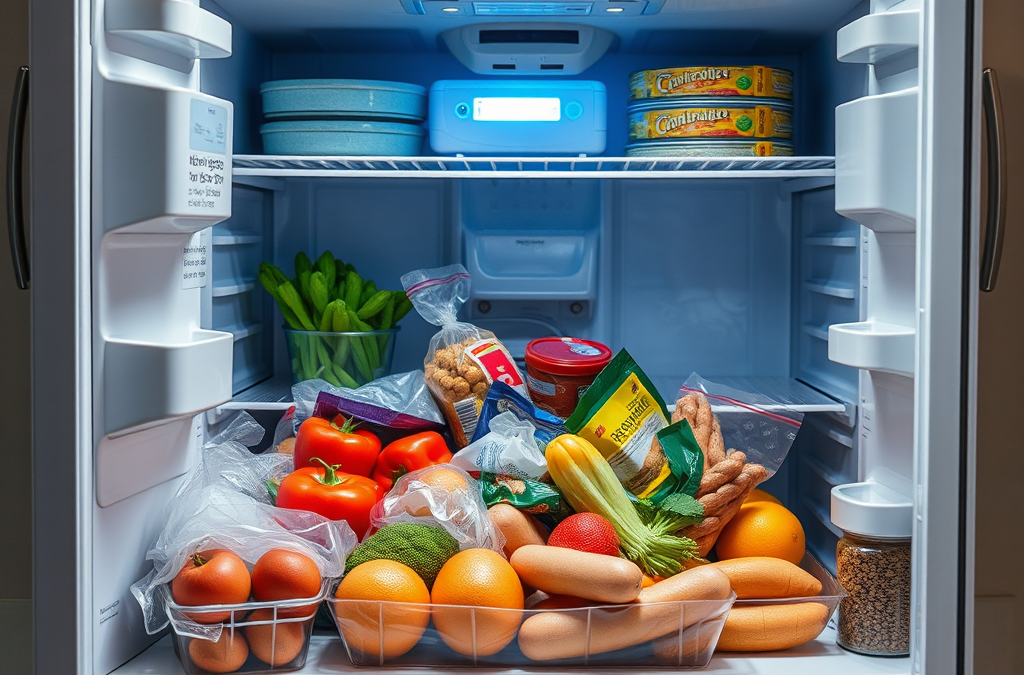
Food decisions become clearer once the possible temperature window is reconstructed. A refrigerator should keep perishable food at 40°F or below, but an uncertain reading does not automatically mean every item is unsafe. The useful questions are how warm the compartment became, how long it may have stayed there, whether the door remained closed, and whether the food was already cold at the beginning of the event.
Begin with evidence rather than opening containers and smelling them one by one. Check a refrigerator thermometer, appliance display, outage notes, smart-home alerts, or a maximum-temperature indicator if one was used. A current reading only describes the refrigerator now; it cannot prove that the compartment stayed cold earlier. A closed refrigerator generally holds cold longer than one opened repeatedly, while a packed compartment may warm more slowly than a nearly empty one. Neither circumstance establishes a safe temperature by itself.
Separate the situation into three levels: a known safe temperature, a short or uncertain exposure, and a prolonged exposure that may have reached the unsafe range. If the refrigerator was without power briefly and food remained cold with no evidence of warming, the decision may be narrower. If the door was left ajar overnight, the appliance alarm sounded for hours, or the temperature history is missing entirely, highly perishable foods deserve the most conservative treatment.
The common mistake is treating “still cool” as equivalent to “safe.” Food can feel cool while having spent enough time warm for bacteria to multiply. The opposite mistake is discarding every item without distinguishing raw chicken from mustard or a whole apple. A careful sort reduces both food waste and unnecessary risk. Keep questionable food refrigerated while making the assessment, and use deciding which refrigerated food to discard after uncertain temperatures as a record-based process rather than a smell test.
Separate High-Risk Refrigerated Foods From More Tolerant Items
Highly perishable foods should be reviewed first because their moisture, nutrients, and handling history can support rapid bacterial growth. The priority group includes raw or cooked meat, poultry, seafood, eggs, milk, cream, soft cheese, deli meat, cooked rice or pasta, leftovers, cut melons, cut leafy greens, prepared salads, and foods made with cream or custard. These items may become unsafe without obvious changes in color, odor, or texture.
Raw poultry and seafood deserve particular attention because their juices can contaminate shelves and ready-to-eat foods. Cooked leftovers are not automatically safer than raw ingredients: cooking may reduce bacteria present at that moment, but handling and later warming can create a new risk. A container of cooked rice left in a warming refrigerator should not be rescued merely because it was fully cooked. Discarding a questionable leftover is usually a better tradeoff than trying to reheat it into safety.
Some refrigerated foods have more resilience, although resilience is not the same as unlimited safety. Hard cheeses, butter, whole uncut fruits and vegetables, unopened commercial condiments, jams, pickles, and similar acidic or preserved products may remain usable under conditions that make milk or cooked meat unacceptable. Their quality may decline before they become an immediate safety concern, and labels may still recommend refrigeration for texture or freshness. Examine the product type, whether it was opened, and whether it was contaminated by leaking food.
A useful priority order is:
Discard first: raw or cooked animal foods, seafood, dairy, eggs, leftovers, prepared salads, and cut produce with a questionable warm exposure.
Assess separately: soft cheeses, opened sauces, deli foods, refrigerated dough, and foods with cream, custard, or mayonnaise.
Often lower concern: hard cheese, butter, whole produce, unopened acidic condiments, and commercially preserved products, provided packaging is intact.
The weak assumption to avoid is that an unopened package is automatically protected. An unopened carton of milk can still warm, and a sealed tray of raw meat can still leak as it heats. Conversely, an opened jar of mustard should not be judged by the same standard as an opened container of chicken salad. Food category, temperature history, and contamination potential matter together.
Use Packaging, Ice Crystals, and Food History as Evidence
Physical clues can refine a decision, but they cannot certify safety. Frozen food that still contains solid ice crystals or feels thoroughly frozen may often be refrozen or cooked promptly, although quality can suffer. A package that has fully thawed, leaked, or remained warm is more difficult to evaluate. Refreezing does not reverse bacterial growth that occurred during thawing; it only changes the food’s temperature again.
Inspect containers for swelling, broken seals, leaking juices, unusual separation, or evidence that food warmed and cooled. A swollen package may indicate spoilage or microbial activity, but a normal-looking package proves little. Do not taste questionable food to test it. Small amounts of harmful bacteria or toxins may not create a detectable flavor, and tasting turns an inspection into an unnecessary exposure.
Food history adds context. A freshly purchased, unopened item that entered the refrigerator cold is different from a casserole that sat on a counter before the refrigerator problem. A door that was opened repeatedly during a power interruption creates a different exposure from a closed appliance in a cool room. A refrigerator packed with warm groceries may also have started the event at a disadvantage. Record what you know instead of relying on a single clue.
Consider this scenario: a refrigerator display reads 46°F after an overnight outage, but no one knows when it crossed 40°F. A sealed container of leftover pasta, an unopened bottle of ketchup, hard cheddar, raw salmon, and whole oranges are inside. The pasta and salmon should receive the most conservative decision because they are highly perishable. Ketchup, hard cheddar, and whole oranges belong to a separate assessment group, though any item touched by leaking salmon should be discarded or thoroughly cleaned according to food-safety guidance.
The comparison that matters is not “smells fine versus smells bad.” It is strong evidence versus weak evidence. A verified temperature log is stronger than a current display; a continuous frozen center is more informative than a cold surface; and a documented short exposure is more reassuring than an unknown overnight interval. If an item is expensive but high-risk, cost does not change the safety mechanism. It may be better to replace one package than to gamble on an invisible hazard.
Apply a Practical Discard Sequence and Prevent a Repeat
Sort the refrigerator in a sequence that protects people and preserves useful evidence. Keep the door closed until you are ready, wash hands after handling leaking packages, and place items into groups rather than making isolated guesses. Start with foods for infants, older adults, pregnant people, or anyone with a weakened immune system; a lower tolerance for uncertain exposure is reasonable for these households.
Use this compact process:
Confirm the current reading: use a refrigerator thermometer if possible, while recognizing that it does not show the earlier peak temperature.
Reconstruct the timeline: note the last known cold time, outage or door-open period, alarms, and any temperature changes.
Remove the highest-risk foods: prioritize meat, poultry, seafood, dairy, eggs, leftovers, prepared foods, and cut produce with prolonged or unknown warming.
Check lower-risk foods: evaluate hard cheese, butter, whole produce, condiments, and preserved products separately for package damage and contamination.
Clean the compartment: contain leaks, wash affected surfaces, and prevent raw-food juices from contacting ready-to-eat items.
When the facts are incomplete, the safest decision may also be the least satisfying one: discard a high-risk item rather than trying to save it through cooking, freezing, or seasoning. Cooking can kill many living bacteria, but it should not be treated as a universal reset for food that may have been warm too long. Freezing preserves the condition food has reached; it does not reliably repair a prior temperature abuse.
Prevention is inexpensive compared with replacing a full refrigerator. Keep an appliance thermometer in the main compartment, avoid filling the door with the most perishable foods, and label leftovers with the preparation date. During a power interruption, open the door as little as possible. A cooler with ice can protect selected high-priority foods if it can be kept cold and monitored, but transferring everything without a plan may spread leaks and make the timeline harder to track.
For future incidents, write down the last confirmed safe temperature and the time the appliance problem was discovered. That small record can distinguish a documented short interruption from an unknowable overnight exposure. The same discipline makes deciding which refrigerated food to discard after uncertain temperatures faster, more consistent, and less dependent on guesswork.
Frequently Asked Questions
Can I keep refrigerated food if it still feels cold?
Cold to the touch is not proof that food stayed at a safe temperature. Use a thermometer or reliable timeline when available; discard high-risk food if prolonged warming is possible.
Should I taste food to check whether it spoiled?
No. Harmful bacteria and toxins may not change taste, smell, or appearance. Tasting adds exposure without providing a dependable safety answer.
Are hard cheeses safer than milk after uncertain refrigeration?
Hard cheeses are generally more tolerant of temperature variation than milk because they contain less available moisture, but contamination, mold, packaging damage, and the length of warming still matter.
Can cooking make questionable leftovers safe?
Cooking may kill many bacteria but does not reliably undo every hazard created by prolonged warming. Do not use reheating as a rescue method for leftovers with an unknown or extended exposure.
What should I check first after a refrigerator temperature problem?
Check the temperature history, appliance thermometer, outage or door-open timeline, leaks, and the most perishable foods first. Keep the door closed while gathering evidence.
Further Reading
Authoritative Sources
Academy of Nutrition and Dietetics eatright.org
Professional nutrition guidance, healthy eating resources, and practical dietitian-reviewed advice.
U.S. Department of Agriculture usda.gov
Official food, nutrition, agriculture, and consumer guidance from the USDA.
NIH Office of Dietary Supplements ods.od.nih.gov
Research-based fact sheets on nutrients, supplements, dietary intake, and safety considerations.
International Society of Sports Nutrition sportsnutritionsociety.org
Evidence-informed sports nutrition resources and position stands for active people and athletes.
Conclusion
Refrigerated-food decisions are strongest when they combine temperature evidence, elapsed time, food type, and contamination history. Put meat, poultry, seafood, dairy, eggs, leftovers, prepared foods, and cut produce at the front of the review; do not let a normal smell or a cool package override an unknown prolonged exposure. Assess hard cheese, butter, whole produce, and preserved condiments separately rather than applying a single rule to the entire refrigerator. When reliable facts are missing, replacing a high-risk item is the sensible tradeoff, especially for vulnerable household members. A refrigerator thermometer, dated leftovers, limited door opening, and a written timeline can make the next incident far easier to judge.
Essential circuits are the electrical services that protect health, preserve critical supplies, or maintain basic communication. They are not simply the rooms a household uses most. A refrigerator, medical device, internet modem, selected lights, a sump pump, or a heating-system control may deserve priority, while an electric range, clothes dryer, water heater, central air conditioner, and workshop receptacles usually consume too much capacity for a modest inverter.
Make the first decision by function rather than convenience. Refrigeration may need periodic operation instead of continuous power. A well pump may be essential for water access but create a demanding motor surge. A gas furnace may use relatively little electricity for its controls and blower, whereas electric resistance heat can overwhelm a small backup system. This distinction is why a circuit schedule is more useful than a vague list of appliances.
Record each candidate circuit, its connected equipment, running watts, estimated starting watts, and expected duty cycle. Appliance labels, manuals, and a plug-in power meter can provide useful figures, but a meter reading during startup is more informative than a steady-state reading alone. Hidden loads matter: a kitchen circuit may include a refrigerator, coffee maker, microwave, toaster, and chargers even if only the refrigerator was intended to remain available.
A practical first-pass list might include one refrigerator circuit, a medical-equipment receptacle, networking equipment, a few lighting points, and a furnace control circuit. Leave convenience receptacles off until the core list has been tested. Readers researching powering only essential circuits without exceeding inverter limits should treat every shared circuit as a group of possible loads, not as a single appliance.
The common mistake is calling a circuit “essential” without controlling what gets plugged into it. A labeled essential panel does not prevent someone from adding a portable heater or electric kettle. Clear outlet labels, removable loads, and a written operating plan reduce that risk more effectively than relying on memory.
Match Running and Startup Demand to Inverter Capacity
An inverter must support both continuous demand and short-duration starting demand. The continuous rating describes the load it can carry over normal operation; the surge or peak rating describes what it may tolerate briefly. These figures are not interchangeable. A group of appliances can remain below the continuous limit yet still trip the inverter when two motors start together.
Add the expected running watts for circuits that may operate at the same time, then compare that total with the inverter’s continuous rating. Next, identify motors, compressors, pumps, and transformer-based equipment that can draw more at startup. Keep headroom rather than designing to the printed maximum. Battery temperature, cable losses, inverter age, and waveform compatibility can reduce practical performance even when the arithmetic appears acceptable.
For example, a refrigerator may run modestly once cold but demand a brief surge when its compressor starts. If a sump pump starts during that same interval, the combined peak may exceed the inverter’s surge capability. A load plan that works when the refrigerator is already running may fail when power is first restored or when the pump cycles. Staggering starts can help, but it does not make an undersized inverter suitable for simultaneous operation.
Separate loads into three groups: must-run, scheduled, and prohibited. Must-run equipment receives the initial capacity allocation. Scheduled equipment, such as a freezer or well pump, operates one item at a time if the system permits. Prohibited loads include high-wattage heating elements and large air-conditioning compressors unless the inverter was specifically sized for them. This approach is more reliable than adding devices until the overload alarm appears.
Do not assume an inverter’s advertised peak rating is available indefinitely or under every battery condition. A low battery, long extension cord, undersized conductors, or a hot installation area can produce voltage drop and shutdowns. Conversely, an inverter that trips with a small measured load may be reacting to startup current, overload protection, low input voltage, or a wiring fault rather than inaccurate labeling. Check the manual before changing the load plan.
Build a Safe Essential-Load Connection
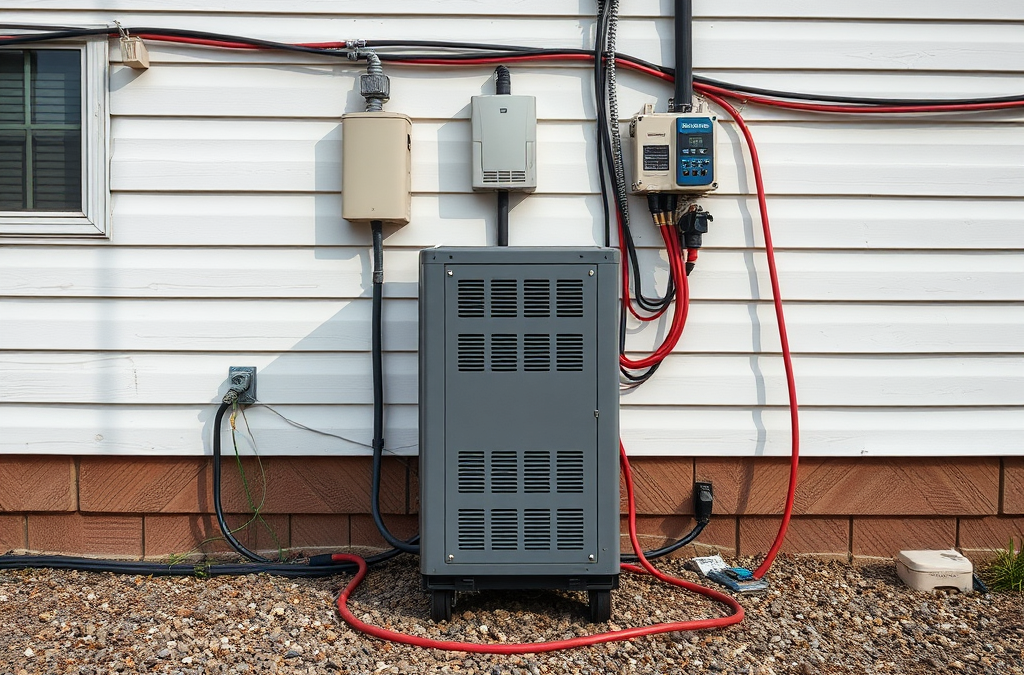
The safest arrangement is a properly installed transfer switch or essential-load panel that isolates backup power from the utility. It allows selected branch circuits to receive inverter power without energizing utility lines. A qualified electrician should determine whether the inverter is suitable for the panel, whether neutral switching is required, and whether grounding and overcurrent protection match the equipment instructions.
Never energize household wiring by plugging a generator-style cord into a wall receptacle. That improvised backfeed can place voltage on circuits thought to be disconnected and can expose people, utility workers, and equipment to dangerous conditions. Turning off a main breaker is not a substitute for a correctly rated transfer mechanism, because breaker position, wiring configuration, and service equipment vary.
Portable equipment needs its own discipline. Use cords rated for the expected current, keep connections dry and protected, avoid daisy-chaining, and follow the inverter manufacturer’s requirements for cable length and conductor size. Locate fuel-burning generators outdoors as directed by their manuals, away from doors, windows, and ventilation openings; an inverter connected to a battery still requires attention to battery ventilation, terminals, and fire exposure.
A dedicated essential-load panel is usually easier to manage than selecting individual extension cords across a home. It can also expose a tradeoff: moving a refrigerator circuit into the panel may unintentionally bring along other receptacles. Before installation, map each breaker and identify shared circuits. If separation is impossible, either reduce the connected equipment or select a different circuit arrangement.
The failure mode to avoid is treating installation as an operating detail. A technically adequate inverter cannot compensate for an unsafe connection method. Include circuit labeling, an isolation procedure, and a shutdown sequence in the plan. The useful comparison is not “panel versus extension cord” in the abstract; it is controlled isolation and known circuit scope versus uncertain backfeed and hidden loads.
Operate, Test, and Shed Loads in Real Conditions
Load shedding works best as a sequence performed before an outage, not as a reaction to repeated inverter shutdowns. During a test, disconnect or switch off all nonessential equipment, energize the selected circuits, and observe the inverter while the largest motor loads start. Add one controlled load at a time. Record alarms, voltage behavior, battery state, and which equipment cycles together.
Use a simple priority order: medical and safety equipment first, refrigeration and water systems next, communications and lighting after that, and convenience appliances last. This order may change for a particular household. Someone dependent on a powered lift, oxygen equipment, heating controls, or a powered well should make that need the first design constraint and obtain equipment-specific advice rather than borrowing a generic household load list.
Signs that the plan is working include stable operation through compressor or pump starts, no overload warning, acceptable equipment behavior, and enough battery capacity for the intended operating period. Signs of failure include immediate shutdown when a motor starts, flickering or abnormal equipment operation, hot plugs or cables, repeated low-voltage alarms, and an unexplained drop in runtime. Stop and investigate rather than repeatedly resetting the inverter.
Scheduled operation can preserve capacity. A freezer may be run during a period when the refrigerator compressor is not starting, and a well pump may be operated before other discretionary loads are connected. Manual scheduling is imperfect, so it should not be used to justify loads that already exceed the inverter’s ratings. Automatic load-management equipment may provide better control but adds cost, installation requirements, and another component that must be tested.
Recheck the plan whenever equipment changes. A new refrigerator, aquarium pump, space heater, battery charger, or home-office setup can alter both running demand and surge behavior. Keep a visible “do not connect” list that names high-demand appliances, and give household members a shutdown order. The best load-shedding plan is one people can follow under fatigue, darkness, and limited battery information.
Frequently Asked Questions
How do I decide which circuits are essential?
Prioritize medical equipment, refrigeration, water access, heating controls, communications, and limited lighting. Exclude shared circuits containing uncontrolled high-wattage appliances unless those loads can be managed.
Should I use running watts or starting watts?
Use both. Running watts determine sustained capacity, while starting watts determine whether compressors, pumps, or motors can start without tripping the inverter.
Can I power an entire breaker panel with a small inverter?
A panel can be energized only when the connected circuits are properly isolated and their combined demand suits the inverter. A breaker being off does not by itself create a compliant transfer arrangement.
Why does an inverter trip even when the measured load seems low?
Startup current, low battery voltage, cable losses, incompatible equipment, overheating, or a wiring problem may cause the trip. Check the inverter’s fault display and manual before adding capacity.
Is it safe to connect an inverter through a wall outlet?
No. A wall-outlet connection can backfeed building wiring. Use an approved transfer switch, interlock where appropriate, or an electrician-installed essential-load arrangement.
Further Reading
Authoritative Sources
Academy of Nutrition and Dietetics eatright.org
Professional nutrition guidance, healthy eating resources, and practical dietitian-reviewed advice.
U.S. Department of Agriculture usda.gov
Official food, nutrition, agriculture, and consumer guidance from the USDA.
NIH Office of Dietary Supplements ods.od.nih.gov
Research-based fact sheets on nutrients, supplements, dietary intake, and safety considerations.
International Society of Sports Nutrition sportsnutritionsociety.org
Evidence-informed sports nutrition resources and position stands for active people and athletes.
Conclusion
Reliable backup power comes from controlling the connected circuits, not from assuming the inverter will manage an entire home. Identify the services that matter most, measure their running and startup demand, and reserve capacity for motor surges and real-world losses. A refrigerator, pump, or furnace blower may behave very differently at startup than its running label suggests. Use a properly isolated transfer arrangement, label every selected circuit, and test the system with loads added in a deliberate order. Keep high-demand appliances disconnected unless the inverter was designed for them. When the equipment alarms, cables heat, voltage falls, or runtime disappoints, shed loads and investigate instead of repeatedly resetting the system. A written, tested circuit plan gives the inverter a manageable job and gives the household a clear response when capacity becomes limited.