A household should be assessed as an electrical and environmental system before appliances are returned to service. An outage may leave more than a dark room: water from a damaged pipe, rain entering through a roof or window, a failed sump pump, a shifted appliance, or heat buildup around refrigeration equipment can create hazards that are not obvious at the wall switch. Walk through the property with a flashlight rather than relying on candles, and do not enter areas with standing water near outlets, panels, extension cords, or appliances.
Look first for conditions that require stopping the inspection. A fallen service line, damaged meter equipment, sparking utility hardware, smoke, active flooding, or a strong gas odor calls for distance and professional or utility assistance. Do not operate the main panel if the panel area is wet or visibly damaged. If a gas appliance was affected by flooding, has a damaged supply connection, or smells of gas, avoid switches and flames and contact the gas utility or a qualified professional.
Once the immediate area is safe, identify which circuits were off and whether the outage followed a storm, flooding, a utility fault, or an internal breaker trip. The cause changes the inspection priority. A brief utility interruption with no weather damage may call for a visual electrical check, while a flooded basement requires treating every submerged electrical component as suspect. A portable generator or inverter adds another concern: improper connection can energize wiring in ways that endanger occupants and utility workers.
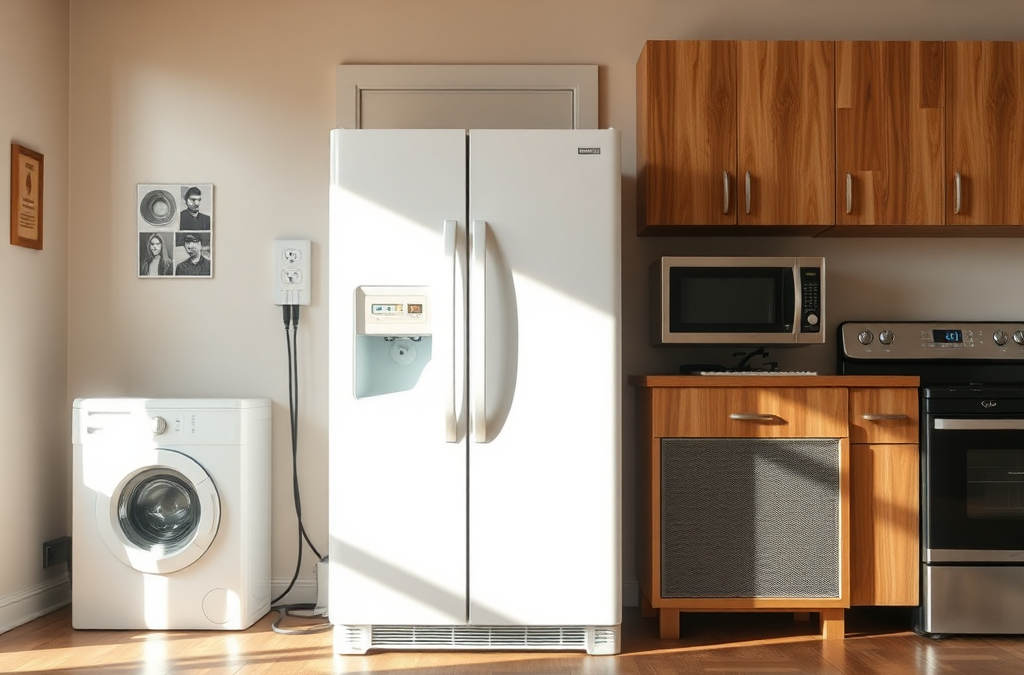
Appliances should remain unplugged while you inspect their surroundings. Check beneath and behind refrigerators, washing machines, dishwashers, water heaters, and freezers for moisture, displaced hoses, cracked fittings, or insulation that has been pulled against a motor or vent. A dry front panel does not prove that the rear compressor, terminal block, or wiring compartment is dry. Prioritize the main electrical panel, wet locations, high-load equipment, and any appliance exposed to abnormal heat or water.
Check Cords, Outlets, and Appliance Damage
Visible condition is the most useful first filter for deciding whether an appliance can be reconnected. Examine the plug blades, cord jacket, strain relief, outlet face, power strip, and nearby wall for melting, discoloration, cracking, soot, looseness, or a burnt smell. A cord that was pinched under a cabinet or pulled when furniture shifted may have internal damage even if its outer insulation looks intact. Do not tape over a cut cord or continue using a plug that fits loosely in the receptacle.
Water exposure deserves a conservative decision. An appliance that was submerged, splashed internally, or left in a damp area should not be tested by simply plugging it in. Moisture can remain around switches, motors, control boards, heating elements, and insulation; energizing those parts may cause shock, shorting, corrosion, or later failure. Drying the exterior is not the same as evaluating the appliance. Manufacturer service instructions or a qualified technician are more appropriate for equipment with internal water exposure.
Inspect outlets without removing their covers. A warm, cracked, loose, or darkened receptacle is not a normal result of restoration. Ground-fault protection may have tripped in kitchens, bathrooms, garages, laundry areas, or outdoor circuits, so identify whether a GFCI receptacle or breaker has opened. Resetting a protective device once may be reasonable only when the area is dry and there is no visible damage; repeated tripping is a stop signal, not an invitation to keep resetting it.
Consider the appliance’s load and operating mechanism. A lamp or small charger may reveal that a circuit is live, but it does not prove that a refrigerator compressor, clothes dryer, range, air conditioner, or water heater is safe. Motors can draw a higher current at startup, and heating appliances produce substantial heat during normal operation. Conversely, a refrigerator may remain quiet for a period after power returns because its thermostat has not called for cooling. Silence alone is not a fault, while a repeated clicking or struggling hum deserves attention.
Use a simple inspection record for each questionable item:
Connection: identify the outlet, breaker, surge device, or extension cord involved.
Behavior: record tripping, sparks, unusual noise, smoke, overheating, or failure to start.
Decision: mark the appliance for normal reconnection, isolation, or professional evaluation.
This process is slower than reconnecting everything at once, but it separates an appliance fault from a circuit fault. That distinction matters if a breaker trips: the cause could be one damaged appliance, several simultaneous startup loads, a wet receptacle, or a problem upstream.
Restore Circuits and Appliances in a Controlled Order
Gradual restoration reduces confusion and limits the consequences of a hidden fault. After the home has passed the visual inspection, unplug or switch off appliances before re-energizing circuits. Follow any instructions from the electric utility, building manager, manufacturer, or emergency authorities, especially if the property experienced flooding or service damage. If the main disconnect was turned off because of a hazard, do not assume it is ready for reactivation without confirmation from the appropriate professional.
Restore the least complicated circuits first, then observe the panel and rooms for several minutes. A circuit that remains stable with lights and ordinary low-load equipment gives more useful information than a whole-house restart. Reconnect appliances one at a time, allowing a short observation period between them. The purpose is not to prove that every device works immediately; it is to identify which connection produces a symptom.
High-load and motor-driven appliances should be treated separately. Refrigerators and freezers may need to resume cooling, but their compressors can have a demanding startup. Air conditioners, pumps, dryers, electric ranges, and space heaters can place heavy loads on a circuit, particularly if several are started together. Choose the correct dedicated outlet and avoid daisy-chained power strips or lightweight extension cords. A portable generator must be used only through an appropriate connection method; plugging a generator into a household outlet can backfeed the electrical system.
A practical sequence is to reconnect essential refrigeration first if the unit is dry and undamaged, followed by basic lighting and communications equipment, then other appliances according to household need. Delay optional high-load equipment until the system has remained stable. This approach trades speed for diagnostic clarity. Reconnecting everything immediately may restore comfort faster, but it can cause nuisance trips, overload a temporary power source, or make it difficult to identify a damaged device.
Observe what happens after each reconnection. A refrigerator should eventually show normal cooling behavior rather than repeated clicking, a pump should start without burning odor or unusual vibration, and a washer should not leak or trip protection when its motor begins. A breaker that trips once after a known startup event still deserves investigation if it trips again. Never defeat a breaker, remove a grounding pin, bypass GFCI protection, or substitute a fuse with a higher rating.
Readers managing several rooms can use the post-outage inspection before restoring household appliances as a room-by-room record, but the inspection should follow the actual circuit layout rather than the convenience of the floor plan. One circuit may serve outlets in multiple rooms, and a single damaged device can affect more than its immediate location.
Recognize Failure Signs and Document the Recovery
Abnormal behavior after restoration is evidence to investigate, not a nuisance to ignore. Stop using an appliance if it emits smoke, produces a burning or plastic odor, sparks, shocks the user, becomes unusually hot, leaks, makes repeated clicking or grinding sounds, or causes a breaker or GFCI to trip again. Unusual behavior may reflect moisture, insulation damage, a failed control board, a locked motor, a damaged heating element, or an overloaded circuit. The visible symptom does not reliably identify the failed component.
Separate appliance symptoms from supply symptoms. If several devices flicker, dim, reset, or behave erratically on different circuits, the problem may involve the service, utility connection, generator, or transfer equipment rather than one appliance. If only one outlet is affected, isolate that outlet and its connected equipment. If one appliance trips protection while other devices operate normally, leave that appliance disconnected and have it evaluated instead of moving it to another outlet as a test.
Refrigeration requires particular judgment. A refrigerator or freezer may appear to run while still failing to maintain a safe internal temperature, especially after a prolonged outage or repeated cycling. Use the appliance’s temperature display if it is reliable, and follow food-safety guidance from a recognized public-health or food-safety authority for decisions about stored food. Do not use the appliance’s exterior warmth, a single cooling sensation, or an assumption that the compressor is running as the only test.
Document photographs of damaged cords, outlets, water lines, labels, and panel conditions before moving equipment. Record the time power returned, the circuits restored, appliances tested, and any protective devices that tripped. This information helps an electrician or appliance technician diagnose intermittent problems and may support an insurance claim. Keep model and serial information available, but do not remove covers or attempt internal repairs unless you are qualified to do so.
A common mistake is treating successful startup as proof of safety. Electrical damage can worsen with heat, vibration, moisture migration, or repeated operation. Another mistake is assuming a newer appliance is automatically protected from abnormal voltage or water exposure. Manufacturer instructions, utility notices, and qualified inspection should override convenience when those sources identify a specific hazard. For additional context, compare each device’s condition with the broader post-outage inspection before restoring household appliances record rather than judging it in isolation.
Frequently Asked Questions
Should I unplug appliances before power returns?
Unplug or switch off appliances that may start automatically, especially high-load equipment. Leave questionable or water-exposed devices disconnected until they are evaluated.
Can I reset a tripped breaker after an outage?
Only consider a single reset when the panel and surrounding area are dry and there is no visible damage or burning odor. If it trips again, leave it off and seek qualified help.
Is an appliance safe if it turns on normally?
Not necessarily. Watch for overheating, unusual sounds, odor, leaks, flickering, or later protective-device trips, and treat internal water exposure as a professional-evaluation issue.
Which appliances should be restored first?
After safety checks, restore essential refrigeration and basic lighting before optional high-load devices. Reconnect equipment individually so a fault can be traced.
What should I do if an outlet sparks?
Stop using the outlet, keep clear of moisture, and do not repeatedly reset protection. If safe to do so, isolate the circuit and arrange inspection by a qualified electrician.
Further Reading
Authoritative Sources
Academy of Nutrition and Dietetics eatright.org
Professional nutrition guidance, healthy eating resources, and practical dietitian-reviewed advice.
U.S. Department of Agriculture usda.gov
Official food, nutrition, agriculture, and consumer guidance from the USDA.
NIH Office of Dietary Supplements ods.od.nih.gov
Research-based fact sheets on nutrients, supplements, dietary intake, and safety considerations.
International Society of Sports Nutrition sportsnutritionsociety.org
Evidence-informed sports nutrition resources and position stands for active people and athletes.
Conclusion
Restoring household appliances after an outage is safer when inspection comes before convenience. Check the property for flooding, utility damage, burning odors, and unsafe panel conditions, then examine each cord, plug, outlet, hose, vent, and appliance exterior. Treat submerged or internally damp equipment as unfit for casual testing. Re-energize circuits gradually and reconnect appliances one at a time, giving priority to essential refrigeration while delaying heavy loads until the system is stable. A repeated trip, spark, smell, shock, leak, or unusual motor sound is a reason to stop, isolate the equipment, and obtain qualified assistance. Written notes and photographs make later diagnosis easier and prevent a brief return of power from being mistaken for a complete recovery.
When routine pickup stops, household refuse becomes a sanitation problem because waste accumulates faster than most homes can safely store it. The first useful action is not buying more bags; it is estimating what is being produced, identifying the most dangerous materials, and deciding where temporary storage can occur without exposing people, food, drinking water, or drainage routes.
Separate waste into broad streams as soon as it is generated. Ordinary dry packaging can usually wait longer than wet food scraps, diapers, animal waste, or anything contaminated with bodily fluids. Batteries, pesticides, solvents, fuel containers, pool chemicals, and cleaning products should never be mixed into a general bag. Broken glass and needles create puncture hazards even when the rest of the bag appears harmless. This separation makes later instructions easier to follow and prevents one leaking container from contaminating an entire storage area.
A short interruption may call for containment and odor control; a prolonged interruption requires space management and a removal plan. A family producing several kitchen bags each day will quickly exceed the capacity of a small indoor bin, while a household with stored food may produce less packaging but more spoiled material after a refrigerator failure. Review the plan daily if temperatures rise, flooding changes access, or public messages announce a different disposal route.
Use a simple priority order:
Protect people from sharps, chemicals, sewage, and animal contamination.
Keep wet and odor-producing waste sealed and separate.
Store dry refuse where wind, rain, rodents, and pets cannot reach it.
Preserve access for authorized pickup, drop-off, or cleanup crews.
A common mistake is treating all trash as equal. That approach may be convenient at the kitchen bin but creates avoidable risks during a disaster. The sanitation plan should also be written down so every household member knows which container receives each material. A household reference such as sanitation planning when trash collection stops during disasters is most useful when it matches the home’s actual waste streams and local instructions.
Choosing Storage Locations and Containers
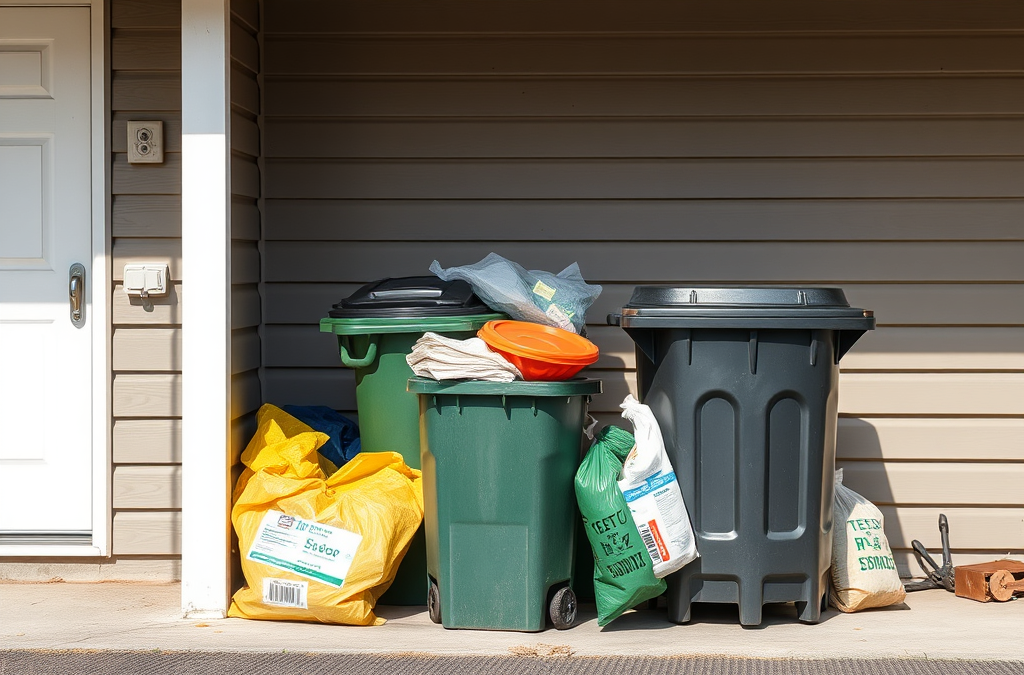
Temporary waste storage works best in a covered, shaded, ventilated location that is separated from living areas and protected from rain. Keep containers away from wells, streams, storm drains, air intakes, gardens used for food, and places where children or pets play. A garage may be suitable if it remains cool and accessible, but an attached garage can allow odors or fumes into the home. An outdoor area may be preferable only when bags are protected from animals, wind, and floodwater.
Use sturdy bags inside rigid containers with tight-fitting lids. Double-bag wet refuse when the inner bag is intact and the outer bag can be closed without squeezing it. Rigid bins should be easy to clean and small enough for one person to move without tearing a bag. Do not fill containers so heavily that lifting causes back injury or spills. Place absorbent material around, not inside, a leaking outer container only as a temporary measure; the damaged bag still needs prompt isolation and replacement.
Container choice involves a tradeoff. Large bins reduce the number of trips and keep more waste together, but they become difficult to move and can hide leaks at the bottom. Smaller containers are easier to inspect and carry but require more closures and more storage space. In a flood-prone location, a lidded container secured against tipping may be safer than loose bags, provided it can be reached without entering contaminated water.
Label containers with plain descriptions such as “general refuse,” “food waste,” “sharps—do not open,” or “household chemicals.” Do not place chemicals in a container that could be mistaken for ordinary garbage. Keep gloves, soap, disinfecting supplies, and clean bags near the work area, but store chemicals according to their labels and never mix cleaning products. Hand sanitizer may be useful when soap and water are unavailable, but visibly dirty hands need washing as soon as safe water is available.
Inspect the storage site each day. Signs that the arrangement is failing include liquid beneath a container, swelling or tearing bags, strong persistent odors, insects, rodent access, animal tracks, or water reaching the storage area. Move people away from a leaking or suspicious container and seek local guidance rather than opening it to repack the contents. For broader household planning, sanitation planning when trash collection stops during disasters should include an alternate storage site in case the first location floods or becomes inaccessible.
Handling Food Waste, Sewage, and Hazardous Materials
Wet organic waste usually becomes the limiting factor first. Spoiled meat, dairy products, cooked foods, and liquid-rich scraps produce odors and attract insects as they warm. Seal these materials promptly in leak-resistant bags, keep them out of direct sun, and avoid storing them beside drinking-water containers. If a refrigerator or freezer has failed, do not delay decisions about unsafe food merely to reduce the number of bags; keeping questionable food indoors can create a greater exposure problem.
Human waste requires a separate plan from ordinary trash. A blocked sewer, damaged septic system, or unavailable toilet can spread contamination through hands, floors, groundwater, and floodwater. Do not pour sewage into streets, storm drains, yards, or waterways. Do not assume that burying waste is safe, particularly near wells, high water tables, flood zones, or vegetable beds. Public health authorities may provide specific directions for temporary toilet use, collection, or disinfection, and those directions should take priority over improvised methods.
Medical waste and sharps need careful containment. Needles, lancets, and broken medical devices should go into a puncture-resistant container that cannot be reopened easily; never push them into a soft bag or attempt to bend them. Medicines, disinfectants, fuels, and pesticides should remain in their original containers when possible. A leaking product, swollen battery, or container with damaged labeling deserves isolation and professional or local-agency advice rather than disposal with household refuse.
Burning trash is not a universal solution. Plastics, treated materials, aerosols, batteries, and chemical residues can release dangerous smoke or create hazardous ash, while wind can carry embers during dry conditions. Burying waste can also contaminate soil or water and may attract animals. Those methods should not be used simply because collection is delayed. The safer choice is usually controlled containment until an authorized collection point, transfer route, or community cleanup instruction becomes available.
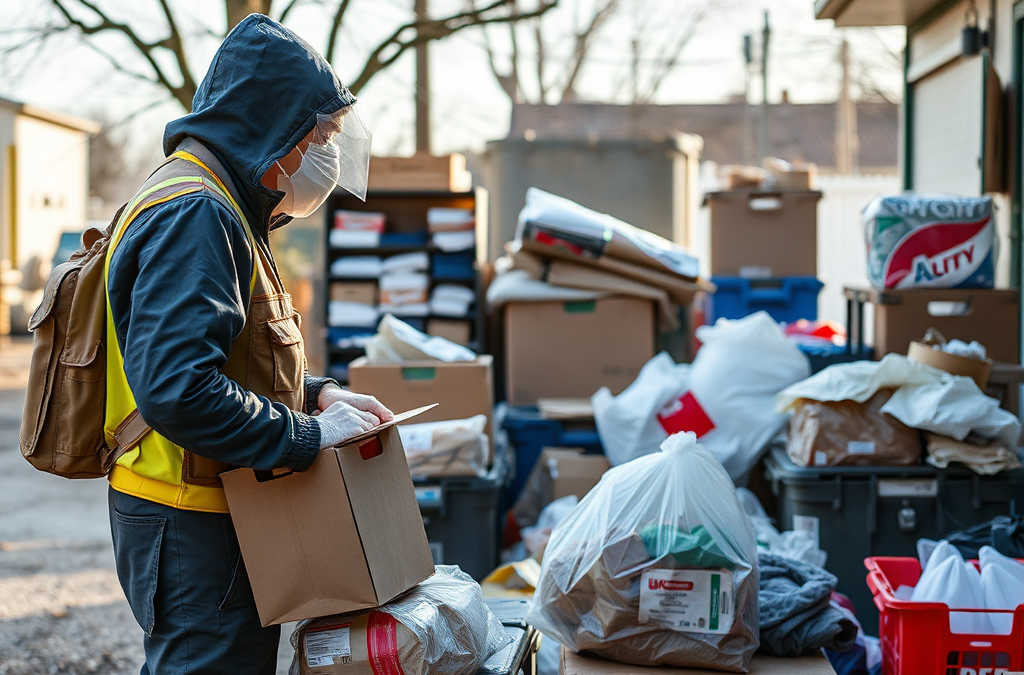
Keep waste work separate from food preparation. Wear durable gloves, cover cuts, avoid touching the face, and wash hands after removing gloves. Disinfect hard surfaces after a spill using a product according to its label; never combine bleach with ammonia, acids, or other cleaners. If sewage contacts skin, eyes, a wound, or household surfaces, follow public health guidance and seek medical advice when symptoms or exposure concerns arise.
Managing Removal, Cleanup, and Changing Conditions
A temporary storage plan is incomplete without a removal decision. Monitor official announcements from local government, emergency management, sanitation departments, or public health agencies for collection changes, restricted drop-off sites, and materials they will not accept. Keep bags and containers accessible to authorized crews, but do not place them in roads, drainage channels, or collection areas before instructions permit it.
Record what has been stored and where it is located. A simple note can identify the number of general-waste bags, food-waste containers, chemical products, and sharps containers. This prevents forgotten material after an evacuation or household handoff. Photographing labels may help communicate with a cleanup service, but do not open containers to improve their appearance or consolidate unknown substances.
Flooding changes the risk calculation. Waste touched by floodwater may contain sewage, fuel, chemicals, or sharp debris even when the original contents were ordinary. Keep children and pets away, avoid direct contact, and follow local instructions for contaminated materials. Gloves alone are not enough protection for unknown chemical exposure or large-scale cleanup. Similarly, extreme heat accelerates decomposition and increases odor, insects, and pressure inside sealed containers; shade and smaller container sizes become more valuable, but ventilation must not expose the home to fumes.
Compare two common approaches: waiting for pickup with everything mixed together, or maintaining separated, documented containers. Mixing may appear simpler, but it can turn recyclable packaging, food waste, chemicals, and sharps into one difficult load that a cleanup crew cannot safely handle. Separation takes more attention at the point of disposal and usually reduces later handling, identifies urgent hazards, and gives officials clearer information about what needs special treatment.
Before moving waste, check the route, container weight, weather, and destination rules. Use a cart when available, keep lids closed, and avoid transporting leaking bags in a passenger compartment. Stop if a container ruptures, an unknown odor appears, or liquid contacts clothing. Clean tools and footwear after handling waste, and launder contaminated clothing separately from ordinary garments. A plan is working when bags remain intact, no waste reaches water or living spaces, odors stay controlled, and each material has a known next destination. It is failing when storage expands into cooking or sleeping areas, containers cannot be inspected, or people begin using unsafe shortcuts.
Households can refine their arrangements through sanitation planning when trash collection stops during disasters by assigning one person to monitor public instructions and another to check storage conditions. That division matters when fatigue, evacuation, injury, or limited mobility makes informal responsibility unreliable.
Local health departments, emergency-management offices, sanitation utilities, and environmental agencies are the most useful sources for disposal instructions because accepted materials and temporary collection sites vary by location. Consult official guidance before handling flood-contaminated waste, sewage, chemicals, or medical sharps.
Frequently Asked Questions
Where should household waste be stored when pickup stops?
Use a shaded, covered, accessible location away from doors, food, wells, drains, floodwater, children, and animals. Choose a backup site if the first area may flood.
Can spoiled food go in the regular trash?
It may be contained separately in leak-resistant bags if local instructions allow it. Keep wet food waste away from dry refuse and replace leaking bags promptly.
Should disaster trash be burned or buried?
Do not assume either method is safe. Burning can create toxic smoke and hazardous ash, while burial can contaminate soil or groundwater; follow local authority instructions.
How should needles and other sharps be handled?
Place them in a rigid, puncture-resistant container that cannot be easily reopened, keep it labeled, and seek local instructions for approved disposal.
What changes after flooding?
Treat flood-touched waste as potentially contaminated with sewage, chemicals, or sharp debris. Keep people away and follow public health or cleanup-agency directions.
Further Reading
Authoritative Sources
Academy of Nutrition and Dietetics eatright.org
Professional nutrition guidance, healthy eating resources, and practical dietitian-reviewed advice.
U.S. Department of Agriculture usda.gov
Official food, nutrition, agriculture, and consumer guidance from the USDA.
NIH Office of Dietary Supplements ods.od.nih.gov
Research-based fact sheets on nutrients, supplements, dietary intake, and safety considerations.
International Society of Sports Nutrition sportsnutritionsociety.org
Evidence-informed sports nutrition resources and position stands for active people and athletes.
Conclusion
When collection stops, sanitation depends on controlling exposure before waste becomes a larger problem. Separate ordinary refuse from wet food, sewage, sharps, chemicals, batteries, and fuel containers; use sealed, labeled containers; and keep them shaded, dry, stable, and away from water and living areas. Check the storage site every day for leaks, insects, animals, heat, flooding, and blocked access. Avoid burning, burying, or transporting unknown materials without official direction. The next useful action is to write a household waste map, identify a backup storage location, gather bags and protective equipment, and save contact information for local health and emergency-management offices. That preparation preserves safer choices when normal pickup and disposal routes are unavailable.
A second-week outage exposes weaknesses that may not matter during a brief interruption. A household can tolerate limited lighting, reduced device use, and improvised meals for several days, but those measures become harder when batteries need recharging, fuel supplies shrink, temperatures remain uncomfortable, and normal services still have not returned. The central question changes from “How do we get through tonight?” to “Can this arrangement safely continue for another several days?”
Short-term plans usually assume that stores, fuel stations, pharmacies, banks, water systems, and local services will soon be available. Those assumptions may fail independently. A nearby shop might reopen while card payments remain unavailable, or a fuel station might have gasoline but no working pumps. A pharmacy may offer limited hours, yet a medication requiring refrigeration may still present a problem. Treat each service as a separate dependency rather than assuming that one sign of recovery means the whole area is functioning.
Resource accounting also becomes more useful than simple rationing. Record drinking water, cooking water, fuel, battery capacity, medications, cash, and food by days of safe use. Include hidden consumption: cleaning, handwashing, flushing, pet care, and preparing dry foods all draw from supplies. A generator that appears to have enough fuel for several days may provide far fewer hours if it is powering a refrigerator, space heater, chargers, and cooking appliances together.
One common mistake is preserving the original routine because it feels familiar. Running a generator on the same schedule as day two, taking long trips for uncertain information, or using disposable supplies without replacing them can create a sharper shortage later. Reassess every morning and evening, write down what changed, and set a specific threshold for seeking outside help or relocating.
Water, Food, Sanitation, and Health Priorities
By the second week, water and sanitation usually deserve more attention than food variety. Drinking water remains the first requirement, but water for hygiene, food preparation, wound care, and toileting determines whether the household can remain healthy. Use clearly labeled containers for drinking water and non-drinking water, and avoid treating an unknown source as safe merely because it looks clean. Follow the instructions for the treatment method being used, since boiling, chemical treatment, and filtration do not address every contaminant in the same way.
Food decisions should become more conservative. Refrigerated perishables should not be kept simply because they smell normal, and repeated brief power returns do not automatically make them safe. Shelf-stable foods are more useful now when they require little water, fuel, or cleanup. Canned beans, fish, vegetables, nut butter, crackers, oats, and ready-to-eat items can reduce cooking demands, but check sodium, allergies, chewing needs, and medical diets. Do not overlook the manual can opener.
Sanitation failures often develop gradually. Full waste containers, blocked toilets, standing dishwater, damp laundry, and poorly stored food attract pests and create odors before they become obvious health hazards. Establish a designated waste area away from food and water, keep hand-cleaning supplies accessible, and separate waste that may contain bodily fluids. Local authorities may issue specific instructions for sewage, refuse, or contaminated water; those instructions take precedence over improvised disposal methods.
Health needs can change quickly when sleep, temperature control, and routine medical care are disrupted. Make a written list of prescriptions, doses, allergies, medical devices, and provider contact details. Protect medicines from heat, freezing, moisture, and direct sunlight according to their labeling. People who depend on powered oxygen, mobility equipment, refrigeration, or electrically operated treatment should contact their care team and emergency services early rather than waiting until a battery is nearly empty.
Secure drinking and treatment water before expanding food choices.
Set a sanitation routine for waste, dishes, hand cleaning, and toilet use.
Use low-fuel foods and preserve special-diet supplies for the person who needs them.
Escalate medical concerns promptly; an outage is not a reason to delay urgent care.
The weak assumption is that a large pantry solves a long outage. Food without water, fuel, safe storage, or appropriate preparation may not be usable. A smaller supply of accessible, familiar food can be more valuable than a larger stock that requires extended cooking or produces difficult waste.
Power, Fuel, Communications, and Information
Second-week power management is a scheduling problem, not merely a battery problem. Decide which loads protect life, health, food safety, or communication, then assign operating windows. A refrigerator may need intermittent operation, while a medical device may require continuous power. Phones can be charged during a short generator run, but unnecessary video use, automatic updates, and repeated searches can consume that reserve without improving the household’s position.
Fuel should be treated as a finite reserve with safety limits. Never operate a generator, camp stove, or fuel-burning appliance indoors, in a garage, or near doors and windows where carbon monoxide can accumulate. Keep fuel in approved containers and away from ignition sources, following local fire-safety requirements. A generator may provide convenience, but it also creates noise, theft exposure, maintenance demands, and fuel dependence. In some households, a smaller power station used for communications and medical equipment is safer than attempting to run every appliance.
Communications should move from casual checking to a deliberate information schedule. Preserve one charged phone for emergency contact, use text messaging when voice calls are unreliable, and write down key numbers because contact lists may not be accessible. Battery-powered or vehicle-powered radios can provide local updates, but verify alarming claims through official local sources when possible. Information has practical value only when it changes a decision, such as where water is available, whether roads are open, or when a cooling center or medical facility is operating.
Compare two approaches: continuous low-level power use versus short, planned operating periods. Continuous use may protect a sensitive device but can exhaust fuel before replacement is available. Scheduled use may conserve fuel but requires temperature checks, charging discipline, and a clear priority order. Review the plan whenever weather changes, a vulnerable person develops symptoms, or official information indicates that restoration will take longer.
A common failure is assuming that a vehicle is an unlimited backup system. Idling a vehicle in an unsafe location can cause carbon monoxide exposure, and repeated short trips may consume fuel needed for evacuation or medical transport. Park vehicles so they can leave, keep keys accessible, and reserve fuel and mobility for the highest-consequence needs.
Deciding Whether to Stay or Relocate
Remaining at home is reasonable only while essential needs can be maintained safely. Evaluate water, sanitation, temperature, medication, food, communication, security, and the condition of everyone in the household. A familiar home may offer shelter and supplies, but familiarity does not compensate for unsafe indoor heat, worsening illness, contaminated water, or an inability to power critical equipment.
Use thresholds rather than waiting for a dramatic crisis. Relocation becomes more compelling when safe drinking water cannot be secured, sanitation is failing, indoor temperatures are dangerous, medication or medical-device power is running out, or reliable information and transport are unavailable. The destination must be more than “somewhere else.” Confirm that it has functioning utilities, space for the household, accessible transport, medication access, and a way to communicate arrival.
For example, a household with healthy adults, adequate water, shelf-stable food, and safe temperatures may be able to remain while monitoring restoration. A household with an infant, an older adult, or a person dependent on powered medical equipment may need to leave earlier, even if food supplies look sufficient. The relevant comparison is not comfort at home versus inconvenience elsewhere; it is the reliability of essential care in each location.
Prepare a departure kit before the decision becomes urgent. Include identification, prescriptions and medication lists, water, ready-to-eat food, chargers, cash, warm or weather-appropriate clothing, pet supplies, and copies of important contacts. Keep vehicles fueled when possible and avoid routes affected by downed lines, flooding, smoke, or official closures. Tell a trusted person where you are going, but do not publicize an empty home.
Do not confuse a restoration estimate with a guarantee. Conditions can change after equipment damage, access problems, or further weather. Recheck the plan at a fixed time each day, identify the next safe destination, and leave while transportation and health remain manageable rather than after reserves are exhausted.
Frequently Asked Questions
What becomes the biggest concern in the second week of an outage?
Water, sanitation, medical needs, indoor temperature, and fuel often become more urgent than lighting or entertainment. The answer depends on household health needs and local conditions.
Should food be rationed differently after seven days?
Use a written inventory and favor food that requires little water, fuel, and cleanup. Protect supplies for infants, medical diets, allergies, and people with limited ability to chew or cook.
How should generator fuel be prioritized?
Reserve it for medical equipment, essential refrigeration, communication, and carefully planned charging. Never operate a generator indoors or in an attached garage.
When should a household leave during a prolonged outage?
Consider leaving before water, sanitation, medication, temperature control, or medical-device power becomes unsafe. Confirm that the destination can actually provide the needed services.
Do short power restorations make an outage plan unnecessary?
No. Brief restoration may not stabilize refrigeration, water pressure, communications, or medical services. Continue monitoring official updates and keep essential reserves until service is dependable.
Further Reading
Authoritative Sources
Academy of Nutrition and Dietetics eatright.org
Professional nutrition guidance, healthy eating resources, and practical dietitian-reviewed advice.
U.S. Department of Agriculture usda.gov
Official food, nutrition, agriculture, and consumer guidance from the USDA.
NIH Office of Dietary Supplements ods.od.nih.gov
Research-based fact sheets on nutrients, supplements, dietary intake, and safety considerations.
International Society of Sports Nutrition sportsnutritionsociety.org
Evidence-informed sports nutrition resources and position stands for active people and athletes.
Conclusion
A second-week outage calls for a fresh operating plan, not a stretched version of the first few days. Count usable water, fuel, batteries, medication, food, and sanitation capacity; then match those reserves to the needs of the most vulnerable person in the household. Keep power use limited to health, safety, food protection, and communication, and treat every fuel-burning appliance as a carbon monoxide risk unless it is operated exactly as designed in a safe location. Set clear relocation thresholds and verify the destination before travel. Official restoration notices are useful, but household decisions should follow actual access to water, medical care, safe temperatures, sanitation, and transport. Reassess at scheduled times so that action occurs while options remain available.